Watchmaker
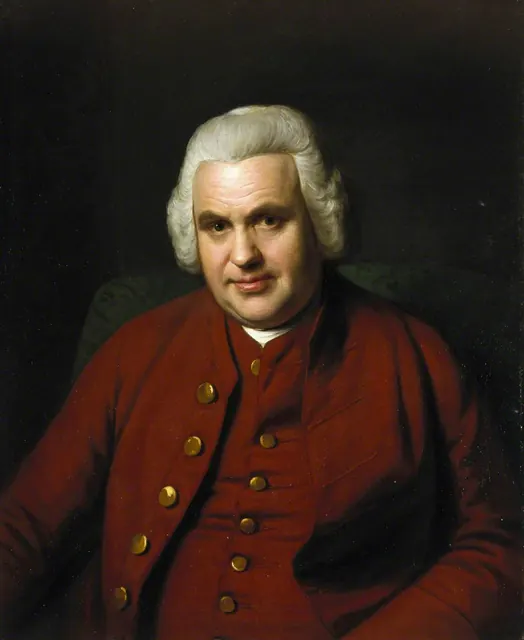
Larcum Kendall
Also recorded as: Kendall, Larcum
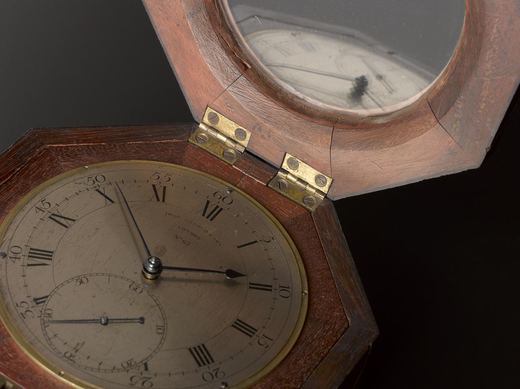
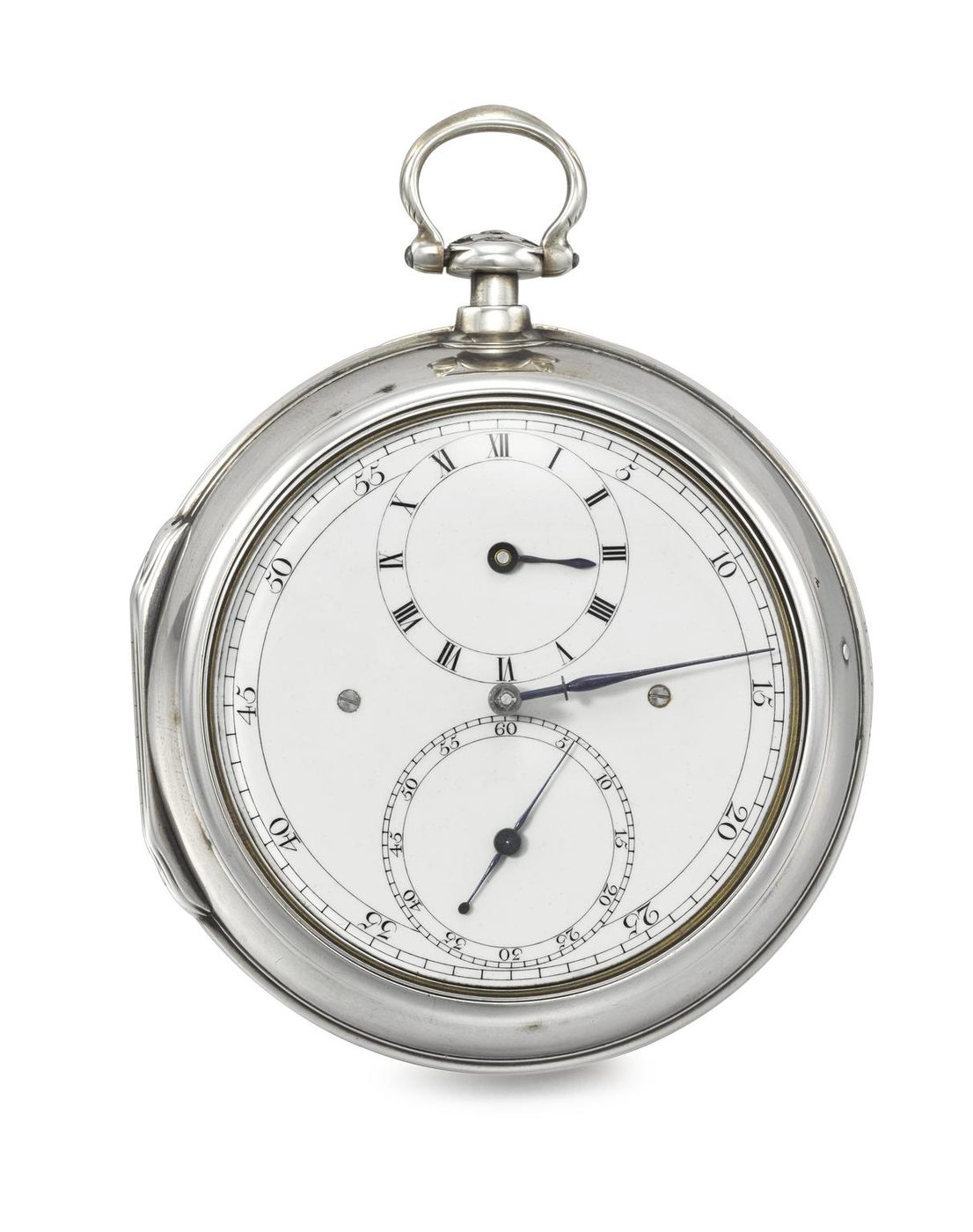
Made K1, the Board of Longitude's copy of Harrison's H4 that Cook carried to the Pacific.
Born at Charlbury in Oxfordshire to a Quaker family, Kendall was apprenticed in 1735 to the London watchmaker John Jefferys and then worked for George Graham as a specialist escapement maker. In 1765 he was one of the experts who witnessed Harrison's explanation of H4, and the Board of Longitude commissioned him to copy it. His copy, K1, was completed in 1769; it went with James Cook on his second and third voyages and performed so well that Cook called it his 'never failing guide'.
Kendall's simplified successors were less successful: K2 (1771), later famous for its voyage on HMS Bounty, and K3 (1774) did not match K1. All three are in the collection of the National Maritime Museum, Greenwich.
K1 cost £450, and when it was presented to the Board of Longitude on 13 January 1770 Kendall received a bonus of £50. Although built like a watch, it is about 13 cm across and weighs 1.45 kg. On Cook's second voyage the astronomer William Wales tested it alongside three timekeepers by John Arnold, which did not stand up to the voyage; Cook reported in 1775 that 'Kendall's watch has exceeded the expectations of its most zealous advocate'.
K1's later career was nearly as remarkable. It stopped off Kamchatka in 1779 on Cook's third voyage and its balance spring broke; repaired by Kendall, it sailed with the First Fleet to Botany Bay in 1787–88, was at sea with Admiral Jervis aboard HMS Victory at the Battle of Cape St Vincent in 1797, and was retired to Greenwich in 1802.
Asked in 1770 to teach other workmen to make further copies, Kendall declined, saying they would still be too expensive for general use, and offered instead simpler watches: K2 (1771) was meant to cost about half as much as K1 and K3 (1774) cost £100, but neither matched its accuracy. K2 was taken by the Bounty mutineers to Pitcairn Island and only reached England again in 1840; K3 sailed with Cook, Vancouver and Flinders.
- Country
- England
- City / centre
- London
- Life / active
- 1719–1790
- Status
- Historical individual
- Key people
- Larcum Kendall; John Jefferys (master); George Graham
Innovations & specialities
- K1 copy of H4 (1769)
- Simplified timekeepers K2 (1771) and K3 (1774)
Timeline
- 1735Apprenticed to John Jefferys
- 1765Witnesses Harrison's disclosure of H4
- 1769Completes K1
- 1772–75K1 on Cook's second voyage
- 1790Dies in London
Works by Larcum Kendall in the catalogue
Open in the catalogue →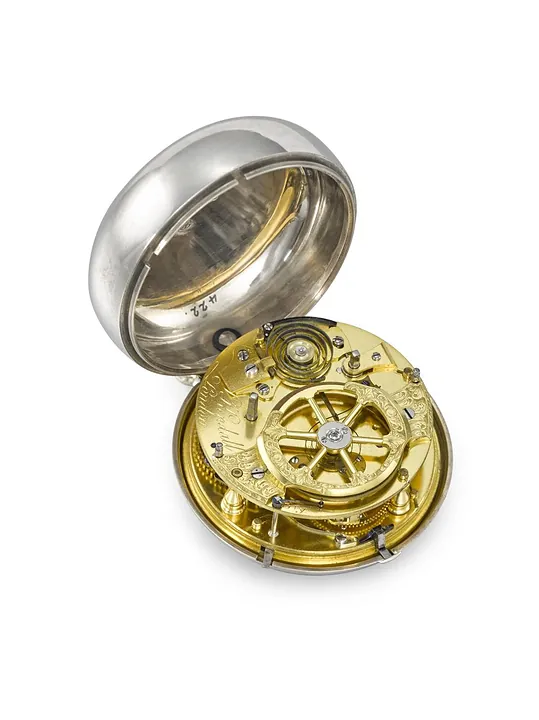
Linked through the Atlas maker authority list, which reconciles the spellings used by different institutions. Attributions are as stated by each holding institution or auction house.
Read and see more
Magazine features
- After Harrison: How Le Roy, Arnold and Earnshaw Turned the Marine Timekeeper into an Industry
Harrison proved that a watch could find longitude. It took another half-century of French and English invention — the detent escapement, the compensation balance and the helical balance spring — to make a timekeeper that navies could buy by the hundred.
- Finding Longitude: Harrison, Arnold, Earnshaw and the Marine Chronometer
How a navigational problem became a horological one — and why the instrument that solved it at sea was not the one that won the prize.
Academy lessons
- Longitude and the marine chronometer
16 min · How the problem of finding longitude at sea led to the Longitude Act of 1714, John Harrison's sea clocks and watches, and the mass-produced chronometers of Arnold, Earnshaw and their successors.