
Clocks · Longcase clock
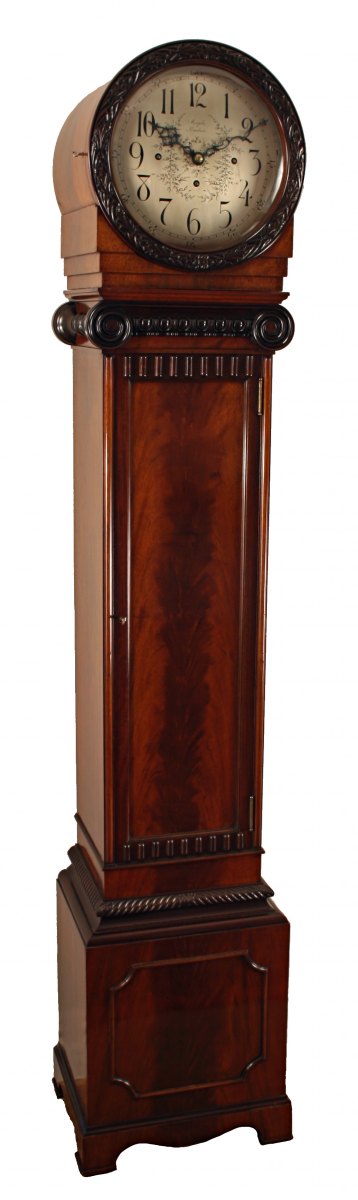
Westminster Chime longcase clock by Maple, London, c. 1890
- Maker / attribution
- Maple (maker)
- Date
- c. 1890
- Historical period
- Industrial Revolution (1850 – 1900)
- Country of origin
- England
- Place
- London
- Object type
- Longcase clock
- Materials / technique
- mahogany, oak
- Dimensions
- Height 6 ft 9 in (206 cm)
- Stock no.
- Product 465
- Credit line
- Dealer listing, P A Oxley (product 465)
- Catalogue title (original)
- Westminster Chime Longcase Clock by Maple of London (English)
View the source record (dealer listing) ↗ (opens another website in a new tab)Suggest a correction
Record summary
Catalogued by P A Oxley (dealer), Wiltshire (stock number Product 465), this is a longcase clock by Maple, made in London, England, dated c. 1890. The Atlas places it in the Industrial Revolution period (1850 – 1900) of its Clocks collection. Materials and techniques recorded by the source: mahogany, oak. Recorded dimensions: Height 6 ft 9 in (206 cm). The record is illustrated with 6 photographs.
Assembled from the source record's structured fields. Dates and attributions are given as the source states them; where a field is missing the Atlas leaves it blank rather than estimating.
Catalogue description
Dealer description — P A Oxley
An excellent high quality late Victorian mahogany longcase clock with Westminster Chime. The movement is of 8 day duration and strikes the quarter hours on four coiled gongs and the main hour on a larger gong. The silvered brass convex dial is engraved with the retailers/makers name, foliage, Arabic numerals and minutes. Also with a strike/silent facility and blued steel hands. The high quality mahogany veneered case has a long glazed trunk door enclosing three large brass weights and a pendulum. The whole case depicts an Ionic column and capital which is carved below the main dial. The base features a shaped plinth and an applied ogee moulding to the main panel. The drum shaped hood has a lockable wooden bezel encasing the dial behind a convex glass and is carved with oak leaves and acorns. A very unusual late Victorian longcase clock which would be the perfect interior design statement. Note: This clock may have originally been purchased as part of a set of furniture by the first owner. John Maple opened a small furnishing shop in the mid 19th century in Tottenham Court Road, London. By the 1880âs with the help of his son Sir John Blundell Maple the business became the largest furniture store in the world. Maker Maple of London
Historical context
Industrial Revolution (1850 – 1900)
American interchangeable-parts manufacture; railroad time standards; Swiss and German factory systems.
Factory production transformed the clock into an everyday object. American makers (Seth Thomas, Ansonia, Waterbury) and German factories (Junghans, Gustav Becker, Lenzkirch) sold millions of shelf, wall and alarm clocks worldwide; France produced standardised Paris movements and carriage clocks; electric time distribution began.
Read the period in the timelineMore clocks from this periodEarlier: Precision & Scientific Horology
Atlas type guide
Longcase (tall-case or grandfather) clocks
The longcase clock was born from two seventeenth-century innovations: Christiaan Huygens's pendulum (1656–57) and the anchor escapement (c. 1670). A long seconds pendulum, nearly a metre long, swings with a small arc, and enclosing it together with the driving weights in a tall wooden case protected the mechanism and created a new piece of furniture. London makers such as Ahasuerus Fromanteel, Thomas Tompion and Joseph Knibb set the pattern.
By the eighteenth century longcase clocks were made throughout Britain, the Netherlands, Scandinavia (the Swedish Mora clock), France (the Comtoise from the Franche-Comté), Germany and colonial America. Eight-day movements with two weights became standard in better clocks; thirty-hour clocks with one weight and a rope or chain were cheaper alternatives.
What to look for
- Winding holes in the dial: two (eight-day, going and striking) or none (thirty-hour, pulled up by a chain).
- Brass dials with applied chapter rings (earlier) versus painted iron 'white' dials (after c. 1770 in Britain).
- Moon-phase arches, date apertures, seconds dials and maker's name on the dial.
- Case woods and style: ebonised, walnut marquetry, lacquer, oak or mahogany; regional styles from London, Lancashire, Scotland or America.
- Whether the movement and dial match the case — 'marriages' are common.
Dating clues
- Square brass dials suggest c. 1670–1720; arched brass dials c. 1715–1790.
- Painted (white) dials were made by Birmingham dial-makers from about 1772.
- Comtoise clocks with repoussé pendulums are mostly nineteenth century.
General guidance written by the Atlas editors about this kind of object. It is not a statement about this particular piece; for that, rely on the source record above and on physical examination.
Read next:Anchor (recoil) escapementDeadbeat escapementAnchor escapement
Related records
Clocks · 1830–1870
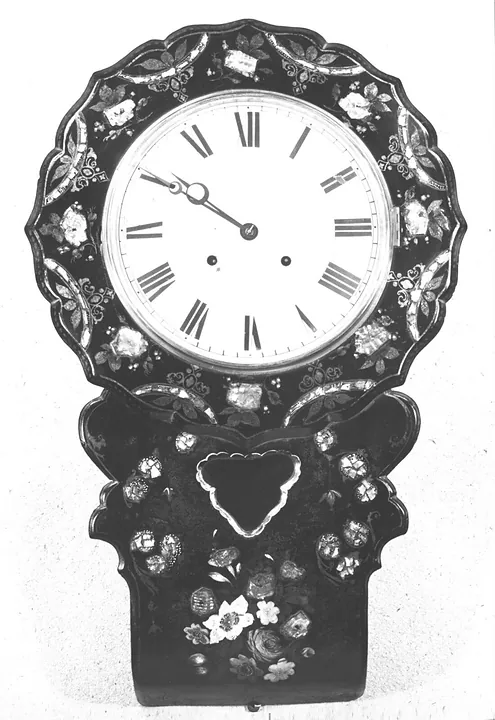
Wall clock in a papier mâché case with painted decoration. English, mid 19th century.
Victoria and Albert Museum, London
Clocks · 1840–1900
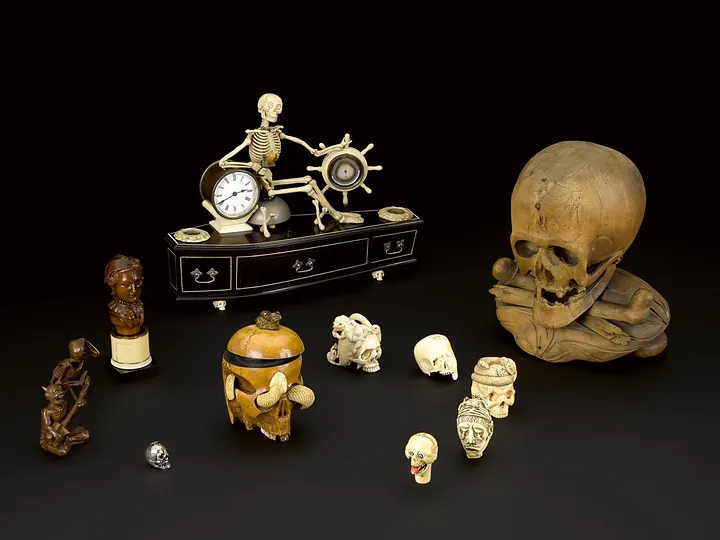
Alarm clock, mounted on model of coffin with skeleton, probably English, 1840–1900
Science Museum Group, London
Clocks · 1840–1880
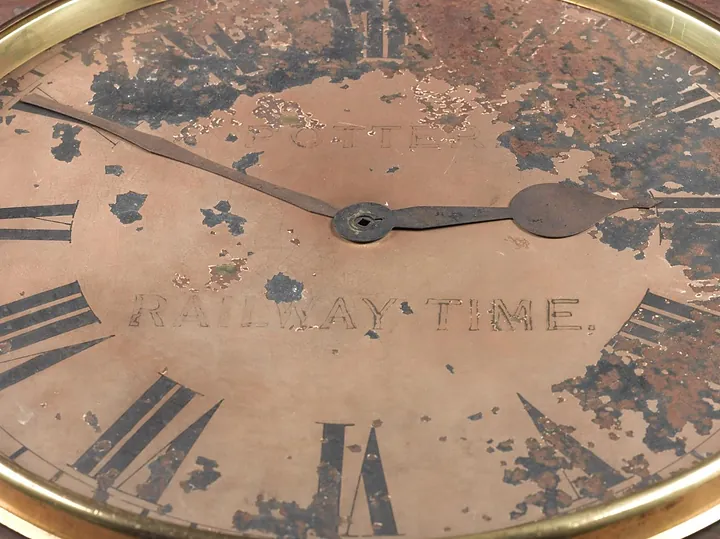
Clock dial marked "Potter, Railway Time" with two hands, unknown maker, British, 1840–1880
Science Museum Group, London
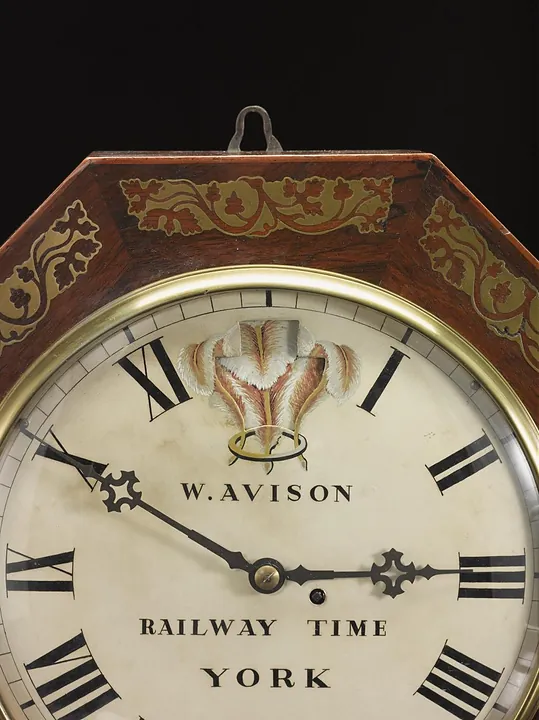
Clocks · 1840–1880
Wall Clock in octagonal case with Prince of Wales Feathers above makers name "W. Avison, Railway Time, York", made by William Avison, England, 1840–1880.
Science Museum Group, London
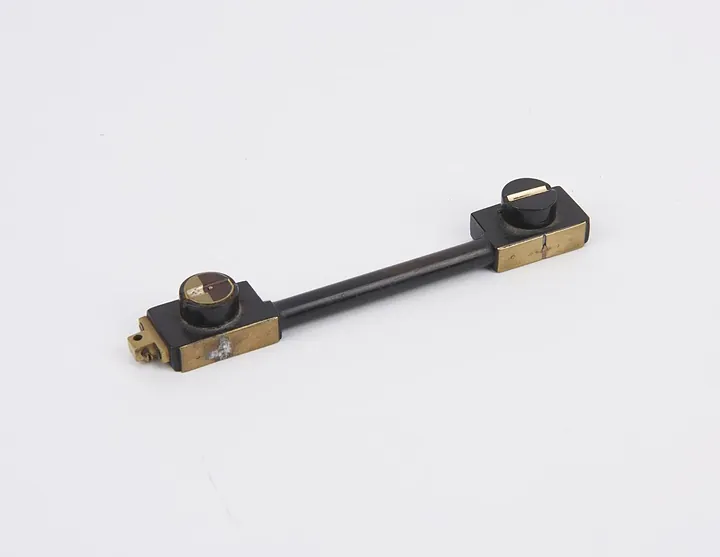
Clocks · 1841–1870
Contact bar from electric clock, unsigned, London, England, 1841–1870
Science Museum Group, London
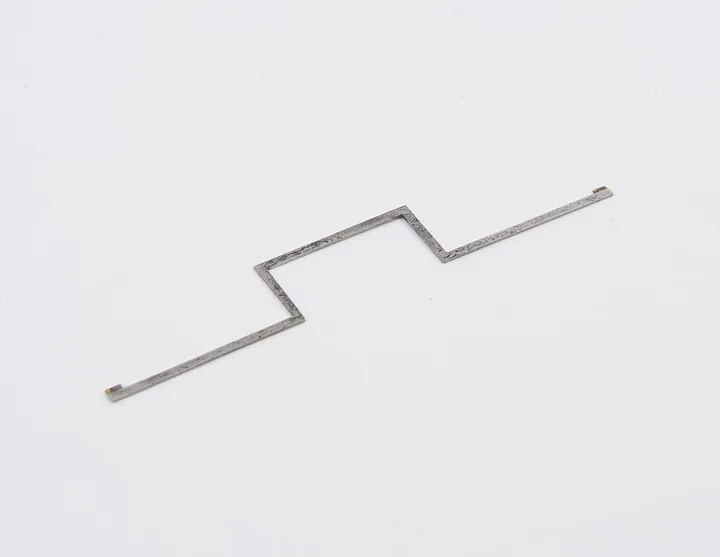
Clocks · 1841–1870
Contactor from electric clock, unsigned, London, England, 1841–1870
Science Museum Group, London
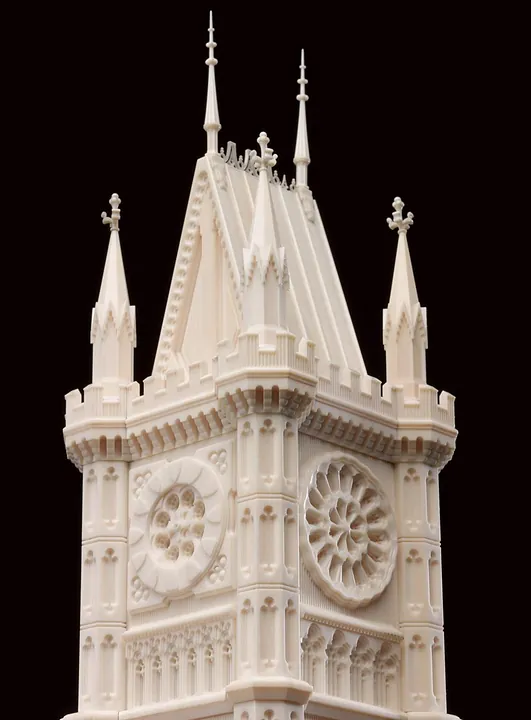
Clocks · 1843–1884
One ivory gothic clock tower & travelling case, by Holtzapffel and Company, London, England, 1843–1884
Science Museum Group, London
Clocks · 1845–1855
Clock by W. H. Darker, England, 1845–1855
Science Museum Group, London