
Pocket Watches · Watch
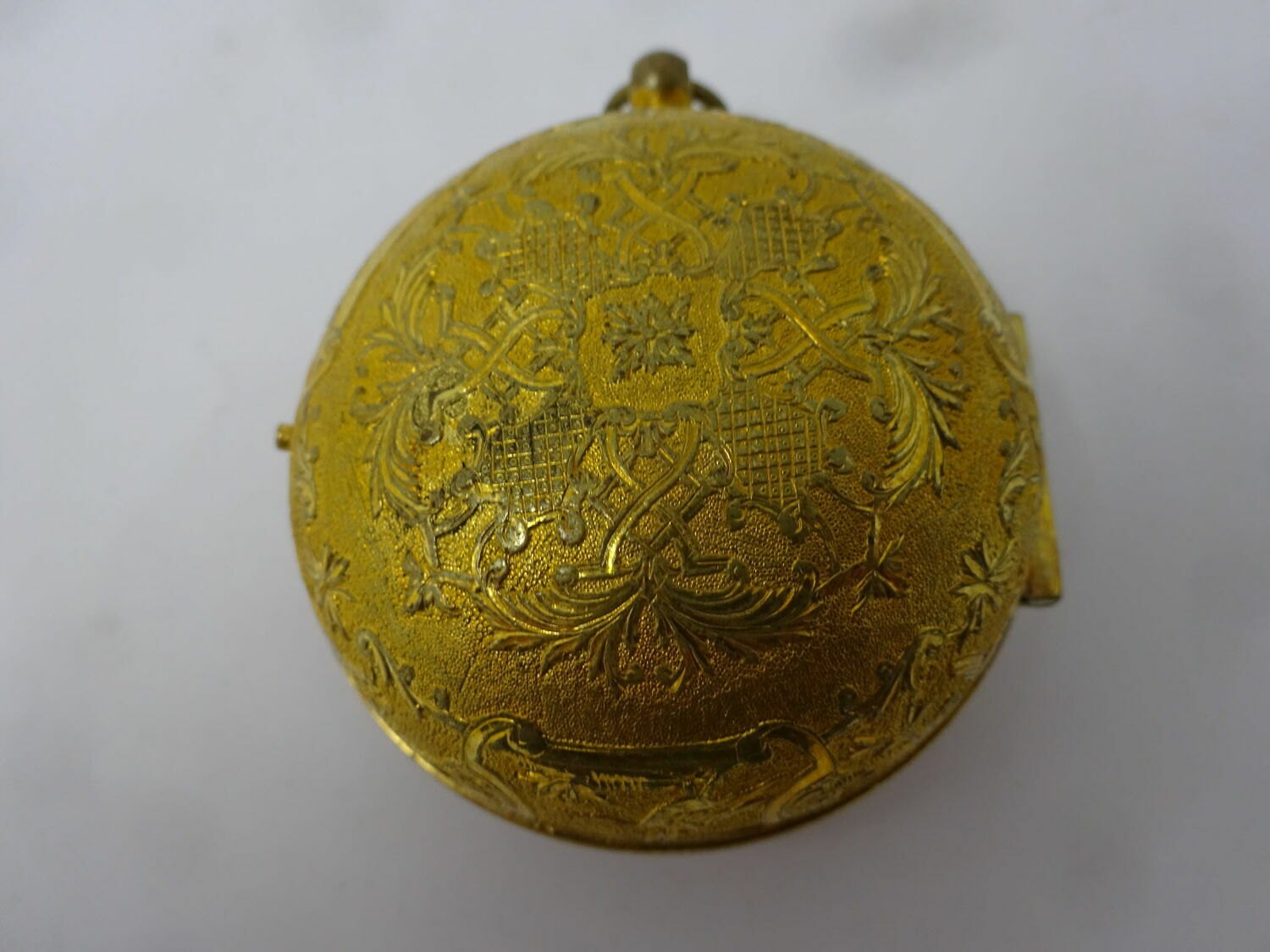
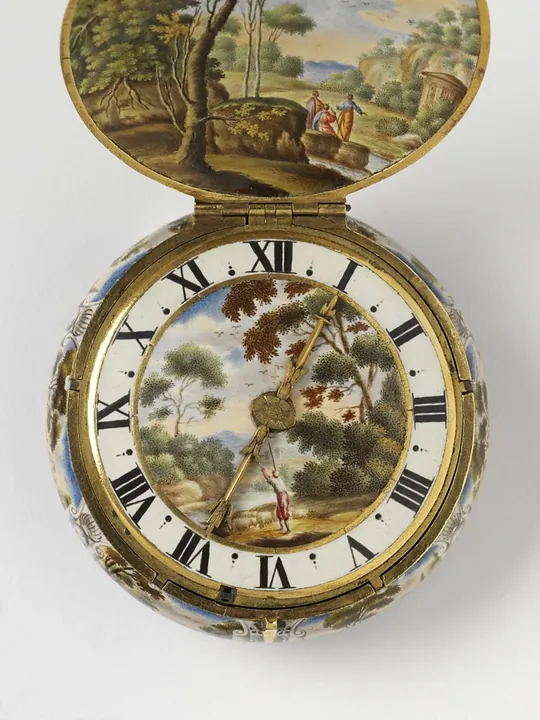
Watch by Jacques Gloria, France, 1685–1700
- Maker / attribution
- Jacques Gloria (Horloger)
- Date
- 1685–1700
- Historical period
- Early Modern Horology (1600 – 1750)
- Country of origin
- France
- Place
- Rouen
- Object type
- Watch
- Materials / technique
- brass
- Dimensions
- height 7,6 cm; length 5,9 cm; thickness 3,5 cm; diameter 5,5 cm
- Holding institution
- Musée du Louvre, Paris
- Accession / object no.
- OA 8309
- Credit line
- Musée du Louvre, Département des Objets d'art du Moyen Age, de la Renaissance et des temps modernes
- Catalogue title (original)
- Montre "oignon" (French)
View the source record ↗ (opens another website in a new tab)Suggest a correction
Record summary
Held and catalogued by Musée du Louvre, Paris (object number OA 8309), this is a watch by Jacques Gloria, made in Rouen, France, dated 1685–1700. The Atlas places it in the Early Modern Horology period (1600 – 1750) of its Pocket Watches collection. Materials and techniques recorded by the source: brass. Recorded dimensions: height 7,6 cm; length 5,9 cm; thickness 3,5 cm; diameter 5,5 cm. The record is illustrated with 4 photographs.
Assembled from the source record's structured fields. Dates and attributions are given as the source states them; where a field is missing the Atlas leaves it blank rather than estimating.
Catalogue description
Catalogue description — Musée du Louvre (French)
Boîtier gravé sur fond amati d'ornements dans le style de Bérain, au centre du fond, quatre cartouches quadrillés, séparés par des entrelacs terminés par des palmes symétriquement disposés autour d'une fleur stylisée. Sur le pourtour, sept médaillons ornés chacun d'un animal (lièvre, chien, renard, héron,...) ; lunette du verre gravée de volutes et de palmes encadrant des oiseaux. Tête du pendant en forme de boule percée. Charnière au niveau du IX. Cadran à chiffres romains, gravé au centre de rinceaux se détachant sur un fond amati. Carré de remontage sous le XII. Mouvement ne possédant pas de fusée, échappement à roue de rencontre. Balancier muni d'un spiral réglant, coq circulaire repercé de rinceaux. Dispositif de réglage à crémaillère graduée de 1 à 9. Un petit disque gradué de 1 à 30 indique le nombre d'heures écoulées depuis le remontage.
Shown in the original language of the source catalogue. An editor-reviewed English translation has not yet been published; we do not publish machine translations as authoritative text.
Dating and period as catalogued (French)
Epoque / période : Louis XIV (1643-1715) (Occident->époque moderne = Ancien Régime->dynastie des Bourbons) · · Date de création/fabrication : 1685 - 1700
Shown in the original language of the source catalogue. An editor-reviewed English translation has not yet been published; we do not publish machine translations as authoritative text.
Materials and techniques as catalogued (French)
Matériau : laiton · Technique : doré = dorure (techniques métal) · Technique : émaillé = émaillage = émail = émaux (techniques métal)
Shown in the original language of the source catalogue. An editor-reviewed English translation has not yet been published; we do not publish machine translations as authoritative text.
Inscriptions & marks
Signature : ; mouvement signé : Gloria ARouën
Provenance
collection Jules-René Olivier (1855-1933), horloger-collectionneur ; legs de sa sœur Marie-Julie Olivier, n° 422 ; comité du 24 janvier 1935 ; conseil du 5 février 1935 ; décret du 4 août 1935
Historical context
Early Modern Horology (1600 – 1750)
Huygens' pendulum and balance spring transform accuracy; English makers develop the anchor and deadbeat escapements.
The balance spring (c. 1675) improved watches dramatically and introduced the minute hand. English pair-cased verge watches with pierced balance cocks and French oignons were typical; enamel painting at Blois and Geneva, and the repeating watch (1680s), made watches objects of great refinement.
Read the period in the timelineMore pocket watches from this periodEarlier: Renaissance Horology
Atlas type guide
Verge and pair-cased watches
After Christiaan Huygens and Robert Hooke applied the balance spring around 1675, the verge watch became a reasonably reliable timekeeper and the minute hand became standard. Through the eighteenth century the typical English watch was a pair-cased verge: a fusee movement with a pierced, engraved balance cock, housed in an inner case and a separate protective outer case, often of repoussé gold, shagreen, tortoiseshell or enamel.
French watches of the same period were thicker 'oignons', later replaced by elegant thinner watches following Jean-Antoine Lépine's bar-bridge calibre of c. 1770. Dutch, Swiss and German makers supplied international markets, and verge watches were made until the mid-nineteenth century as cheaper alternatives to the cylinder and lever.
What to look for
- The pierced balance cock on the backplate: winged (continental) or with a foot (English); its style dates the watch.
- Fusee and chain visible through the movement; key winding through the dial (early) or case back.
- Hallmarks inside English silver or gold cases, which give a date letter.
- Maker's name and serial number engraved on the backplate; watch papers inside outer cases.
- Enamel dials (after c. 1720) versus earlier champlevé metal dials.
Dating clues
- Champlevé dials: c. 1680–1730; white enamel dials thereafter.
- English case hallmarks give the year of assay to within a year.
- Verge watches persisted in cheap production until c. 1850.
General guidance written by the Atlas editors about this kind of object. It is not a statement about this particular piece; for that, rely on the source record above and on physical examination.
Read next:Verge escapementBalance spring (hairspring)Verge escapement
Related records
Pocket Watches · c. 1600
Pocket watch by Hans Reinboldt, France, c. 1600
German Clock Museum
Pocket Watches · 1600
Pocket watch, France, 1600
Rijksmuseum
Pocket Watches · first quarter of 17th century
Watch by Suzanne de Court, France, first quarter of 17th century
The Metropolitan Museum of Art, New York
Pocket Watches · early 17th century
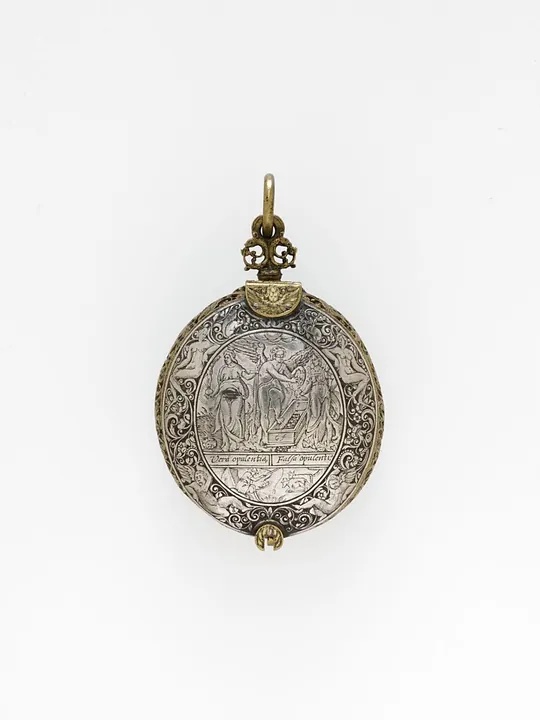
Watch of engraved and pierced silver and gilt brass, signed 'Noel Hubert A Rouen', France, early 17th century
Victoria and Albert Museum, London
Pocket Watches · 1601–1700
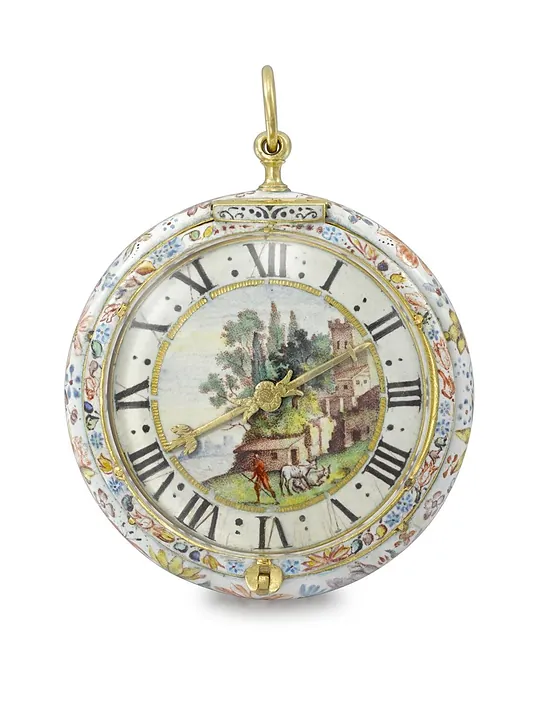
Pocket watch by D Margotin, France, 1601–1700
Science Museum Group, London
Pocket Watches · 1630
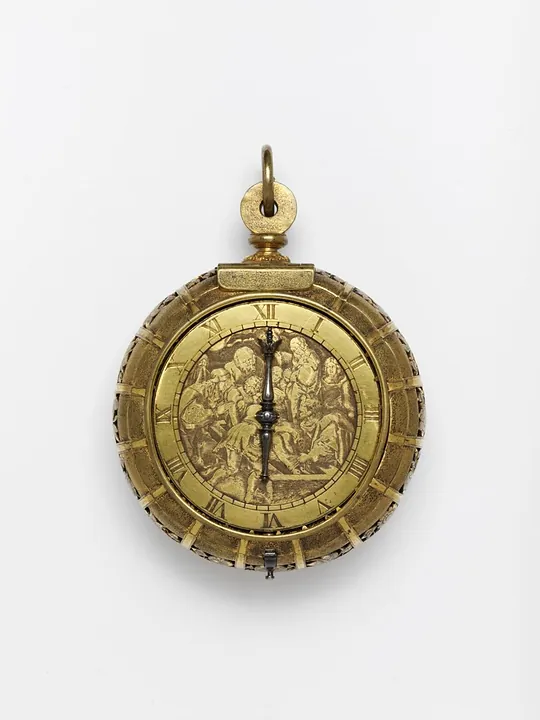
Carriage watch with gilt brass case and engraved dial by Nicolas Lemaindre, Blois, 1630
Victoria and Albert Museum, London
Pocket Watches · 1640–1660
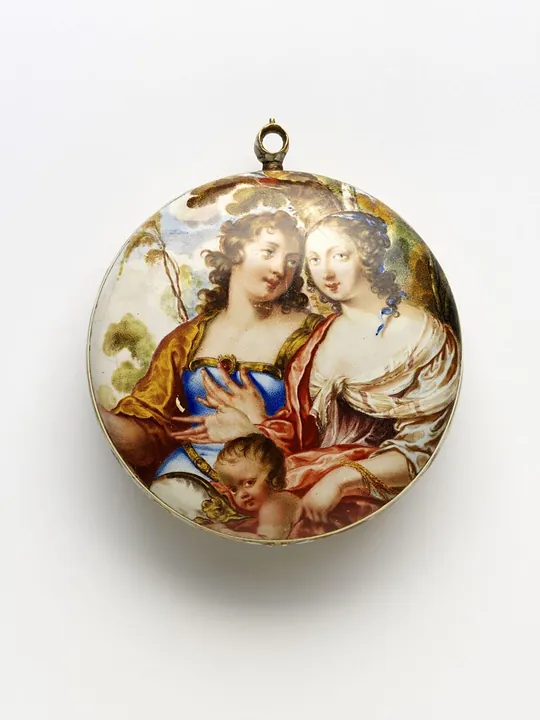
Watch by Jan Bernardus Vrythoff, France, 1640–1660
Victoria and Albert Museum, London
Pocket Watches · 1640–1650
Watch with enamelled gold case depicting Faith, Hope and Charity, made by Nicolas Bernard, Paris, 1640–1650
Victoria and Albert Museum, London