
Pocket Watches · Pocket watch
Unusual Mock Pendulum Verge with Enamel Scenes, 1710
- Maker / attribution
- Unrecorded in source
- Date
- 1710
- Historical period
- Early Modern Horology (1600 – 1750)
- Country of origin
- Unrecorded in source
- Object type
- Pocket watch
- Materials / technique
- enamel
- Dealer
- WatchMuseum.org shop
- Stock no.
- Product 1187
- Credit line
- Dealer listing, WatchMuseum.org shop (product 1187)
- Catalogue title (original)
- Unusual Mock Pendulum Verge with Enamel Scenes (English)
View the source record (dealer listing) ↗ (opens another website in a new tab)Suggest a correction
Record summary
Catalogued by WatchMuseum.org shop (stock number Product 1187), this is a pocket watch, dated 1710. The Atlas places it in the Early Modern Horology period (1600 – 1750) of its Pocket Watches collection. Materials and techniques recorded by the source: enamel. The record is illustrated with 6 photographs.
Assembled from the source record's structured fields. Dates and attributions are given as the source states them; where a field is missing the Atlas leaves it blank rather than estimating.
Catalogue description
Dealer description — WatchMuseum.org shop
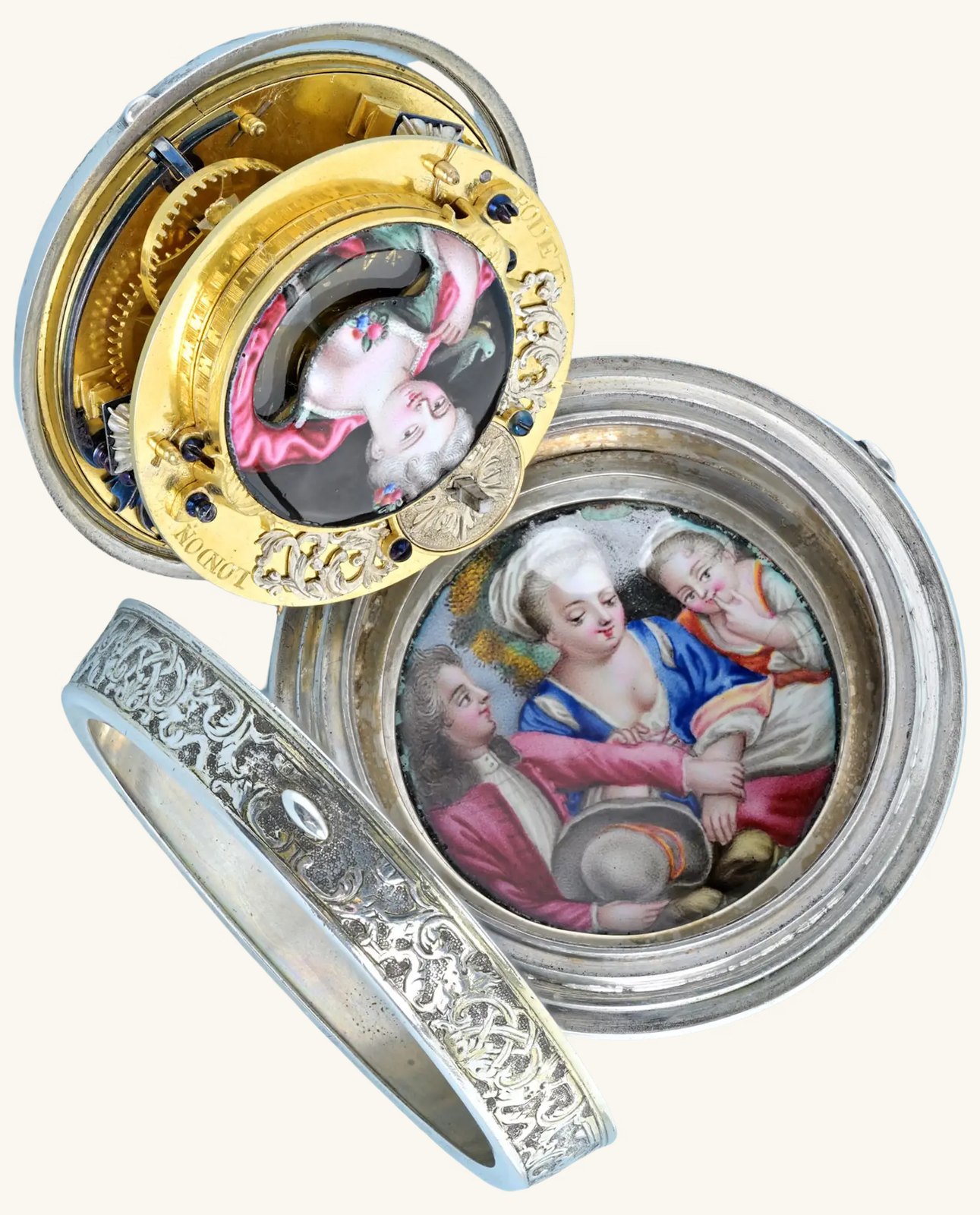
Step into the fascinating world of 18th-century horology with this exceptional English verge watch from 1710, an exquisite blend of artistry and mechanical ingenuity. This unusual timepiece showcases a mock pendulum, a rare feature that adds to its historical allure, all housed within a distinctive silver consular case adorned with vibrant polychrome enamels. The watch’s movement is a marvel of craftsmanship, featuring a deep full-plate fire gilt construction, supported by elegant gilt Egyptian pillars capped with a delicate blue steel plate and silver tops. The intricate fusee and chain mechanism, along with a worm and wheel barrel setup nestled between the plates, highlight the technical sophistication of the era. Adding to its charm, the bridge cock’s table is graced with a polychrome enamel portrait of a young woman tenderly holding a dove, while the lower section is semi-circular and pierced, offering a glimpse into the meticulous detail that defines this extraordinary piece. This is an interesting 18th-century English verge watch that features a mock pendulum and is housed in a unique silver consular case set with polychrome enamels. The movement is a deep full-plate fire gilt, with gilt Egyptian pillars that are capped by a thin blue steel plate and silver tops. It has a fusee and chain, with a worm and wheel barrel setup between the plates. The bridge cock’s table is covered with a polychrome enamel portrait of a young woman holding a dove, while the lower section is semi-circular, pierced, and glazed to reveal the bob on the balance. An engraved gilt rim encloses the balance, protecting it from dust. The dial is silver, with Roman and Arabic numerals, blue steel beetle and poker hands, and is wound through the signed silver dial. The silver consular case is of a very unusual design, with both front and back covers opening and sharing the same seven-joint hinge with the middle section. The middle section is constructed like the inner of a pair case, with a glazed split bezel hinged with the movement which the chased and engraved bezel closes over. The silver pendant and ring bow are also present. The back cover is chased and engraved, set with a large polychrome enamel scene of an elderly man and young lady. Opening the back cover reveals the back of the movement framed in a plain deep silver bezel and the reverse of the plaque which is decorated with another polychrome enamel scene of a courting couple and onlooker. Rodet is the signature on the watch, and it suggests that the maker may have been Huguenot. The enameled scene on the watch refers to the story of “Greek Charity,” which describes a Greek General, Cimone, who was starved by his Roman captors. On her daily visits, his daughter succored him and saved his life. A similar watch is depicted in the Camerer Cuss Book of Antique Watches on pages 106 & 107. Overall, this is an attractive watch of unusual construction, with many intriguing features. It has historical significance, as its design and enameled scene reflect the cultural and storytelling traditions of the time, while its unusual case and movement design attest to the skill and ingenuity of its maker. It’s a true gem of horological history. Signed Rodet – London Circa 1710 Diameter 59 mm Depth 19 mm Period 18th Century Materials Enamel Silver
Historical context
Early Modern Horology (1600 – 1750)
Huygens' pendulum and balance spring transform accuracy; English makers develop the anchor and deadbeat escapements.
The balance spring (c. 1675) improved watches dramatically and introduced the minute hand. English pair-cased verge watches with pierced balance cocks and French oignons were typical; enamel painting at Blois and Geneva, and the repeating watch (1680s), made watches objects of great refinement.
Read the period in the timelineMore pocket watches from this periodEarlier: Renaissance Horology
Atlas type guide
Verge and pair-cased watches
After Christiaan Huygens and Robert Hooke applied the balance spring around 1675, the verge watch became a reasonably reliable timekeeper and the minute hand became standard. Through the eighteenth century the typical English watch was a pair-cased verge: a fusee movement with a pierced, engraved balance cock, housed in an inner case and a separate protective outer case, often of repoussé gold, shagreen, tortoiseshell or enamel.
French watches of the same period were thicker 'oignons', later replaced by elegant thinner watches following Jean-Antoine Lépine's bar-bridge calibre of c. 1770. Dutch, Swiss and German makers supplied international markets, and verge watches were made until the mid-nineteenth century as cheaper alternatives to the cylinder and lever.
What to look for
- The pierced balance cock on the backplate: winged (continental) or with a foot (English); its style dates the watch.
- Fusee and chain visible through the movement; key winding through the dial (early) or case back.
- Hallmarks inside English silver or gold cases, which give a date letter.
- Maker's name and serial number engraved on the backplate; watch papers inside outer cases.
- Enamel dials (after c. 1720) versus earlier champlevé metal dials.
Dating clues
- Champlevé dials: c. 1680–1730; white enamel dials thereafter.
- English case hallmarks give the year of assay to within a year.
- Verge watches persisted in cheap production until c. 1850.
General guidance written by the Atlas editors about this kind of object. It is not a statement about this particular piece; for that, rely on the source record above and on physical examination.
Related records
Pocket Watches · 1600–1699
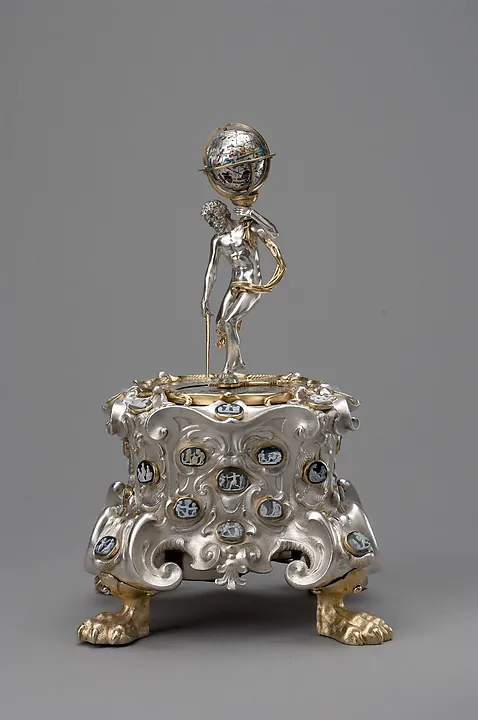
Pocket watch by Georg Ernst, Germany, 1600–1699
Fine Arts Museum Vienna
Pocket Watches · c. 1600
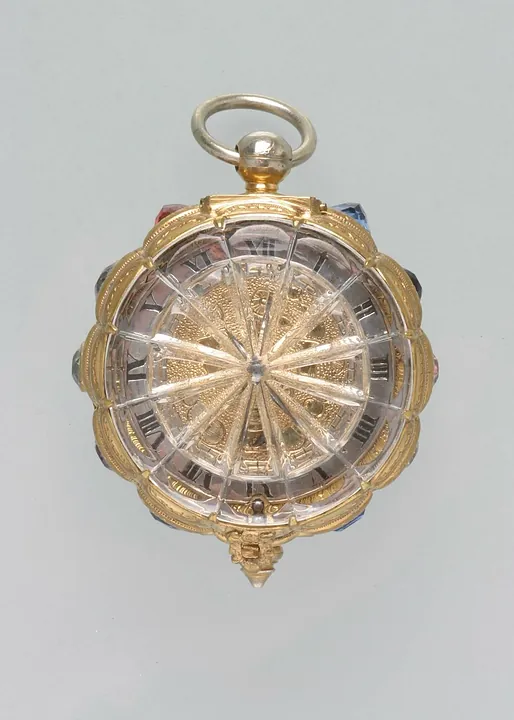
Pocket watch by Balthasar de Paep, Belgium, c. 1600
German Clock Museum
Pocket Watches · c. 1600
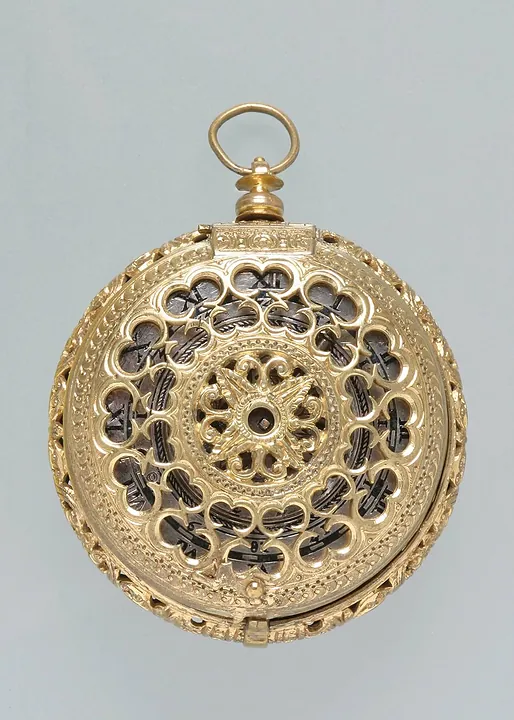
Pocket watch by Hans Reinboldt, France, c. 1600
German Clock Museum
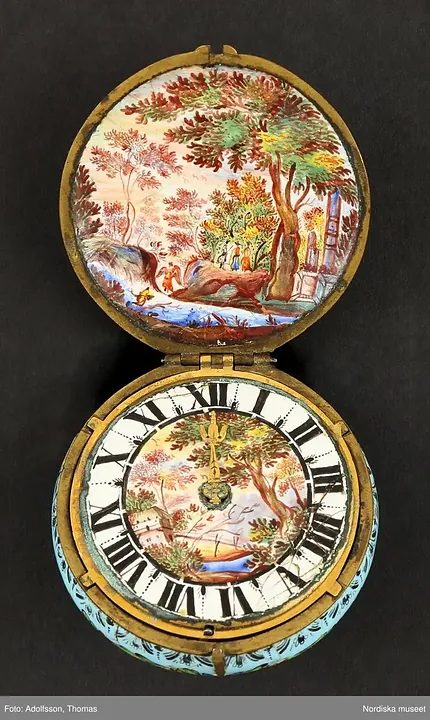
Pocket Watches · 1600–1699
Pocket watch by Johan Etmiller, Germany, 1600–1699
Nordic Museum Foundation
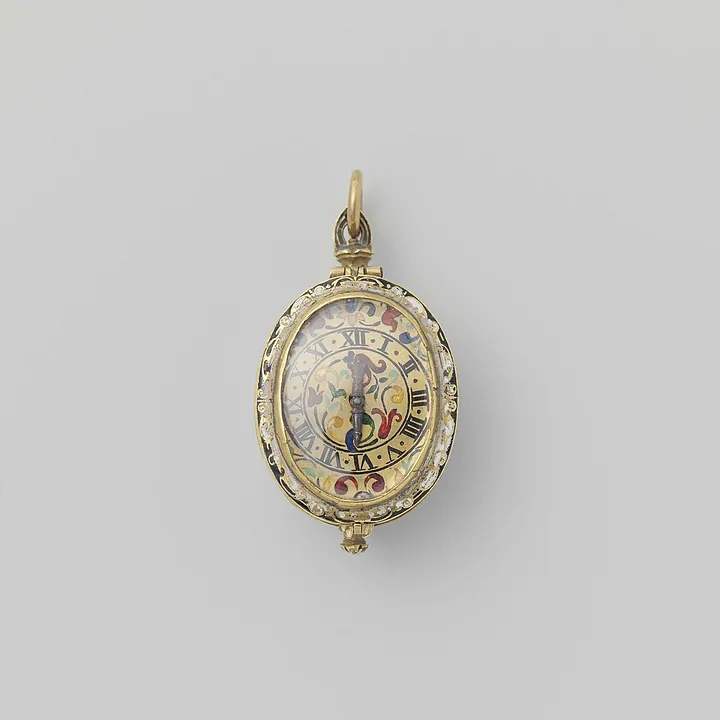
Pocket Watches · 1600
Pocket watch, France, 1600
Rijksmuseum
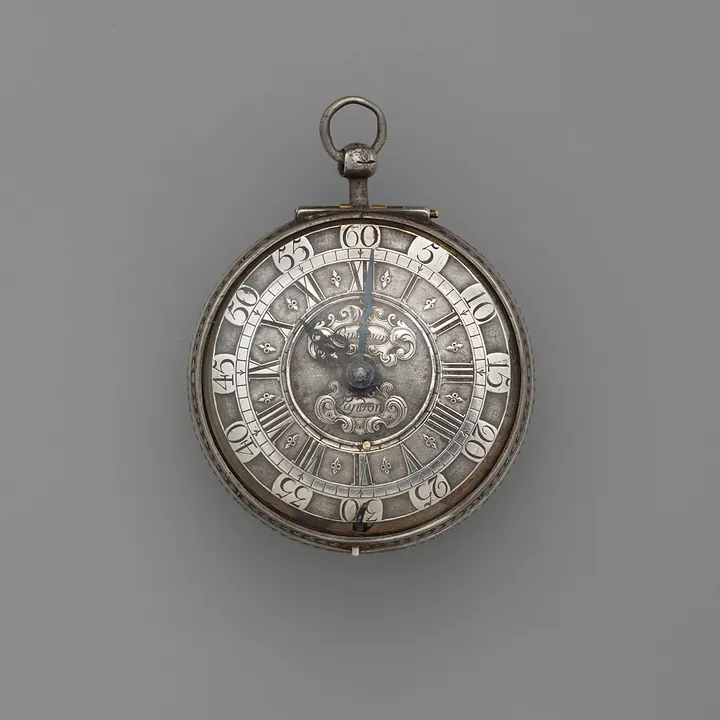
Pocket Watches · 17th century
Watch by John Bushman, England, 17th century
The Metropolitan Museum of Art, New York
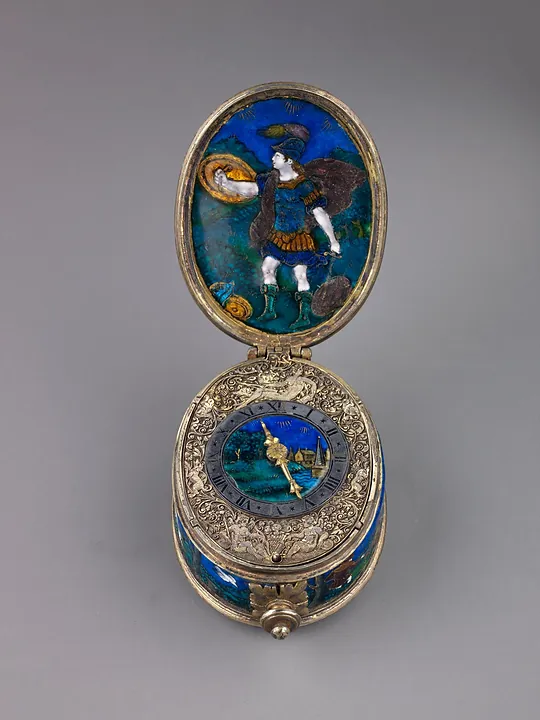
Pocket Watches · first quarter of 17th century
Watch by Suzanne de Court, France, first quarter of 17th century
The Metropolitan Museum of Art, New York
Pocket Watches · early 17th century
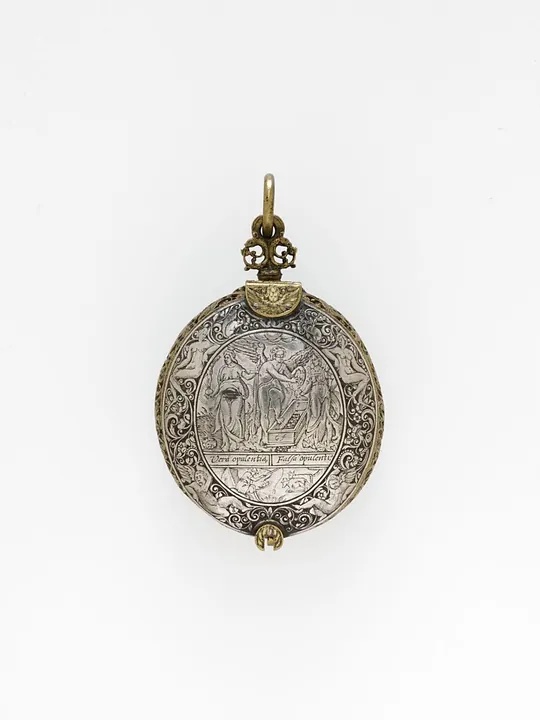
Watch of engraved and pierced silver and gilt brass, signed 'Noel Hubert A Rouen', France, early 17th century
Victoria and Albert Museum, London