
Clocks · Tavern clock
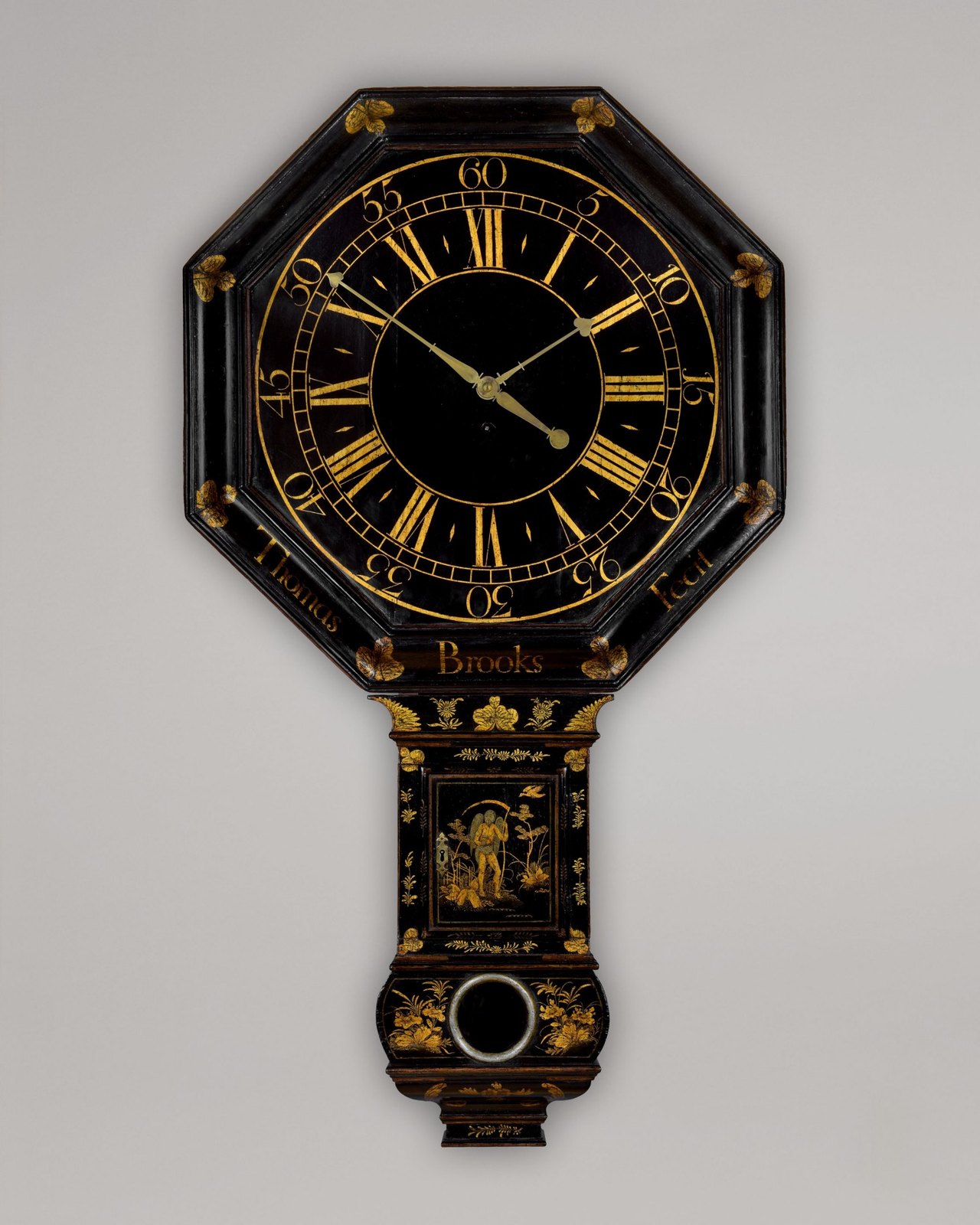
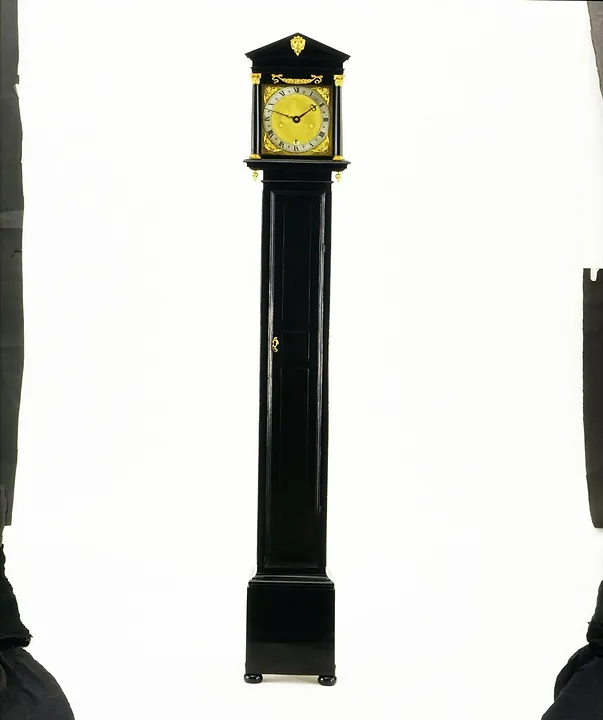
Tavern clock by Thomas Brooks, London, c. 1735
- Maker / attribution
- Thomas Brooks (maker)
- Date
- c. 1735
- Historical period
- Early Modern Horology (1600 – 1750)
- Country of origin
- England
- Place
- London
- Object type
- Tavern clock
- Dimensions
- Height 160 cm
- Stock no.
- SKU 110
- Credit line
- Dealer listing, Howard Walwyn (SKU 110)
- Catalogue title (original)
- THOMAS BROOKS FECIT. A RARE, EARLY SHIELD DIAL TAVERN CLOCK BY THIS UNUSUAL EARLY MAKER. (English)
View the source record (dealer listing) ↗ (opens another website in a new tab)Suggest a correction
Record summary
Catalogued by Howard Walwyn Fine Antique Clocks (dealer), London (stock number SKU 110), this is a tavern clock by Thomas Brooks, made in London, England, dated c. 1735. The Atlas places it in the Early Modern Horology period (1600 – 1750) of its Clocks collection. Recorded dimensions: Height 160 cm. The record is illustrated with 2 photographs.
Assembled from the source record's structured fields. Dates and attributions are given as the source states them; where a field is missing the Atlas leaves it blank rather than estimating.
Catalogue description
Dealer description — Howard Walwyn
A rare, early shield dial tavern clock by this unusual early maker. The case with its bombé shaped base and black and raised gilt lacquer chinoiserie decoration is one of the largest we have ever seen. It is decorated on to pine, as one would expect on a piece of George II lacquer furniture at the end of the early period. The central door features Father Time with his scythe in an exotic oriental landscape. The original ogee shaped base has floral and foliate decoration which is repeated on the case sides in the form of chrysanthemums. The panel below the door slides from side to side and has a central glass lenticle for observing the swinging pendulum. The flat wood dial consists of three vertical planks and has a bold ogee edge moulding with gilt foliate decoration and the maker’s signature. The chapter ring is very well laid out with Roman hours and outside five minute marks. The brass hands have heart shaped tips, the minute with counterpoise. The original eight day rectangular plated movement with finned pillars has a long pendulum with brass bob and oval lead weight. Height: 63 in (160 cm) Width: 36 in (91.5 cm) Depth: 9 ¼ in (23.5 cm) * Thomas Brooks is listed on page 107 of Brian Loomes’ Watchmakers and Clockmakers of the World 21st Century Edition as working in London after 1730. Provenance: American Private Collection HW5562 Signed / Inscribed Thomas Brooks Fecit
Historical context
Early Modern Horology (1600 – 1750)
Huygens' pendulum and balance spring transform accuracy; English makers develop the anchor and deadbeat escapements.
Huygens's pendulum (1656–57) improved clock accuracy from about a quarter of an hour to under a minute a day. The anchor escapement (c. 1670) and the long seconds pendulum created the longcase clock; London makers such as Fromanteel, Knibb, Tompion and Quare led European clockmaking, and French makers created the Boulle pendule.
Read the period in the timelineMore clocks from this periodEarlier: Renaissance Horology
Atlas type guide
Domestic clocks
A clock combines four systems: a source of power (falling weight, coiled spring, or later electricity), a gear train that divides time, an escapement and oscillator that regulate it (foliot, pendulum or balance), and an indicating system of dial and hands or a bell. Its history runs from the large iron weight-driven clocks of the late thirteenth century to Renaissance spring-driven table clocks, the pendulum revolution of 1656, the factory clocks of the nineteenth century and electric and quartz clocks of the twentieth.
Domestic clocks also reflect regional furniture and decorative traditions — English longcase and bracket clocks, French pendules, Viennese regulators, Black Forest and American shelf clocks — and therefore record changing tastes as much as technical progress.
What to look for
- How the clock is powered: weights, spring barrel, fusee, electric coil.
- The oscillator: foliot, short pendulum, long seconds pendulum or balance.
- Whether it strikes: hour only (count wheel) or hours and quarters (rack striking).
- The maker or retailer's name on dial and movement, and any factory trademarks.
- Signs of alteration — replaced dials, converted escapements, 'married' cases.
Dating clues
- Before 1656 clocks used foliots or balances; after, most domestic clocks have pendulums.
- Anchor escapements spread after c. 1670; minute hands became common at the same time.
- Factory production in America and Germany transformed prices after c. 1840.
General guidance written by the Atlas editors about this kind of object. It is not a statement about this particular piece; for that, rely on the source record above and on physical examination.
Related records
Clocks · 1598–1603
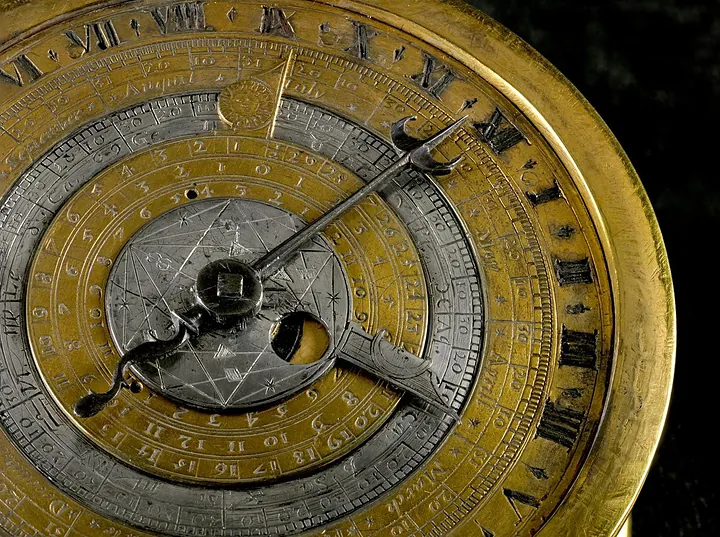
Circular table-clock with calendrical and lunar indications made by Nicholas Vallin in London between 1598 and 1603.
Science Museum Group, London
Clocks · 1611
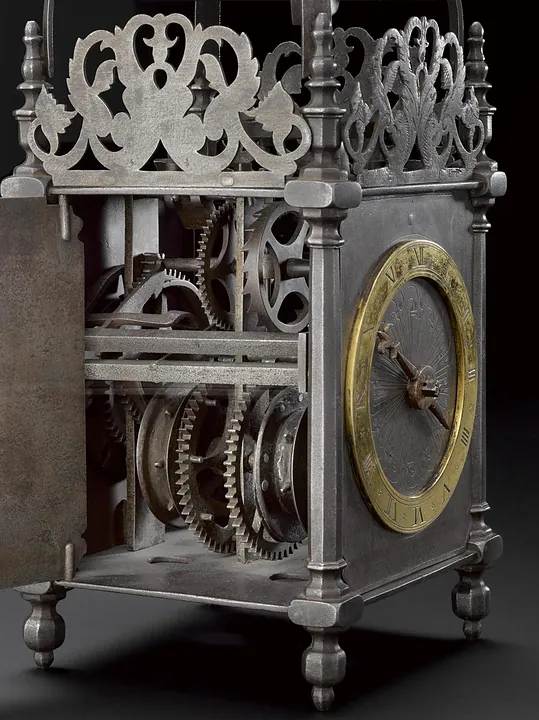
English iron lantern clock, with wheel balance, by John Holloway, Market Lavington, Wiltshire, England, 1611.
Science Museum Group, London
Clocks · 1630
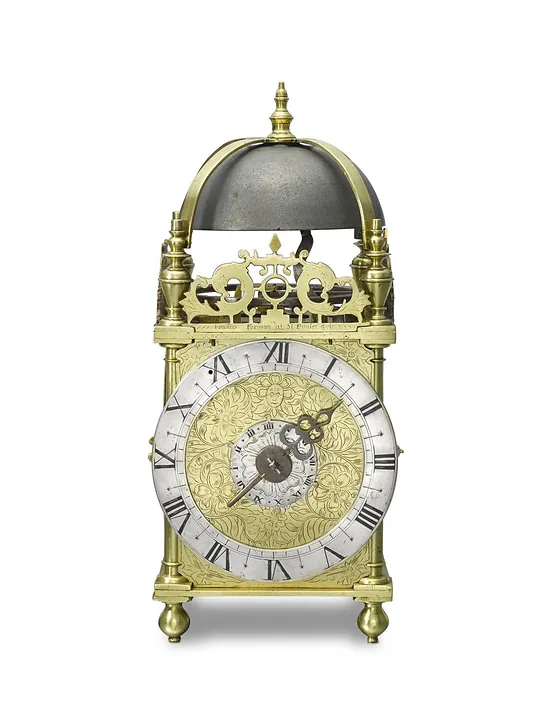
Lantern clock by Francis Forman, England, 1630
Science Museum Group, London
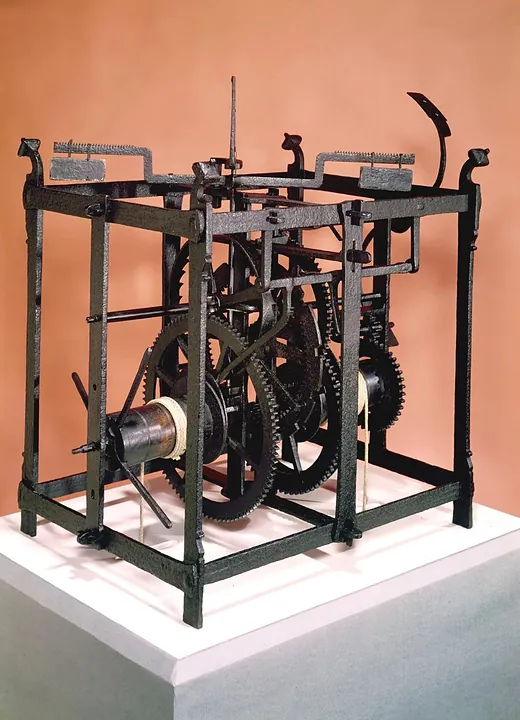
Clocks · 1632–1640
Turret clock, England, 1632–1640
Science Museum Group, London
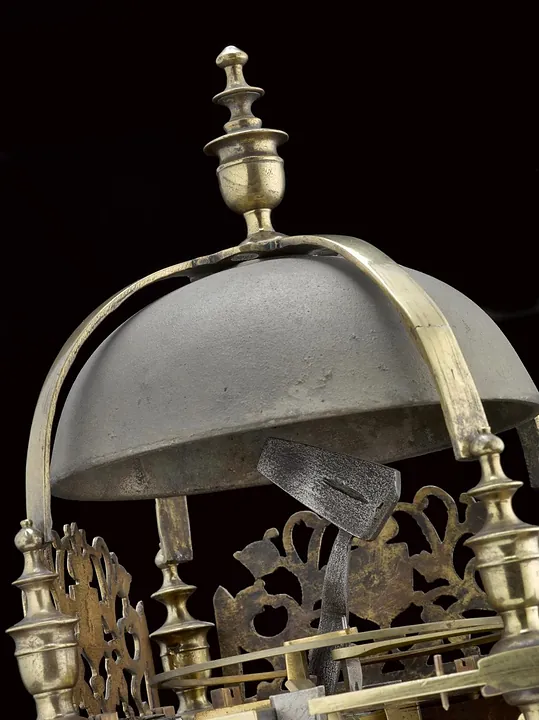
Clocks · 1645–1655
Balance-wheel brass lantern clock, with two driving weights and one counterweight, by Thomas Knifton, Cross Keys, Lothbury, London, England, 1645–1655.
Science Museum Group, London
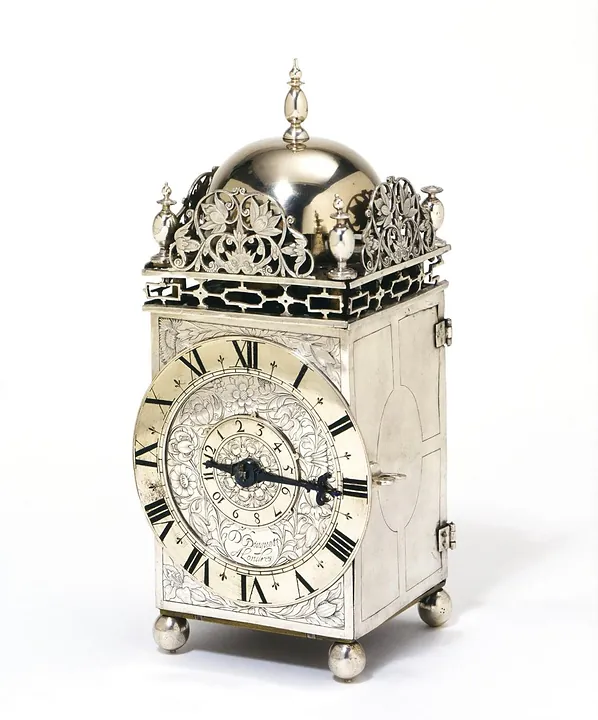
Clocks · c. 1650
Lantern alarm clock, silver, by David Bouquet, circa 1650
Victoria and Albert Museum, London
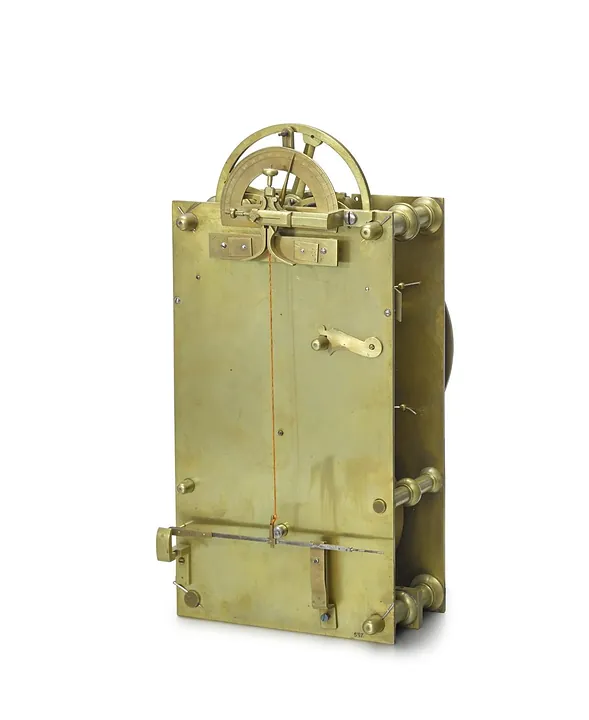
Clocks · 1650–1660
Lantern clock by Peter Closon, England, 1650–1660
Science Museum Group, London
Clocks · c. 1660
Longcase clock, c. 1660, English, made by Ahasuerus Fromanteel
Victoria and Albert Museum, London