
Pocket Watches · Watch
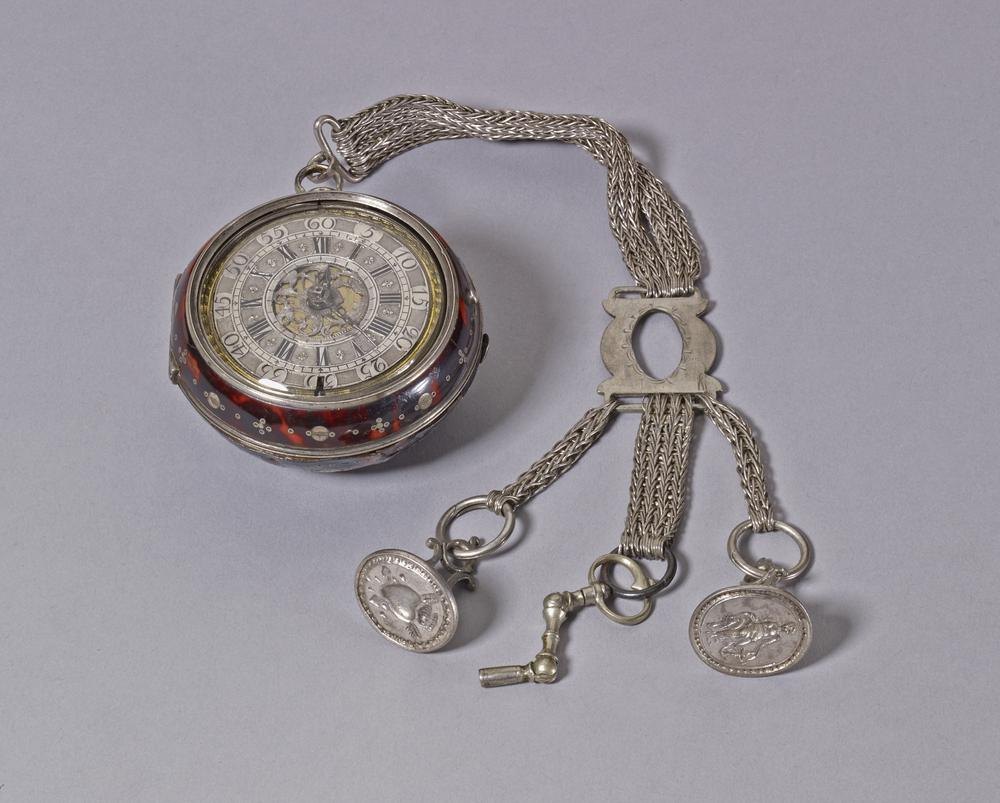
Silver and Tortoise-shell Pair-Cased Verge Watch with Chatelaine, Two Silver Seal Matrices and winding key
- Maker / attribution
- Charles Gretton (Made by)
- Date
- 1672–1675
- Historical period
- Early Modern Horology (1600 – 1750)
- Country of origin
- England
- Place
- London (England)
- Object type
- Watch
- Materials / technique
- brass, tortoise-shell, silver
- Dimensions
- Diameter: 55 millimetres (outer case)
- Holding institution
- British Museum
- Accession / object no.
- 1958,1201.2316
- Credit line
- British Museum, London
- Catalogue title (original)
- Silver and Tortoise-shell Pair-Cased Verge Watch with Chatelaine, Two Silver Seal Matrices and winding key (English)
View the source record ↗ (opens another website in a new tab)Suggest a correction
Record summary
Held and catalogued by British Museum (object number 1958,1201.2316), this is a watch by Charles Gretton, made in London (England), dated 1672–1675. The Atlas places it in the Early Modern Horology period (1600 – 1750) of its Pocket Watches collection. Materials and techniques recorded by the source: brass, tortoise-shell, silver. Recorded dimensions: Diameter: 55 millimetres (outer case). The record is illustrated with 6 photographs.
Assembled from the source record's structured fields. Dates and attributions are given as the source states them; where a field is missing the Atlas leaves it blank rather than estimating.
Catalogue description
Description — British Museum
Silver and Tortoise-shell Pair-Cased Verge Watch with Chatelaine, Two Silver Seal Matrices and winding key. Cases Plain silver inner case with a wide band and hinged back and bezel, both glazed. Tortoise-shell covered brass outer case with silver piqué point decoration around the band and bezel, and silver piqué posé decoration on the back consisting of a crest, mantling and shield of arms. Attached to the pendant is a silver chatelaine consisting of a top hook connected via a double woven silver chain to a central silver plate pierced with an oval in the centre. Attached to the central plate, three woven silver chains carry two silver seals and a silver articulated crank-key. Seal Matrix 1. Silver with an intaglio of Hope. Seal Matrix 2. Silver with an intaglio of a heart pierced with two arrows with a crown above. : DIAL A gilt-brass dial-plate is engraved with a wheat-ear border to surround a pinned-on silver champlevé dial with an outer circle of minutes numbered 5-60 in Arabic surrounding Roman hours I-XII and stylised fleur-de-lys half-hour marks. In the middle, a quarters circle surrounds a pierced central disc. On the back of the movement a subsidiary seconds dial consists of an applied silver ring numbered 5-60 anti-clockwise around a matted centre. : MOVEMENT FRAME Full-plate with four elaborate tulip pillars. A large central recess in the front-plate traversed by a cruciform bridge riveted on. : MAINSPRING & SET-UP Gilt-brass barrel with snap-in cap and riveted steel hook. Tangent-screw set-up mounted on the back-plate. The short worm gear runs in two pierced steel brackets, both now broken and partly missing. There is a steel indicator over the worm gear but no silver disc on the brass wheel. : FUSEE & STOP-WORK Gilt-brass fusee with chain and standard stop-work, the stop-block elaborately pierced, the spring attached to the back-plate by a decoratively turned screw. : TRAIN Four-wheel train of gilt-brass wheels, the centre, third and contrate wheels with three crossings. The centre wheel and third pinion are recessed in to the front-plate and run in a separate riveted-on bridge. The arbor of the contrate wheel is extended through the back-plate to carry a hand which indicates seconds. : ESCAPEMENT & BALANCE Verge escapement with a crown wheel bearing in a riveted potence with engraved decoration on the visible sides, and a riveted counter-potence. Steel 2-arm balance with a ringed rim. The verge is not original. Pierced and engraved foliate balance-cock with an almost circular table and a long pointed oval foot, screwed to the back-plate. : MOTION WORK The centre wheel carries a pinion of report which drives a conventional minute wheel and pinion which in turn drives an hour wheel in the normal way for watches with balance-spring. : CASE-CATCH Blued-steel all-in-one bolt and spring screwed to the underside of the dial plate. : TRAIN COUNT Pinion of Report:14 Minute wheel:56 pinion:14 Hour wheel:42 : Fusee:8.25 turns Duration.
Curator's comments — British Museum
Text from 'Watches', by David Thompson, London, 2008, p. 48-49. Charles Gretton SILVER AND TORTOISESHELL PAIR-CASED VERGE WATCH LONDON, c. 1675-80 SIGNED: 'Charles Gretton' Charles Gretton became a Freeman in the Worshipful Company of Clockmakers on 3 June 1672, having been apprenticed to Humfrey Downing on 30 June 1662. He established his business at Three Crane Court, Fleet Street, and in the following years rose to high office in the Company. He became an Assistant to the Court in 1689, later serving as Warden in 1697, rising to Renter Warden and Senior Warden in the following years and finally being elected Master in 1700. He is known to still have been working in 1712 and is thought to have continued until at least 1733. In 1701 he presented £50 to the Company to be held in trust to pay fifty shillings a year to apprentice the sons of deceased Freemen of the Company in clock- and watchmaking. Between 1672 and 1698 Gretton took on a number of apprentices, of whom probably the most famous was Henry Sully, who later moved to France and worked on marine timekeepers designed to establish longitude at sea. That Gretton's workshop was relatively prolific can be deduced from the number of surviving examples of his work. There are eleven watches in various museums in Britain, of which four are in the British Museum, and of these four this example is undoubtedly the finest, and also the earliest, dating from about 1675. For its day, this watch is also very progressive as it has an indication of seconds. Watches with such an indication were rare before the invention of the balance spring, and there is no more than a handful known to survive. A view of the movement clearly shows it to be of the pre-balance spring era with an unsprung two-arm balance and with the tangent-screw set-up mounted on the back plate. Outstanding, however, is the seconds dial and hand on the back of the movement. The seconds hand is carried round anticlockwise on the extended contrate wheel arbor. Another feature of the modern era is seen in the gearing for the hands. In older watches, there is a pinion of report mounted on the extended great wheel arbor to drive a dial wheel for a single hand. This has been abandoned completely. Here, the four-wheel going train, driven by a fusee with chain, is arranged with a centre wheel on which is mounted a cannon pinion that drives typical two-stage reduction motion work to give the watch concentric hour and minute hands, a new feature which rapidly became the standard. The dial can also be seen as 'modern' but here there may have been an alteration, carried out early in the watch's history. There is evidence of alteration to the dial, so it may be that the present chapter ring and dial centre are modifications, probably carried out towards the end of the seventeenth century. The pair-cases comprise a plain silver inner case, unusually glazed on the back to show the movement and the seconds dial, and an outer case of tortoiseshell-covered brass with silver rims and silver piqué decoration around the bezel and band. On the back, inlaid in silver, is a shield and crest, emblazoned: 'quarterly, first and fourth, argent a cross fleurie ragully between four Cornish choughs sable; second and third, party per pale or and gules two lions rampant vert and or. Crest, on a ducal coronet or, a Cornish chough wings expanded sable, beaked and legged gules.' These are the combined arms of the families of Ithell and Delwood of Wales, Cambridge and Leicester. View more about curator's comments 1. Charles Gretton was free in the Clockmakers' Company in 1672 and the watch is pre-balance spring, giving a date of 1672-1675. 2. The chapter-ring and dial centre are likely to be replacements, the chapter ring does not quite fit the recess and there are alterations in the dial-plate for one of the dial feet. The pierced central disc has a cut-out for a lug in a recess but the disc now stands on a raised centre. This centre appears to have been soldered onto the dial plate. 3. The arms are:- quarterly, first and fourth, argent a cross fleurie ragully between four cornish choughs sable [for Ithell]; second and third, party per pale or and gules two lions rampant vert and or [for Delwood]. Crest, on a ducal coronet or, a cornish chough wings expanded sable, beaked and legged gules. The arms are those of the combined families of Ithell and Delwood of Wales, Cambridge and Leicester.
Inscriptions & marks
signature; Charles Gretton [back-plate]; hallmark; London 1801 [seal matrices]; maker's mark; C F in cameo [seal matrices]
Provenance
Previous owner/ex-collection:, Courtenay Adrian Ilbert
Historical context
Early Modern Horology (1600 – 1750)
Huygens' pendulum and balance spring transform accuracy; English makers develop the anchor and deadbeat escapements.
The balance spring (c. 1675) improved watches dramatically and introduced the minute hand. English pair-cased verge watches with pierced balance cocks and French oignons were typical; enamel painting at Blois and Geneva, and the repeating watch (1680s), made watches objects of great refinement.
Read the period in the timelineMore pocket watches from this periodEarlier: Renaissance Horology
Atlas type guide
Verge and pair-cased watches
After Christiaan Huygens and Robert Hooke applied the balance spring around 1675, the verge watch became a reasonably reliable timekeeper and the minute hand became standard. Through the eighteenth century the typical English watch was a pair-cased verge: a fusee movement with a pierced, engraved balance cock, housed in an inner case and a separate protective outer case, often of repoussé gold, shagreen, tortoiseshell or enamel.
French watches of the same period were thicker 'oignons', later replaced by elegant thinner watches following Jean-Antoine Lépine's bar-bridge calibre of c. 1770. Dutch, Swiss and German makers supplied international markets, and verge watches were made until the mid-nineteenth century as cheaper alternatives to the cylinder and lever.
What to look for
- The pierced balance cock on the backplate: winged (continental) or with a foot (English); its style dates the watch.
- Fusee and chain visible through the movement; key winding through the dial (early) or case back.
- Hallmarks inside English silver or gold cases, which give a date letter.
- Maker's name and serial number engraved on the backplate; watch papers inside outer cases.
- Enamel dials (after c. 1720) versus earlier champlevé metal dials.
Dating clues
- Champlevé dials: c. 1680–1730; white enamel dials thereafter.
- English case hallmarks give the year of assay to within a year.
- Verge watches persisted in cheap production until c. 1850.
General guidance written by the Atlas editors about this kind of object. It is not a statement about this particular piece; for that, rely on the source record above and on physical examination.
Read next:Verge escapement
Related records
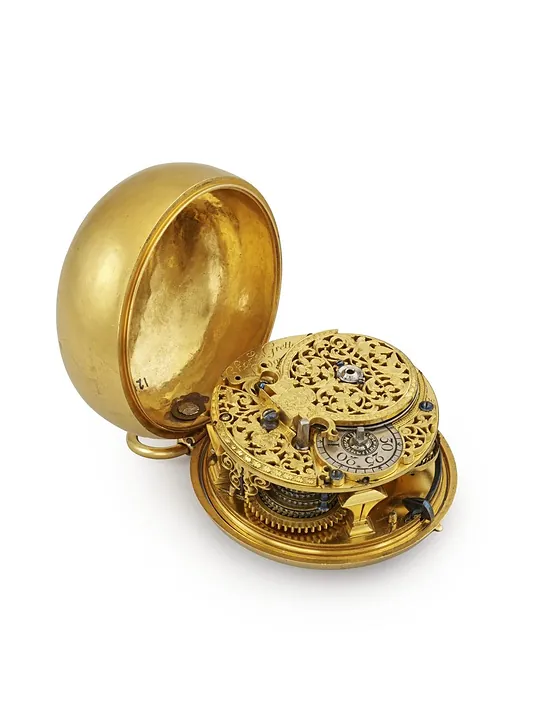
Pocket Watches · 1702
Pocket watch by Charles Gretton, England, 1702
Science Museum Group, London
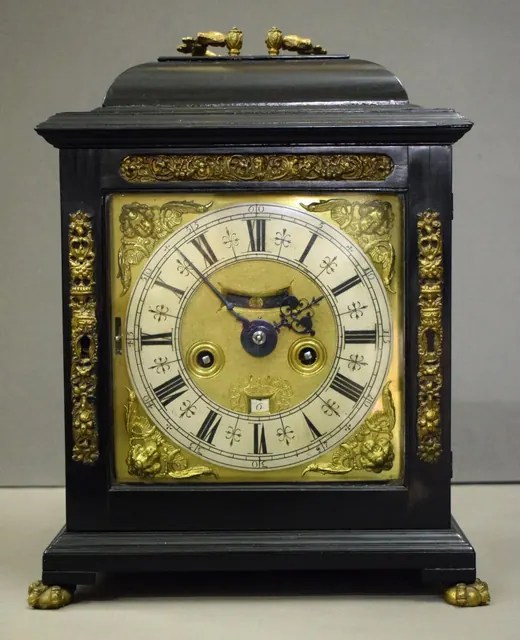
Clocks · c. 1680
Clock by Charles Gretton, England, c. 1680
Victoria and Albert Museum, London
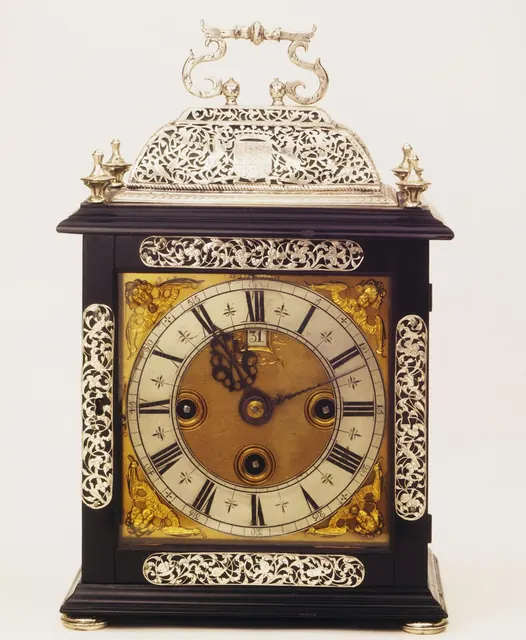
Clocks · c. 1700
Bracket clock by Charles Gretton, England, c. 1700
Victoria and Albert Museum, London
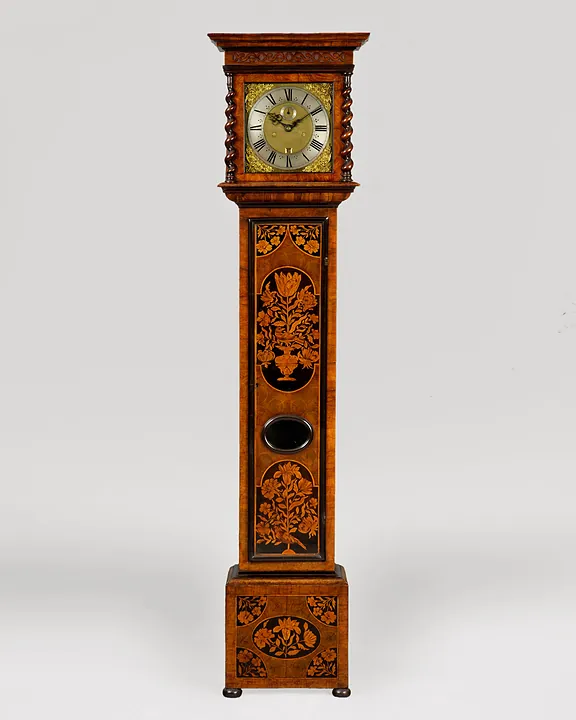
Clocks · c. 1685
Longcase clock by Charles Gretton, London, c. 1685
Howard Walwyn Fine Antique Clocks (dealer), London
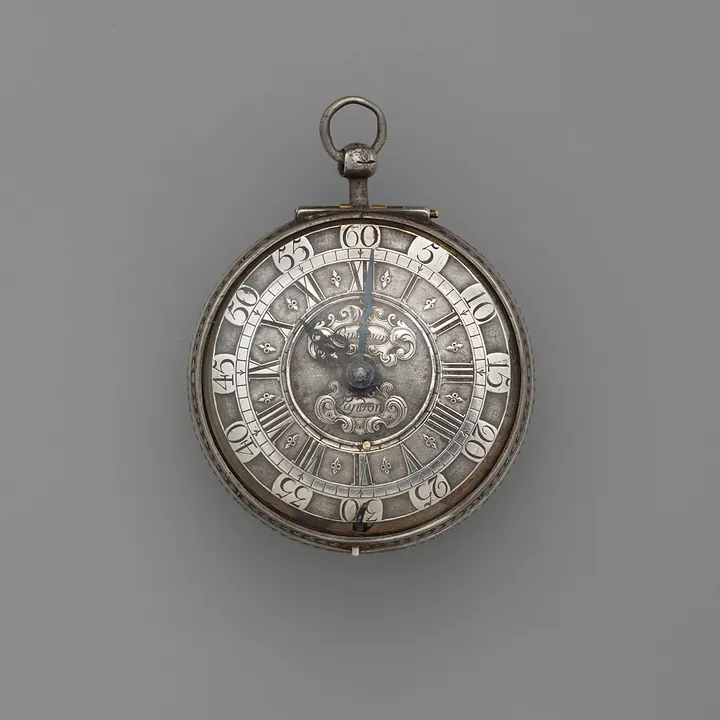
Pocket Watches · 17th century
Watch by John Bushman, England, 17th century
The Metropolitan Museum of Art, New York
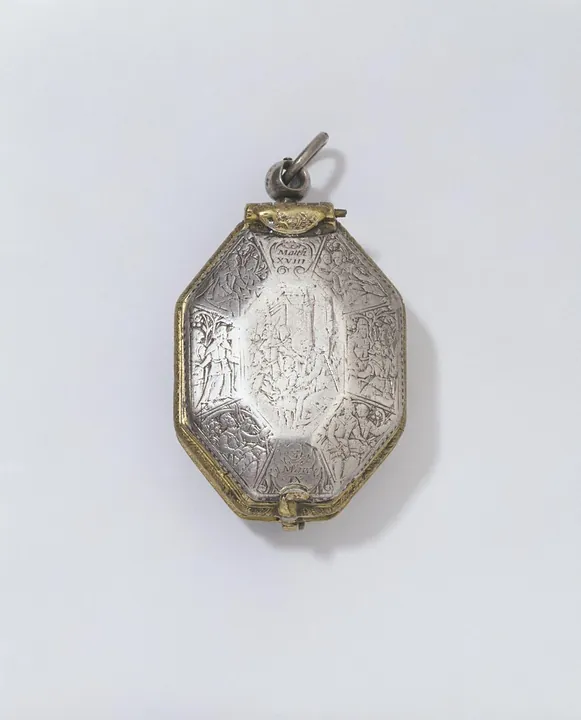
Pocket Watches · c. 1610-1620
Case and dial of engraved silver and gilt brass. English, about 1640.
Victoria and Albert Museum, London
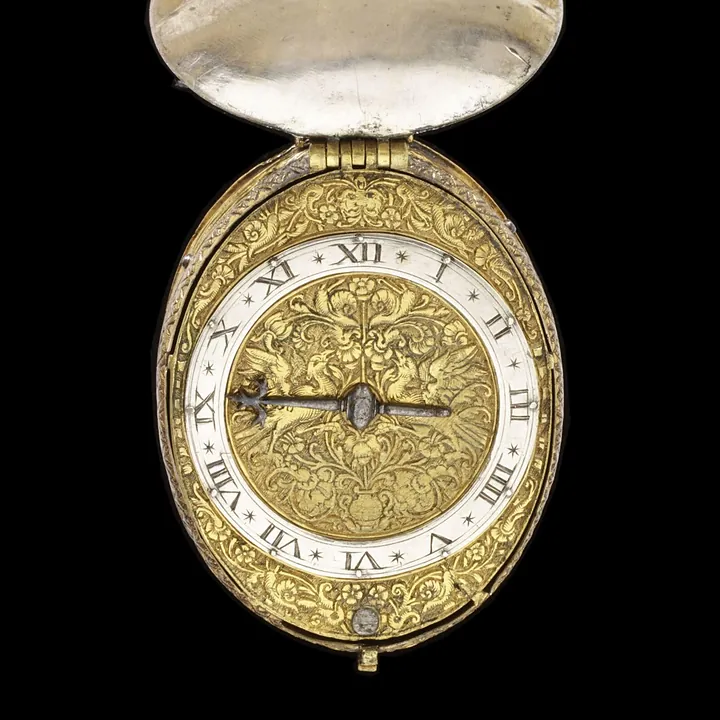
Pocket Watches · c. 1610
Watch by N. Ridgdale, England, c. 1610
Victoria and Albert Museum, London
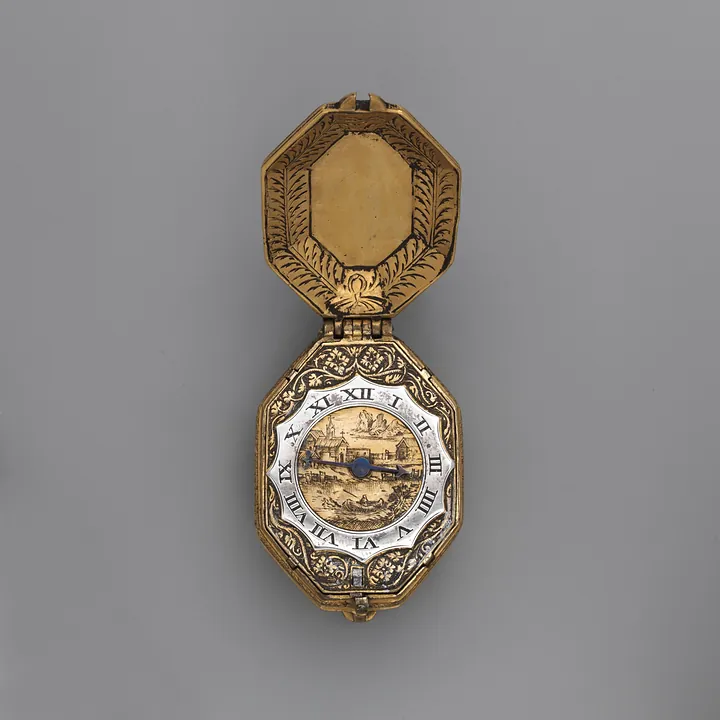
Pocket Watches · c. 1620–25
Watch by Isaac Symms, England, c. 1620–25
The Metropolitan Museum of Art, New York