
Wristwatches · World time wristwatch
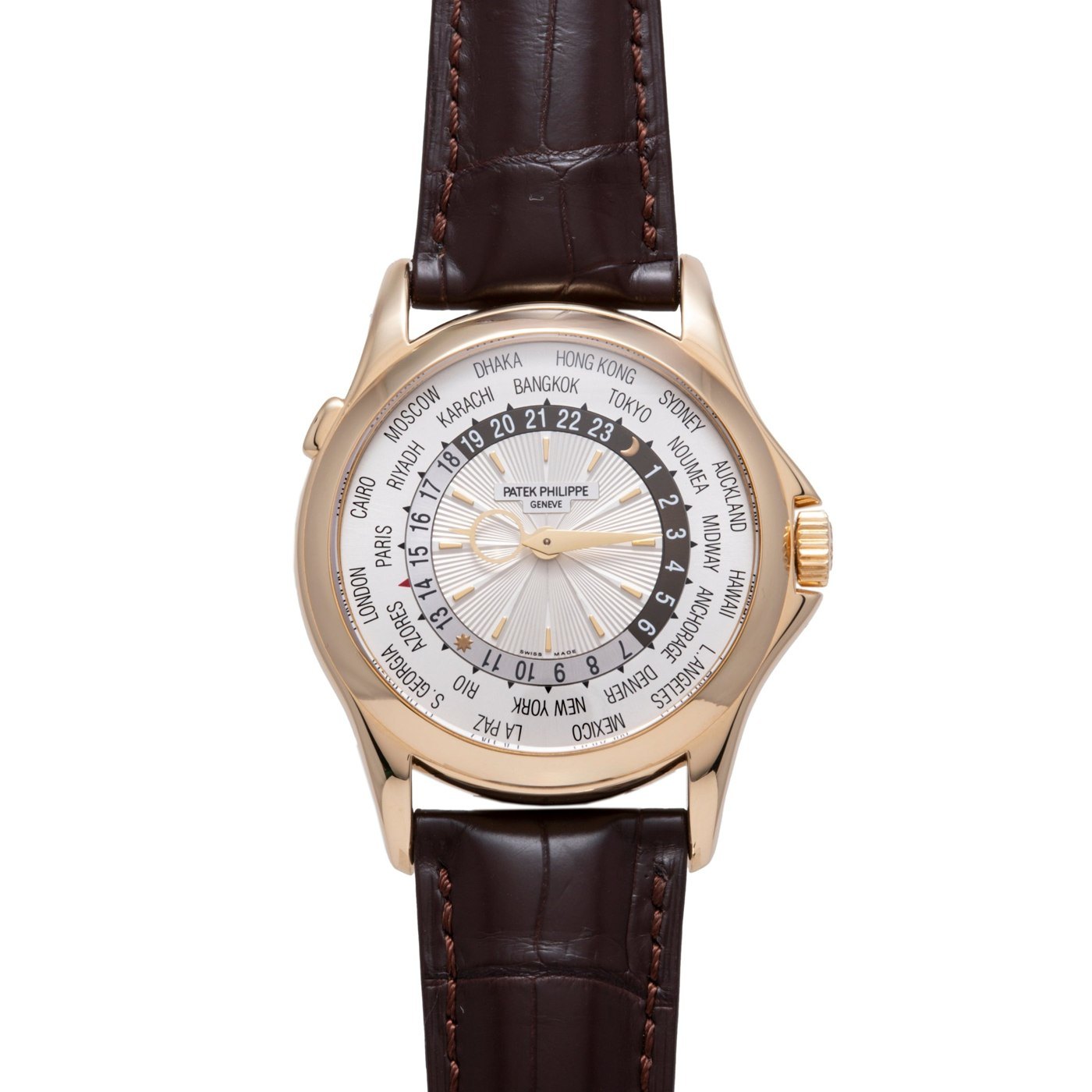
Patek Philippe World Time Ref. 5130J-001
- Maker / attribution
- Patek Philippe (source attribution)
- Date
- Introduced in 2006
- Historical period
- Mechanical Renaissance (1990 – 2010)
- Country of origin
- Switzerland
- Object type
- World time wristwatch
- Materials / technique
- 18K yellow gold
- Dimensions
- 39.5mm
- Holding institution
- Analog:Shift
- Accession / object no.
- patek-philippe-world-time-ref-5130j-001-bf01c08a79
- Credit line
- Analog:Shift
- Catalogue title (original)
- ساعت Patek Philippe World Time مدل 5130J-001 (English)
View the source record ↗ (opens another website in a new tab)Suggest a correction
Record summary
Held and catalogued by Analog:Shift (object number patek-philippe-world-time-ref-5130j-001-bf01c08a79), this is a world time wristwatch attributed to Patek Philippe, made in Switzerland, dated Introduced in 2006. The Atlas places it in the Mechanical Renaissance period (1990 – 2010) of its Wristwatches collection. Materials and techniques recorded by the source: 18K yellow gold. Recorded dimensions: 39.5mm. The record is illustrated with 1 photograph.
Assembled from the source record's structured fields. Dates and attributions are given as the source states them; where a field is missing the Atlas leaves it blank rather than estimating.
Catalogue description
Original object description
Introduced in 2006 as the successor to Reference 5110, the Patek Philippe Reference 5130J-001 world-time wristwatch is cased in 18K yellow gold with a 39.5mm diameter. Applied gold hour markers accent the silver guilloché dial, which coordinates with an external city disk naming 24 international locations and an internal 24-hour band split into light and dark sections to indicate day and night across multiple zones simultaneously. Depressing the push-piece at 10 o'clock advances both the local time and city indications in one-hour increments. The watch runs on the automatic Calibre 240 HU, powered by an off-center 22K gold micro-rotor, and is secured to a brown alligator leather strap with an 18K yellow gold deployant clasp. It is preserved with its Certificate of Origin, instructional booklets, and original presentation packaging.
Case and Dial
Constructed from 18K yellow gold, the 39.5mm case encloses a silver dial detailed with engine-turned guilloché and applied gold hour indices. The surrounding world-time display consists of two concentric tracks: an outer disk marked with 24 major global cities representing time zones, and an inner rotating 24-hour scale divided into contrasting dark and light halves to reflect night and day.
Movement and Functionality
Powering the timepiece is the ultra-thin automatic Patek Philippe Calibre 240 HU, which achieves its compact profile through an off-center 22K gold rotor. It offers concurrent reading of 24 time zones. Engaging the case pusher at 10 o'clock shifts the designated city and advances the local hour display in one-hour steps without altering the minute hand's setting.
Provenance and Completeness
This watch is fitted with an authentic brown alligator strap fastened by an 18K yellow gold deployant clasp. Its complete ensemble includes the manufacturer's inner and outer presentation boxes, instructional manuals, factory documentation, and the original Certificate of Origin.
Historical context
Mechanical Renaissance (1990 – 2010)
Mechanical watches return as cultural objects; independent watchmaking flourishes.
Mechanical watches returned as cultural and luxury objects. Complications, tourbillons and new materials proliferated; independent watchmakers such as George Daniels, F.P. Journe and Philippe Dufour revived artisanal watchmaking; collecting vintage watches became a major field.
Read the period in the timelineMore wristwatches from this periodEarlier: Quartz Revolution
Atlas type guide
Military, pilot and travel watches
The wristwatch owes much of its adoption by men to warfare and aviation. Wristlets — small pocket watches soldered with lugs and worn on a strap — were used in colonial campaigns and became standard equipment in the First World War, with protective grilles over the crystal ('shrapnel guards'). Louis Cartier's Santos (1904), designed for the aviator Alberto Santos-Dumont, is often cited as an early purpose-made pilot's watch.
In the Second World War governments specified watches in detail: the German B-Uhr observation watches, the American A-11, and the British 'W.W.W.' (the 'Dirty Dozen' set of 1945). After the war, jet travel brought GMT and world-time watches, which show two or more time zones at once — Louis Cottier's world-time mechanism and the Rolex GMT-Master (1955) are examples.
What to look for
- Military markings on the case back: broad arrow, issue numbers, 'W.W.W.', 'A.T.P.'
- High-legibility black dials with luminous Arabic numerals; oversized crowns for gloved hands.
- 24-hour hands and rotating 24-hour bezels or city rings on GMT/world-time watches.
- Wire lugs on early wristlets converted from pocket watches.
Dating clues
- Wire-lug wristlets: c. 1900–1925.
- Military specifications of the Second World War: 1939–1945.
- GMT and world-time wristwatches: mainly after 1950.
General guidance written by the Atlas editors about this kind of object. It is not a statement about this particular piece; for that, rely on the source record above and on physical examination.
Related records
Clocks · 1965–1975
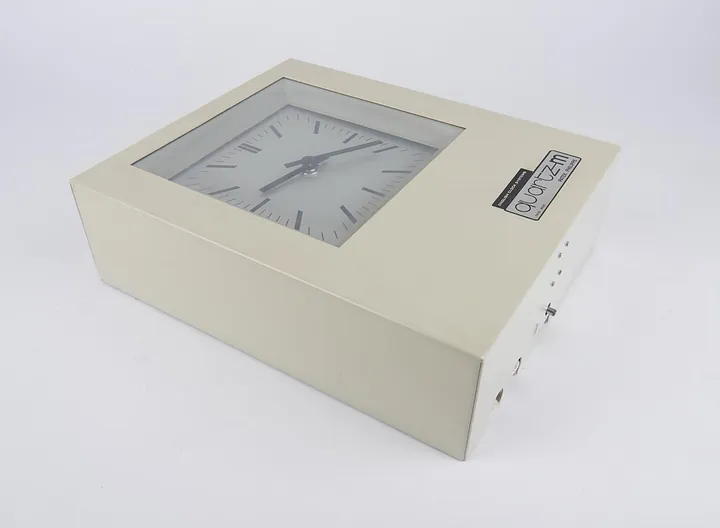
Quartz master clock QM 1, with movement by Patek Phillippe, Switzerland, 1965–1975. Supplied by English Clock Systems.
Science Museum Group, London
Instruments · 1965–1984
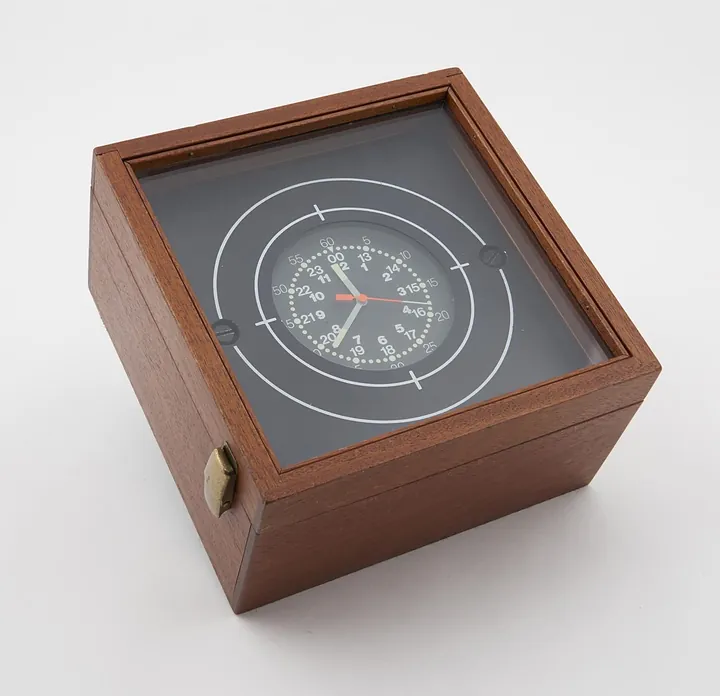
Chronometer by Patek Philippe and Kelvin Hughes, England, 1965–1984
Science Museum Group, London
Pocket Watches · c. 1895
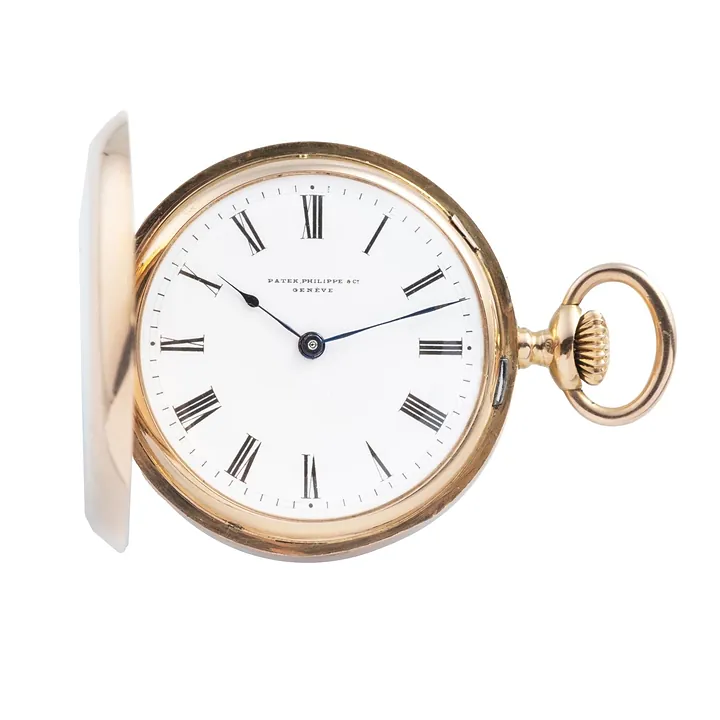
Patek Philippe pocket watch, c. 1895
Antiquorum auction archive, Geneva
Pocket Watches · c. 1900
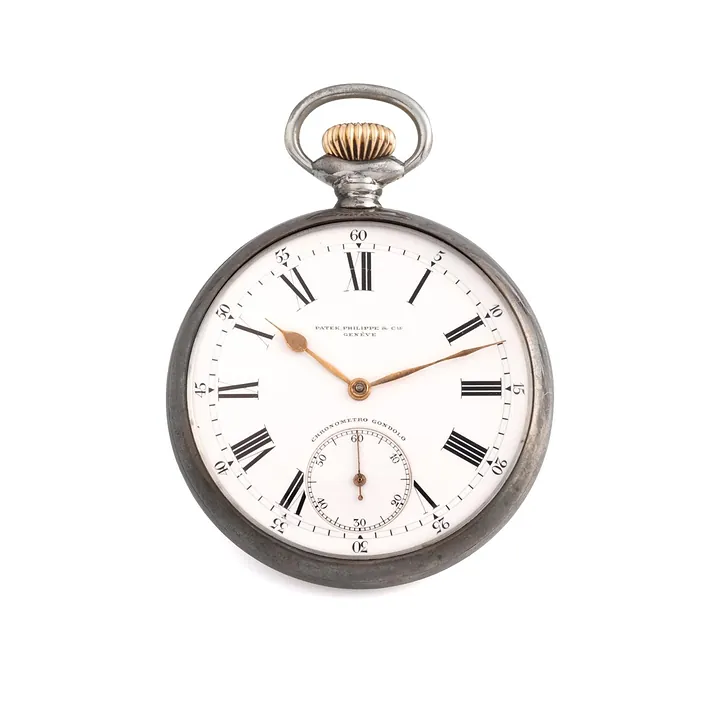
Patek Philippe Chronometro Gondolo, c. 1900
Antiquorum auction archive, Geneva
Wristwatches · 1991
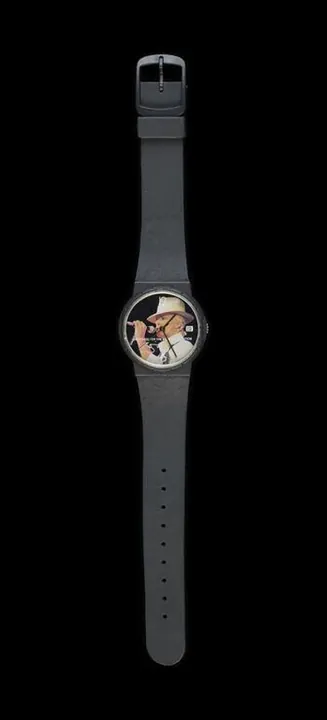
Limited edition watch designed by Eta relating to David Bowie's Serious Moonlight live tour, 1991
Victoria and Albert Museum, London

Wristwatches · 2008
Wristwatch by Breitling?, 2008
Museum Rotterdam

Wristwatches · c. 1990s
Audemars Piguet Bamboo, c. 1990s
Antiquorum auction archive, Geneva

Wristwatches · c. 1990
Audemars Piguet Huitieme Perpetual Calendar, ref. 25696PT, c. 1990
Antiquorum auction archive, Geneva