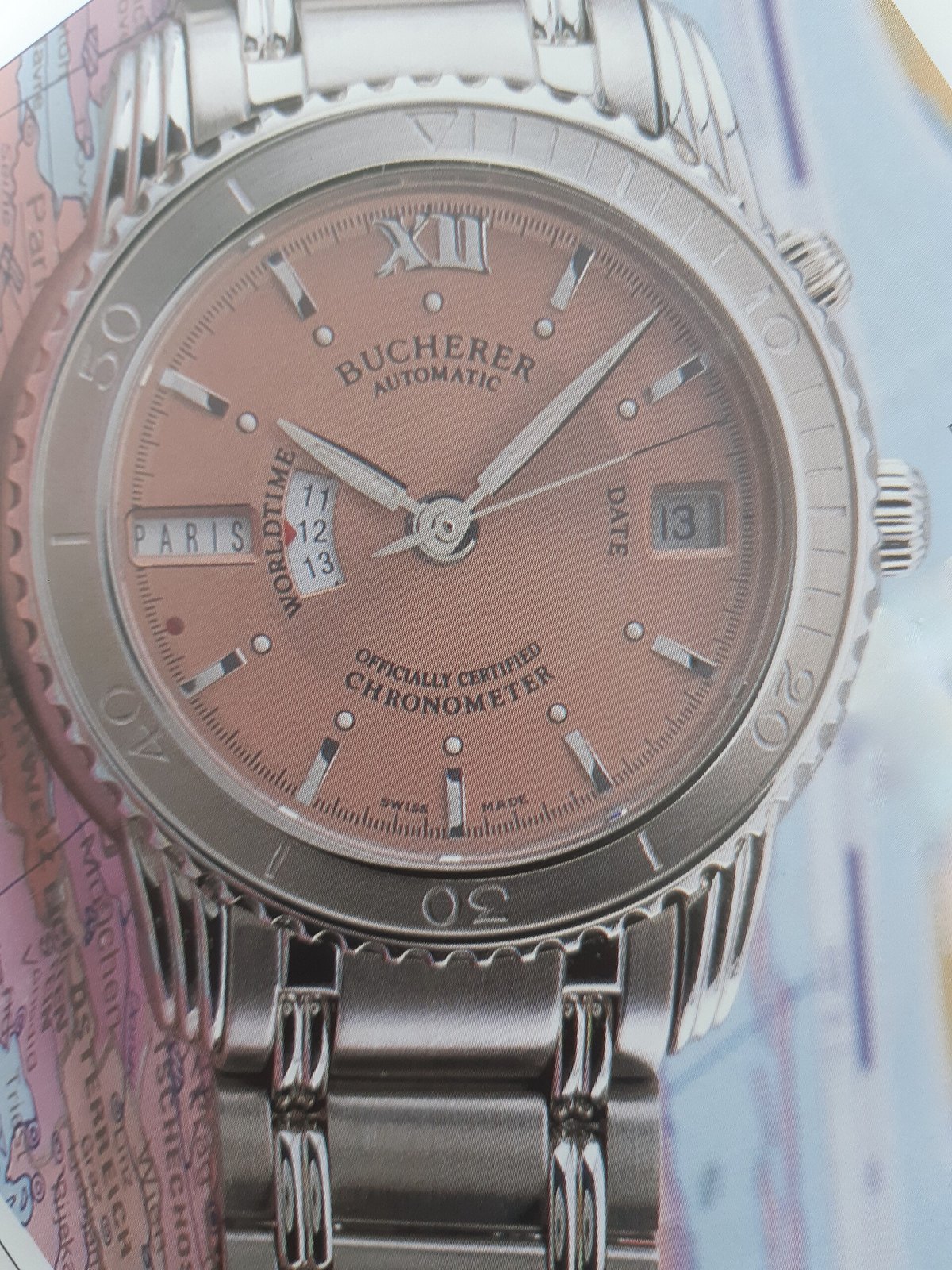
Complication
World time
Also known as: Heure universelle · Weltzeit
How it works
A ring of city names (one per time zone) and a 24-hour ring turning once a day around the dial show the hour in every zone at once; setting the local time aligns the rings.
Why it was invented
To read the time across the world at a glance in the age of international telegraphy and flight.
- Invented
- 1930s
- Credited to
- Louis Cottier
- Historical period
- Golden Age of Mechanical Watchmaking
History and development
Geneva watchmaker Louis Cottier developed the world-time mechanism in the 1930s, notably for Patek Philippe, building on the 24 standard zones adopted after the 1884 International Meridian Conference.
Related mechanisms
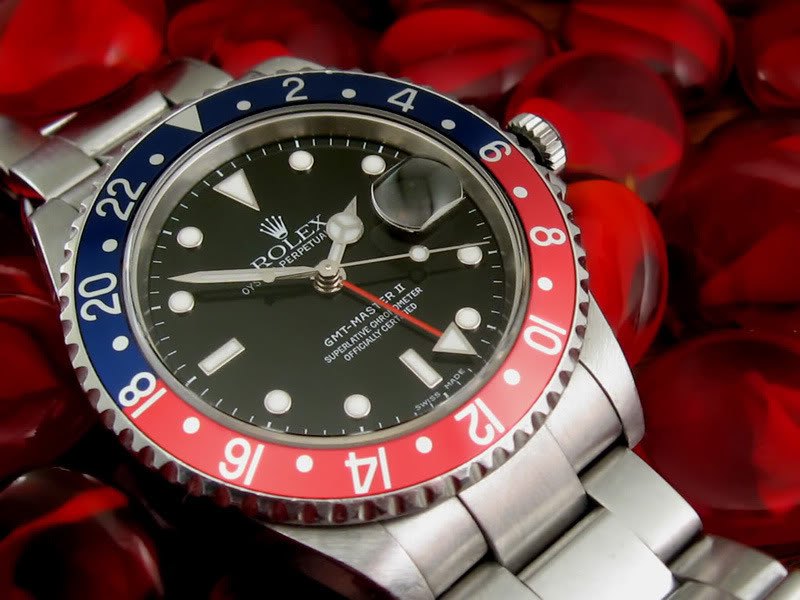
In the catalogue
Open in the catalogue →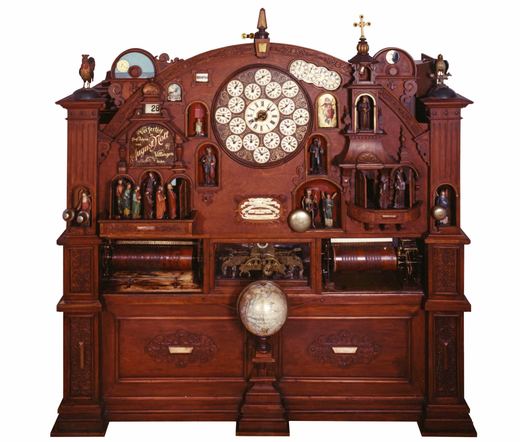
Clocks · 1800–1899
Clock by August Noll, France, 1800–1899
German Clock Museum
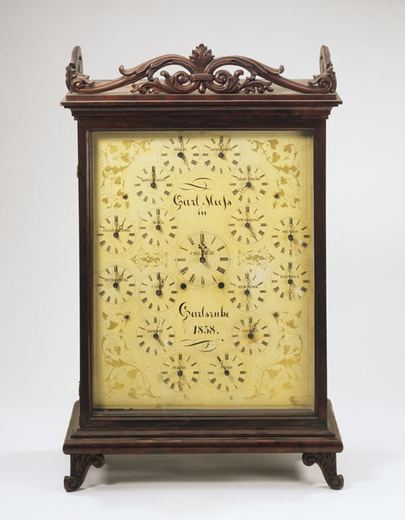
Clocks · 1800–1899
Clock by Carl Meeß, Germany, 1800–1899
Badisches Landesmuseum Karlsruhe
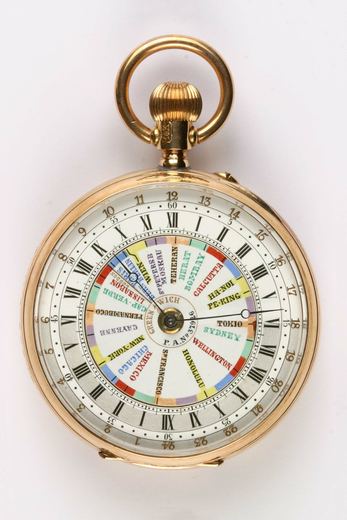
Pocket Watches · 1885
Pocket watch by Béguelin und Co. S.A., Switzerland, 1885
German Clock Museum
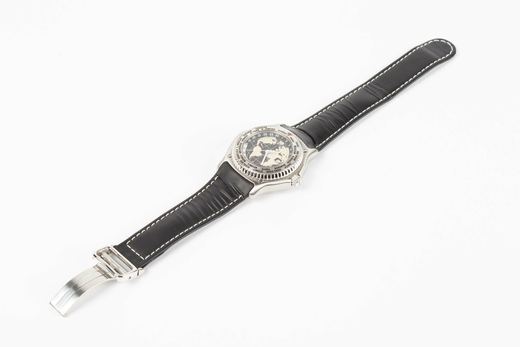
Wristwatches · 2000
Wristwatch by Ebel, Switzerland, 2000
German Clock Museum
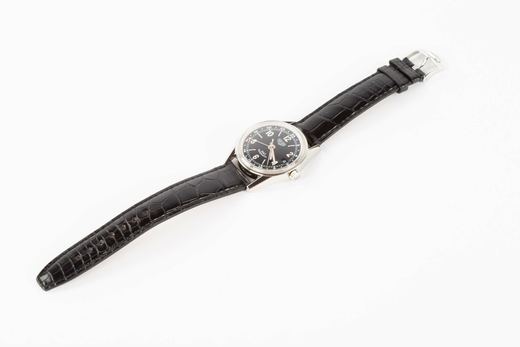
Wristwatches · 2000
Wristwatch by Eduard Heuer, Switzerland, 2000
German Clock Museum
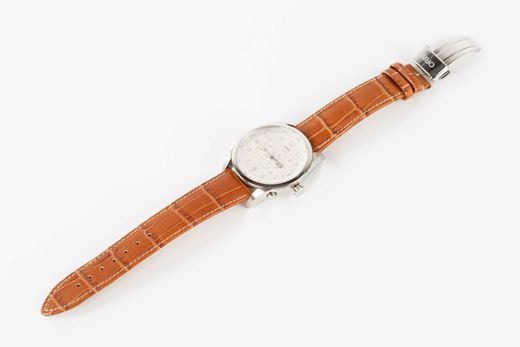
Wristwatches · 2000
Wristwatch, Switzerland, 2000 (German Clock Museum Museu_ProvidedCHO_museum_digital_57951__technical_number_)
German Clock Museum
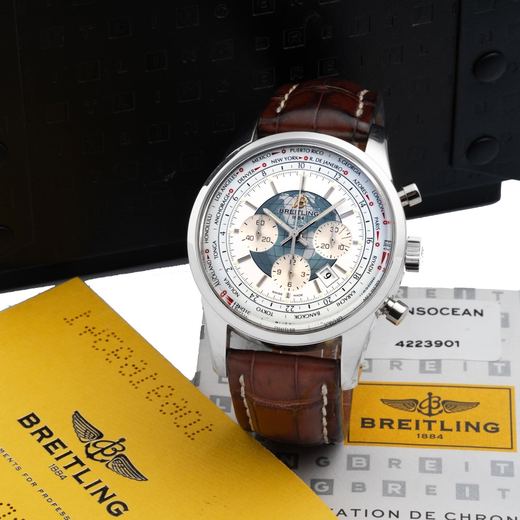
Wristwatches · Sold in August 2013
Breitling Transocean Chronograph Unitime, ref. AB 0510, Sold in August 2013
Antiquorum auction archive, Geneva
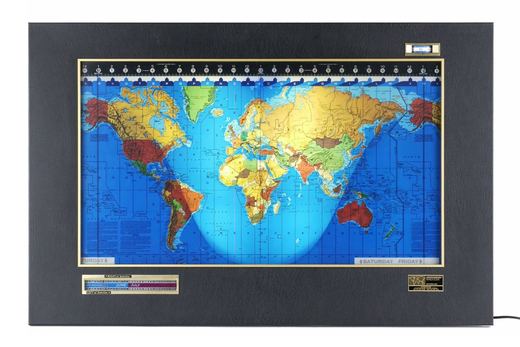
Clocks · 2013
Clock by Geochron, United States, 2013
German Clock Museum
Records are linked when the holding institution's description names this mechanism; check each source record for confirmation.