
Wristwatches · Annual calendar wristwatch
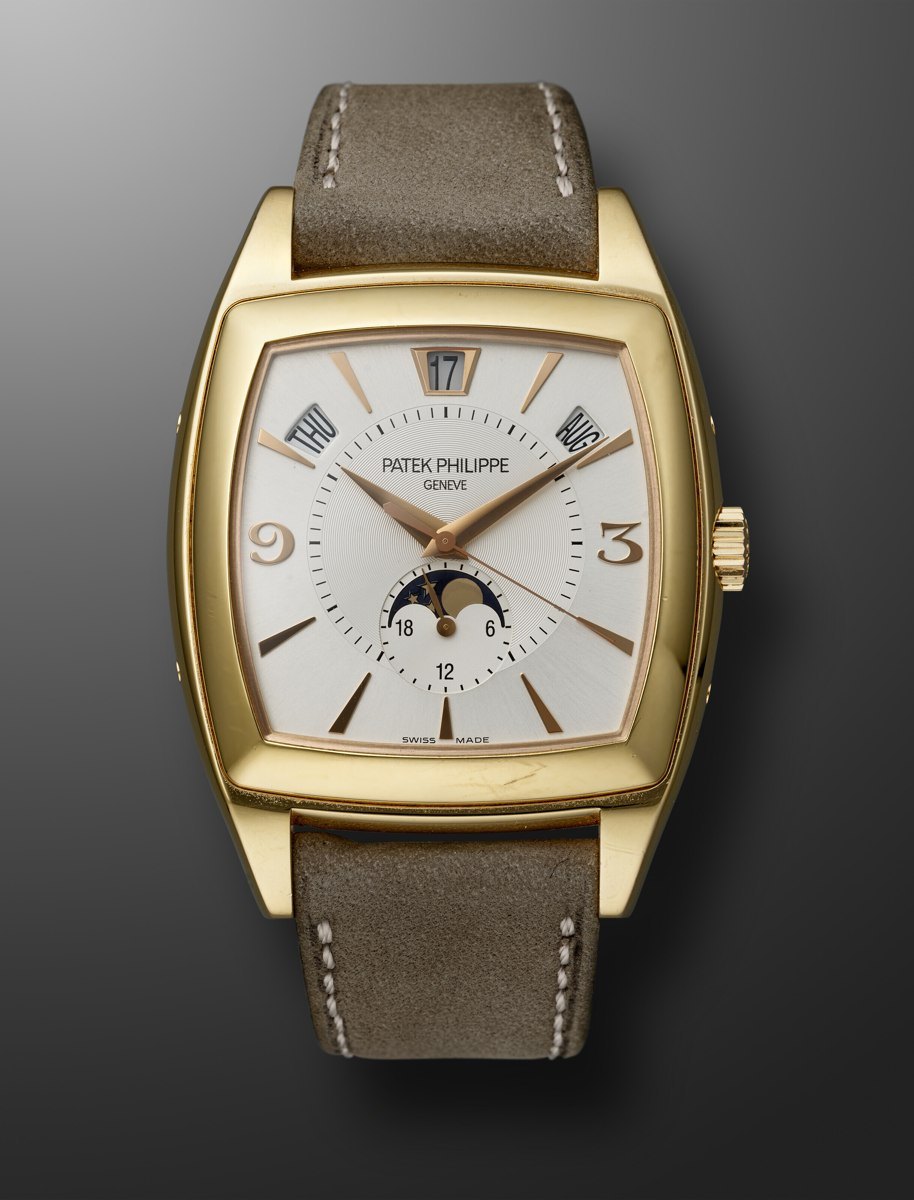
Patek Philippe 'Gondolo' Annual Calendar Ref. 5135R-001
- Maker / attribution
- Patek Philippe (source attribution)
- Date
- c. 2007
- Historical period
- Mechanical Renaissance (1990 – 2010)
- Country of origin
- Switzerland
- Object type
- Annual calendar wristwatch
- Materials / technique
- Pink gold
- Dimensions
- 38 mm
- Auction house
- Christie’s
- Lot
- 215
- Credit line
- Christie’s
- Catalogue title (original)
- PATEK PHILIPPE, PINK GOLD ANNUAL CALENDAR 'GONDOLO' WITH MOON PHASES, REF. 5135R-001, | Christie’s (English)
View the source record (auction lot) ↗ (opens another website in a new tab)Suggest a correction
Record summary
Catalogued by Christie’s (lot 215), this is an annual calendar wristwatch attributed to Patek Philippe, made in Switzerland, dated c. 2007. The Atlas places it in the Mechanical Renaissance period (1990 – 2010) of its Wristwatches collection. Materials and techniques recorded by the source: Pink gold. Recorded dimensions: 38 mm. The record is illustrated with 1 photograph.
Assembled from the source record's structured fields. Dates and attributions are given as the source states them; where a field is missing the Atlas leaves it blank rather than estimating.
Catalogue description
Original object description
Originating in Switzerland and dated to circa 2007 according to Christie's, this Patek Philippe 'Gondolo' Calendario (reference 5135R-001) is an annual calendar wristwatch fashioned with a 38 mm tonneau-shaped pink gold case. Patek Philippe launched the reference in 2004 to pay tribute to its Art Deco era creations. Paired with a corresponding pink gold buckle from the manufacturer, the watch features a silvered dial configured with individual windows indicating the day, date, and month, alongside an integrated 24-hour display and moon phase indicator located at the 6 o'clock position. The timepiece is driven by the self-winding caliber 324, an annual calendar movement engineered to necessitate manual adjustment only once annually on March 1st. At the time of Christie's cataloguing, the movement was running and all complications functioned properly, though servicing was advised. The pink gold case remains in very good overall condition, displaying minor surface abrasions and small indentations. Accompaniments include the original presentation box, a Certificate of Origin from 2007, an instructional or promotional booklet, and a leather folder.
Historical context
Mechanical Renaissance (1990 – 2010)
Mechanical watches return as cultural objects; independent watchmaking flourishes.
Mechanical watches returned as cultural and luxury objects. Complications, tourbillons and new materials proliferated; independent watchmakers such as George Daniels, F.P. Journe and Philippe Dufour revived artisanal watchmaking; collecting vintage watches became a major field.
Read the period in the timelineMore wristwatches from this periodEarlier: Quartz Revolution
Atlas type guide
Calendar, moon-phase and perpetual calendar watches
Calendar complications range from a simple date to the perpetual calendar, which automatically allows for months of different lengths and leap years until 2100. Pocket watches with perpetual calendars were made in the eighteenth and nineteenth centuries; Patek Philippe made the first perpetual calendar wristwatch in 1925, and series production followed in 1941. The annual calendar (Patek Philippe, 1996) needs correction only once a year.
Moon-phase displays use a disc with two moons and 59 teeth advanced daily, approximating the 29.5-day lunation; more precise trains reduce the error to one day in over a century.
What to look for
- Apertures or subsidiary dials for day, date, month and leap year.
- Moon disc under a 'bosom' shaped aperture.
- Recessed correctors on the case band for setting the calendar.
Dating clues
- Triple-date wristwatches: popular c. 1940–1955.
- Perpetual calendar wristwatches: from 1925 (unique) and 1941 (series).
General guidance written by the Atlas editors about this kind of object. It is not a statement about this particular piece; for that, rely on the source record above and on physical examination.
Related records
Clocks · 1965–1975
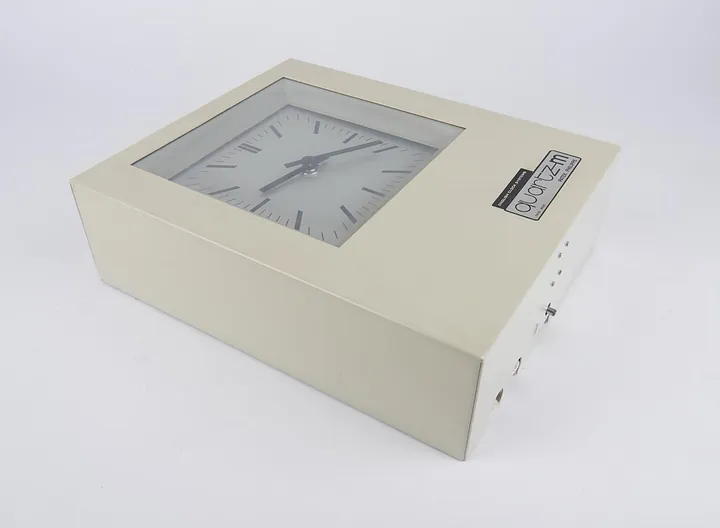
Quartz master clock QM 1, with movement by Patek Phillippe, Switzerland, 1965–1975. Supplied by English Clock Systems.
Science Museum Group, London
Instruments · 1965–1984
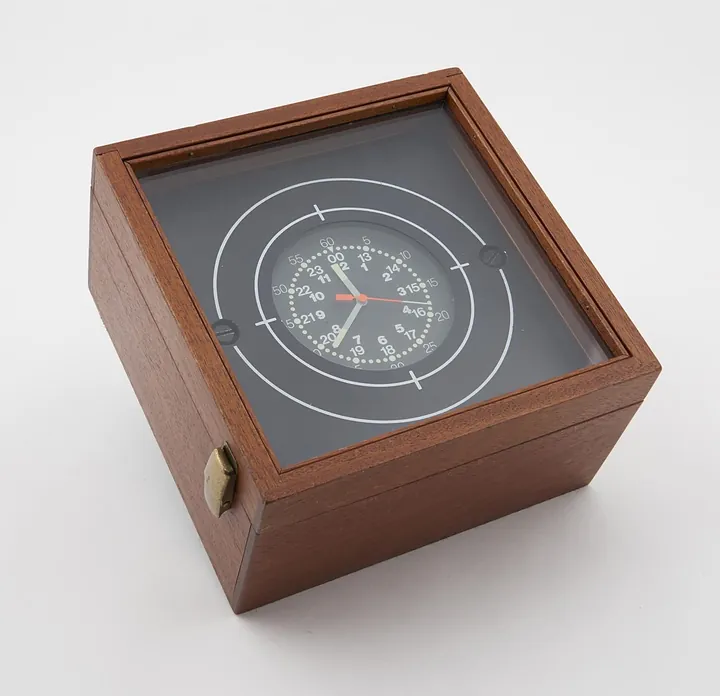
Chronometer by Patek Philippe and Kelvin Hughes, England, 1965–1984
Science Museum Group, London
Pocket Watches · c. 1895
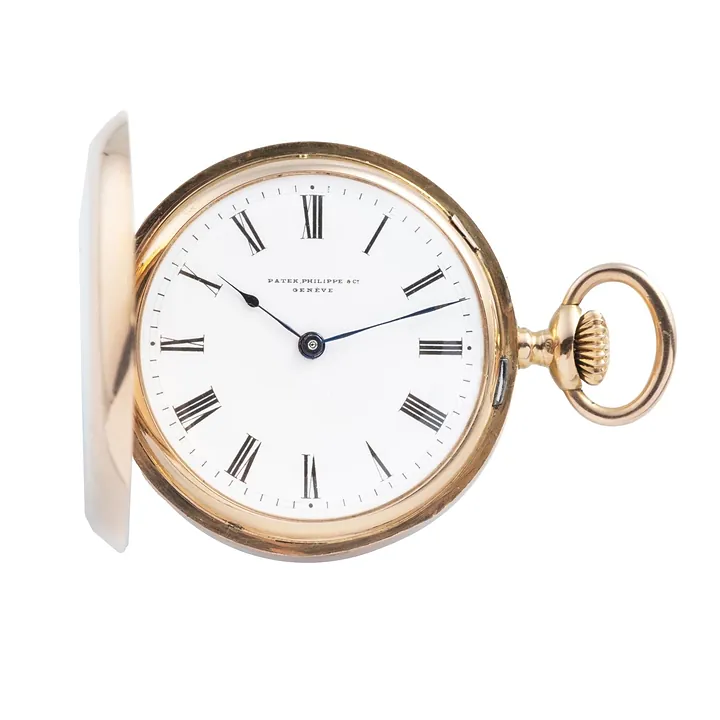
Patek Philippe pocket watch, c. 1895
Antiquorum auction archive, Geneva
Pocket Watches · c. 1900
Patek Philippe Chronometro Gondolo, c. 1900
Antiquorum auction archive, Geneva
Wristwatches · 1991
Limited edition watch designed by Eta relating to David Bowie's Serious Moonlight live tour, 1991
Victoria and Albert Museum, London

Wristwatches · 2008
Wristwatch by Breitling?, 2008
Museum Rotterdam

Wristwatches · c. 1990s
Audemars Piguet Bamboo, c. 1990s
Antiquorum auction archive, Geneva

Wristwatches · c. 1990
Audemars Piguet Huitieme Perpetual Calendar, ref. 25696PT, c. 1990
Antiquorum auction archive, Geneva