
Pocket Watches · Pendant watch
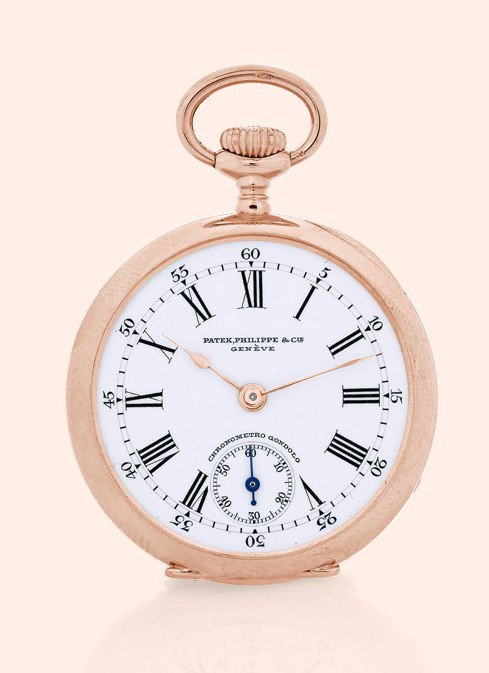
Patek Philippe Chronometro Gondolo 12-ligne Pendant Watch
- Maker / attribution
- Patek, Philippe & Cie. (source attribution)
- Date
- c. 1910
- Historical period
- Golden Age of Mechanical Watchmaking (1900 – 1945)
- Country of origin
- Switzerland
- Object type
- Pendant watch
- Materials / technique
- 18K Rose Gold
- Holding institution
- Antiquorum
- Accession / object no.
- 232
- Credit line
- Antiquorum
- Catalogue title (original)
- 'Chronometro\nGondolo 12 Lines'\nPatek, Philippe & Cie.,\nGenève, 'Chronometro Gondolo', No.\n143140, case No. 248710. Made for\nGondolo & Laboriau, Relojoeiros, Rio\nde Janeiro, circa 1910.\nVery fin (English)
View the source record ↗ (opens another website in a new tab)Suggest a correction
Record summary
Held and catalogued by Antiquorum (object number 232), this is a pendant watch attributed to Patek, Philippe & Cie., made in Switzerland, dated c. 1910. The Atlas places it in the Golden Age of Mechanical Watchmaking period (1900 – 1945) of its Pocket Watches collection. Materials and techniques recorded by the source: 18K Rose Gold. The record is illustrated with 1 photograph.
Assembled from the source record's structured fields. Dates and attributions are given as the source states them; where a field is missing the Atlas leaves it blank rather than estimating.
Catalogue description
Original object description
Crafted circa 1910 for the retailer Gondolo & Laboriau in Rio de Janeiro, this Patek Philippe 'Chronometro Gondolo' is an open-face, 12-ligne keyless pendant watch made for women. Its four-body 'bassine' housing in 18K rose gold features an engine-turned back cover and an inner hinged cuvette made of gold. The white enamel dial is executed with radial Roman numerals, a subsidiary seconds register, and a peripheral minute circle marked with Arabic figures at five-minute steps. Signed by Patek, Philippe & Cie. on its patented bridge structure, the frosted gilt 18-jewel movement includes a solid gold geartrain, a straight-line 'à moustache' lever escapement, a split bimetallic balance for thermal compensation, and a blued steel Breguet hairspring, wound through wolf's tooth gearing. Auction records confirm that original maker signatures are visible on the movement, case, and dial.
Case and Dial
The 18K rose gold four-piece 'bassine' case measures 32 mm across and presents an engine-turned pattern across its rear cover. On the white enamel dial, pink gold spade hands indicate the time over a sunken small-seconds register at 6 o'clock and an outer minute track calibrated with Arabic numerals every five minutes.
Movement and Mechanics
Powering the timepiece is an 18-jewel, 12''' frosted gilt caliber designed around a patented bridge architecture and fitted with a wheel train of solid gold. Chronometric performance is governed by a straight-line 'moustache' lever escapement, a cut bimetallic balance wheel, a blued steel Breguet overcoil spring, and an eccentric cam micrometer regulator, all energized by wolf's tooth winding wheels. The caliber is inscribed with the signature of Patek, Philippe & Cie., attesting to its Geneva manufacture.
Provenance and Identification
Numbered 143140 on the movement and 248710 on the case, this watch was commissioned around 1910 by Rio de Janeiro agents Gondolo & Laboriau and is documented in Patek Philippe's archives under the 'Chronometro Gondolo' designation. Maker signatures are present across the case, dial, and movement. Auction evaluations graded the movement condition as '2 Very good' and the case as '3 Good', reflecting the current state of this late-production pendant watch.
Inscriptions & marks
143140 (movement), 248710 (case)
Historical context
Golden Age of Mechanical Watchmaking (1900 – 1945)
The wristwatch displaces the pocket watch; waterproof cases, self-winding and grand complications.
The pocket watch reached technical maturity and then began to give way to the wristwatch after the First World War. Complicated watches for collectors such as Henry Graves Jr. and James Ward Packard, railroad watches, and slim Art Deco dress watches are characteristic.
Read the period in the timelineMore pocket watches from this periodEarlier: Industrial Revolution
Atlas type guide
Early spring-driven watches
Portable spring-driven timepieces appeared in southern Germany, France and Italy in the early sixteenth century; Peter Henlein of Nuremberg is traditionally credited, although the historical record is complex. These early watches were worn as pendants or carried, had iron or brass movements with a verge escapement and a foliot or small balance, and used a stackfreed or fusee to equalise spring force. They indicated hours only and were notoriously inaccurate.
From the later sixteenth century watches were made in Blois, Paris, Geneva, London and Augsburg in oval, octagonal, cruciform, skull and other 'form' cases of rock crystal, gilt brass, silver and enamel. They were jewellery and status objects as much as timekeepers.
What to look for
- A single hour hand and often a touch-pin hour ring for feeling the time.
- Stackfreed (a cam and spring) instead of a fusee on German watches.
- Pierced and engraved cocks over the balance, fine gut fusee lines.
- Rock-crystal, enamelled or engraved form cases.
Dating clues
- Drum-shaped German watches: c. 1530–1580.
- Oval and form watches: c. 1580–1650.
- Before c. 1675 there is no balance spring; watches can vary by many minutes a day.
General guidance written by the Atlas editors about this kind of object. It is not a statement about this particular piece; for that, rely on the source record above and on physical examination.
Related records
Pocket Watches · c. 1930
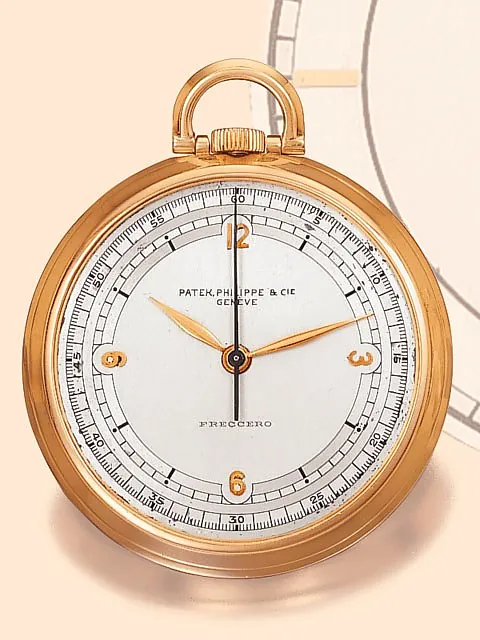
Patek Philippe 18K Gold Keyless Dress Watch
Antiquorum
Pocket Watches · c. 1928
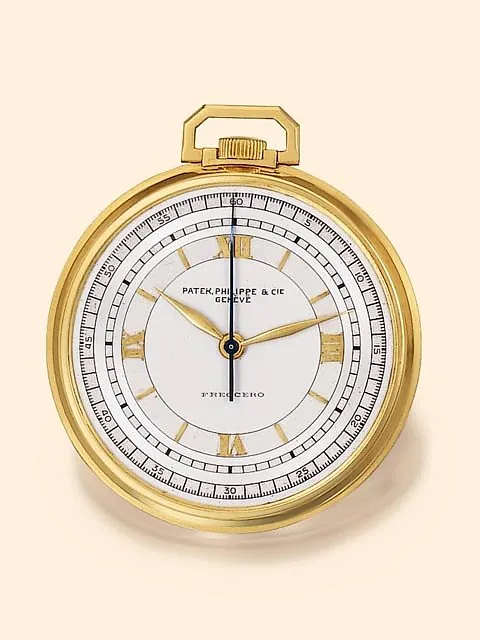
Patek Philippe Center-Seconds Pocket Watch
Antiquorum
Pocket Watches · c. 1915
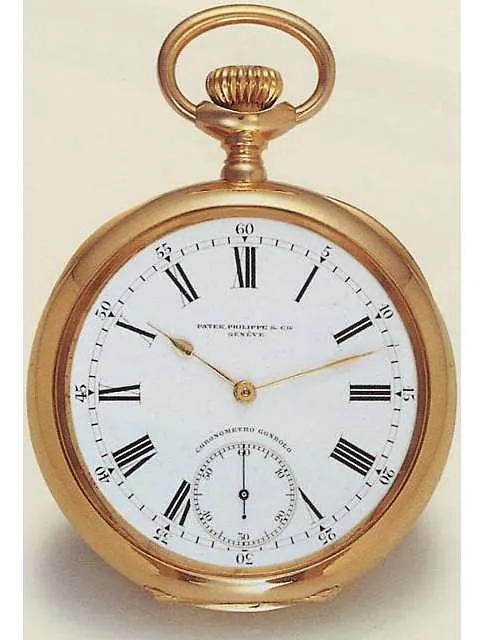
Patek Philippe Chronometro Gondolo Pocket Watch
Antiquorum
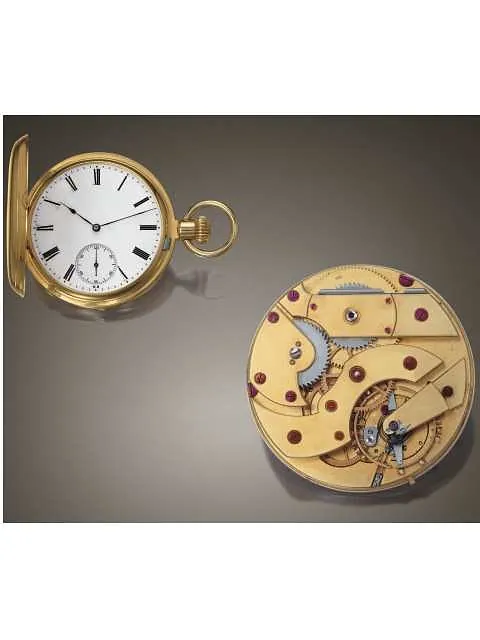
Pocket Watches · 1872
Patek, Philippe & Cie. Hunting Cased Keyless Pocket Chronometer No. 47372
Antiquorum

Pocket Watches · c. 1900
Patek Philippe Chronometro Gondolo, c. 1900
Antiquorum auction archive, Geneva
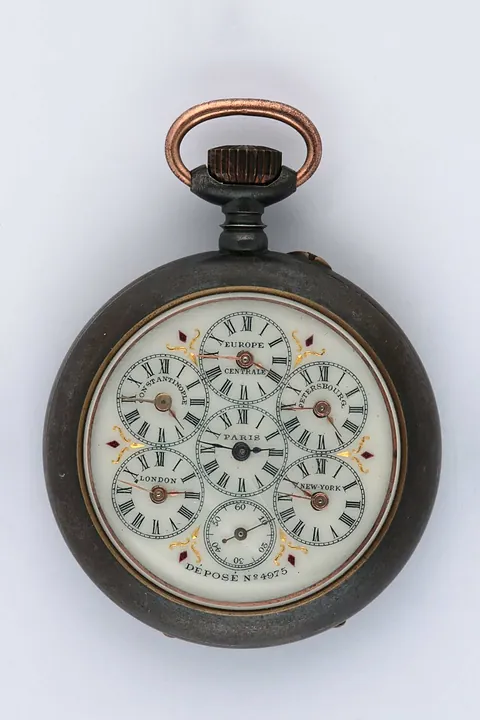
Pocket Watches · c. 1900
Pocket watch by A. Sandoz-Boucherin, Switzerland, c. 1900
German Clock Museum
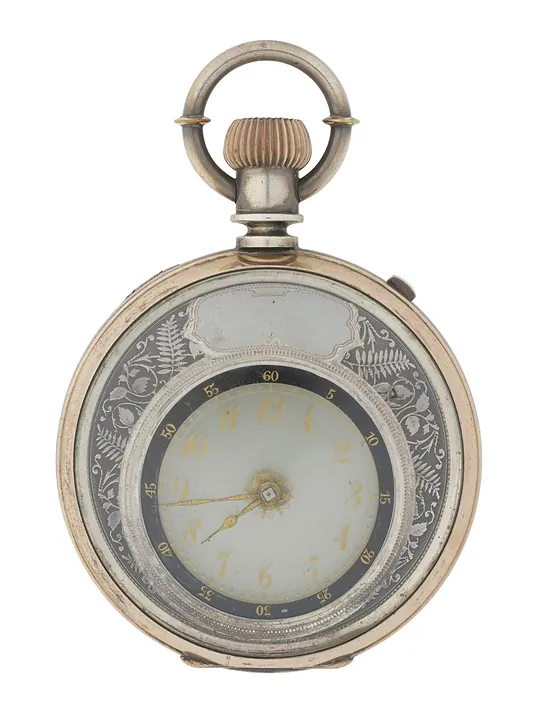
Pocket Watches · 1900
Pocket watch by Armand Schwob & Frère, Switzerland, 1900
Science Museum Group, London
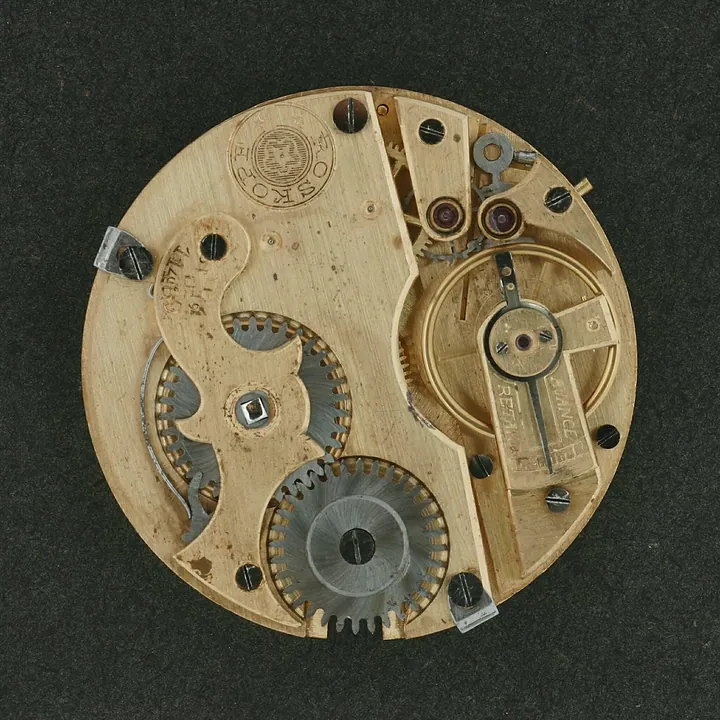
Pocket Watches · c. 1900
Pocket watch by Vve. Chs. Léon Schmid und Cie, Switzerland, c. 1900
German Clock Museum