
Wristwatches · Diver's wristwatch
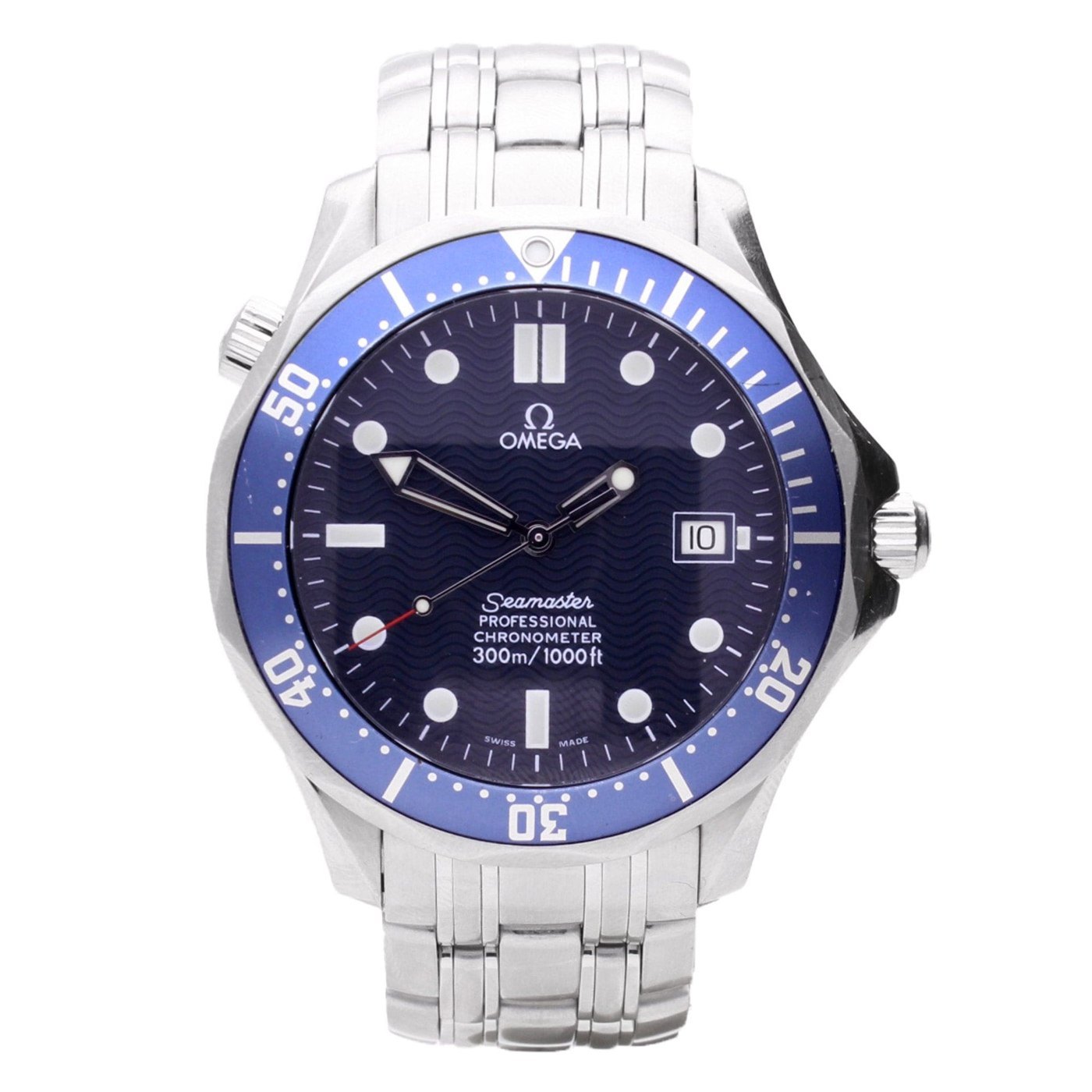
OMEGA Seamaster Professional Diver 300M, Ref. 2531.80.00
- Maker / attribution
- OMEGA (source attribution)
- Date
- 2005
- Historical period
- Mechanical Renaissance (1990 – 2010)
- Country of origin
- سوئیس
- Object type
- Diver's wristwatch
- Materials / technique
- Stainless steel
- Holding institution
- Zamanito
- Accession / object no.
- omega-seamaster-professional-diver-300m-ref-2531-80-00-e35a60d90d
- Credit line
- Zamanito
- Catalogue title (original)
- ساعت مچی غواصی OMEGA Seamaster Professional Diver 300M رفرنس 2531.80.00 (English)
View the source record ↗ (opens another website in a new tab)Suggest a correction
Record summary
Held and catalogued by Zamanito (object number omega-seamaster-professional-diver-300m-ref-2531-80-00-e35a60d90d), this is a diver's wristwatch attributed to OMEGA, made in سوئیس, dated 2005. The Atlas places it in the Mechanical Renaissance period (1990 – 2010) of its Wristwatches collection. Materials and techniques recorded by the source: Stainless steel. The record is illustrated with 1 photograph.
Assembled from the source record's structured fields. Dates and attributions are given as the source states them; where a field is missing the Atlas leaves it blank rather than estimating.
Catalogue description
Original object description
Produced in 2005, this stainless steel OMEGA Seamaster Professional Diver 300M carries reference 2531.80.00 and is configured with a 42 mm case engineered to professional diving criteria with a 300-meter depth rating. A helium escape valve sits on the case flank at the 10 o'clock position, while a blue unidirectional bezel features a 60-minute scale for calculating elapsed time. Encircled by a minute chapter ring, the blue dial is rendered with an embossed wave relief, openworked luminous hands, a central seconds hand, luminous hour indices, and a quick-set date window positioned at 3 o'clock. The timepiece is driven by the chronometer-certified automatic Omega Calibre 1120, which controls the three central hands along with the calendar complication. Fitted with a stainless steel bracelet that features a folding wetsuit extension within the clasp, the watch is accompanied by its manufacturer's box and reference pictogram cards. No prior servicing documentation is recorded, but cataloguing notes that visible parts exhibit no structural impairment; these remarks rely entirely on source records without constituting independent technical validation.
Historical context
Mechanical Renaissance (1990 – 2010)
Mechanical watches return as cultural objects; independent watchmaking flourishes.
Mechanical watches returned as cultural and luxury objects. Complications, tourbillons and new materials proliferated; independent watchmakers such as George Daniels, F.P. Journe and Philippe Dufour revived artisanal watchmaking; collecting vintage watches became a major field.
Read the period in the timelineMore wristwatches from this periodEarlier: Quartz Revolution
Atlas type guide
Dive and water-resistant watches
Keeping water and dust out of a wristwatch was a long-standing challenge. Rolex's screw-down Oyster case (1926) and Omega's Marine (1932) were landmarks; in the early 1950s Blancpain's Fifty Fathoms and Rolex's Submariner defined the professional dive watch with rotating bezels for timing dives, luminous dials and high water resistance. The ISO 6425 standard (1982) later codified what a 'diver's watch' must do.
Dive watches became icons of post-war design and exploration, and their evolution — helium escape valves, ceramic bezels, saturation-diving depth ratings — records the history of underwater work.
What to look for
- Unidirectional or bidirectional rotating bezel with minute markings.
- Screw-down crown and case back; depth rating printed on the dial.
- Luminous hands and markers (radium before c. 1960, tritium c. 1960–1998, then Super-LumiNova).
- Reference numbers on the case between the lugs or inside the back.
Dating clues
- Screw-down Oyster cases: from 1926.
- Professional dive watches: from 1953.
- Tritium 'T' marks on dials: c. 1960–1998.
General guidance written by the Atlas editors about this kind of object. It is not a statement about this particular piece; for that, rely on the source record above and on physical examination.
Related records
Wristwatches · 1971
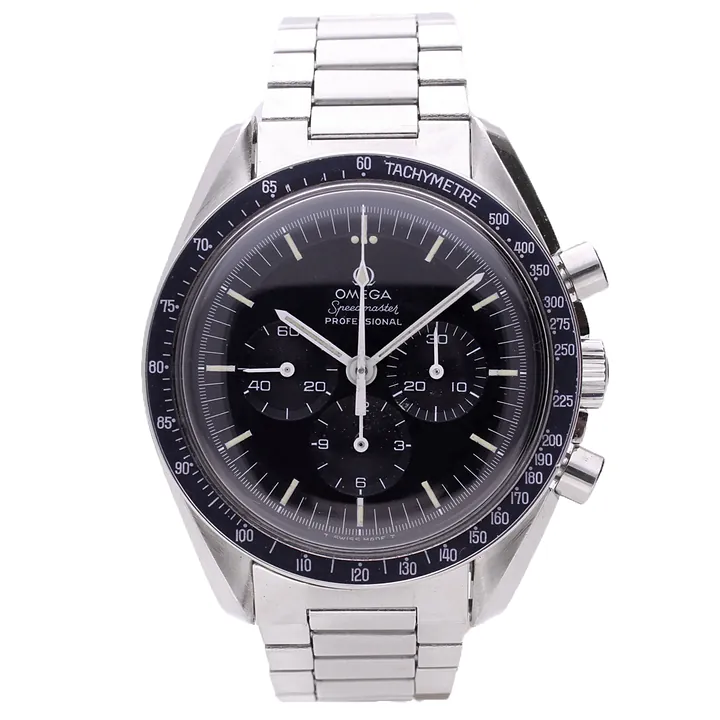
Stainless steel Omega ref. 145.022 Speedmaster Professional chronograph wristwatch, 1971
Somlo Antiques (dealer), London
Wristwatches · 1979
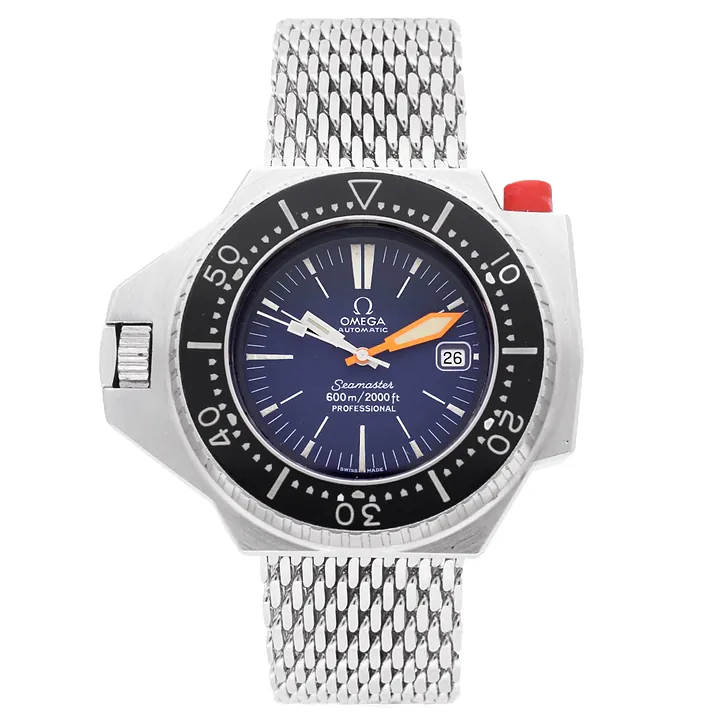
Stainless steel Omega Seamaster PloProf 600m automatic divers wrist watch, 1979
Somlo Antiques (dealer), London
Wristwatches · 1961
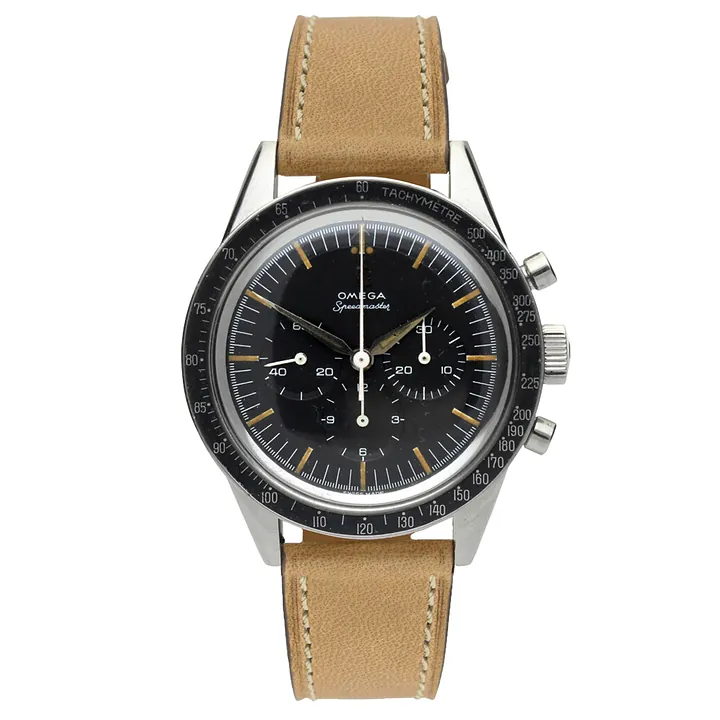
Stainless steel Omega ref. 2998-4 Speedmaster chronograph wristwatch, 1961
Somlo Antiques (dealer), London
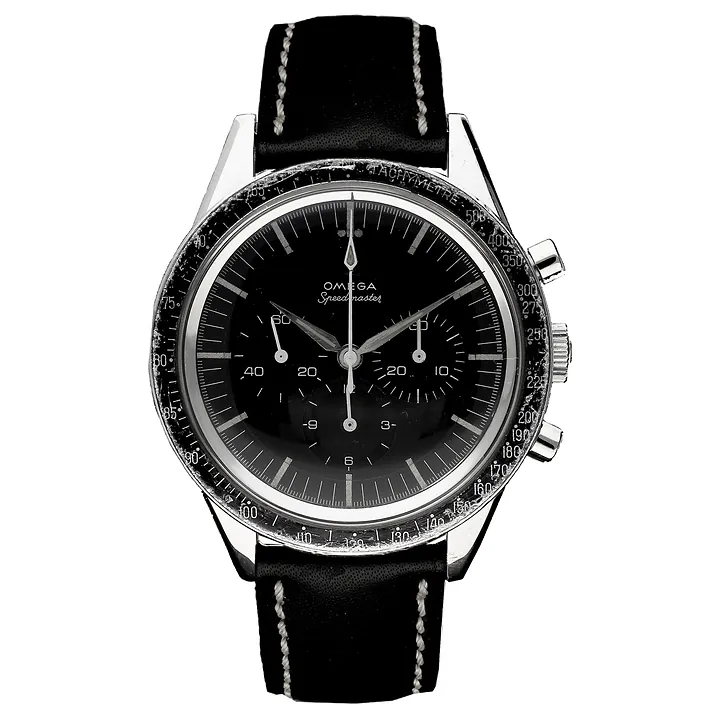
Wristwatches · 1963
Stainless steel Omega ref. 2998-4 Speedmaster chronograph wristwatch, 1963
Somlo Antiques (dealer), London
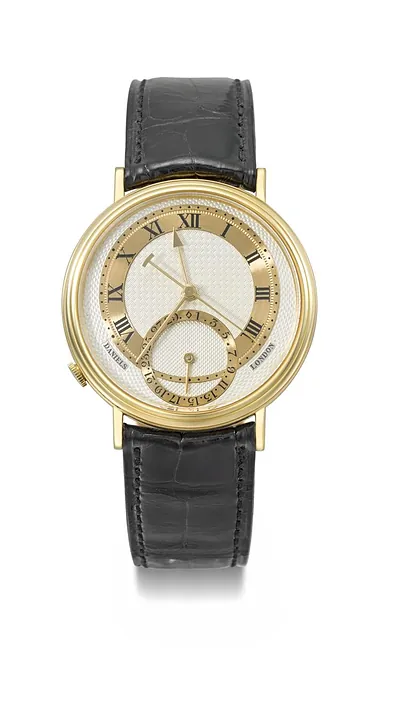
Wristwatches · 1999
'Millennium' co-axial wristwatch by George Daniels and Omega, England, 1999
Science Museum Group, London
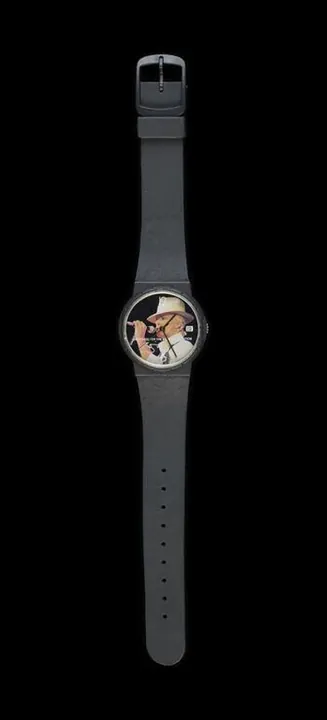
Wristwatches · 1991
Limited edition watch designed by Eta relating to David Bowie's Serious Moonlight live tour, 1991
Victoria and Albert Museum, London
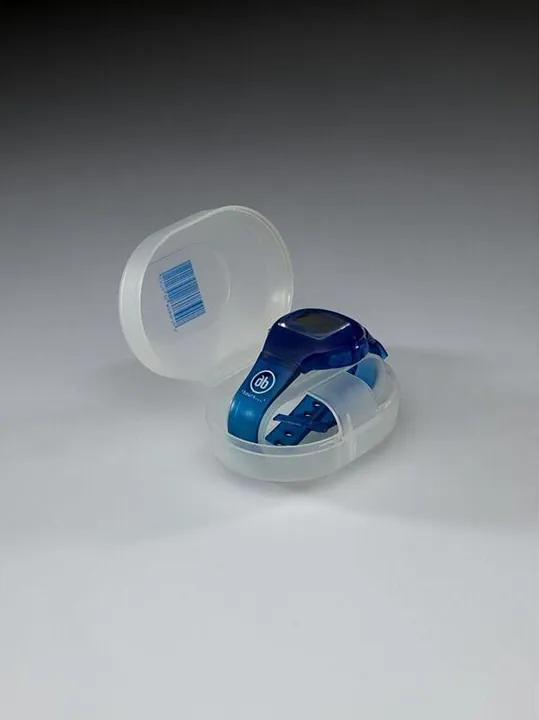
Wristwatches · 1999
Blue digital talking watch in case, made by Virgin Records to promote the David Bowie album Hours , 1999
Victoria and Albert Museum, London
Wristwatches · 1999
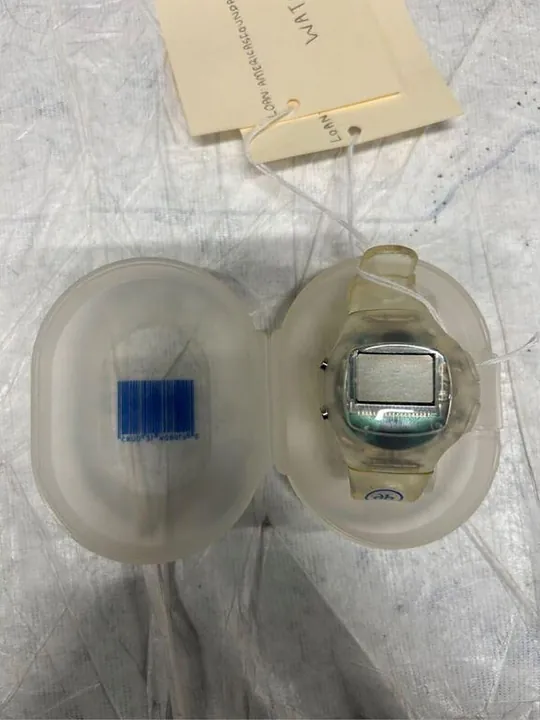
Transparent digital talking watch in case, made by Virgin Records to promote the David Bowie album Hours , 1999
Victoria and Albert Museum, London