
Wristwatches · Wristwatch
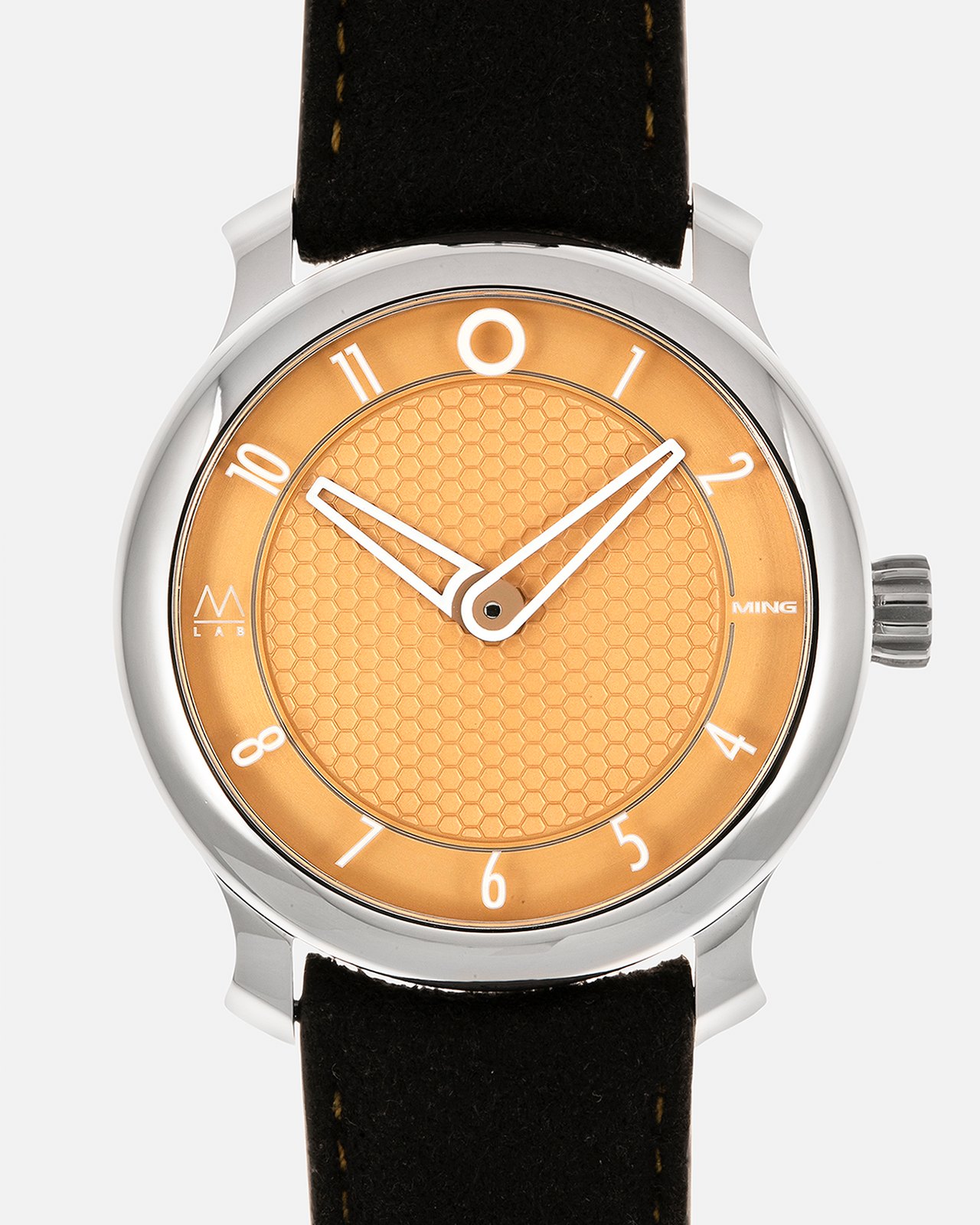
Ming Massena Lab 17.09 Honey, 2021
- Maker / attribution
- MING (maker)
- Date
- 2021
- Historical period
- Contemporary Horology (2010 – Present)
- Country of origin
- Unrecorded in source
- Object type
- Wristwatch
- Stock no.
- Product 7433057173591
- Credit line
- Dealer listing, S.Song Watches (product 7433057173591)
- Catalogue title (original)
- Ming Massena Lab 17.09 Honey (English)
View the source record (dealer listing) ↗ (opens another website in a new tab)Suggest a correction
Record summary
Catalogued by S.Song Watches (dealer), Seattle (stock number Product 7433057173591), this is a wristwatch by MING, dated 2021. The Atlas places it in the Contemporary Horology period (2010 – Present) of its Wristwatches collection. The record is illustrated with 6 photographs.
Assembled from the source record's structured fields. Dates and attributions are given as the source states them; where a field is missing the Atlas leaves it blank rather than estimating.
Catalogue description
Dealer description — S.Song Watches
Among the pantheon of exceptional independent watchmakers we've had the privilege of witnessing in recent years, two of the fastest-rising names in modern horology are MING and Massena LAB . Both brands have enjoyed remarkable success since their inception, so it came as little surprise that a collaboration between them was met with considerable enthusiasm, and rightly so. Back in mid-2021, MING and Massena LAB unveiled the MING × Massena Lab 17.09, released in two limited variants totalling just 200 individually numbered pieces: 150 examples with a sleek black dial, and 50 with a warm, vibrant honey-colored dial—the latter being the very example offered here today. Featuring the brand’s distinctive case design, the 17.09 begins just like most other MING timepieces, with a gently domed bezel and subtle flourishes like its flared lugs, a hallmark of MING’s aesthetic. The polished bezel and lug hoods are offset by a satin-brushed mid-case, creating a striking visual contrast that runs parallel to the case profile. On the underside, a solid stainless steel caseback conceals the Schwarz-Etienne Cal. 330.M1 automatic movement, which is essentially a modified version of the Sellita Cal. SW330-2. The caseback is engraved with the watch’s individual serial number and adorned with a honeycomb texture that echoes the design of the dial. Aesthetically, what gives the 17.09 its distinctive character is its radiant honeycomb dial, which was directly inspired, according to William Massena, by mid-century Rolex honeycomb dials. The dial showcases an intricate hexagonal guilloché pattern that radiates outward from the centre, stopping just short of the concentrically satin-brushed chapter ring. This outer chapter ring provides a refined backdrop for the hour numerals and both brand logos, all uniquely printed on the underside of the crystal. The result is a multi-layered arrangement that adds visual depth and clarity, making the dial feel both richly detailed yet elegantly spaced—a design approach that is now a signature hallmark for many of MING’s horological creations. With MING’s signature luminescent pattern applied onto the hands as well as the printed numerals on the underside of the sapphire crystal, the 17.09 stands as a beautifully balanced collaboration as a whole. It highlights each brand’s distinct design language while forming a cohesive whole that complements both identities without either overshadowing the other.
Historical context
Contemporary Horology (2010 – Present)
Silicon components, connected watches, optical-lattice research clocks and a thriving independent scene.
Smartwatches became the world's best-selling watches, while mechanical watchmaking focuses on craft, innovation (silicon components, new escapements) and independent makers.
Read the period in the timelineMore wristwatches from this periodEarlier: Mechanical Renaissance
Atlas type guide
Wristwatches
Bracelet watches were worn by women from the early nineteenth century — Breguet made one for Caroline Murat, Queen of Naples, in 1810–12 — but the wristwatch only became a man's instrument with military use and aviation in the early twentieth century. Between the World Wars it overtook the pocket watch; the 1920s and 1930s brought rectangular Art Deco cases, water-resistant cases and the first automatic winding systems.
After 1945 the wristwatch became a carrier of identity — dress watches, sports and dive watches, chronographs, calendars — produced by Swiss, American, Japanese, German, Soviet and Chinese industries. The quartz revolution after 1969 and the mechanical renaissance since the 1990s, including the rise of independent watchmakers, complete the story.
What to look for
- The reference number (between the lugs or inside the case back) and serial number, the starting point for dating.
- The calibre: its maker and number are often stamped under the dial or on the bridge.
- Originality of dial, hands and crown — refinished ('redial') dials are common.
- Case material marks: 18K/750, 14K/585, stainless steel, gold-filled, plated.
Dating clues
- Wire-lug cases: before c. 1925.
- Water-resistant screw-down cases: from 1926.
- Quartz movements: from 1969; sapphire crystals widespread after c. 1980.
General guidance written by the Atlas editors about this kind of object. It is not a statement about this particular piece; for that, rely on the source record above and on physical examination.
Related records
Wristwatches · 2022
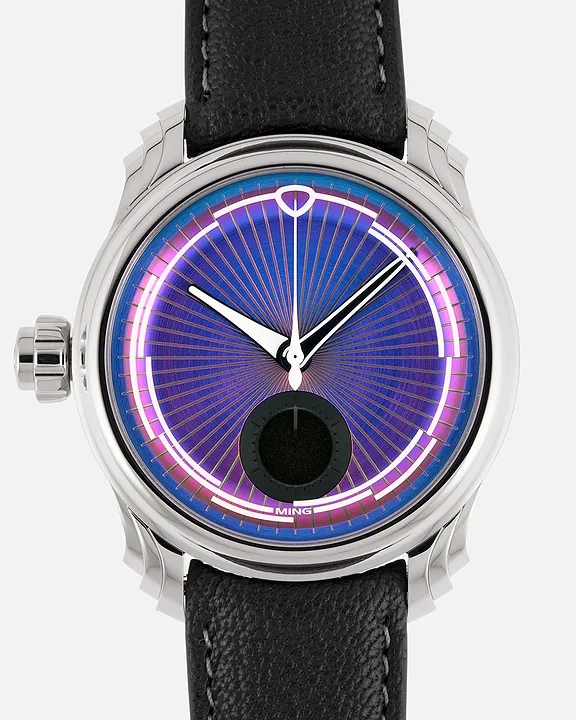
Ming 57.04 Iris Monopusher Chronograph, 2022
S.Song Watches (dealer), Seattle
Wristwatches · 2023
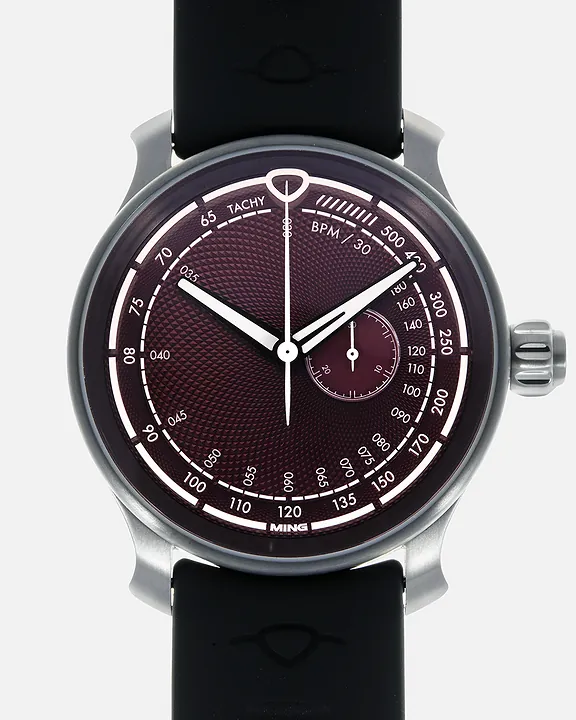
Ming 37.04 Monopusher Chronograph Tantalum, 2023
S.Song Watches (dealer), Seattle
Wristwatches · 2022
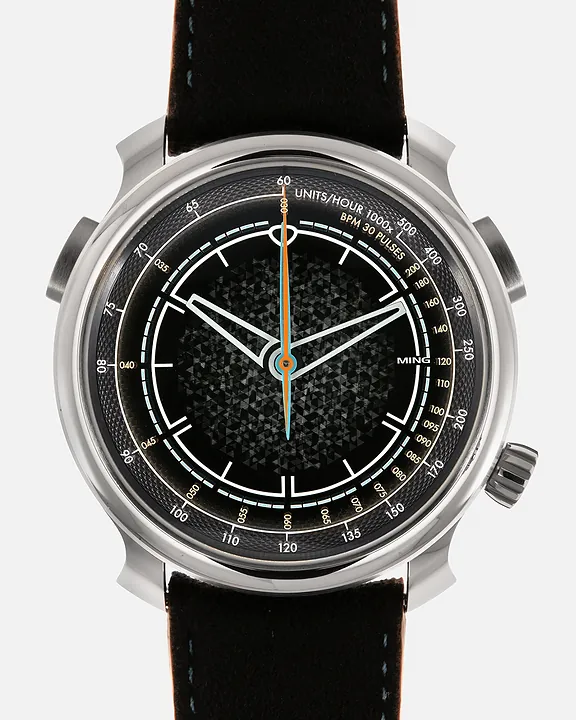
Ming 20.01 Series II Agengraphe Chronograph Special Projects Cave, 2022
S.Song Watches (dealer), Seattle
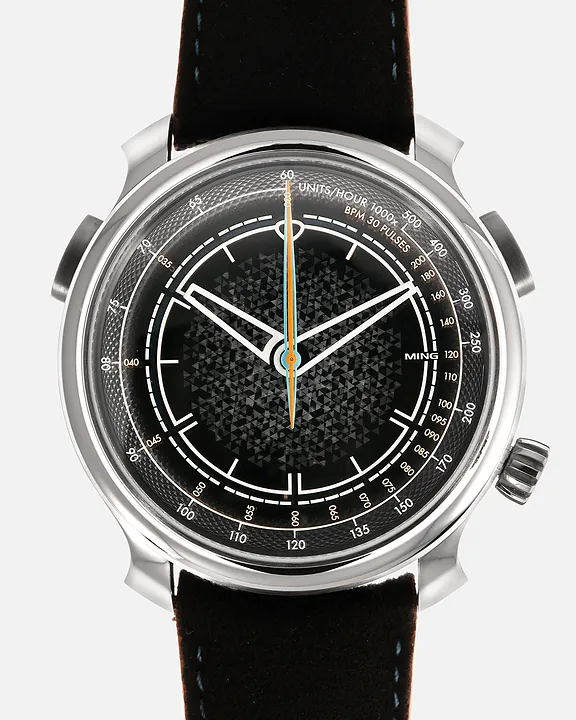
Wristwatches · 2022
Ming 20.01 Series II Agengraphe Chronograph Special Projects Cave, 2022
S.Song Watches (dealer), Seattle
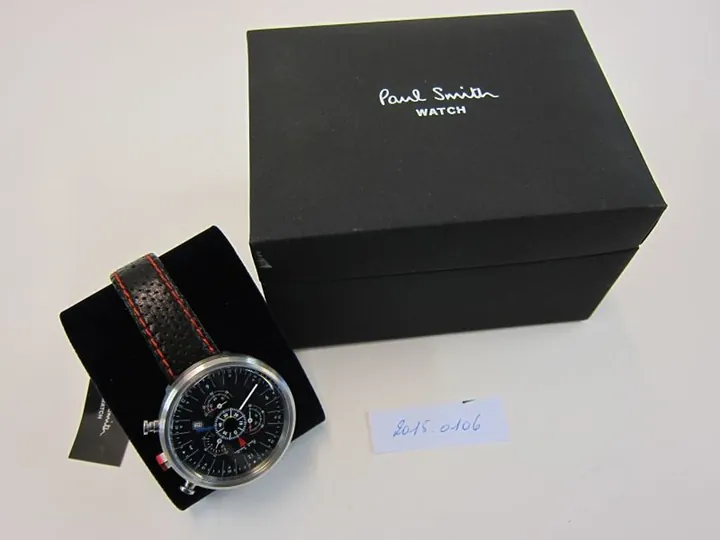
Wristwatches · 2010
Wristwatch, 2010
Modemuseum Hasselt
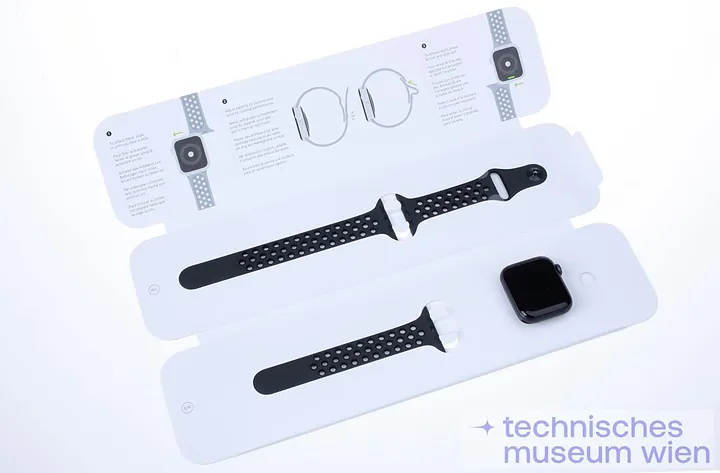
Wristwatches · 2018 (Series 4 released in September 2018; '1977' in the source is the model number A1977)
Apple Watch Series 4 (GPS, 40 mm, model A1977), 2018
Vienna Museum of Science and Technology
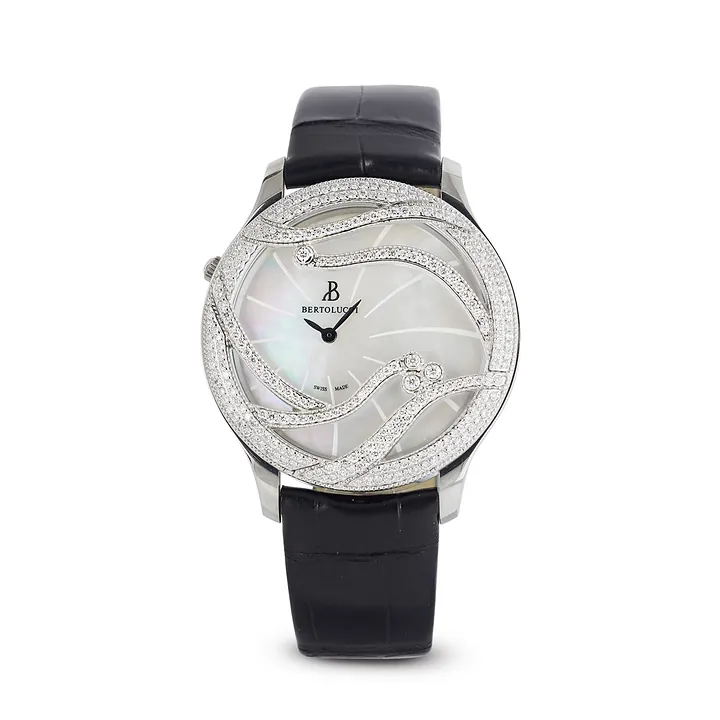
Wristwatches · c. 2010s
Bertolucci Stria III, ref. 11513.50.45.B88.6C1.501, c. 2010s
Antiquorum auction archive, Geneva
Wristwatches · c. 2010s
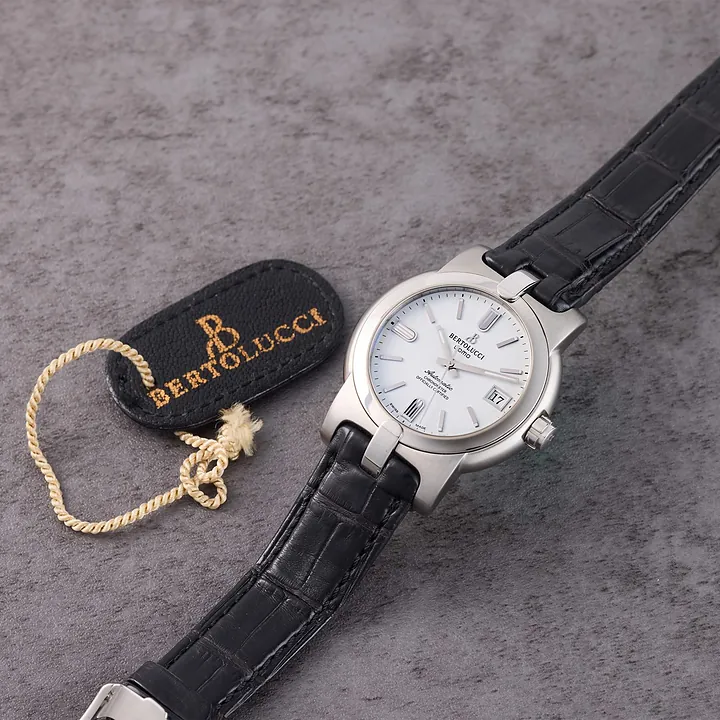
Bertolucci Uoma, ref. 824.51.41.10B, c. 2010s
Antiquorum auction archive, Geneva