
Wristwatches · Wristwatch
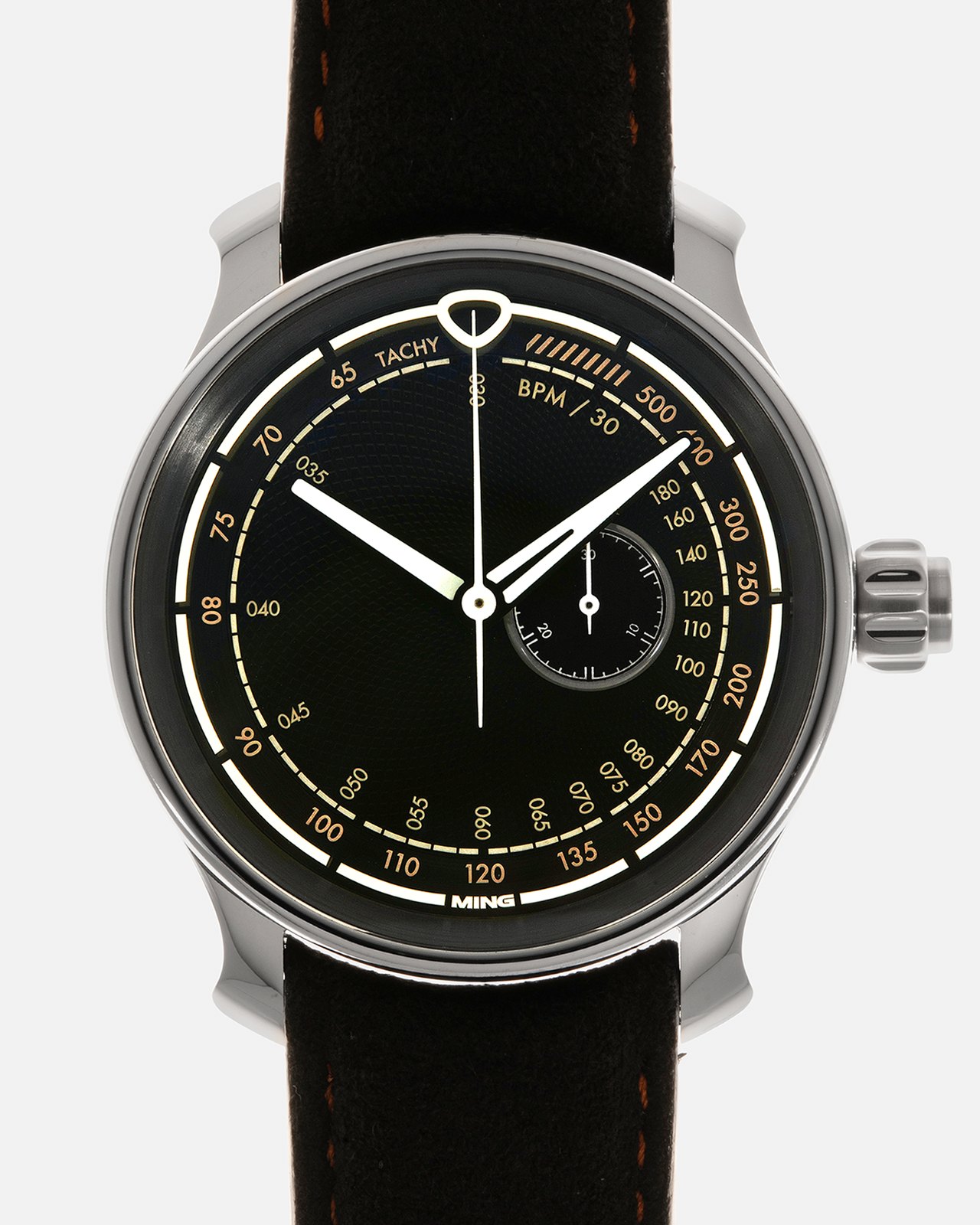
Ming 37.04 Monopusher Chronograph Titanium, 2023
- Maker / attribution
- MING (maker)
- Date
- 2023
- Historical period
- Contemporary Horology (2010 – Present)
- Country of origin
- Unrecorded in source
- Object type
- Wristwatch
- Materials / technique
- titanium
- Stock no.
- Product 7382618079319
- Credit line
- Dealer listing, S.Song Watches (product 7382618079319)
- Catalogue title (original)
- Ming 37.04 Monopusher Chronograph Titanium (English)
View the source record (dealer listing) ↗ (opens another website in a new tab)Suggest a correction
Record summary
Catalogued by S.Song Watches (dealer), Seattle (stock number Product 7382618079319), this is a wristwatch by MING, dated 2023. The Atlas places it in the Contemporary Horology period (2010 – Present) of its Wristwatches collection. Materials and techniques recorded by the source: titanium. The record is illustrated with 6 photographs.
Assembled from the source record's structured fields. Dates and attributions are given as the source states them; where a field is missing the Atlas leaves it blank rather than estimating.
Catalogue description
Dealer description — S.Song Watches
That being said, if there was a shining light, a name that has defied the odds, through truly original thinking and an unwavering desire for quality, it would have to be MING. In 2022, MING celebrated its 5th anniversary in watchmaking by unveiling a new design within their Special Projects Cave program—a by-invitation-only initiative dedicated to creating unique pieces and limited-edition watches in very small quantities. Enter the 37.04, a monopusher chronograph powered by a movement originally made famous by legendary watchmakers François-Paul Journe, Vianney Halter, and Denis Flageollet, who first used it in the Cartier Tortue Monopoussoir. In line with this, the design team at MING successfully sourced a batch of these movements, then set about extensively reworking and refining them specifically for the 37.04. In other words, the movement encased here within the 37.04's ultra-light grade 5 titanium case is a significantly improved version of the original, meticulously reworked by La Joux Perret in La Chaux-de-Fonds to MING’s exacting specifications. As shown in the photos, the new skeletonized bridges are coated in classical-grained 5N rose gold and feature hand-polished anglage —a distinctive finishing style also found on MING’s 19.02 and 19.05 models. Regarding its power reserve, the reworked LJP5000.M1 can hold a charge of up to 38 hours on a full wind. In addition to the above, also encased within the watch is a black guilloché dial produced by Comblémine SA, a dial-manufacturing company helmed by the legendary Kari Voutilainen, known for creating some of the most beautiful watch dials in existence. As mentioned earlier, the dial is adorned with an intricate guilloché and is subsequently covered by a sapphire layer that displays the multi-scaled design featuring a pulsometer, tachymeter, and minute markers, each on different levels and all intricately treated with Super-Luminova X1 inlays. The recessed chronograph minute counter is also seamlessly integrated into the metal dial itself. It’s remarkable how the team managed to tastefully combine all these elements—each of which, on paper, seems like a lot—into a design that is both visually stimulating and cohesive. The result is a stunning dial with immense visual depth, as expected from MING’s exceptional design prowess and sensibilities. Like many of MING’s other horological creations, the 37.04 boasts a distinctive case featuring their signature flared, twisted lugs, which are embellished with multiple textured finishes throughout. It also includes a specially engineered crown with an integrated monopusher. The 37.04 also comes fitted with a handmade Barenia full-grain calf leather strap crafted by famed strap maker Jean Rousseau Paris. According to MING, only 100 pieces were made available when they first announced the 37.04 in 2022, as they had a limited supply of movements and spare parts. Priority was also given to those on the Special Project Caves interest list, making this 37.04 a particularly rare offering to boot.
Historical context
Contemporary Horology (2010 – Present)
Silicon components, connected watches, optical-lattice research clocks and a thriving independent scene.
Smartwatches became the world's best-selling watches, while mechanical watchmaking focuses on craft, innovation (silicon components, new escapements) and independent makers.
Read the period in the timelineMore wristwatches from this periodEarlier: Mechanical Renaissance
Atlas type guide
Chronographs and split-seconds watches
A chronograph is a watch with an additional seconds hand that can be started, stopped and returned to zero independently of the timekeeping. Louis Moinet built an early example in 1816 and Nicolas Rieussec a recording 'chronographe' in 1821; Adolphe Nicole's heart-shaped reset cam (patented 1862) made the modern return-to-zero possible. Split-seconds (rattrapante) chronographs add a second hand that can be stopped for intermediate times; flyback chronographs restart instantly.
Chronographs were essential tools for doctors (pulsometer scales), artillery (telemeter), engineers and sport. In wristwatches, Valjoux, Venus, Lemania and later the automatic chronographs of 1969 (Zenith El Primero, the Chronomatic Calibre 11 group and Seiko 6139) are milestones.
What to look for
- Push-pieces on the case band or a single button in the crown (monopusher).
- Subsidiary registers for minutes and hours; tachymeter, telemeter or pulsometer scales.
- Column wheel versus cam control visible in the movement.
- Calibre markings of specialist makers (Valjoux, Lemania, Venus, Landeron).
Dating clues
- Pocket chronographs with heart cam reset: after 1862.
- Wrist chronographs: from c. 1910; two-button designs from the 1930s.
- Automatic chronographs: from 1969.
General guidance written by the Atlas editors about this kind of object. It is not a statement about this particular piece; for that, rely on the source record above and on physical examination.
Read next:Flyback chronographChronograph
Related records
Wristwatches · 2022
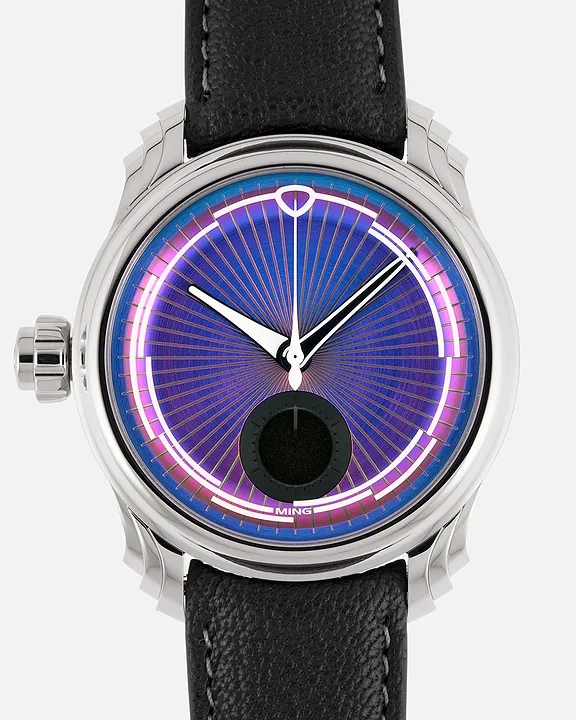
Ming 57.04 Iris Monopusher Chronograph, 2022
S.Song Watches (dealer), Seattle
Wristwatches · 2023
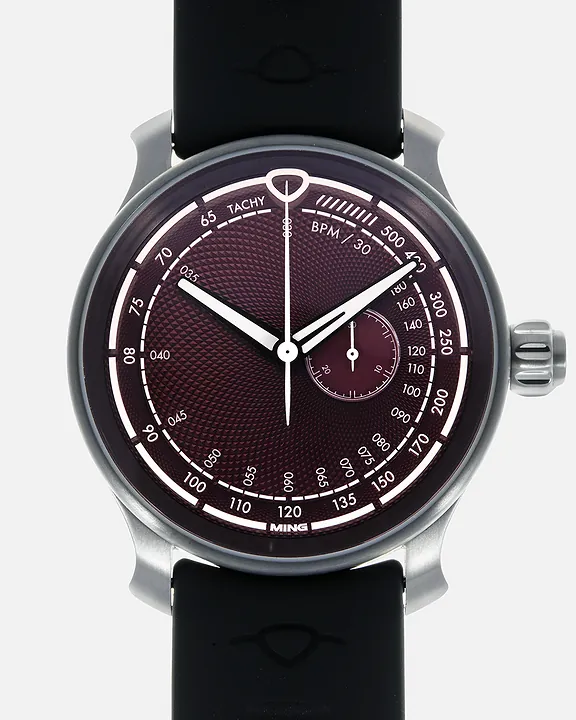
Ming 37.04 Monopusher Chronograph Tantalum, 2023
S.Song Watches (dealer), Seattle
Wristwatches · 2022
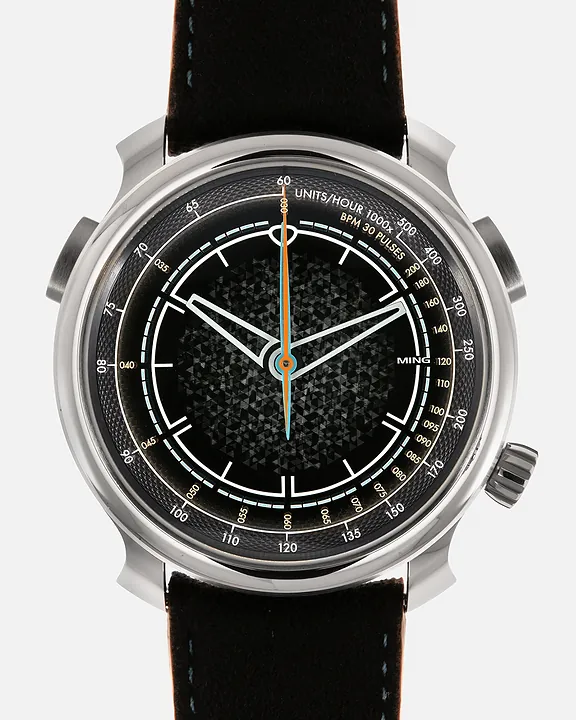
Ming 20.01 Series II Agengraphe Chronograph Special Projects Cave, 2022
S.Song Watches (dealer), Seattle
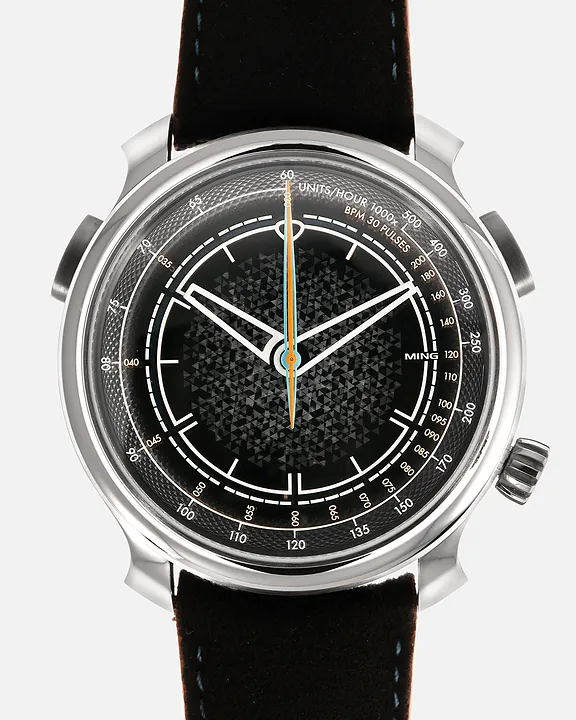
Wristwatches · 2022
Ming 20.01 Series II Agengraphe Chronograph Special Projects Cave, 2022
S.Song Watches (dealer), Seattle
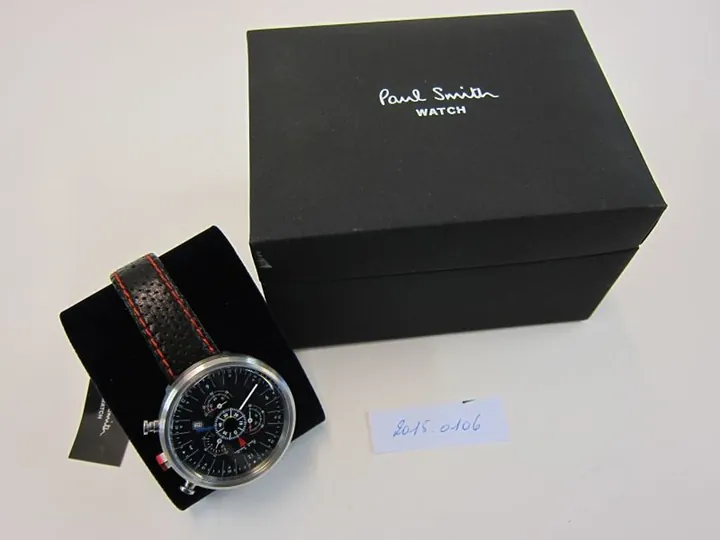
Wristwatches · 2010
Wristwatch, 2010
Modemuseum Hasselt
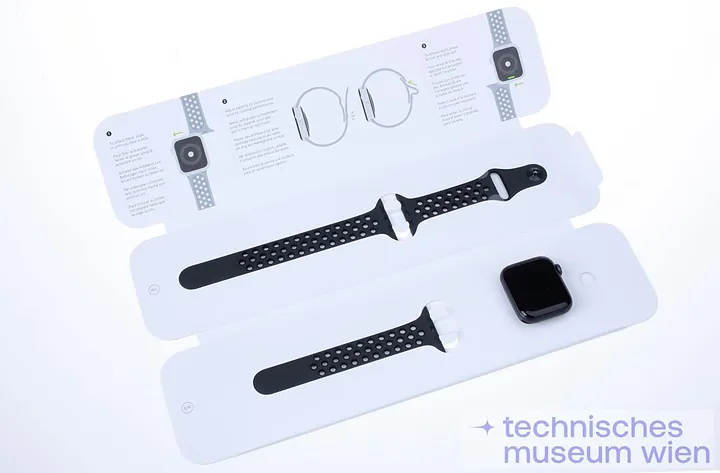
Wristwatches · 2018 (Series 4 released in September 2018; '1977' in the source is the model number A1977)
Apple Watch Series 4 (GPS, 40 mm, model A1977), 2018
Vienna Museum of Science and Technology
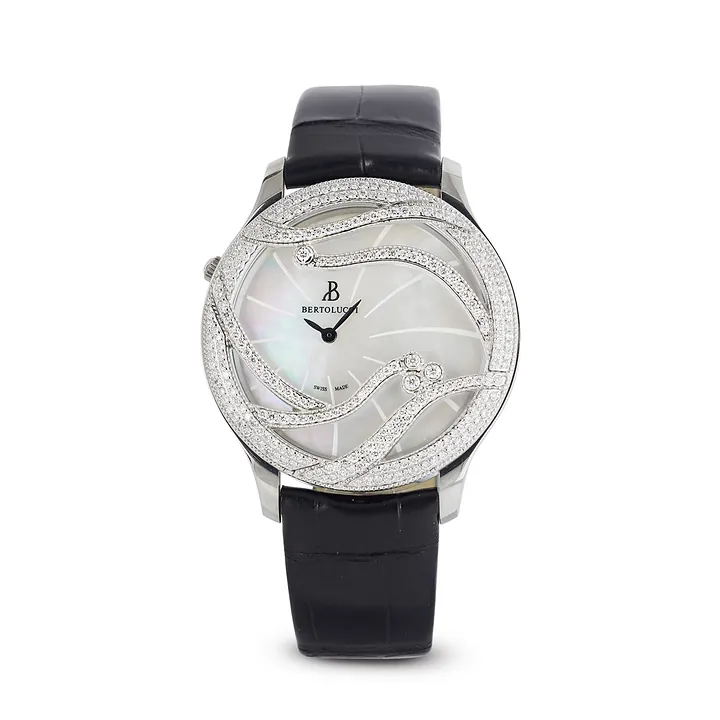
Wristwatches · c. 2010s
Bertolucci Stria III, ref. 11513.50.45.B88.6C1.501, c. 2010s
Antiquorum auction archive, Geneva
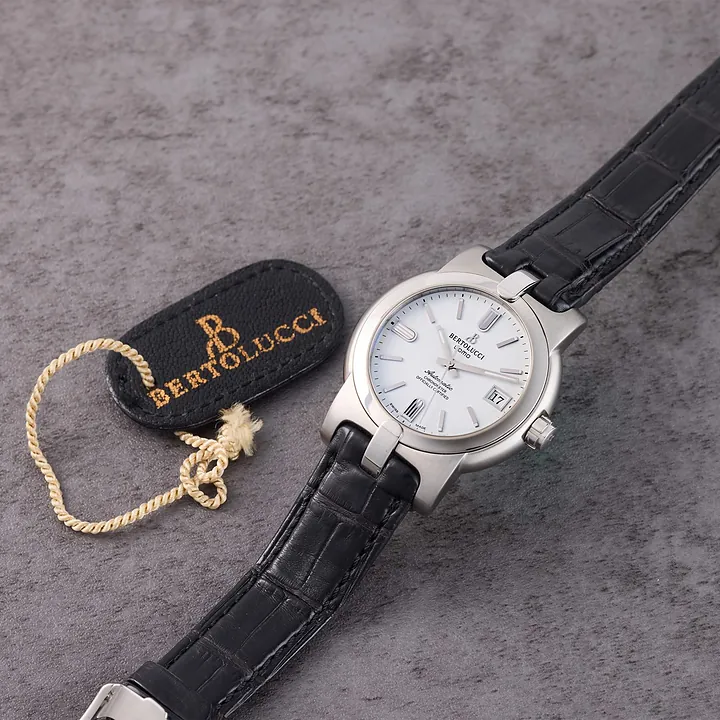
Wristwatches · c. 2010s
Bertolucci Uoma, ref. 824.51.41.10B, c. 2010s
Antiquorum auction archive, Geneva