

Clocks · Table clock
MB&F and L'Epée Ref. 76.6008/140 'T-Rex' Table Clock
- Maker / attribution
- MB&F and L'Epée (source attribution)
- Date
- c. 2019
- Historical period
- Contemporary Horology (2010 – Present)
- Country of origin
- Unrecorded in source
- Object type
- Table clock
- Materials / technique
- Stainless steel, palladium-plated brass, bronze, and hand-blown Murano glass
- Dimensions
- 265mm height x 258mm width x 178mm length
- Holding institution
- Phillips
- Accession / object no.
- 8065
- Credit line
- Phillips
- Catalogue title (original)
- MB&F and L'Epée Phillips Watches Online Auction: The Hong Kong Sessions, Spring 2025 (English)
View the source record ↗ (opens another website in a new tab)Suggest a correction
Record summary
Held and catalogued by Phillips (object number 8065), this is a table clock attributed to MB&F and L'Epée, dated c. 2019. The Atlas places it in the Contemporary Horology period (2010 – Present) of its Clocks collection. Materials and techniques recorded by the source: Stainless steel, palladium-plated brass, bronze, and hand-blown Murano glass. Recorded dimensions: 265mm height x 258mm width x 178mm length. The record is illustrated with 1 photograph.
Assembled from the source record's structured fields. Dates and attributions are given as the source states them; where a field is missing the Atlas leaves it blank rather than estimating.
Catalogue description
Original object description
A collaborative creation by MB&F and L'Epée 1839, this sculptural desk timepiece carries the reference number 76.6008/140 and is designated 'T-Rex'. Cataloguing places its manufacture around 2019, forming part of a limited series of 100 examples featuring blue dials. Based directly on three-dimensional scans of dinosaur skeletal remains, the structure evokes the hind limbs of a Tyrannosaurus Rex in a mix of bronze, stainless steel, and palladium-plated brass, finished in alternating sandblasted and polished surface textures. Suspended atop the legs within gimbal-style mounting rings sits a spherical dial of deep blue hand-blown Murano glass, over which curved steel hands indicate the hours and minutes. The clock is driven by the manual-wind calibre 1855, equipped with 17 jewels, an 18,000 vph balance frequency, and an eight-day power reserve. Hand setting is performed directly at the front dial, while energy is wound into the movement through the rear barrel axis using an included dedicated key. Maker signatures appear on both the movement and the housing. Surviving alongside the piece are its dedicated presentation box, an instruction booklet, gloves, a cleaning cloth, the winding key, and an undated warranty document from L'Epée.
Inscriptions & marks
36’396
Historical context
Contemporary Horology (2010 – Present)
Silicon components, connected watches, optical-lattice research clocks and a thriving independent scene.
Today time is distributed by satellite navigation and networks with nanosecond accuracy, while mechanical clocks are made as art, design and craft objects. Contemporary designers explore the clock as sculpture and kinetic art.
Read the period in the timelineMore clocks from this periodEarlier: Mechanical Renaissance
Atlas type guide
Bracket, table and spring-driven clocks
Spring-driven clocks freed timekeeping from the hanging weight. The coiled mainspring, documented from the fifteenth century, made portable table clocks possible; to even out its declining force, makers used the fusee, a conical pulley connected to the barrel by a gut line or chain. Renaissance table clocks from Augsburg and Nuremberg — drum-shaped, square or tower-shaped in gilt brass — were luxury scientific objects, often with astronomical dials and alarms.
After the pendulum, English makers developed the bracket clock: a wooden case with a carrying handle, a short pendulum with a verge escapement, and often repeating work to sound the hours on demand at night. Later examples use the anchor escapement. In the nineteenth century, 'table clock' became a broad term for spring clocks of every nationality.
What to look for
- A fusee in the movement (cone-shaped pulley) and the type of line — gut or chain.
- Verge escapement with a short bob pendulum, often with a decoratively engraved backplate.
- Repeat cords or buttons that make the clock strike again on demand.
- Gilt-brass engraved cases and horizontal dials on Renaissance pieces.
- Case shapes: inverted bell, bell top, break-arch, lancet or balloon.
Dating clues
- Drum and tower table clocks: c. 1520–1650.
- Ebony veneered English bracket clocks with verge escapements: c. 1670–1800.
- Engraved backplates were usual on English clocks until c. 1800, then generally plain.
General guidance written by the Atlas editors about this kind of object. It is not a statement about this particular piece; for that, rely on the source record above and on physical examination.
Related records
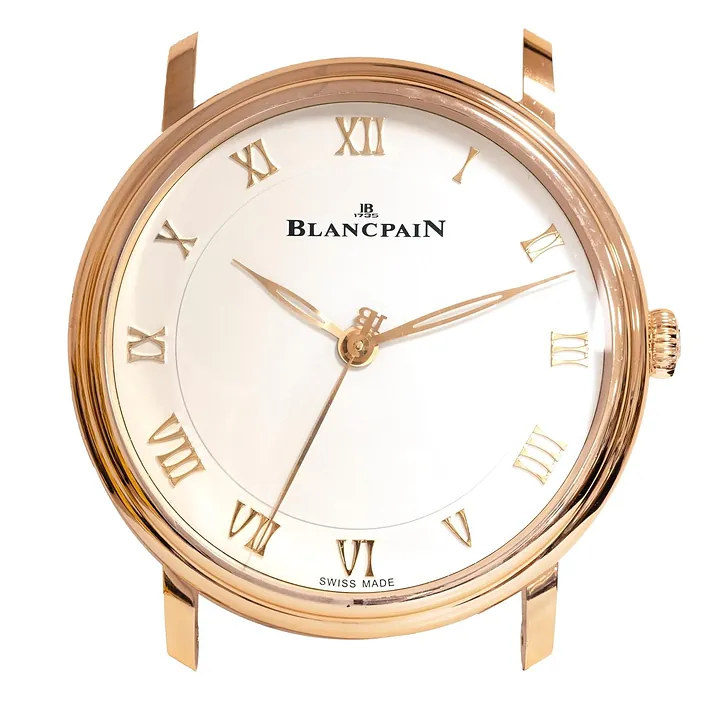
Clocks · c. 2010
Blancpain clock, c. 2010
Antiquorum auction archive, Geneva
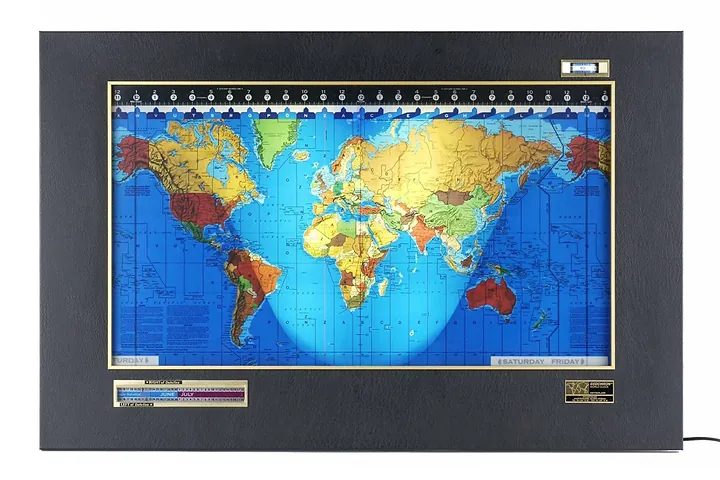
Clocks · 2013
Clock by Geochron, United States, 2013
German Clock Museum
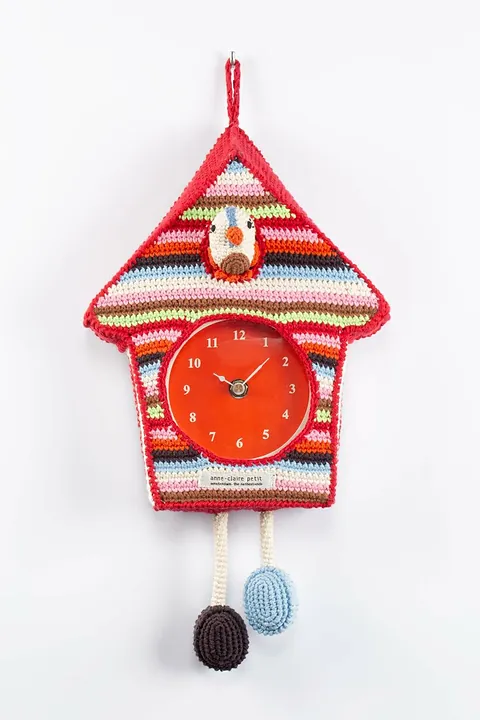
Clocks · 2013
Cuckoo / black forest clock by Anne-Claire Petit, Netherlands, 2013
German Clock Museum
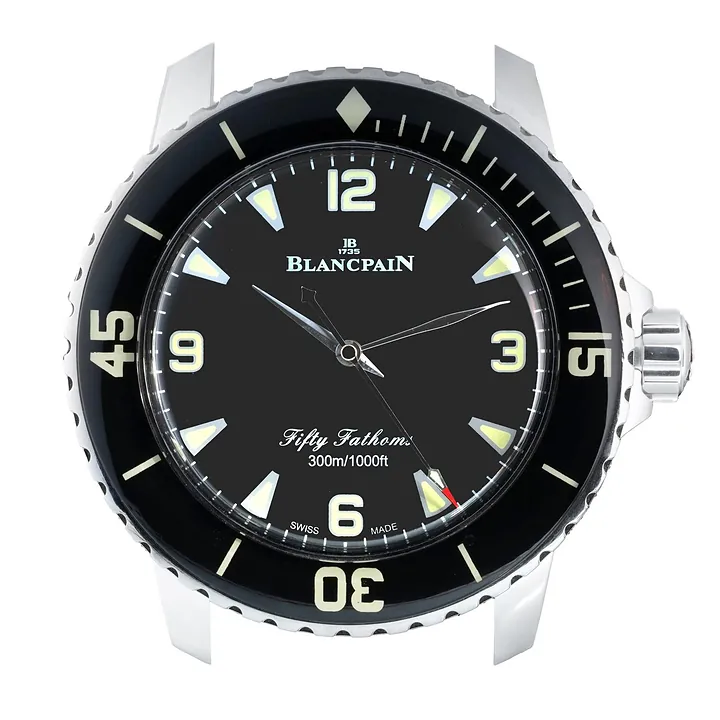
Clocks · c. 2015
Rueg Made for Blancpain Fifty Fathoms, c. 2015
Antiquorum auction archive, Geneva
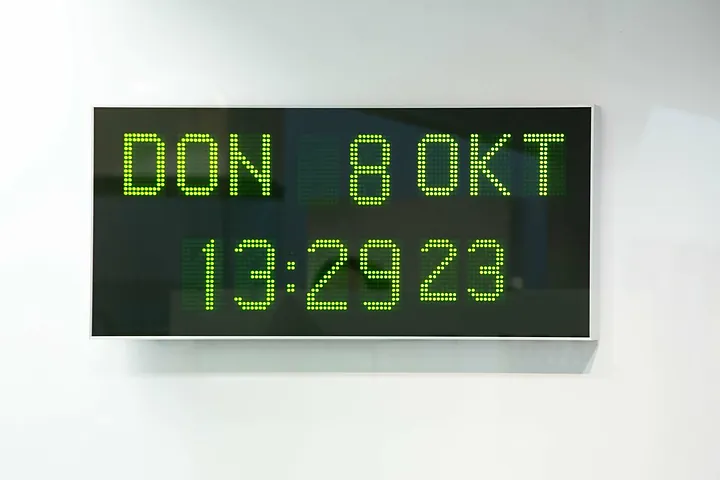
Clocks · 2016
Wall clock by Bürk Mobatime, Germany, 2016
German Clock Museum
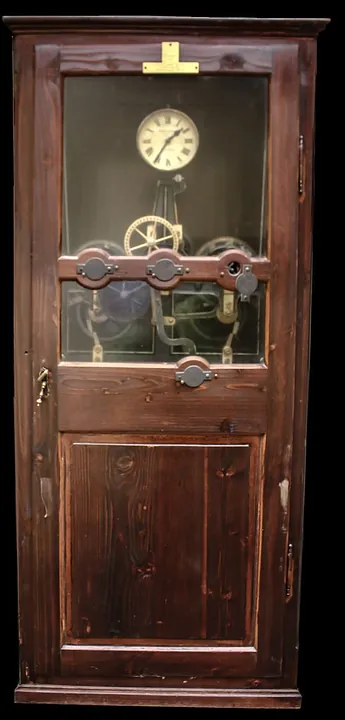
Clocks · 2020
Turret clock, 2020
Local History Museum of Wilfersdorf
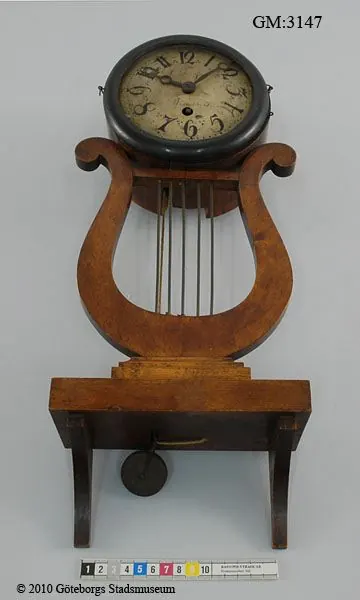
Clocks · 2010
Wall clock by Markus Pettersson, Sweden, 2010
Museum of Gothenburg
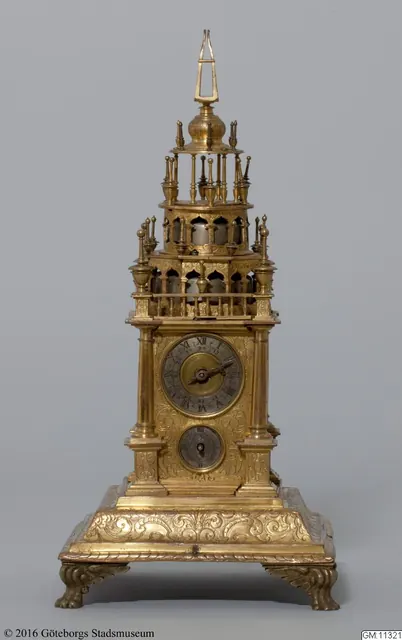
Clocks · 2016
Table clock by Jana Mäkinen, Sweden, 2016
Museum of Gothenburg