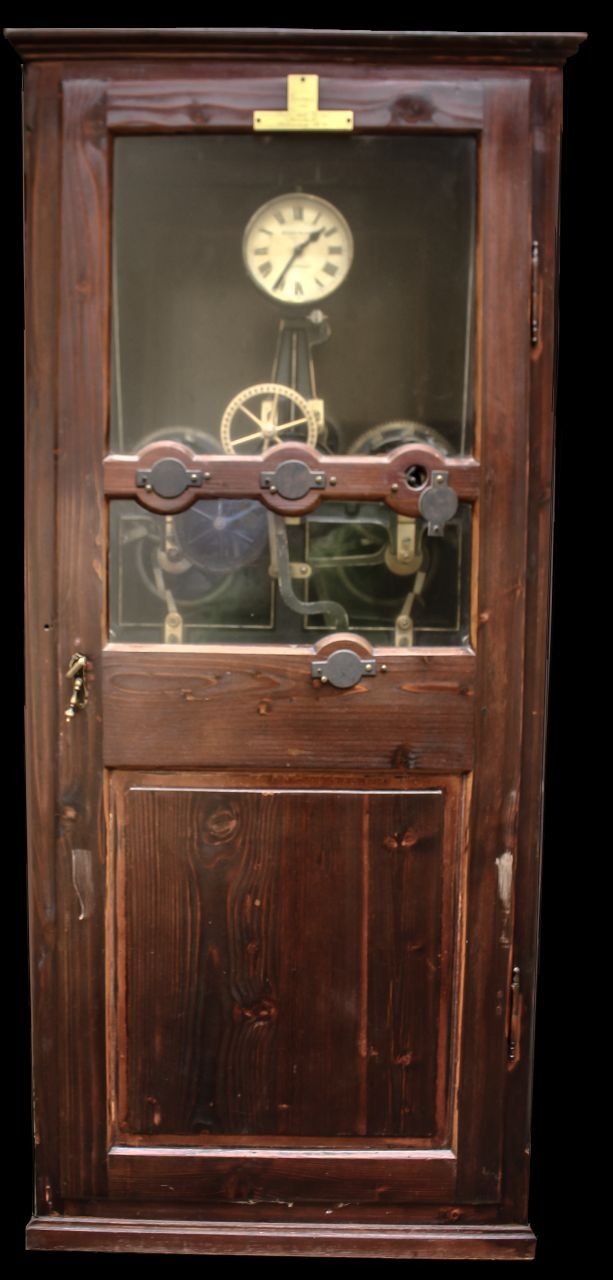
Clocks · Turret clock
Turret clock, 2020
- Maker / attribution
- Unrecorded in source
- Date
- 2020
- Historical period
- Contemporary Horology (2010 – Present)
- Country of origin
- Unrecorded in source
- Object type
- Turret clock
- Holding institution
- Local History Museum of Wilfersdorf
- Accession / object no.
- 01902
- Catalogue title (original)
- Turmuhr von Hobersdorf (German)
Record summary
Held and catalogued by Local History Museum of Wilfersdorf (object number 01902), this is a turret clock, dated 2020. The Atlas places it in the Contemporary Horology period (2010 – Present) of its Clocks collection. The record is illustrated with 1 photograph.
Assembled from the source record's structured fields. Dates and attributions are given as the source states them; where a field is missing the Atlas leaves it blank rather than estimating.
Catalogue description
Catalogue description from Local History Museum of Wilfersdorf (English)
It was Edmund’s wish that the clock will be handed over to the museum after his death (2020). Surrender by his sisters Monika (Köhler) and Andrea.
Historical context
Contemporary Horology (2010 – Present)
Silicon components, connected watches, optical-lattice research clocks and a thriving independent scene.
Today time is distributed by satellite navigation and networks with nanosecond accuracy, while mechanical clocks are made as art, design and craft objects. Contemporary designers explore the clock as sculpture and kinetic art.
Read the period in the timelineMore clocks from this periodEarlier: Mechanical Renaissance
Atlas type guide
Turret, tower and public clocks
The first mechanical clocks of the late thirteenth and fourteenth centuries were large iron striking clocks in towers, monasteries and cathedrals, driven by falling weights and controlled by a verge escapement with a foliot or wheel balance. They struck a bell rather than displaying the time, and only gradually acquired dials. Public clocks ordered civic life, regulating markets, work and worship.
From the seventeenth century the pendulum and then the anchor and pinwheel escapements made turret clocks far more accurate. In the nineteenth century firms such as Dent, Smith of Derby, Gillett & Johnston, J. F. Weule and Collin made cast-iron flatbed movements, and Edmund Beckett Denison's gravity escapement for the Great Clock of Westminster (1859) became the standard for accurate tower clocks.
What to look for
- Frame construction: early wrought-iron 'birdcage' or posted frames versus later cast-iron flatbed or plate-and-spacer frames.
- The escapement: verge and foliot, anchor, pinwheel or double three-legged gravity escapement.
- Striking and chiming trains with count wheels or rack striking.
- Maker's plates and dates cast or engraved on the frame.
Dating clues
- Wedged and riveted wrought-iron frames generally predate 1700.
- Flatbed cast-iron movements date from about 1840 onward.
- Electrical synchronisation and electric winding appear from about 1900.
General guidance written by the Atlas editors about this kind of object. It is not a statement about this particular piece; for that, rely on the source record above and on physical examination.
Related records
Clocks · circa 2010
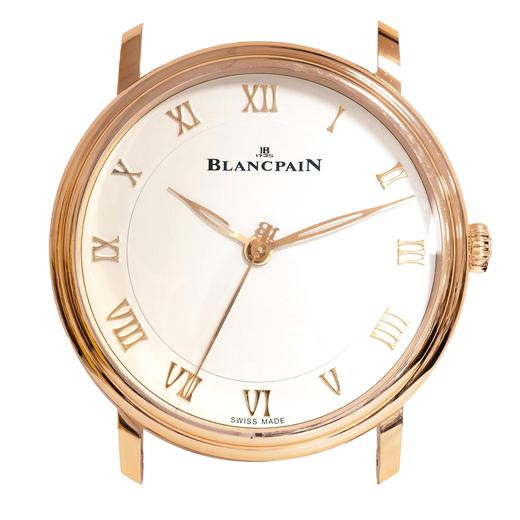
Blancpain clock, circa 2010
Antiquorum auction archive, Geneva

Clocks · 2013
Clock by Geochron, United States, 2013
German Clock Museum

Clocks · 2013
Cuckoo / black forest clock by Anne-Claire Petit, Netherlands, 2013
German Clock Museum

Clocks · circa 2015
Rueg Made for Blancpain Fifty Fathoms, circa 2015
Antiquorum auction archive, Geneva
Clocks · 2016
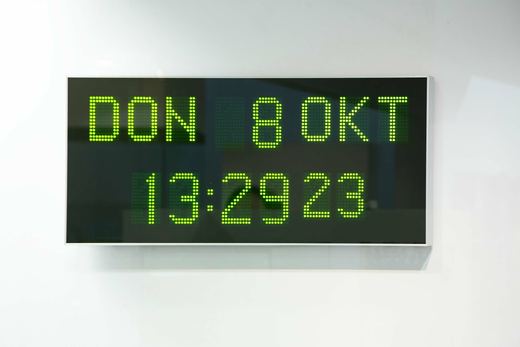
Wall clock by Bürk Mobatime, Germany, 2016
German Clock Museum