
Pocket Watches · Pair-cased clock watch
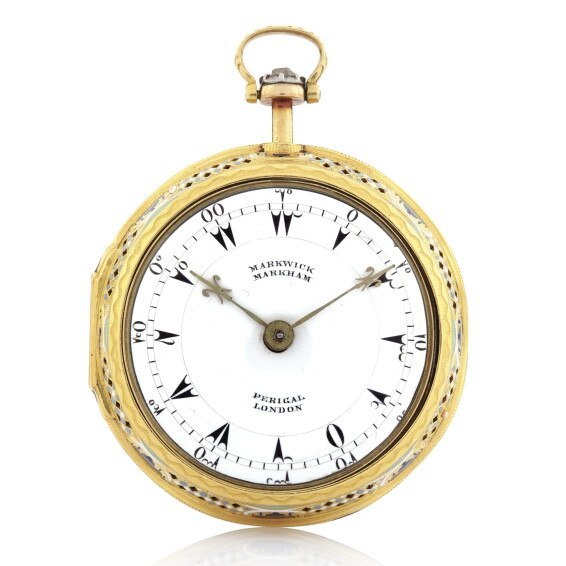
Markwick Markham, Perigal London Gold and Enamel Pair-Cased Clock Watch
- Maker / attribution
- Perigal London Markwick Markham (source attribution)
- Date
- c. 1796
- Historical period
- Precision & Scientific Horology (1750 – 1850)
- Country of origin
- England
- Place
- London
- Object type
- Pair-cased clock watch
- Auction house
- Sotheby's
- Lot
- 207
- Credit line
- Sotheby's
- Catalogue title (original)
- (#207) Markwick Markham, London (English)
View the source record (auction lot) ↗ (opens another website in a new tab)Suggest a correction
Record summary
Catalogued by Sotheby's (lot 207), this is a pair-cased clock watch attributed to Perigal London Markwick Markham, made in London, England, dated c. 1796. The Atlas places it in the Precision & Scientific Horology period (1750 – 1850) of its Pocket Watches collection. The record is illustrated with 1 photograph.
Assembled from the source record's structured fields. Dates and attributions are given as the source states them; where a field is missing the Atlas leaves it blank rather than estimating.
Catalogue description
Original object description
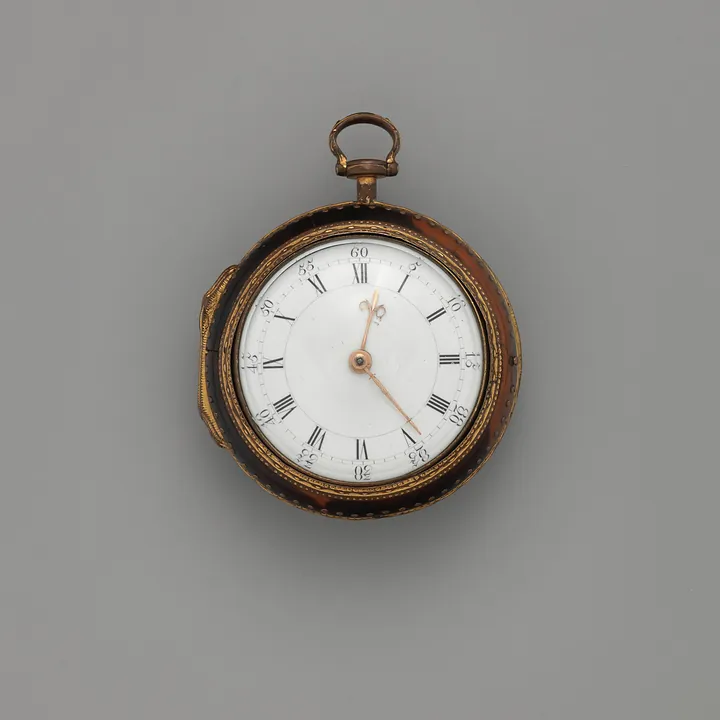
Produced in London, England, around 1796 specifically for export to the Ottoman Empire, this gold and enamel pair-cased clock watch is marked with London hallmarks for 1796 as well as the sponsor's mark "VW". Its white enamel dial, which exhibits later replacement hands along with a subtle hairline running between 6 and 8 o'clock and edge chipping, features Ottoman Turkish numerals and the signature "Markwick Markham, Perigal London". Running on a numbered full-plate gilt verge movement inscribed by "Markwick Markham, Borrel", the mechanism employs a balance cock enriched by piercing and engraving, a diamond endstone mounted in a screwed chaton, and striking and repeating trains sounding the hours and quarter-hours upon an interior bell. Both pair cases are perforated with openwork to release the chime; the inner gold case is engraved with scroll motifs, while the outer case is embellished with vivid polychrome enamels, diamond ornamentation, and a checkered border.
Construction and Market Context
Constructed circa 1796 to appeal to Ottoman tastes, the watch features an elaborate pair of gold cases designed to emit the chime of its internal bell. Openwork scrollwork on the inner container is complemented by the outer case's lavish enamel decoration, which includes a depiction of the Sultan Ahmet Camii Mosque, military trophies set against translucent deep purple enamel, and gilded floral garlands executed in turquoise, pale blue, and white. The outer perimeter is framed by a checkered pattern, and a diamond is set into the pendant push piece.
Dial and Movement
The timepiece is fitted with a white enamel dial bearing Ottoman numerals, an inscription reading "Markwick Markham, Perigal London", and non-original hands. A light hairline fracture is visible on the dial surface spanning from the 6 to 8 o'clock markers. Within sits a gilt full-plate verge caliber bearing the signature and serial number of "Markwick Markham, Borrel". Designed with striking and repeating systems for sounding hours as well as quarters, the movement incorporates a pierced and chased balance cock alongside a diamond endstone held in place by a screwed chaton.
Documentation and Condition
Bearing 1796 London assay marks and the "VW" maker's stamp on its case elements, the watch was recorded in running order at the time of cataloguing. Noted flaws include perimeter chipping on the dial, light surface abrasions across the metal cases, and a customary need for overhaul, with the evaluators noting that condition summaries represent subjective viewpoints rather than definitive warranties regarding the originality of individual components.
Historical context
Precision & Scientific Horology (1750 – 1850)
Harrison solves longitude; Mudge invents the lever; Breguet's Paris workshop defines the modern watch.
From 1750 to 1850 the watch became a precision instrument. Mudge's lever escapement, the cylinder escapement, Lépine's thin bar calibre, Breguet's innovations (overcoil, tourbillon, perpétuelle) and the pocket chronometer of Arnold and Earnshaw all date from this period, while verge watches remained common in cheaper production.
Read the period in the timelineMore pocket watches from this periodEarlier: Early Modern Horology
Atlas type guide
Early spring-driven watches
Portable spring-driven timepieces appeared in southern Germany, France and Italy in the early sixteenth century; Peter Henlein of Nuremberg is traditionally credited, although the historical record is complex. These early watches were worn as pendants or carried, had iron or brass movements with a verge escapement and a foliot or small balance, and used a stackfreed or fusee to equalise spring force. They indicated hours only and were notoriously inaccurate.
From the later sixteenth century watches were made in Blois, Paris, Geneva, London and Augsburg in oval, octagonal, cruciform, skull and other 'form' cases of rock crystal, gilt brass, silver and enamel. They were jewellery and status objects as much as timekeepers.
What to look for
- A single hour hand and often a touch-pin hour ring for feeling the time.
- Stackfreed (a cam and spring) instead of a fusee on German watches.
- Pierced and engraved cocks over the balance, fine gut fusee lines.
- Rock-crystal, enamelled or engraved form cases.
Dating clues
- Drum-shaped German watches: c. 1530–1580.
- Oval and form watches: c. 1580–1650.
- Before c. 1675 there is no balance spring; watches can vary by many minutes a day.
General guidance written by the Atlas editors about this kind of object. It is not a statement about this particular piece; for that, rely on the source record above and on physical examination.
Read next:FuseeFoliotThe Melanchthon watch
Related records
Pocket Watches · c. 1740–60
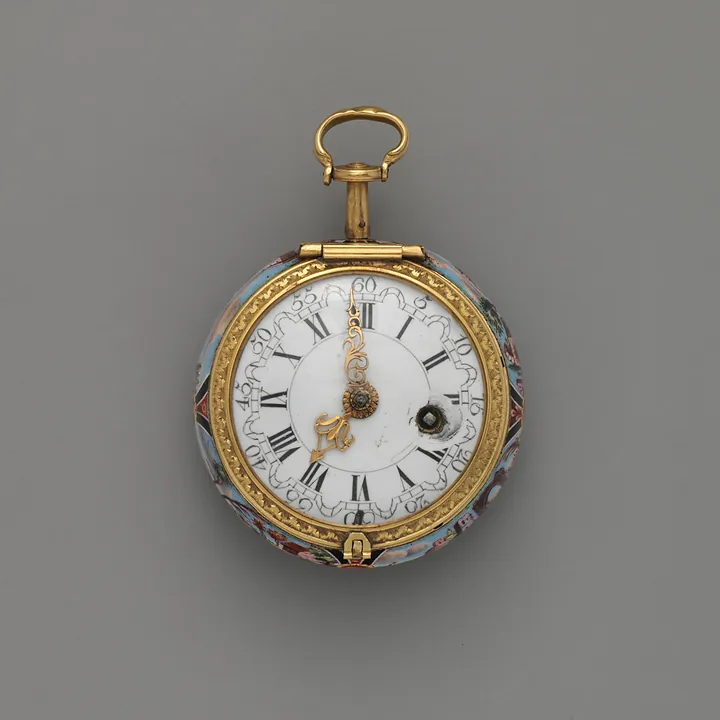
Watch by Charles Cabrier II, England, c. 1740–60 (The Met 17.190.1458)
The Metropolitan Museum of Art, New York
Pocket Watches · c. 1740–60
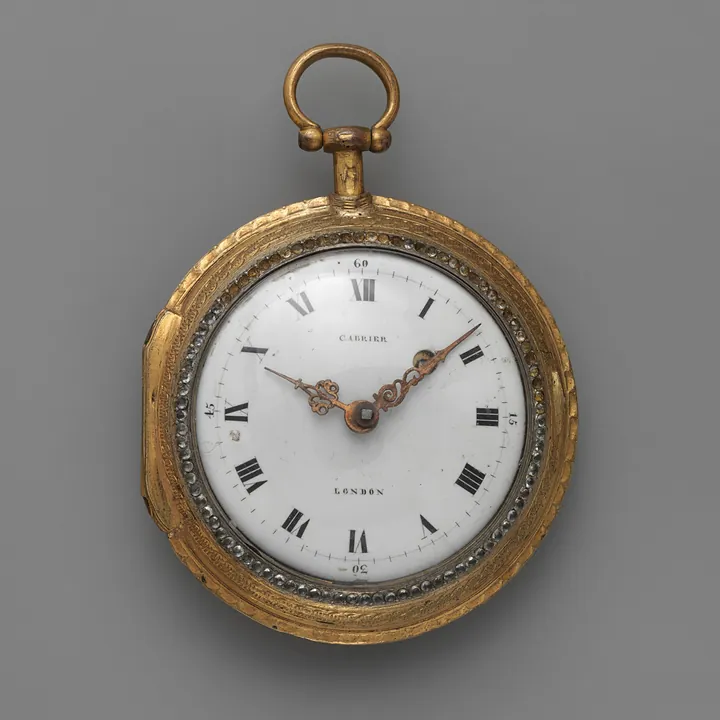
Watch by Charles Cabrier II, England, c. 1740–60 (The Met 17.190.1461)
The Metropolitan Museum of Art, New York
Pocket Watches · c. 1751–52
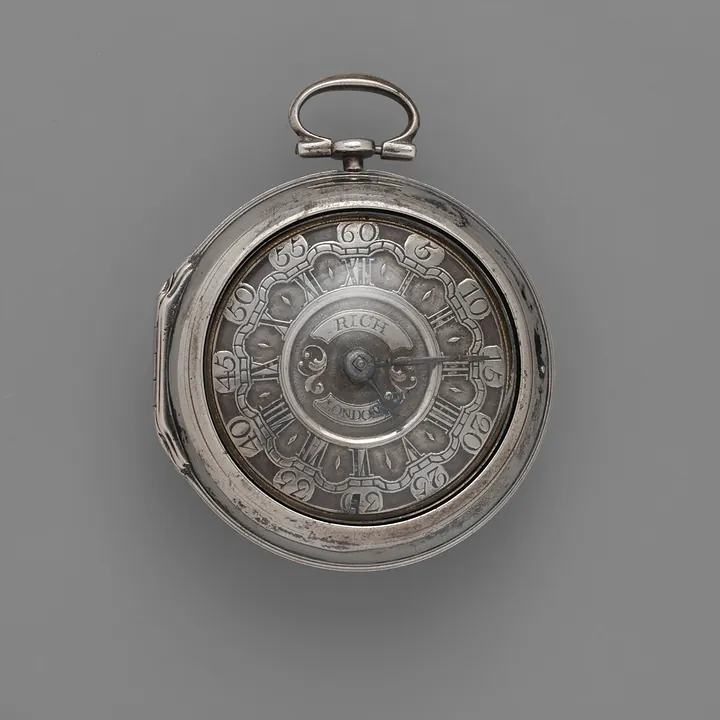
Watch by John Rich, England, c. 1751–52
The Metropolitan Museum of Art, New York
Pocket Watches · c. 1753
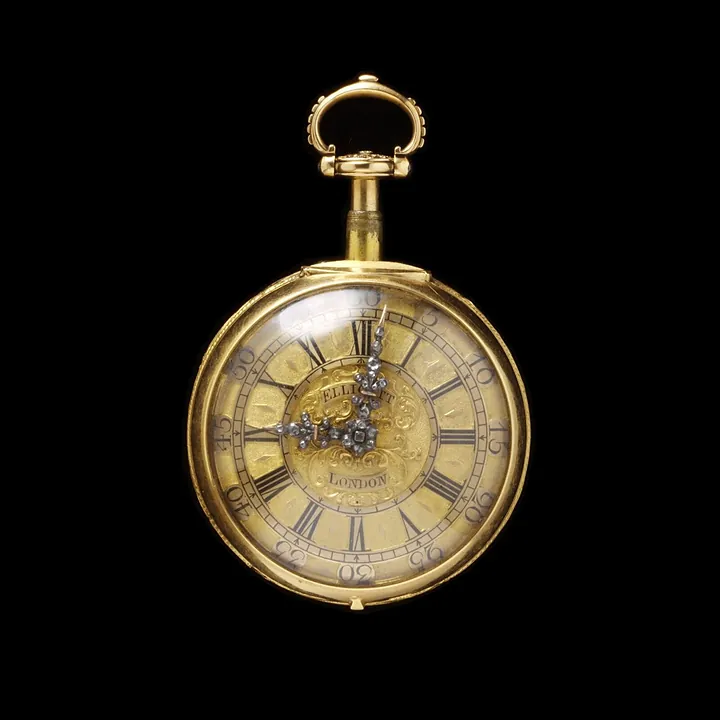
Gold watch, signed 'Jno. Ellicott, London, 3719', the inner case pierced and engraved, with a casemaker's mark 'JB', London, about 1753
Victoria and Albert Museum, London
Pocket Watches · 1750–1810
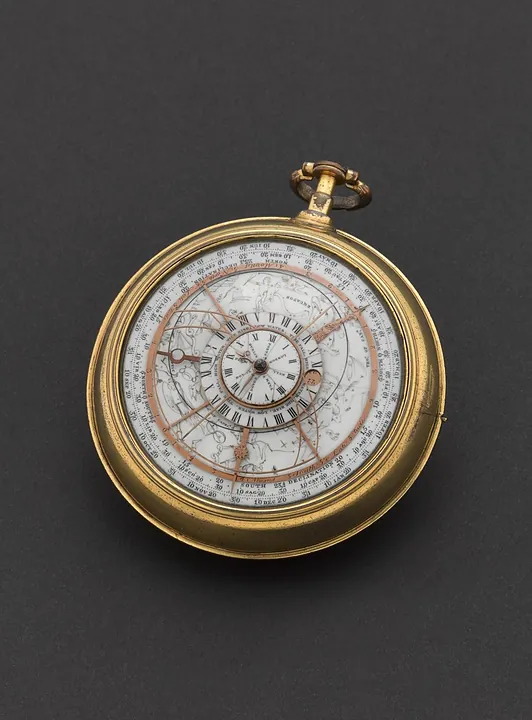
Astronomical watch by George Margetts No.3043 in pair case, 1750–1810
Science Museum Group, London
Pocket Watches · 1750–1775
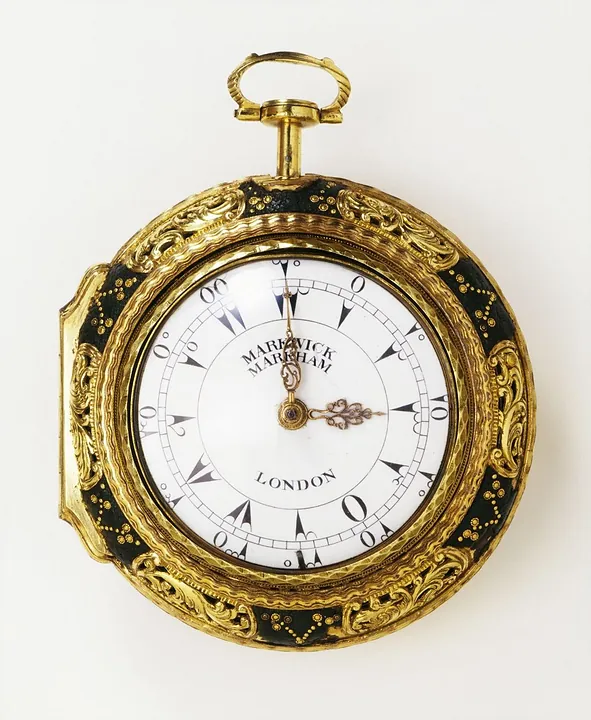
Watch made for the Turkish market
Victoria and Albert Museum, London
Pocket Watches · c. 1760
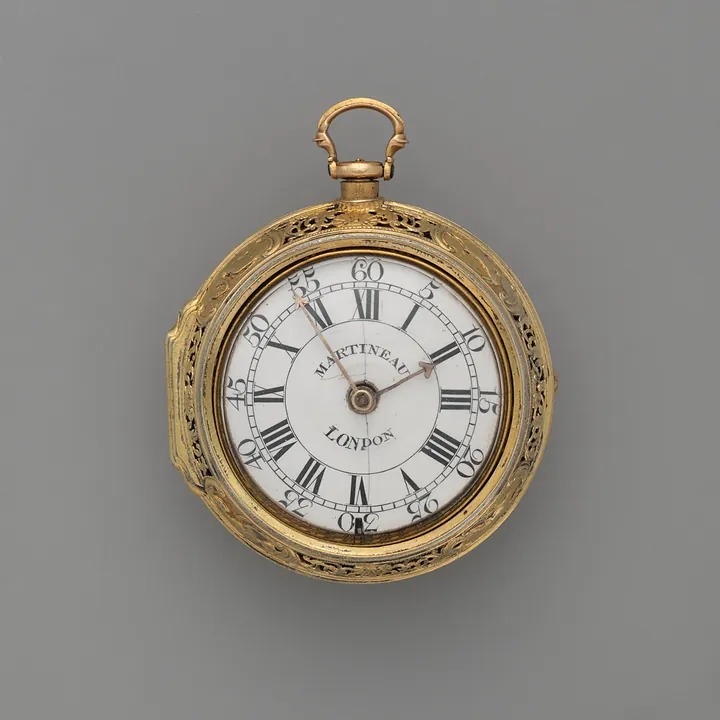
Clock-watch by Sr. Joseph Martineau, England, c. 1760
The Metropolitan Museum of Art, New York
Pocket Watches · c. 1760
Watch by John Ellicott, England, c. 1760
The Metropolitan Museum of Art, New York