
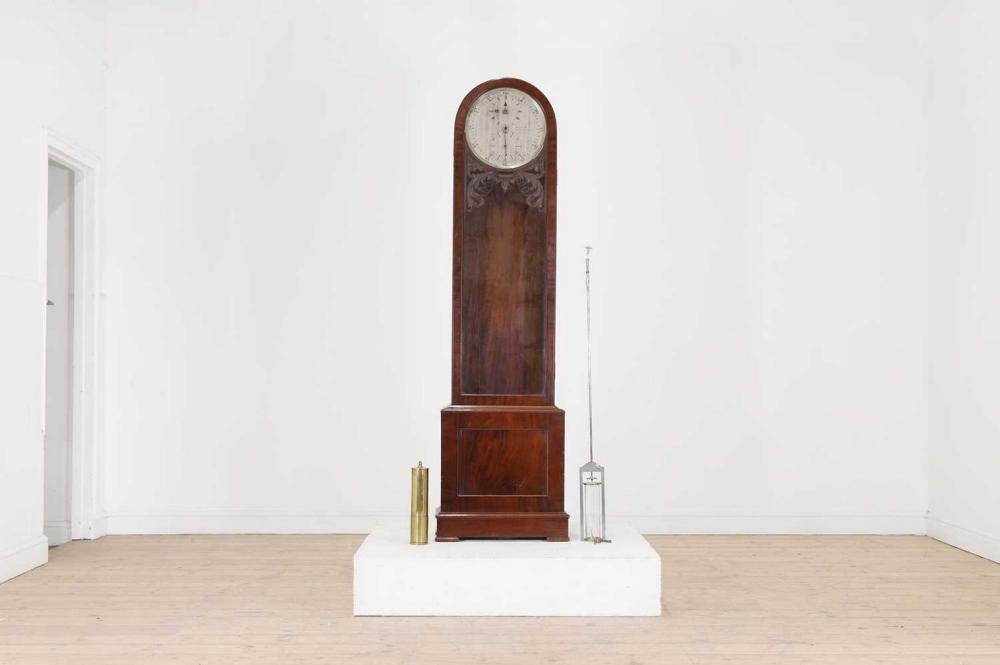
Clocks · Regulator clock
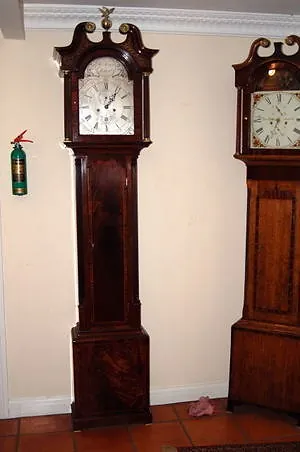
Mahogany regulator clock by Sir James Clark
- Maker / attribution
- Sir James Clark (source attribution)
- Date
- 19th century
- Historical period
- Precision & Scientific Horology (1750 – 1850)
- Country of origin
- Scotland
- Object type
- Regulator clock
- Dimensions
- 47cm wide 30cm deep 177cm high
- Auction house
- Sworders (via Invaluable)
- Lot
- 253
- Credit line
- Sworders (via Invaluable)
- Catalogue title (original)
- A mahogany regulator clock by Sir James Clark (1788-1870) (English)
View the source record (auction lot) ↗ (opens another website in a new tab)Suggest a correction
Record summary
Catalogued by Sworders (via Invaluable) (lot 253), this is a regulator clock attributed to Sir James Clark, made in Scotland, dated 19th century. The Atlas places it in the Precision & Scientific Horology period (1750 – 1850) of its Clocks collection. Recorded dimensions: 47cm wide 30cm deep 177cm high. The record is illustrated with 1 photograph.
Assembled from the source record's structured fields. Dates and attributions are given as the source states them; where a field is missing the Atlas leaves it blank rather than estimating.
Catalogue description
Original object description
This nineteenth-century Scottish regulator clock is housed in a mahogany tallcase measuring 177 cm high, 47 cm wide, and 30 cm deep. Standing upon bracket feet, its panelled plinth supports the main trunk, which features a full-length glass pane set beneath pierced foliate fretwork, offering an unobstructed view of the internal pendulum and mechanism. The silvered face displays Arabic numerals supplemented by two secondary dials. An engraved text identifies it as having been "Made by Dr James" Clark, MD.FRCS.EDIN. Historic archives link this credit to Sir James Clark (1788–1870), a medical graduate of Aberdeen and Edinburgh who served as doctor to Princess Victoria and the Duchess of Kent before his appointment as Physician-in-Ordinary to Queen Victoria after her 1837 coronation.
Historical context
Precision & Scientific Horology (1750 – 1850)
Harrison solves longitude; Mudge invents the lever; Breguet's Paris workshop defines the modern watch.
The age of the deadbeat escapement, compensated pendulums and observatory regulators. Domestic clocks spread through the middle classes: English longcase and bracket clocks, French gilt-bronze mantel clocks, Viennese Biedermeier wall clocks, Black Forest painted-shield clocks, and the first American shelf clocks.
Read the period in the timelineMore clocks from this periodEarlier: Early Modern Horology
Atlas type guide
Regulators, wall and Vienna clocks
A regulator is a precision pendulum clock used as a time standard in observatories, workshops and railway offices. Typical features are a deadbeat or Graham escapement, a temperature-compensated pendulum (mercury jar, gridiron or later invar), maintaining power and a regulator dial that separates hours, minutes and seconds. George Graham's deadbeat escapement (c. 1715) and his mercury pendulum, together with Harrison's gridiron, set the pattern for two centuries.
Wall clocks span a much wider range: the elegant Viennese Laterndluhr and Dachluhr of the Biedermeier period, the Dutch stoelklok and staartklok, English 'dial' clocks used in schools, offices and railway stations, and mass-produced spring and weight wall clocks from Germany (Gustav Becker, Junghans, Kienzle) and America.
What to look for
- Deadbeat escapement and compensated pendulum (gridiron rods, mercury jar or wood rod).
- A regulator dial with a large central minute hand and separate hour and seconds dials.
- Vienna regulators: glazed cases, slender pendulum, small weights, enamel two-piece dials.
- German factory trademarks stamped on the backplate (e.g. Gustav Becker anchor and crown, Junghans star).
Dating clues
- Graham-type deadbeat regulators: from c. 1720.
- Viennese Laterndluhr: c. 1800–1850.
- German factory 'Vienna-style' regulators: c. 1870–1930; Gustav Becker serial numbers allow close dating.
General guidance written by the Atlas editors about this kind of object. It is not a statement about this particular piece; for that, rely on the source record above and on physical examination.
Read next:Deadbeat escapementAnchor (recoil) escapementGrasshopper escapement
Related records
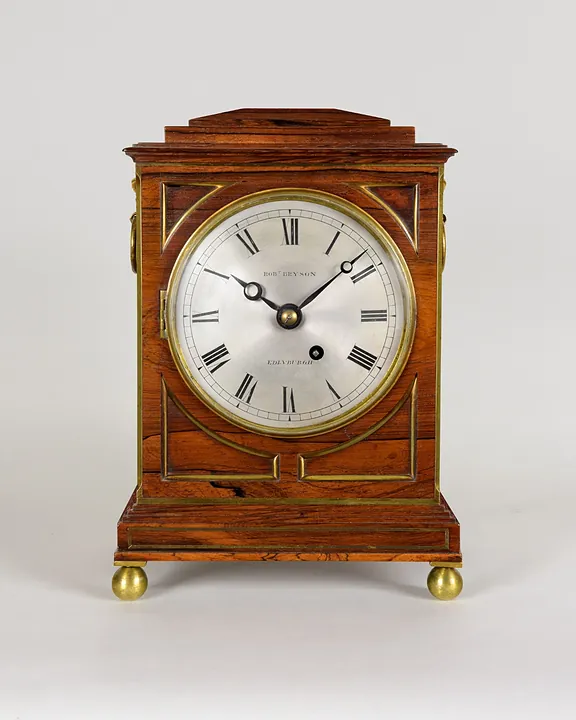
Clocks · c. 1820–1830
Bracket clock by Bryson, Edinburgh, c. 1820–1830
Howard Walwyn Fine Antique Clocks (dealer), London
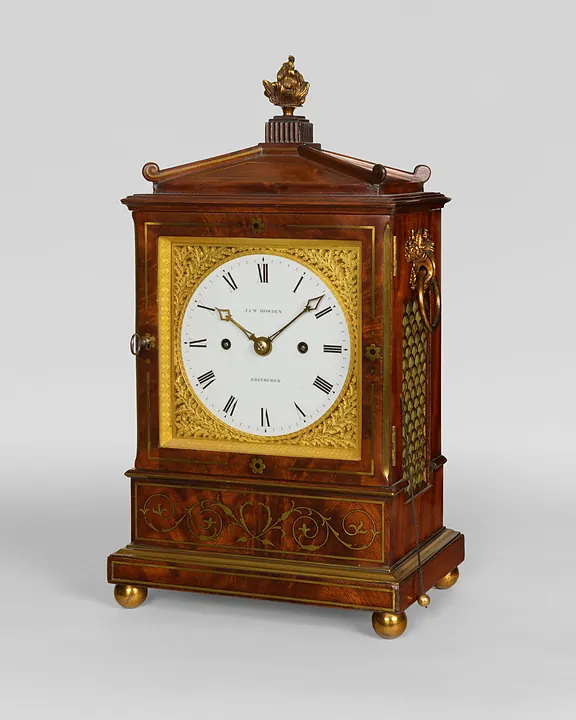
Clocks · c. 1820–1830
Bracket clock by J & W Howden, Edinburgh, c. 1820–1830
Howard Walwyn Fine Antique Clocks (dealer), London
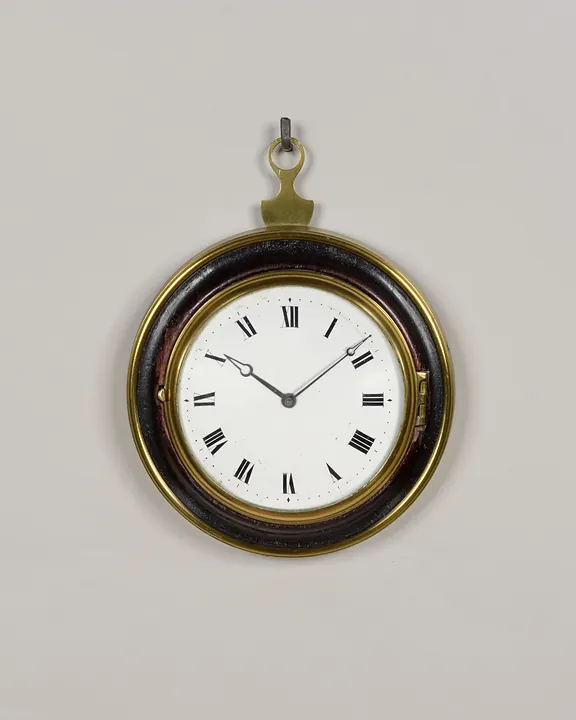
Clocks · c. 1810
Clock by Reid and Auld, Edinburgh, c. 1810
Howard Walwyn Fine Antique Clocks (dealer), London
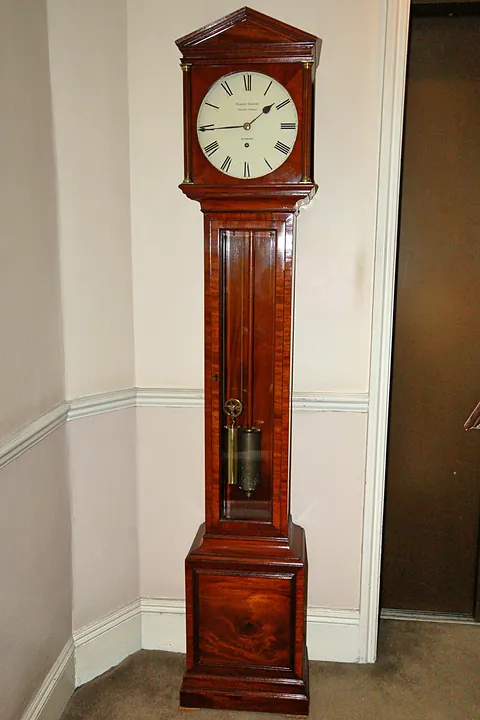
Clocks · c. 1810
Grandfather Clock by Robert Bryson, Edinburgh, c. 1810
Pendulum of Mayfair (dealer), London
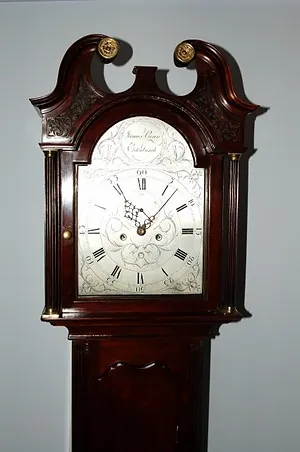
Clocks · c. 1790
Grandfather Clock by James Gray, Edinburgh, c. 1790
Pendulum of Mayfair (dealer), London
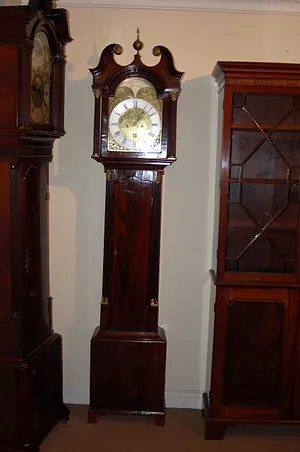
Clocks · c. 1785
Grandfather Clock by Robert Clidsdale, Edinburgh, c. 1785
Pendulum of Mayfair (dealer), London
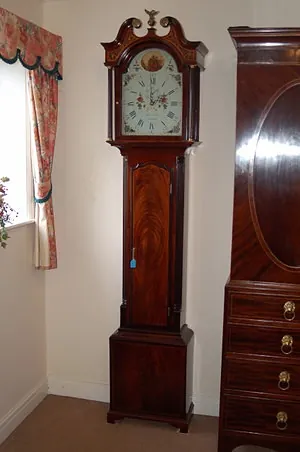
Clocks · c. 1795
Grandfather Clock by John Scott, Edinburgh, c. 1795
Pendulum of Mayfair (dealer), London
Clocks · c. 1790
Grandfather Clock by Thos Morgan, Edinburgh, c. 1790
Pendulum of Mayfair (dealer), London