
Wristwatches · Wristwatch
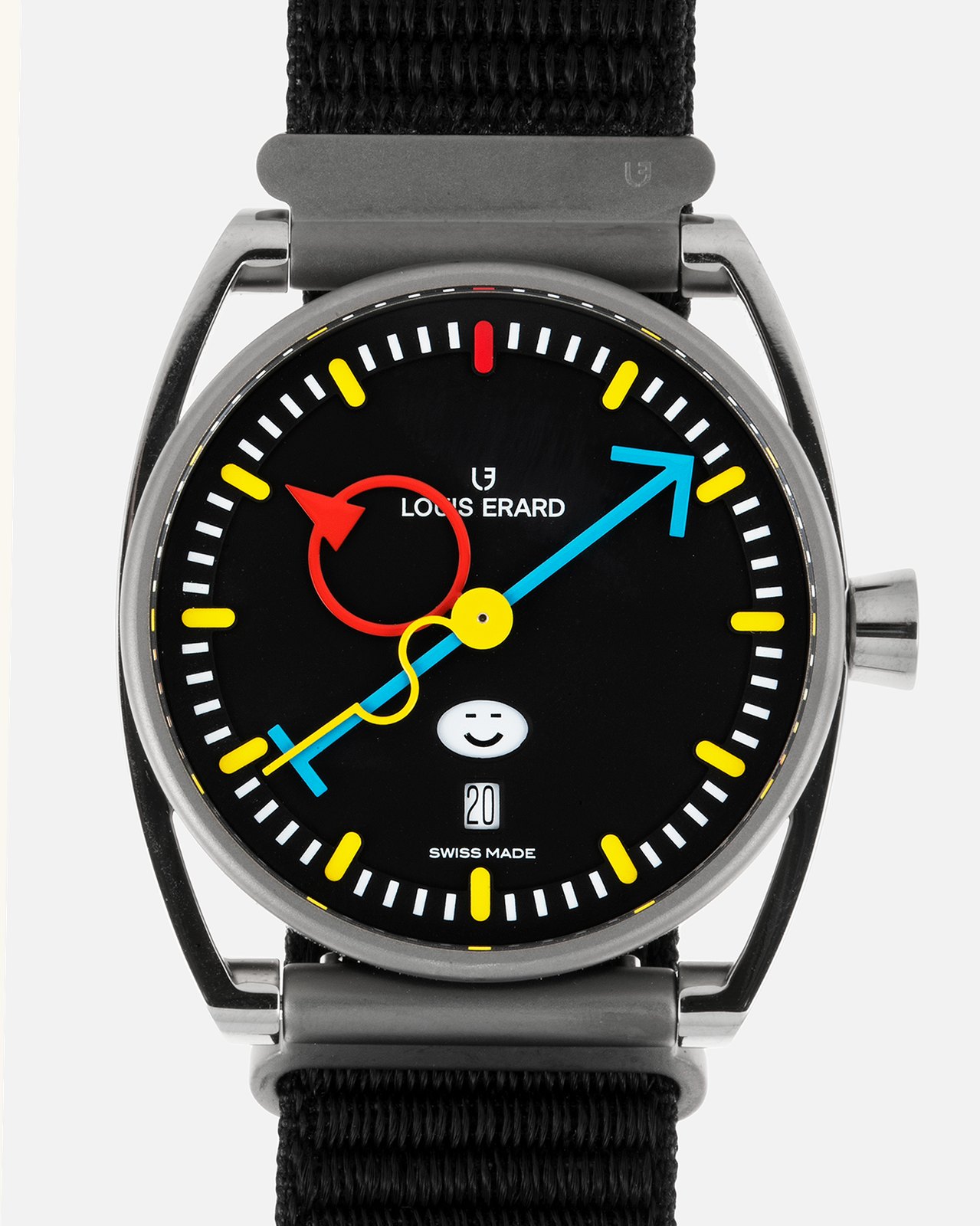
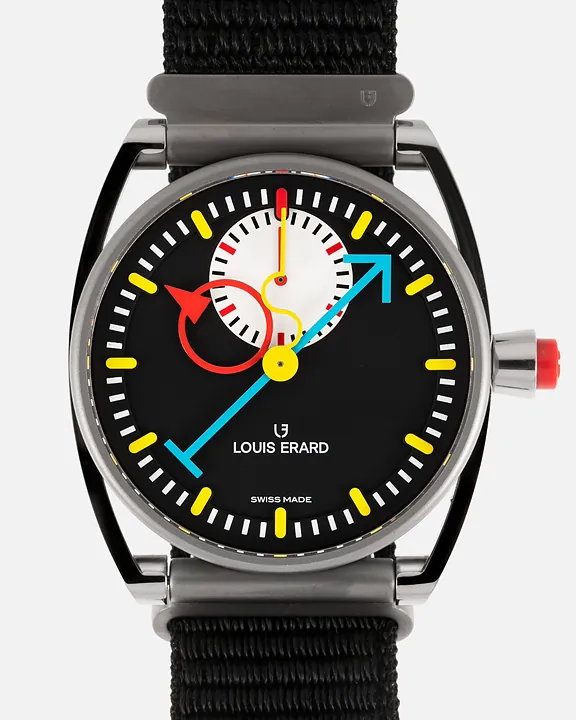
Louis Erard X Alain Silberstein La Semaine, 2021
- Maker / attribution
- Louis Erard X Alain Silberstein (maker)
- Date
- 2021
- Historical period
- Contemporary Horology (2010 – Present)
- Country of origin
- Unrecorded in source
- Object type
- Wristwatch
- Dimensions
- Case 40 mm
- Stock no.
- Product 6880083607639
- Credit line
- Dealer listing, S.Song Watches (product 6880083607639)
- Catalogue title (original)
- Louis Erard X Alain Silberstein La Semaine (English)
View the source record (dealer listing) ↗ (opens another website in a new tab)Suggest a correction
Record summary
Catalogued by S.Song Watches (dealer), Seattle (stock number Product 6880083607639), this is a wristwatch by Louis Erard X Alain Silberstein, dated 2021. The Atlas places it in the Contemporary Horology period (2010 – Present) of its Wristwatches collection. Recorded dimensions: Case 40 mm. The record is illustrated with 6 photographs.
Assembled from the source record's structured fields. Dates and attributions are given as the source states them; where a field is missing the Atlas leaves it blank rather than estimating.
Catalogue description
Dealer description — S.Song Watches
Founded in 1929, Louis Erard is a watchmaker filled with heritage and history. Selling watches under their own banner since 1931, the brand was eventually acquired in the 1990s before it was later relaunched during the independent watchmaking boom of the early 2000s. Now established with a strong design language that doesn't break the bank to buy into, Louis Erard has built up a passionate customer base that continues to grow thanks to the popularity and success of their collaborative projects and impressive individual exploits. One of their most successful collaborations is with the famed French designer and watchmaking industry veteran Alain Silberstein. Released in 2021 as Louis Erard's second collaboration with Alain Silberstein following the duo's first collaboration in 2019, the Le Triptyque Louis Erard x Alain Silberstein was a trio of timepieces that each featured a unique set of functions and layout while also being limited to just 178 pieces each. Offered here is the La Semaine variant, which is my favorite out of the three due to its unique and playful demeanor which we will discuss below. Sharing the same 40mm case as its two sibling models, the La Semaine is an exceedingly unique timepiece that features vertical sidebars or 'brancards' as they are also known that are reminiscent of independent watchmaking powerhouse De Bethune's floating lugs. To highlight the various parts of the case, it is made from two different materials with different surface finishes. Made from micro-blasted grade 2 titanium, its lugs, case, and bezel all sport a matte finish, while its grade 5 titanium vertical sidebars feature a polished finish. Featuring the most vital piece of Alain's signature visual style is the La Semaine's dial. A plain black dial hosting multi-colored hands made from various shapes, the La Semaine tastefully blends yellow with red and blue to create a visual delight, enhancing legibility. Another highlight of the La Semaine is its day-of-the-week indicator which is represented by a series of smiley emoticons that allows the wearer to set the mood of the day. A very fun yet appropriate complication for modern users today if you ask me. You will also find a date window at 6 o ‘clock just beneath the aperture for the emoticons. Powering this playful and unique display is the automatic ETA 2836-2, which features a respectable 38-hour power reserve. Fitted with a sapphire crystal exhibition caseback, the La Semaine's movement is proudly on full display with its custom Louis Erard winding rotor as it drives this wonderful collaborative timepiece forward.
Historical context
Contemporary Horology (2010 – Present)
Silicon components, connected watches, optical-lattice research clocks and a thriving independent scene.
Smartwatches became the world's best-selling watches, while mechanical watchmaking focuses on craft, innovation (silicon components, new escapements) and independent makers.
Read the period in the timelineMore wristwatches from this periodEarlier: Mechanical Renaissance
Atlas type guide
Wristwatches
Bracelet watches were worn by women from the early nineteenth century — Breguet made one for Caroline Murat, Queen of Naples, in 1810–12 — but the wristwatch only became a man's instrument with military use and aviation in the early twentieth century. Between the World Wars it overtook the pocket watch; the 1920s and 1930s brought rectangular Art Deco cases, water-resistant cases and the first automatic winding systems.
After 1945 the wristwatch became a carrier of identity — dress watches, sports and dive watches, chronographs, calendars — produced by Swiss, American, Japanese, German, Soviet and Chinese industries. The quartz revolution after 1969 and the mechanical renaissance since the 1990s, including the rise of independent watchmakers, complete the story.
What to look for
- The reference number (between the lugs or inside the case back) and serial number, the starting point for dating.
- The calibre: its maker and number are often stamped under the dial or on the bridge.
- Originality of dial, hands and crown — refinished ('redial') dials are common.
- Case material marks: 18K/750, 14K/585, stainless steel, gold-filled, plated.
Dating clues
- Wire-lug cases: before c. 1925.
- Water-resistant screw-down cases: from 1926.
- Quartz movements: from 1969; sapphire crystals widespread after c. 1980.
General guidance written by the Atlas editors about this kind of object. It is not a statement about this particular piece; for that, rely on the source record above and on physical examination.
Related records
Wristwatches · 2022
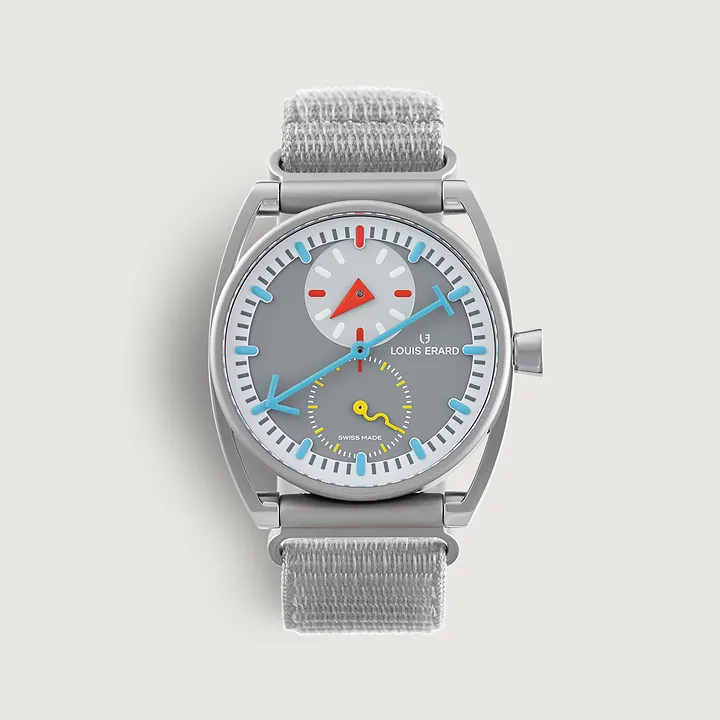
Louis Erard x Alain Silberstein Le Regulator Singapore, 2022
Watches of Knightsbridge (dealer), London
Wristwatches · 2022
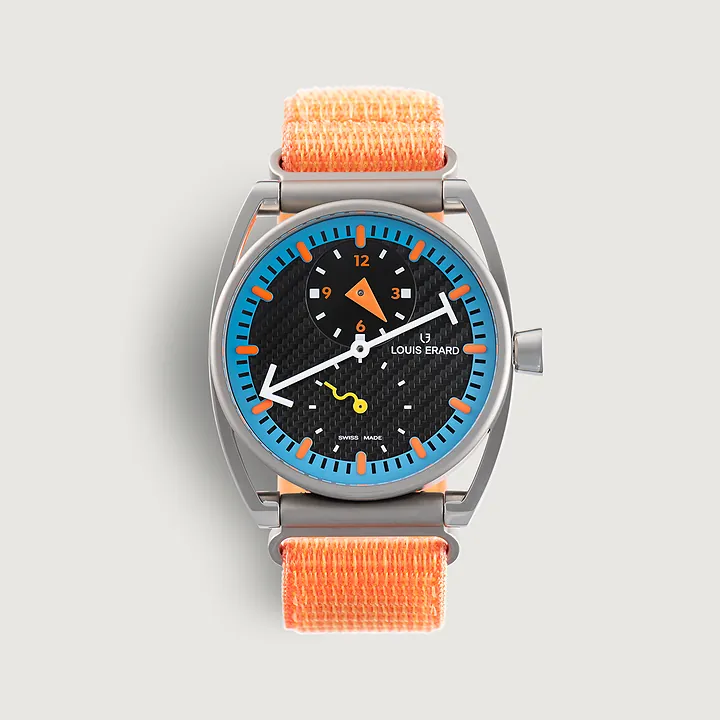
Louis Erard x Alain Silberstein Le Regulator For Seddiqi UAE, 2022
Watches of Knightsbridge (dealer), London
Wristwatches · 2022
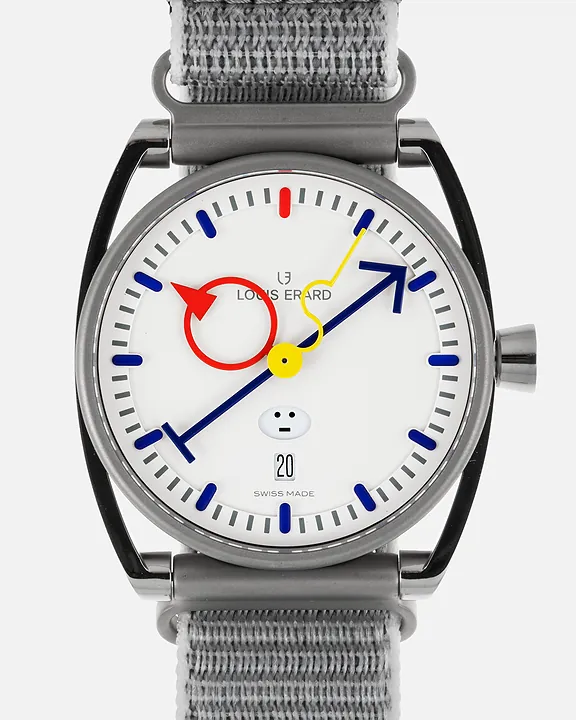
Louis Erard X Alain Silberstein La Semaine Blanche, 2022
S.Song Watches (dealer), Seattle
Wristwatches · 2021
Louis Erard X Alain Silberstein Monopoussoir Chronograph, 2021
S.Song Watches (dealer), Seattle
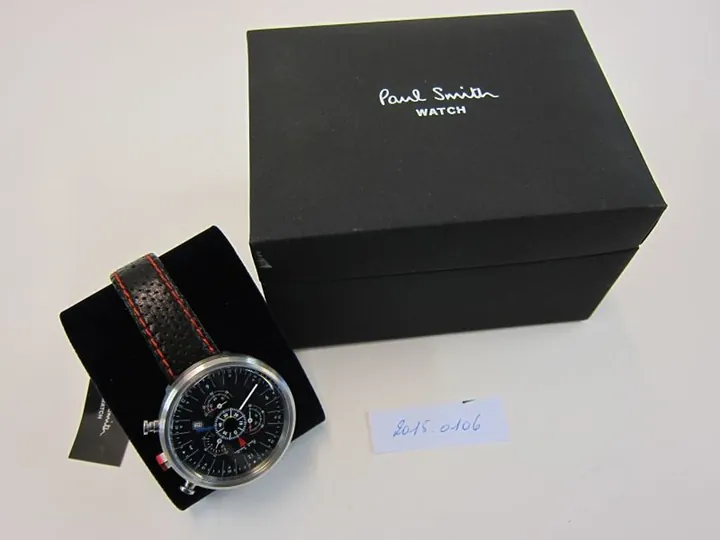
Wristwatches · 2010
Wristwatch, 2010
Modemuseum Hasselt
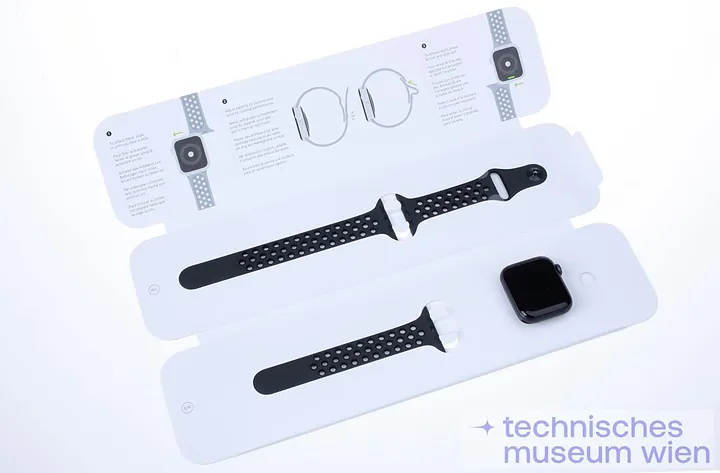
Wristwatches · 2018 (Series 4 released in September 2018; '1977' in the source is the model number A1977)
Apple Watch Series 4 (GPS, 40 mm, model A1977), 2018
Vienna Museum of Science and Technology
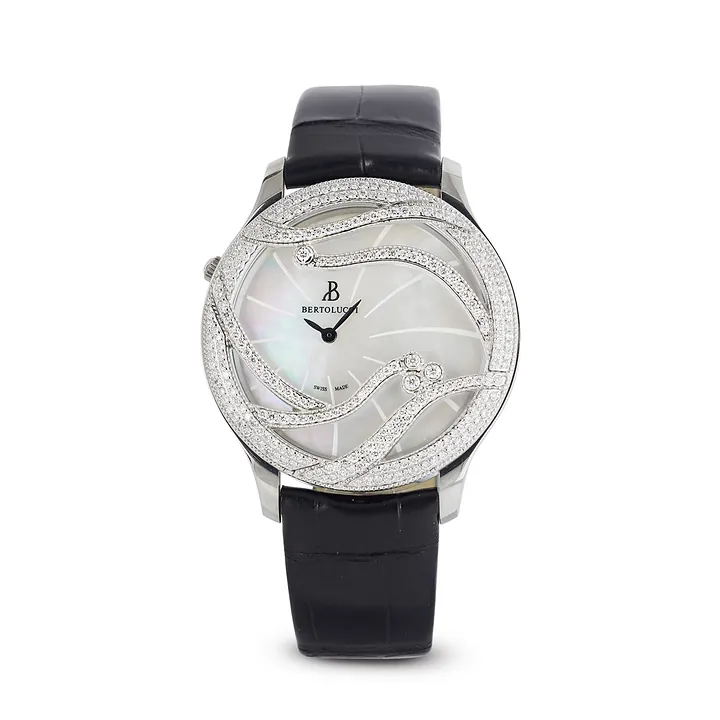
Wristwatches · c. 2010s
Bertolucci Stria III, ref. 11513.50.45.B88.6C1.501, c. 2010s
Antiquorum auction archive, Geneva
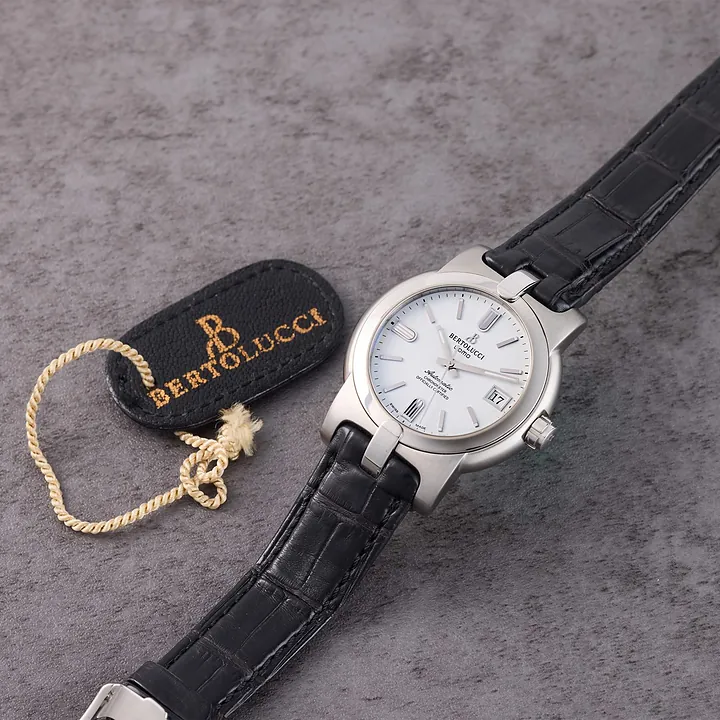
Wristwatches · c. 2010s
Bertolucci Uoma, ref. 824.51.41.10B, c. 2010s
Antiquorum auction archive, Geneva