
Wristwatches · Wristwatch
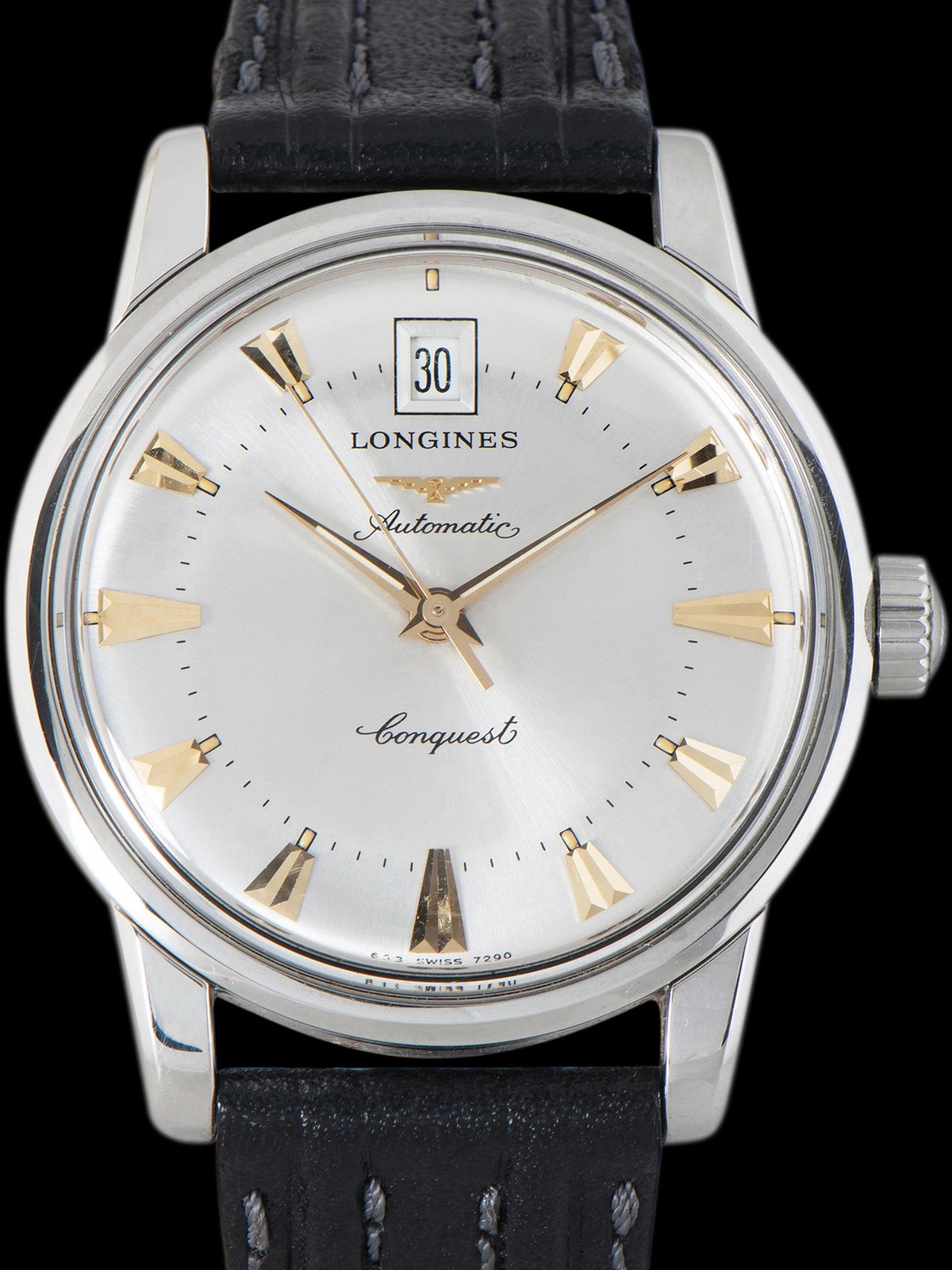
Longines Conquest Heritage (Ref. L1.611.4), 2000s
- Maker / attribution
- Longines (maker)
- Date
- 2000s
- Historical period
- Mechanical Renaissance (1990 – 2010)
- Country of origin
- Switzerland
- Object type
- Wristwatch
- Dimensions
- Case 35 mm
- Stock no.
- LONGCHL16114
- Credit line
- Dealer listing, Craft & Tailored (LONGCHL16114)
- Catalogue title (original)
- 2000s Longines Conquest Heritage (Ref. L1.611.4) W/ Box & Booklet (English)
View the source record (dealer listing) ↗ (opens another website in a new tab)Suggest a correction
Record summary
Catalogued by Craft & Tailored (dealer), Los Angeles (stock number LONGCHL16114), this is a wristwatch by Longines, made in Switzerland, dated 2000s. The Atlas places it in the Mechanical Renaissance period (1990 – 2010) of its Wristwatches collection. Recorded dimensions: Case 35 mm. The record is illustrated with 6 photographs.
Assembled from the source record's structured fields. Dates and attributions are given as the source states them; where a field is missing the Atlas leaves it blank rather than estimating.
Catalogue description
Dealer description — Craft & Tailored
Longines is one of the world’s oldest continuously operating watch manufacturers, with origins stretching back to 1832. Over nearly two centuries, the brand has earned a reputation for crafting timepieces of remarkable precision—so much so that Longines serves as the official timekeeper of the Kentucky Derby, where accuracy is everything. From robust chronographs and capable divers to elegant dress watches, Longines has consistently delivered designs that balance beauty and functionality. Its history is rich with military-issued pieces, refined sports watches, and some of the most charming dress references of the mid-century era. Introduced in 1954, the Conquest line quickly became a signature expression of Longines’ mid-century aesthetic. Its clean geometries, thoughtful detailing, and restrained elegance made the Conquest an enduring success, spawning numerous variations while preserving its timeless design language. This 2000s Conquest Heritage (Ref. L1.611.4) pays faithful tribute to the original 1950s model—so faithfully, in fact, that it could easily be mistaken for a true vintage piece. The watch retains the classic 35mm case profile, complete with defined lug chamfers and the signature enameled case back. Yellow gold markers and hands add warmth and dimension to the dial, elevating the stainless steel case into something both refined and versatile. While its aesthetics remain rooted in the past, this Heritage model benefits from a notable modern upgrade: Longines’ in-house Cal. L633 automatic movement. Running at 28,800 bph with 25 jewels, it delivers contemporary accuracy and reliability while preserving the spirit of the original design. The result is a beautifully executed homage that blends vintage charm with modern performance—an ideal choice for collectors who appreciate classic proportions without sacrificing everyday functionality. SPECS Stock # LONGCHL16114 Brand Longines Style Conquest Heritage Model L1.611.4 Serial 267XXXXX Size Men's Material Stainless Steel Dial Silver Millimeters 35 Strap Longines 2pc Leather Strap W/ Longines Tang Buckle CASE & BRACELET The excellent case exhibits minimal wear with no notable evidence of being previously polished. The case retains its original knurled crown. The case back is in excellent condition, retaining crisp factory engravings with the yellow gold and blue enamel medallion fully intact. The watch comes supplied on its original 2pc Longines leather strap with the original stainless steel Longines signed tang buckle. DIAL & HANDS The original silver sunburst dial with yellow gold markers and hands remains in flawless condition. The tritium lume plots have achieved a charming golden patina and exhibit no degradation under UV light inspection. The original tritium alpha-style hands have taken on a creamy patina, slightly lighter than the dial, and show no degradation when inspected under UV light. ACCESSORIES The watch comes with its original box and booklet. The watch is keeping time perfectly, the previous service history is unknown.
Historical context
Mechanical Renaissance (1990 – 2010)
Mechanical watches return as cultural objects; independent watchmaking flourishes.
Mechanical watches returned as cultural and luxury objects. Complications, tourbillons and new materials proliferated; independent watchmakers such as George Daniels, F.P. Journe and Philippe Dufour revived artisanal watchmaking; collecting vintage watches became a major field.
Read the period in the timelineMore wristwatches from this periodEarlier: Quartz Revolution
Atlas type guide
Wristwatches
Bracelet watches were worn by women from the early nineteenth century — Breguet made one for Caroline Murat, Queen of Naples, in 1810–12 — but the wristwatch only became a man's instrument with military use and aviation in the early twentieth century. Between the World Wars it overtook the pocket watch; the 1920s and 1930s brought rectangular Art Deco cases, water-resistant cases and the first automatic winding systems.
After 1945 the wristwatch became a carrier of identity — dress watches, sports and dive watches, chronographs, calendars — produced by Swiss, American, Japanese, German, Soviet and Chinese industries. The quartz revolution after 1969 and the mechanical renaissance since the 1990s, including the rise of independent watchmakers, complete the story.
What to look for
- The reference number (between the lugs or inside the case back) and serial number, the starting point for dating.
- The calibre: its maker and number are often stamped under the dial or on the bridge.
- Originality of dial, hands and crown — refinished ('redial') dials are common.
- Case material marks: 18K/750, 14K/585, stainless steel, gold-filled, plated.
Dating clues
- Wire-lug cases: before c. 1925.
- Water-resistant screw-down cases: from 1926.
- Quartz movements: from 1969; sapphire crystals widespread after c. 1980.
General guidance written by the Atlas editors about this kind of object. It is not a statement about this particular piece; for that, rely on the source record above and on physical examination.
Related records
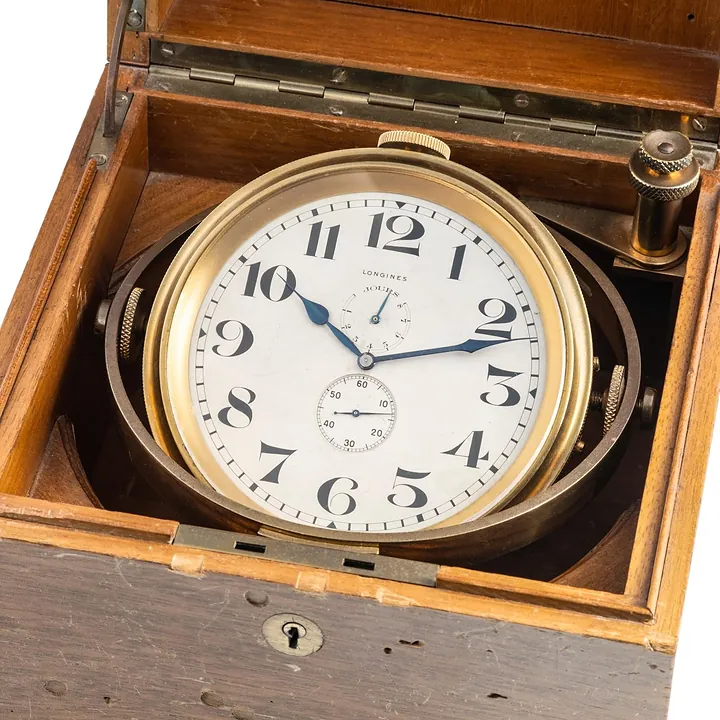
Instruments · c. 1940
Longines marine chronometer, c. 1940
Antiquorum auction archive, Geneva
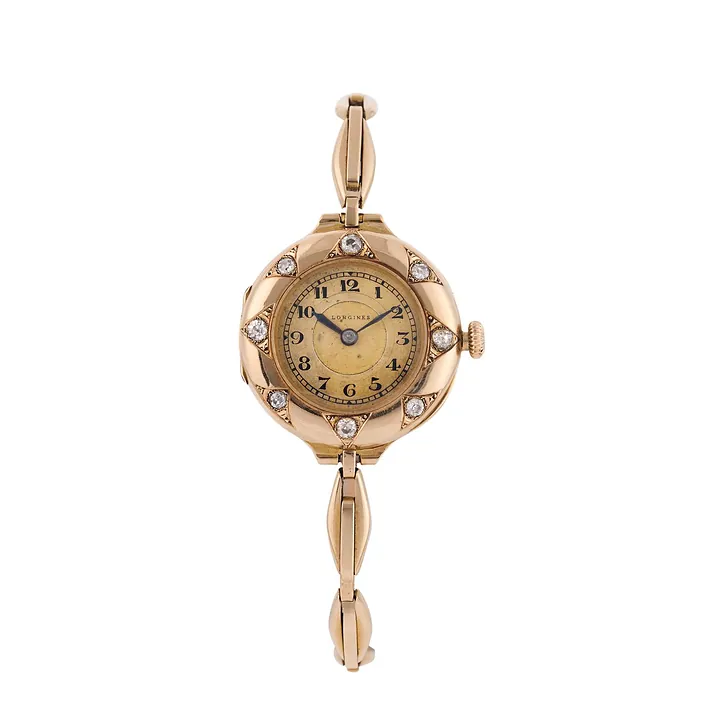
Pocket Watches · c. 1910-1920s
Longines watch, c. 1910-1920s
Antiquorum auction archive, Geneva
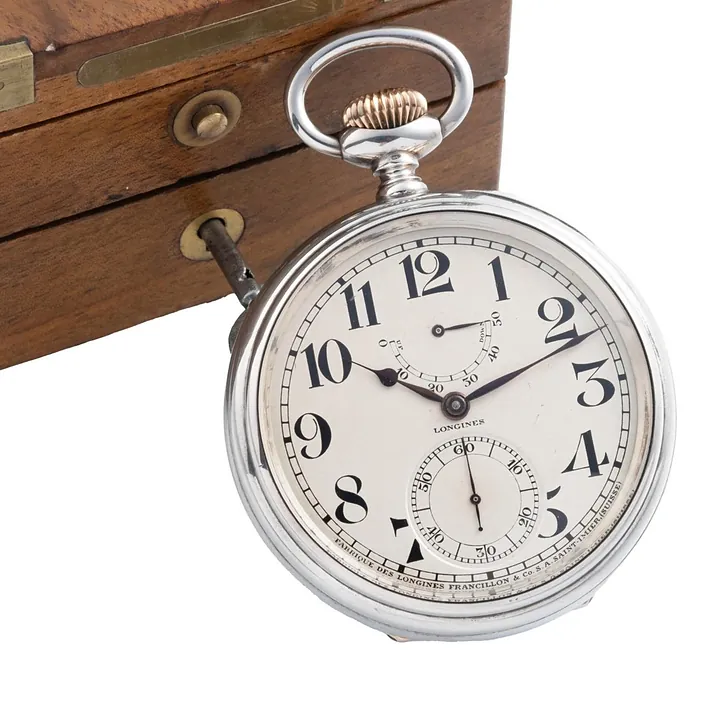
Pocket Watches · c. 1915
Longines ''torpedo-Boat Watch'', c. 1915
Antiquorum auction archive, Geneva
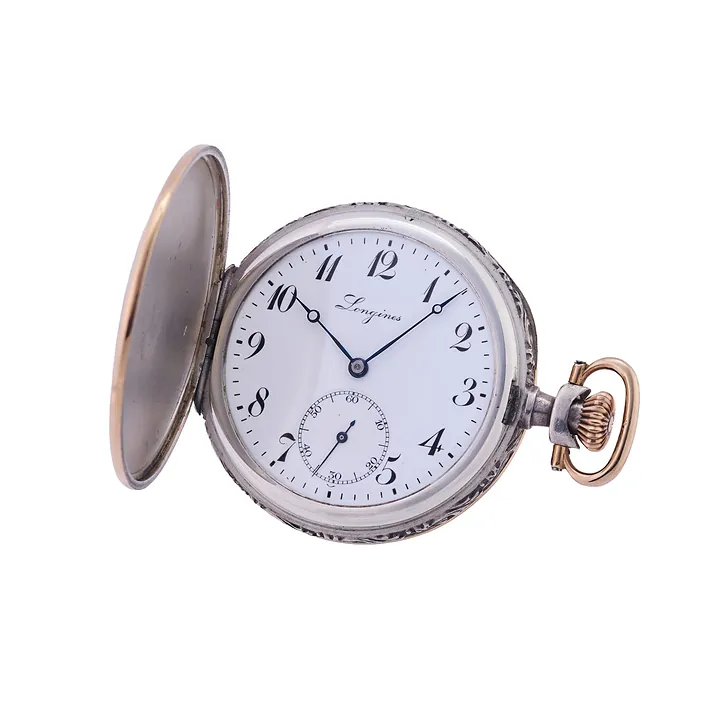
Pocket Watches · c. 1920s
Longines pocket watch, c. 1920s (Antiquorum Lot 389-59)
Antiquorum auction archive, Geneva

Wristwatches · 2008
Wristwatch by Breitling?, 2008
Museum Rotterdam

Wristwatches · c. 1990s
Audemars Piguet Bamboo, c. 1990s
Antiquorum auction archive, Geneva

Wristwatches · c. 1990
Audemars Piguet Huitieme Perpetual Calendar, ref. 25696PT, c. 1990
Antiquorum auction archive, Geneva

Wristwatches · c. 1990
Breitling Chronomat, ref. b13050.1, c. 1990
Antiquorum auction archive, Geneva