
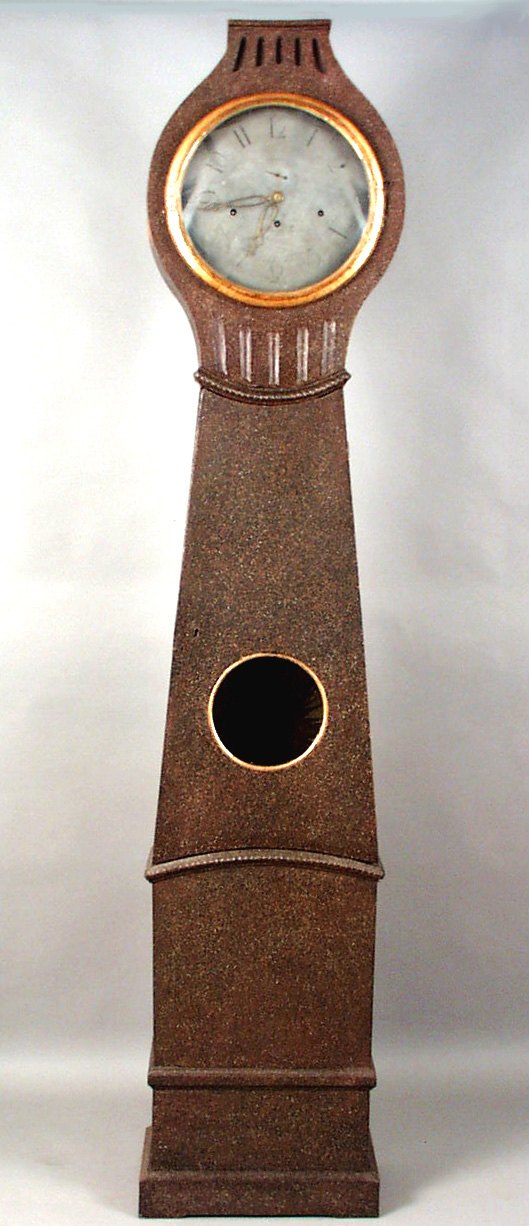
Clocks · Longcase clock
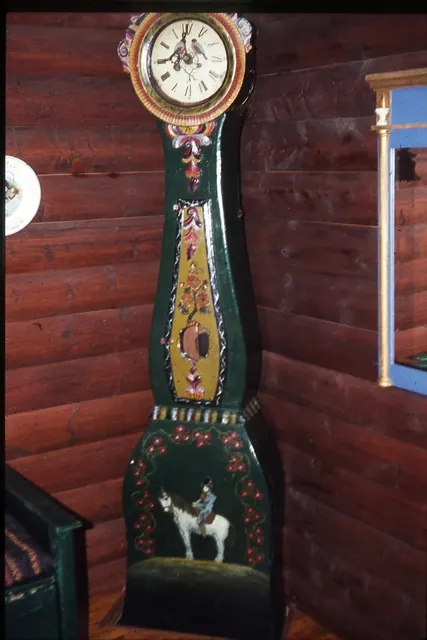
Longcase clock, Sweden, 1790
- Maker / attribution
- Unrecorded in source
- Date
- 1790
- Historical period
- Precision & Scientific Horology (1750 – 1850)
- Country of origin
- Sweden
- Place
- Sverige Karlskrona Blekinge Sverige Blekinge Karlskrona Karlskrona
- Object type
- Longcase clock
- Materials / technique
- Furu Glas
- Dimensions
- Bredd 470 mm Djup 245 mm
- Holding institution
- Blekinge Museum
- Accession / object no.
- blm_item_25797
- Credit line
- Blekinge Museum
- Catalogue title (original)
- Golvur (Swedish)
View the source record ↗ (opens another website in a new tab)Suggest a correction
Record summary
Held and catalogued by Blekinge Museum (object number blm_item_25797), this is a longcase clock, made in Sverige Karlskrona Blekinge Sverige Blekinge Karlskrona Karlskrona, Sweden, dated 1790. The Atlas places it in the Precision & Scientific Horology period (1750 – 1850) of its Clocks collection. Materials and techniques recorded by the source: Furu Glas. Recorded dimensions: Bredd 470 mm Djup 245 mm. The record is illustrated with 6 photographs.
Assembled from the source record's structured fields. Dates and attributions are given as the source states them; where a field is missing the Atlas leaves it blank rather than estimating.
Catalogue description
Catalogue description from Blekinge Museum
Golvur med fodral i imiterad porfyrmålning. Rak mot huven avsmalnande pendelhus. Golvlist och rak list på nederdelen. En nedåtsvängd kulrad under dörren och en uppåtsvängd kulrad under huven. Dörren svängd i över- och underkant. I dörren runt glasat fönster med förgylld ram. Nyckelhål med rombisk enkel liten nyckelbricka. Nyckel finns. Låsbricka saknas. Invändigt på bakstycket målad stor sol med ansikte. Rund huv upptill och nertill avsmalnande. Dekorerad med djupa kannelyrer. Upptill avslutat med en platta och list. Ovala fönster på sidorna med förgyllda ramar. På luckan välvt glas med förgylld ram, fäst med sprint. Litet handtag. Glaset låses med stor krok som passar i rektangulärt hål i huven. Huven har på insidan ett vinkeljärn passande mot vridbar järnten på pendelhuset (för låsning). Huvens glas är i plexiglas. Invändigt målad i grågrön färg. Nederdelen senare tillverkad. Fodralet är utvändigt målad med porfyrimitation, målad på 1980-talet. Äldre målningen är blå enligt uppgift. Äldre förgyllningar runt glasen, kulraderna och kannelyrerna. Urtavla av tenn med arabiska siffror. Signering: "Johan Gottfried Lannér Carlskrona No 1". Tim- och minutvisare i mässing. Sekunder i egen cirkel, visare i järn. En cirkel runt "10:an" med text: "Spelar intet". En cirkel runt "2:an" med text: "Contradansar N 253". Urverk i mässing monterat på träplatta. Hål i plattan för pendeln. Träplattan kan låsas på pendelhuset med träkilar. Tyngder av mässing. Pendel av järn, klädd med mässing. L: 1011 mm. Två mässingsklädda lod: L: 250, D: 65 mm resp L: 220 D: 60 mm. En vev av järn och mässing. En nyckel av järn. Uret tillverkat av Johan Gottfried Lannér 1764-1790 Karlskrona. Inköpt 2000 av Andreas Friberg, Stockholm Bilaga till samlingen: Brev från Blm till urets förre ägare Bertil Ljunggren, Stockholm.
Shown in the original language of the source catalogue. An editor-reviewed English translation has not yet been published; we do not publish machine translations as authoritative text.
Historical context
Precision & Scientific Horology (1750 – 1850)
Harrison solves longitude; Mudge invents the lever; Breguet's Paris workshop defines the modern watch.
The age of the deadbeat escapement, compensated pendulums and observatory regulators. Domestic clocks spread through the middle classes: English longcase and bracket clocks, French gilt-bronze mantel clocks, Viennese Biedermeier wall clocks, Black Forest painted-shield clocks, and the first American shelf clocks.
Read the period in the timelineMore clocks from this periodEarlier: Early Modern Horology
Atlas type guide
Longcase (tall-case or grandfather) clocks
The longcase clock was born from two seventeenth-century innovations: Christiaan Huygens's pendulum (1656–57) and the anchor escapement (c. 1670). A long seconds pendulum, nearly a metre long, swings with a small arc, and enclosing it together with the driving weights in a tall wooden case protected the mechanism and created a new piece of furniture. London makers such as Ahasuerus Fromanteel, Thomas Tompion and Joseph Knibb set the pattern.
By the eighteenth century longcase clocks were made throughout Britain, the Netherlands, Scandinavia (the Swedish Mora clock), France (the Comtoise from the Franche-Comté), Germany and colonial America. Eight-day movements with two weights became standard in better clocks; thirty-hour clocks with one weight and a rope or chain were cheaper alternatives.
What to look for
- Winding holes in the dial: two (eight-day, going and striking) or none (thirty-hour, pulled up by a chain).
- Brass dials with applied chapter rings (earlier) versus painted iron 'white' dials (after c. 1770 in Britain).
- Moon-phase arches, date apertures, seconds dials and maker's name on the dial.
- Case woods and style: ebonised, walnut marquetry, lacquer, oak or mahogany; regional styles from London, Lancashire, Scotland or America.
- Whether the movement and dial match the case — 'marriages' are common.
Dating clues
- Square brass dials suggest c. 1670–1720; arched brass dials c. 1715–1790.
- Painted (white) dials were made by Birmingham dial-makers from about 1772.
- Comtoise clocks with repoussé pendulums are mostly nineteenth century.
General guidance written by the Atlas editors about this kind of object. It is not a statement about this particular piece; for that, rely on the source record above and on physical examination.
Read next:Anchor (recoil) escapementDeadbeat escapementAnchor escapement
Related records
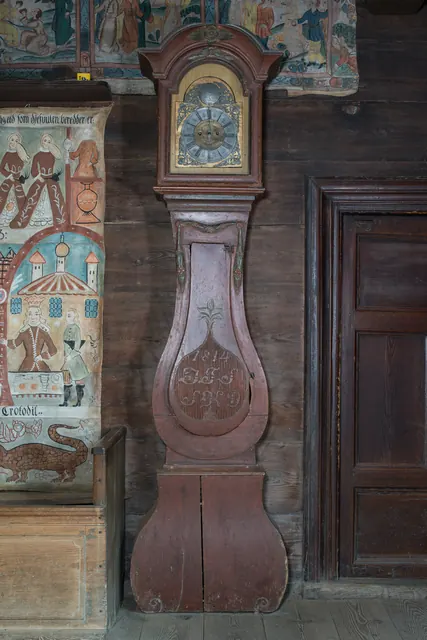
Clocks · 1814
Clock by Ola Svensson, Sweden, 1814
Skansen
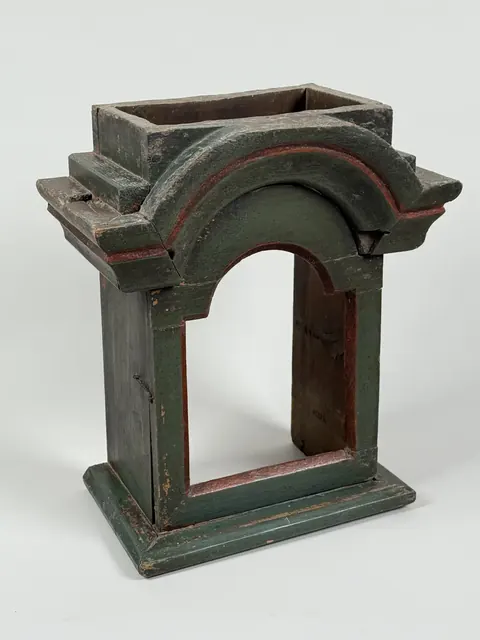
Clocks · 1833
Clock, Sweden, 1833
Skansen
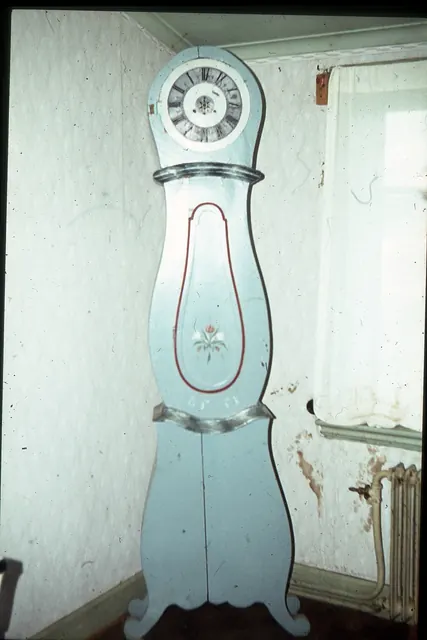
Clocks · 1775
Longcase clock, Sweden, 1775
National Association of Swedish Handicraft Societies
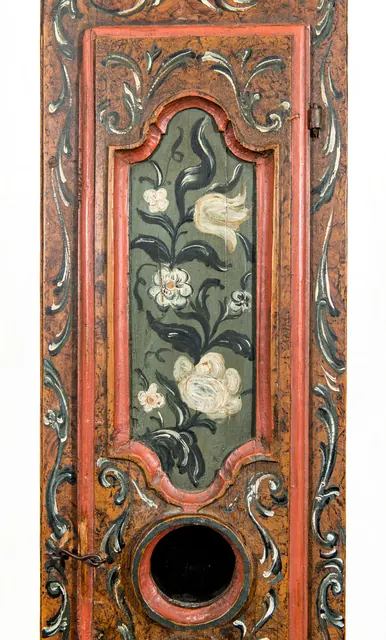
Clocks · 1772
Longcase clock, Sweden, 1772
Skelleftea museum
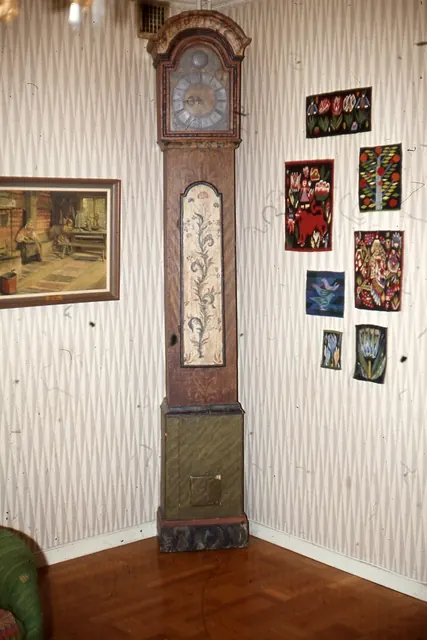
Clocks · 1775
Longcase clock, Sweden, 1775
National Association of Swedish Handicraft Societies
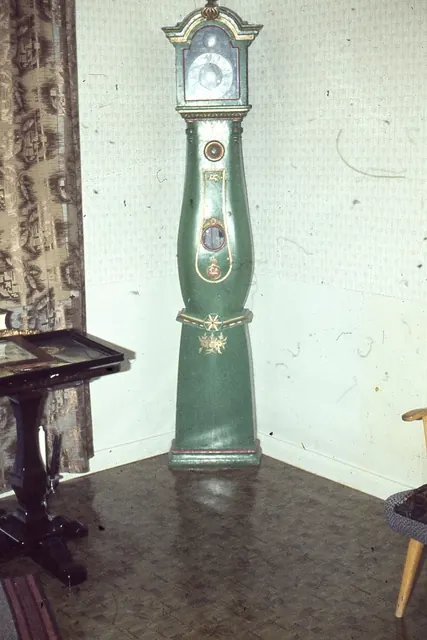
Clocks · 1799
Longcase clock, Sweden, 1799
National Association of Swedish Handicraft Societies
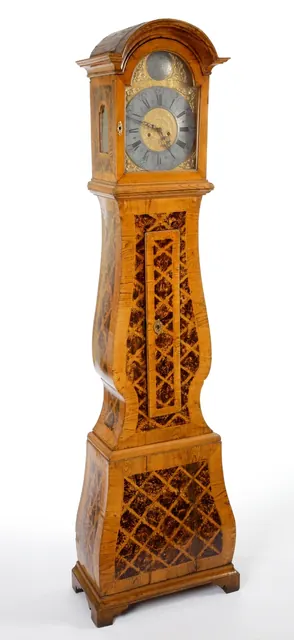
Clocks · 1766
Longcase clock by Sven Fogelberg, Sweden, 1766
Kulturparken Småland
Clocks · 1761
Longcase clock, Sweden, 1761
National Association of Swedish Handicraft Societies