
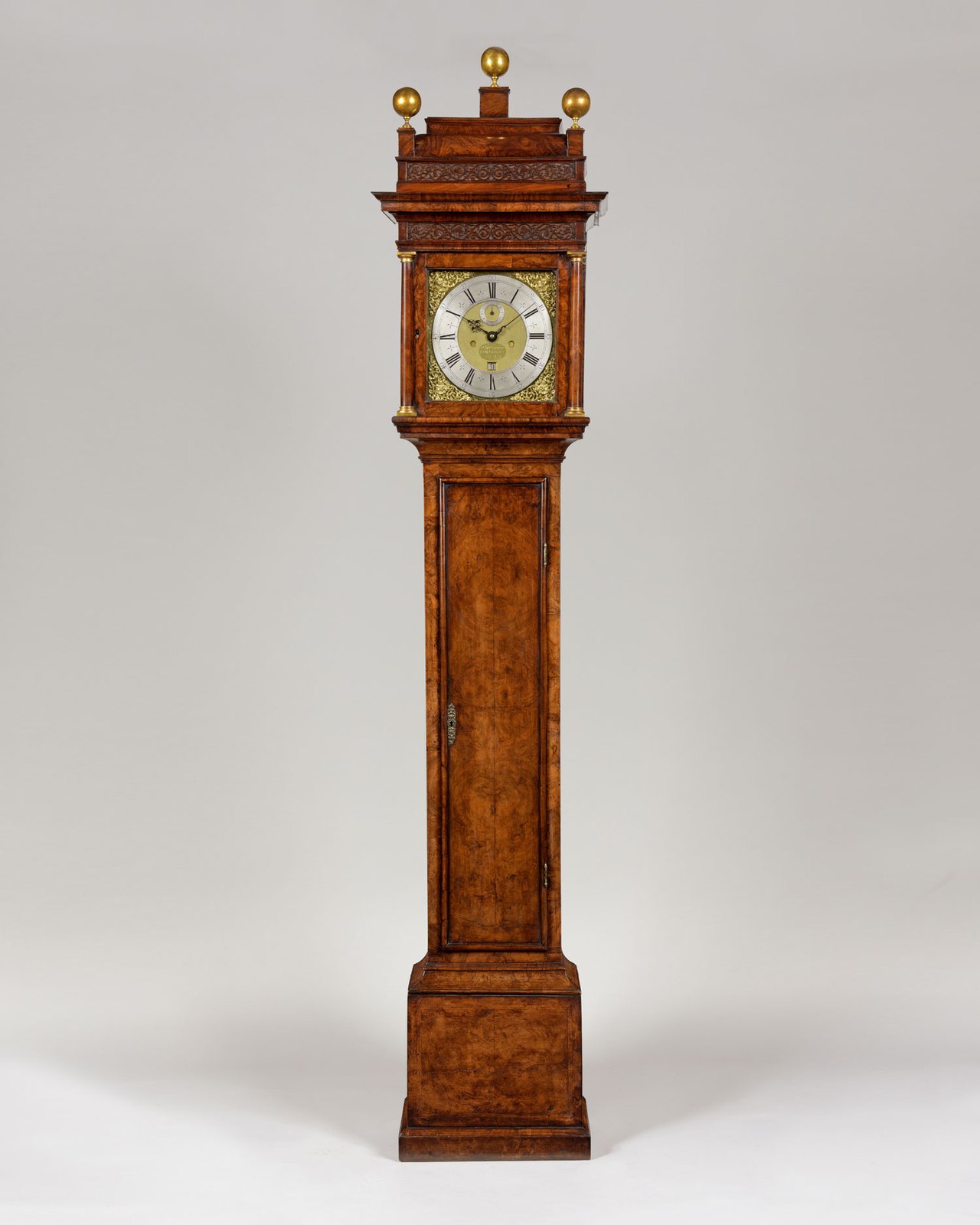
Clocks · Longcase clock
Longcase clock by Thomas Tompion & Edward Banger, London, c. 1707
- Maker / attribution
- Thomas Tompion & Edward Banger (maker)
- Date
- c. 1707
- Historical period
- Early Modern Horology (1600 – 1750)
- Country of origin
- England
- Place
- London
- Object type
- Longcase clock
- Dimensions
- Height 242 cm
- Stock no.
- SKU 461
- Credit line
- Dealer listing, Howard Walwyn (SKU 461)
- Catalogue title (original)
- THOMAS TOMPION & EDWARD BANGER, N° 463 (English)
View the source record (dealer listing) ↗ (opens another website in a new tab)Suggest a correction
Record summary
Catalogued by Howard Walwyn Fine Antique Clocks (dealer), London (stock number SKU 461), this is a longcase clock by Thomas Tompion & Edward Banger, made in London, England, dated c. 1707. The Atlas places it in the Early Modern Horology period (1600 – 1750) of its Clocks collection. Recorded dimensions: Height 242 cm. The record is illustrated with 6 photographs.
Assembled from the source record's structured fields. Dates and attributions are given as the source states them; where a field is missing the Atlas leaves it blank rather than estimating.
Catalogue description
Dealer description — Howard Walwyn
A fine and rare Queen Anne period ‘Type 3’ longcase clock by this famous partnership. The case is veneered with figured walnut. The hood has pierced sound frets above two doric columns, a caddy top with mounts supporting three brass ball finials. The trunk door is numbered 463 on the leading edge. The 11 inch square brass dial is mounted with Indian mask and scroll spandrels. The silvered chapter ring has Roman hours and an outer Arabic 5 minute band. The finely matted centre has a subsidiary Arabic seconds dial and a chamfered date aperture with pin hole adjustment. It is signed on a polished reserve Tho: Tompion, EDW BANGER, LONDON . The 6-pillar 8-day duration anchor escapement movement is fully latched and there is a cut out on the backplate to release the anchor. It is rack striking with the hours sounded on a bell. The movement is punch-numbered 463 on the lower edge of the backplate. Date : circa 1707 Height : 95 ½ in (242 cm) * Thomas Tompion is universally regarded as the greatest of the clockmakers from the Golden Age of English Horology. Born in Ickwell Green, Bedfordshire in 1639, he moved to London in 1671 and became a Free Brother in the Clockmakers’ Company. In 1674 he established his business at the sign of The Dial and Three Crowns in Water Lane now called Whitefriars Street, and met Dr Robert Hooke, an eminent physicist and mathematician, who helped him with his movement designs. Through this association, Tompion came to the notice of Charles II and from that time he held an unrivalled position in English horology. Tompion died in 1713 and is buried at Westminster Abbey. There are comparatively few clocks signed by Thomas Tompion and Edward Banger. The latter had been Tompion’s apprentice and he was made free of the Clockmakers’ Company in 1695. By 1708, the pair had quarrelled and there are no further jointly made clocks recorded. This clock is fully described and illustrated in Thomas Tompion – 300 Years by Evans, Carter and Wright on pages 480-481. It is also listed on page 80 of Jeremy Evans’ book Tompion at the Dial and Three Crowns . HW6336
Historical context
Early Modern Horology (1600 – 1750)
Huygens' pendulum and balance spring transform accuracy; English makers develop the anchor and deadbeat escapements.
Huygens's pendulum (1656–57) improved clock accuracy from about a quarter of an hour to under a minute a day. The anchor escapement (c. 1670) and the long seconds pendulum created the longcase clock; London makers such as Fromanteel, Knibb, Tompion and Quare led European clockmaking, and French makers created the Boulle pendule.
Read the period in the timelineMore clocks from this periodEarlier: Renaissance Horology
Atlas type guide
Longcase (tall-case or grandfather) clocks
The longcase clock was born from two seventeenth-century innovations: Christiaan Huygens's pendulum (1656–57) and the anchor escapement (c. 1670). A long seconds pendulum, nearly a metre long, swings with a small arc, and enclosing it together with the driving weights in a tall wooden case protected the mechanism and created a new piece of furniture. London makers such as Ahasuerus Fromanteel, Thomas Tompion and Joseph Knibb set the pattern.
By the eighteenth century longcase clocks were made throughout Britain, the Netherlands, Scandinavia (the Swedish Mora clock), France (the Comtoise from the Franche-Comté), Germany and colonial America. Eight-day movements with two weights became standard in better clocks; thirty-hour clocks with one weight and a rope or chain were cheaper alternatives.
What to look for
- Winding holes in the dial: two (eight-day, going and striking) or none (thirty-hour, pulled up by a chain).
- Brass dials with applied chapter rings (earlier) versus painted iron 'white' dials (after c. 1770 in Britain).
- Moon-phase arches, date apertures, seconds dials and maker's name on the dial.
- Case woods and style: ebonised, walnut marquetry, lacquer, oak or mahogany; regional styles from London, Lancashire, Scotland or America.
- Whether the movement and dial match the case — 'marriages' are common.
Dating clues
- Square brass dials suggest c. 1670–1720; arched brass dials c. 1715–1790.
- Painted (white) dials were made by Birmingham dial-makers from about 1772.
- Comtoise clocks with repoussé pendulums are mostly nineteenth century.
General guidance written by the Atlas editors about this kind of object. It is not a statement about this particular piece; for that, rely on the source record above and on physical examination.
Read next:Deadbeat escapementAnchor escapement
Related records
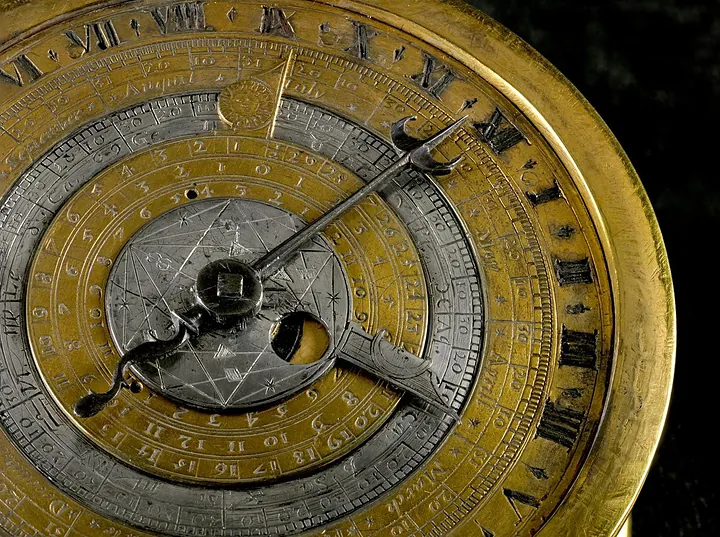
Clocks · 1598–1603
Circular table-clock with calendrical and lunar indications made by Nicholas Vallin in London between 1598 and 1603.
Science Museum Group, London
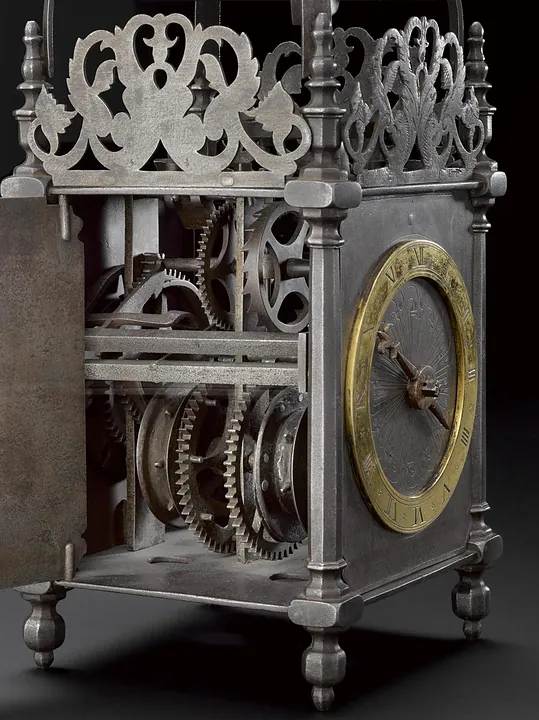
Clocks · 1611
English iron lantern clock, with wheel balance, by John Holloway, Market Lavington, Wiltshire, England, 1611.
Science Museum Group, London
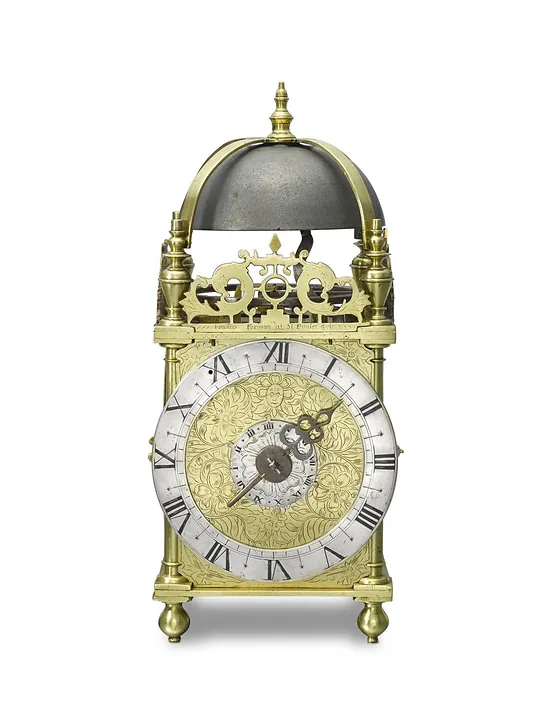
Clocks · 1630
Lantern clock by Francis Forman, England, 1630
Science Museum Group, London
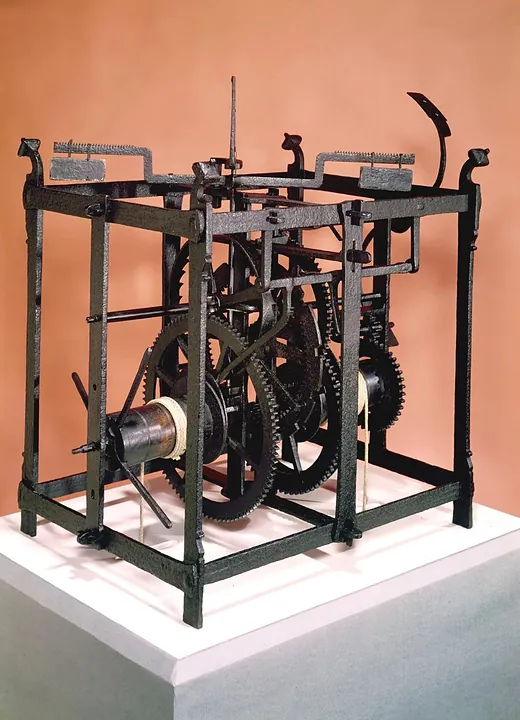
Clocks · 1632–1640
Turret clock, England, 1632–1640
Science Museum Group, London
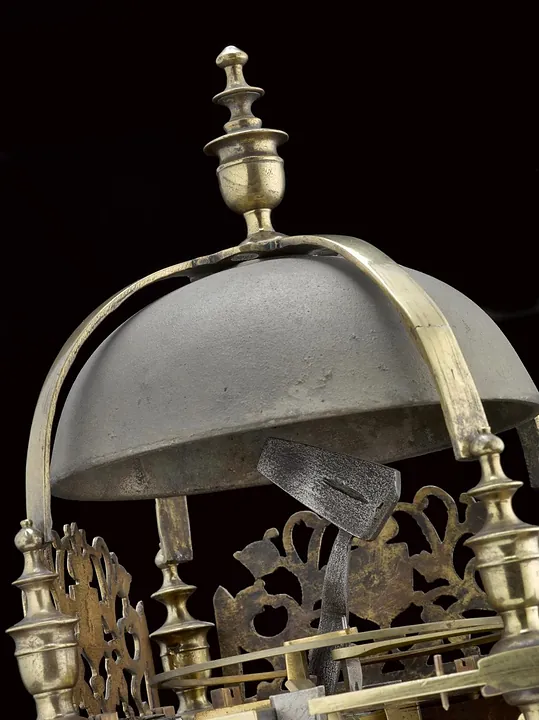
Clocks · 1645–1655
Balance-wheel brass lantern clock, with two driving weights and one counterweight, by Thomas Knifton, Cross Keys, Lothbury, London, England, 1645–1655.
Science Museum Group, London
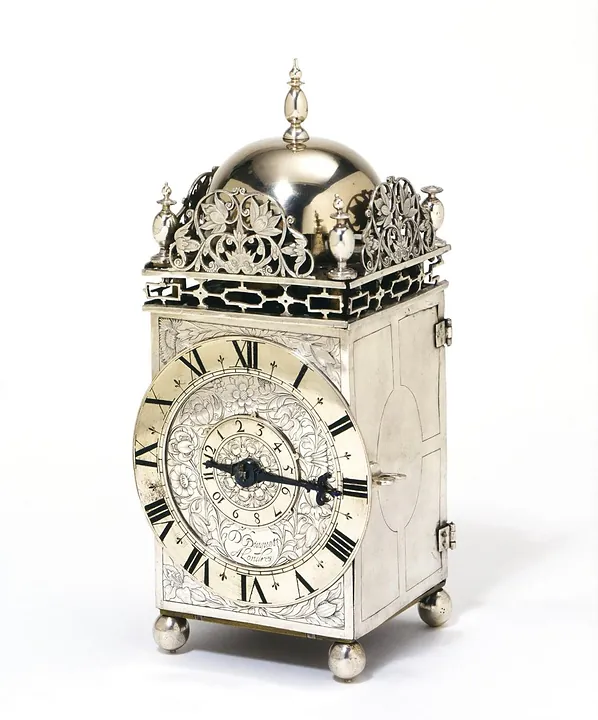
Clocks · c. 1650
Lantern alarm clock, silver, by David Bouquet, circa 1650
Victoria and Albert Museum, London
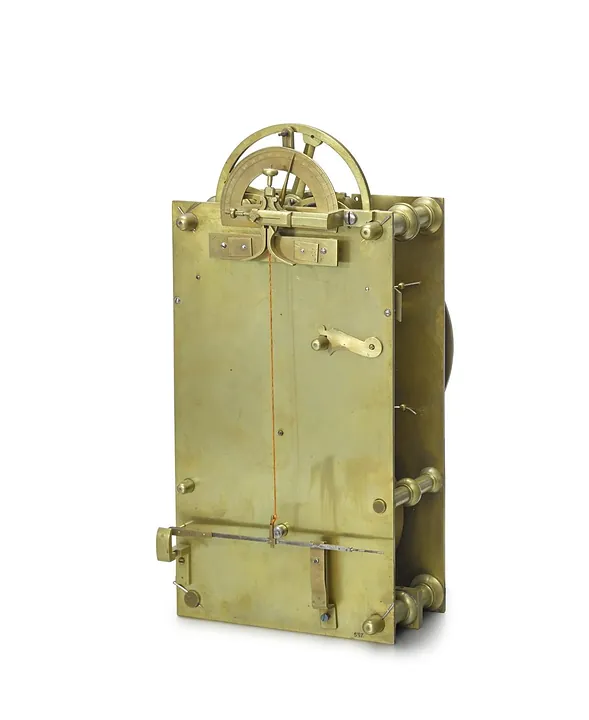
Clocks · 1650–1660
Lantern clock by Peter Closon, England, 1650–1660
Science Museum Group, London
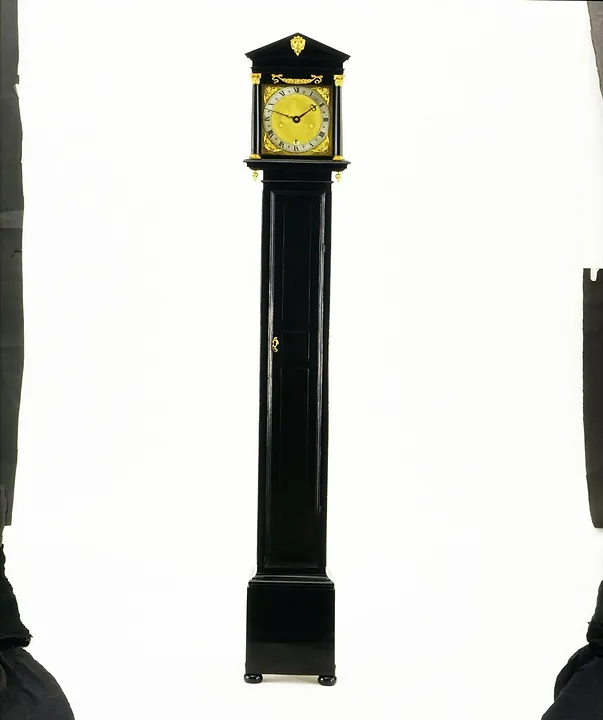
Clocks · c. 1660
Longcase clock, c. 1660, English, made by Ahasuerus Fromanteel
Victoria and Albert Museum, London