
Clocks · Longcase clock
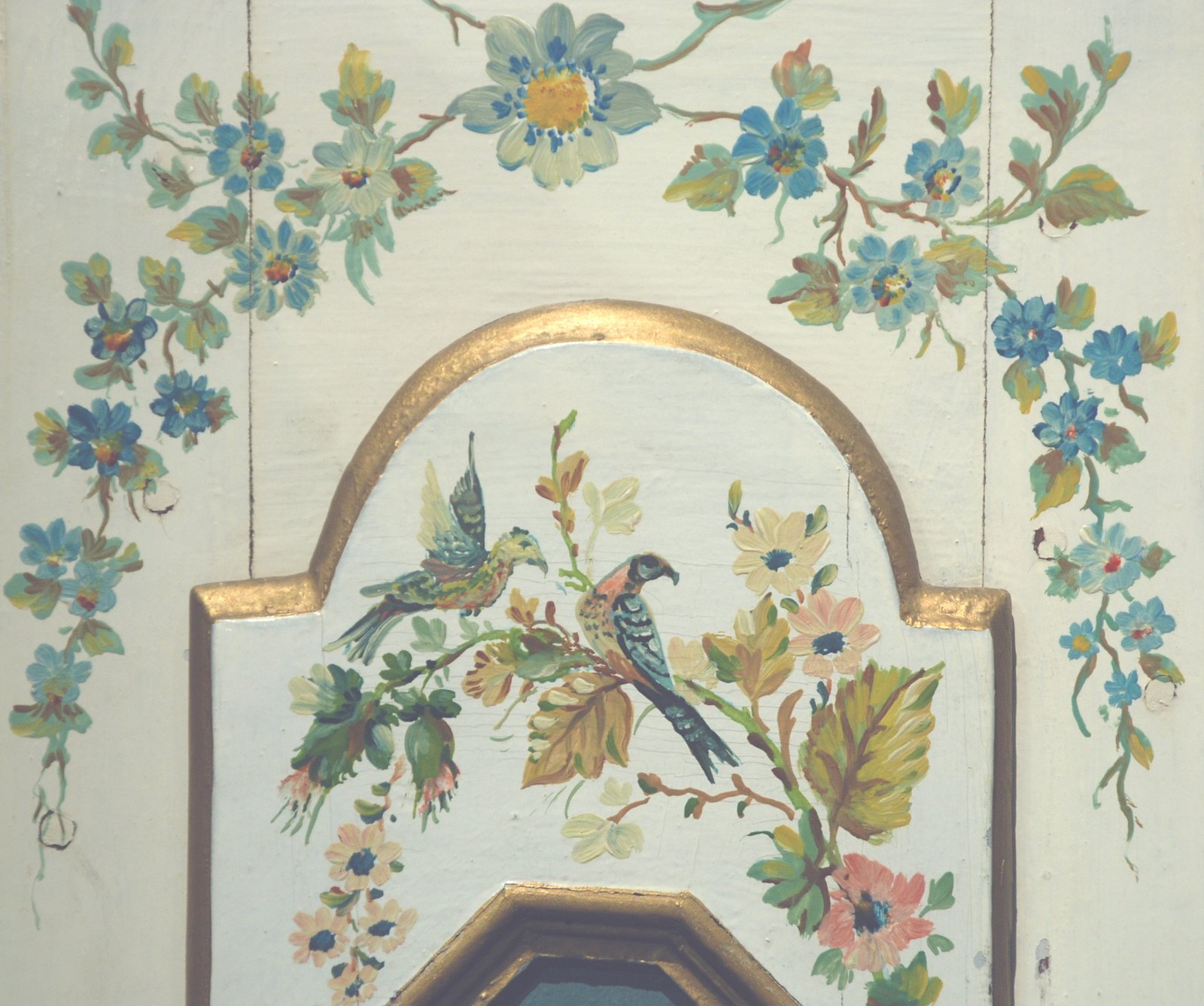
Longcase clock, 1600
- Maker / attribution
- Unrecorded in source
- Date
- 1600
- Historical period
- Early Modern Horology (1600 – 1750)
- Country of origin
- Unrecorded in source
- Object type
- Longcase clock
- Materials / technique
- Trä
- Dimensions
- Bredd 400 mm Djup 290 mm
- Holding institution
- Blekinge Museum
- Accession / object no.
- blm_item_25810
- Credit line
- Blekinge Museum
- Catalogue title (original)
- Golvur (Swedish)
View the source record ↗ (opens another website in a new tab)Suggest a correction
Record summary
Held and catalogued by Blekinge Museum (object number blm_item_25810), this is a longcase clock, dated 1600. The Atlas places it in the Early Modern Horology period (1600 – 1750) of its Clocks collection. Materials and techniques recorded by the source: Trä. Recorded dimensions: Bredd 400 mm Djup 290 mm. The record is illustrated with 2 photographs.
Assembled from the source record's structured fields. Dates and attributions are given as the source states them; where a field is missing the Atlas leaves it blank rather than estimating.
Catalogue description
Catalogue description from Blekinge Museum
Golvur med fodral av trä. Rakt fodral med något utstickande sockel och huv. Huven välvd upptill och med pelare på sidorna. Fönster på huvens sidor. Vitmålat fodral med blommönster samt fåglar på blå och grön grund. Rektangulär bronserad urtavla med bågformat krön. En visare. Romerska siffror på en ring av tenn som är försilvrad. Ornament i hörnen. Märkning ovanför urtavlan: "SGS". På insidan av dörren finns en papperslapp med texten: "Golfur från 1600-talet. Målades 1796 och 1903 4/7 av målaren C.J. Berg." Tidigare förvärv. Omärkt Neg nr A 23555
Shown in the original language of the source catalogue. An editor-reviewed English translation has not yet been published; we do not publish machine translations as authoritative text.
Historical context
Early Modern Horology (1600 – 1750)
Huygens' pendulum and balance spring transform accuracy; English makers develop the anchor and deadbeat escapements.
Huygens's pendulum (1656–57) improved clock accuracy from about a quarter of an hour to under a minute a day. The anchor escapement (c. 1670) and the long seconds pendulum created the longcase clock; London makers such as Fromanteel, Knibb, Tompion and Quare led European clockmaking, and French makers created the Boulle pendule.
Read the period in the timelineMore clocks from this periodEarlier: Renaissance Horology
Atlas type guide
Longcase (tall-case or grandfather) clocks
The longcase clock was born from two seventeenth-century innovations: Christiaan Huygens's pendulum (1656–57) and the anchor escapement (c. 1670). A long seconds pendulum, nearly a metre long, swings with a small arc, and enclosing it together with the driving weights in a tall wooden case protected the mechanism and created a new piece of furniture. London makers such as Ahasuerus Fromanteel, Thomas Tompion and Joseph Knibb set the pattern.
By the eighteenth century longcase clocks were made throughout Britain, the Netherlands, Scandinavia (the Swedish Mora clock), France (the Comtoise from the Franche-Comté), Germany and colonial America. Eight-day movements with two weights became standard in better clocks; thirty-hour clocks with one weight and a rope or chain were cheaper alternatives.
What to look for
- Winding holes in the dial: two (eight-day, going and striking) or none (thirty-hour, pulled up by a chain).
- Brass dials with applied chapter rings (earlier) versus painted iron 'white' dials (after c. 1770 in Britain).
- Moon-phase arches, date apertures, seconds dials and maker's name on the dial.
- Case woods and style: ebonised, walnut marquetry, lacquer, oak or mahogany; regional styles from London, Lancashire, Scotland or America.
- Whether the movement and dial match the case — 'marriages' are common.
Dating clues
- Square brass dials suggest c. 1670–1720; arched brass dials c. 1715–1790.
- Painted (white) dials were made by Birmingham dial-makers from about 1772.
- Comtoise clocks with repoussé pendulums are mostly nineteenth century.
General guidance written by the Atlas editors about this kind of object. It is not a statement about this particular piece; for that, rely on the source record above and on physical examination.
Read next:Anchor (recoil) escapementDeadbeat escapementAnchor escapement
Related records
Clocks · Early 17th century
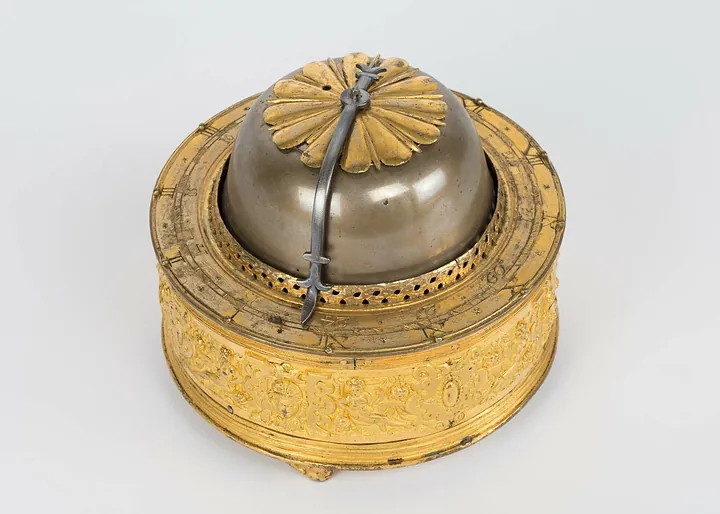
Table clock, probably Denmark, early 17th century
German Clock Museum
Clocks · 1590–1610
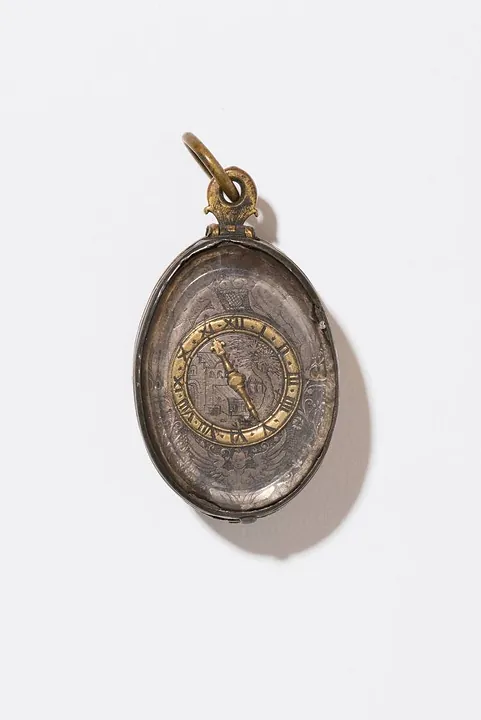
Clock, France, 1590–1610
MAK – Museum of Applied Arts
Clocks · c. 1600
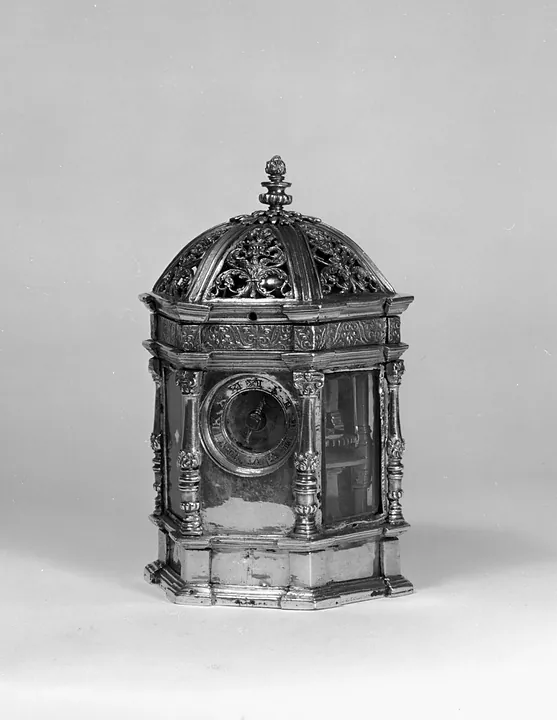
Table Clock, sheet brass, engraved, pierced and gilt, Paris, ca.1600, signed 'B(?) Pichard, à Paris'
Victoria and Albert Museum, London
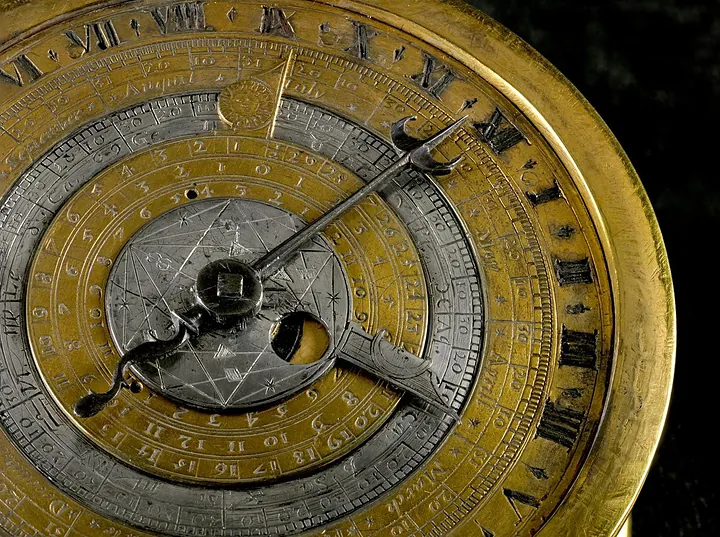
Clocks · 1598–1603
Circular table-clock with calendrical and lunar indications made by Nicholas Vallin in London between 1598 and 1603.
Science Museum Group, London
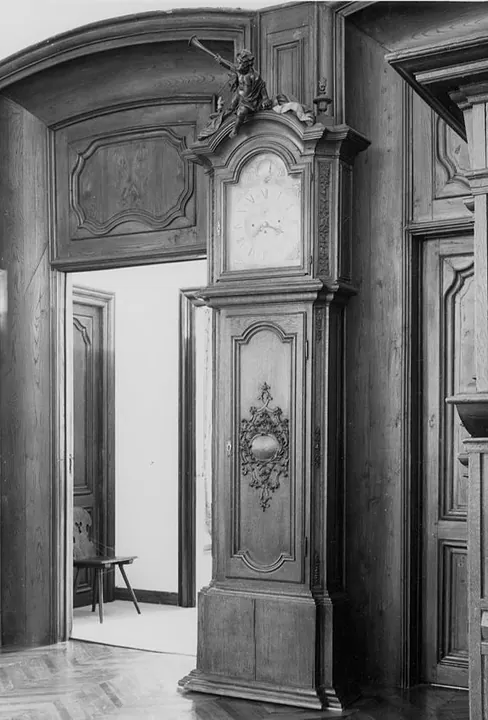
Clocks · 1600–1699
Clock by Joannes Volcker, Belgium, 1600–1699 (no. AP_10156031)
Royal Institute for Cultural Heritage
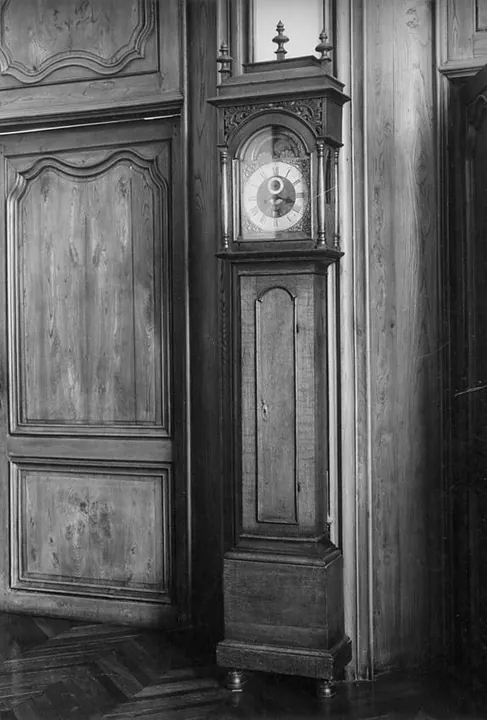
Clocks · 1600–1699
Clock by Joannes Volcker, Belgium, 1600–1699 (no. AP_10156032)
Royal Institute for Cultural Heritage
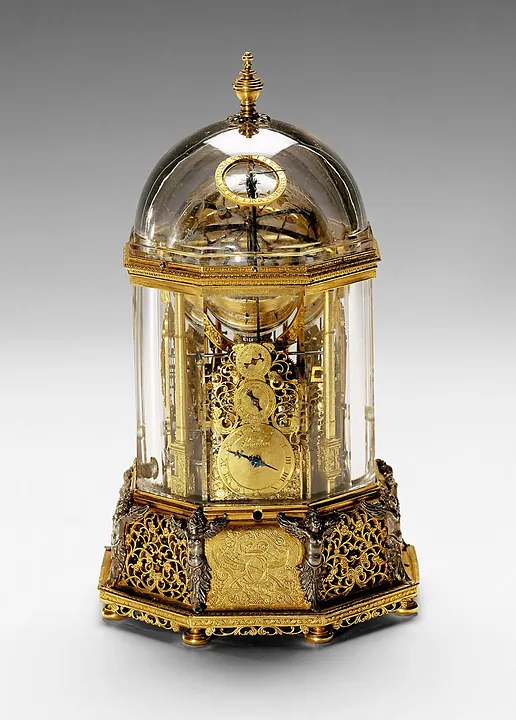
Clocks · 1600–1699
Clock attributed to Jobst Bürgi, Czech Republic, 1600–1699
Fine Arts Museum Vienna
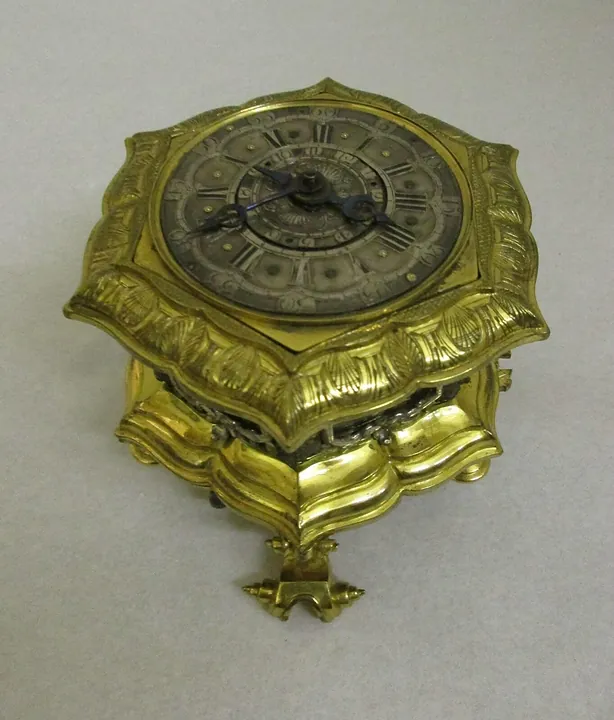
Clocks · 1600–1700
Clock, Germany, 1600–1700
Victoria and Albert Museum, London