
Clocks · Lantern clock
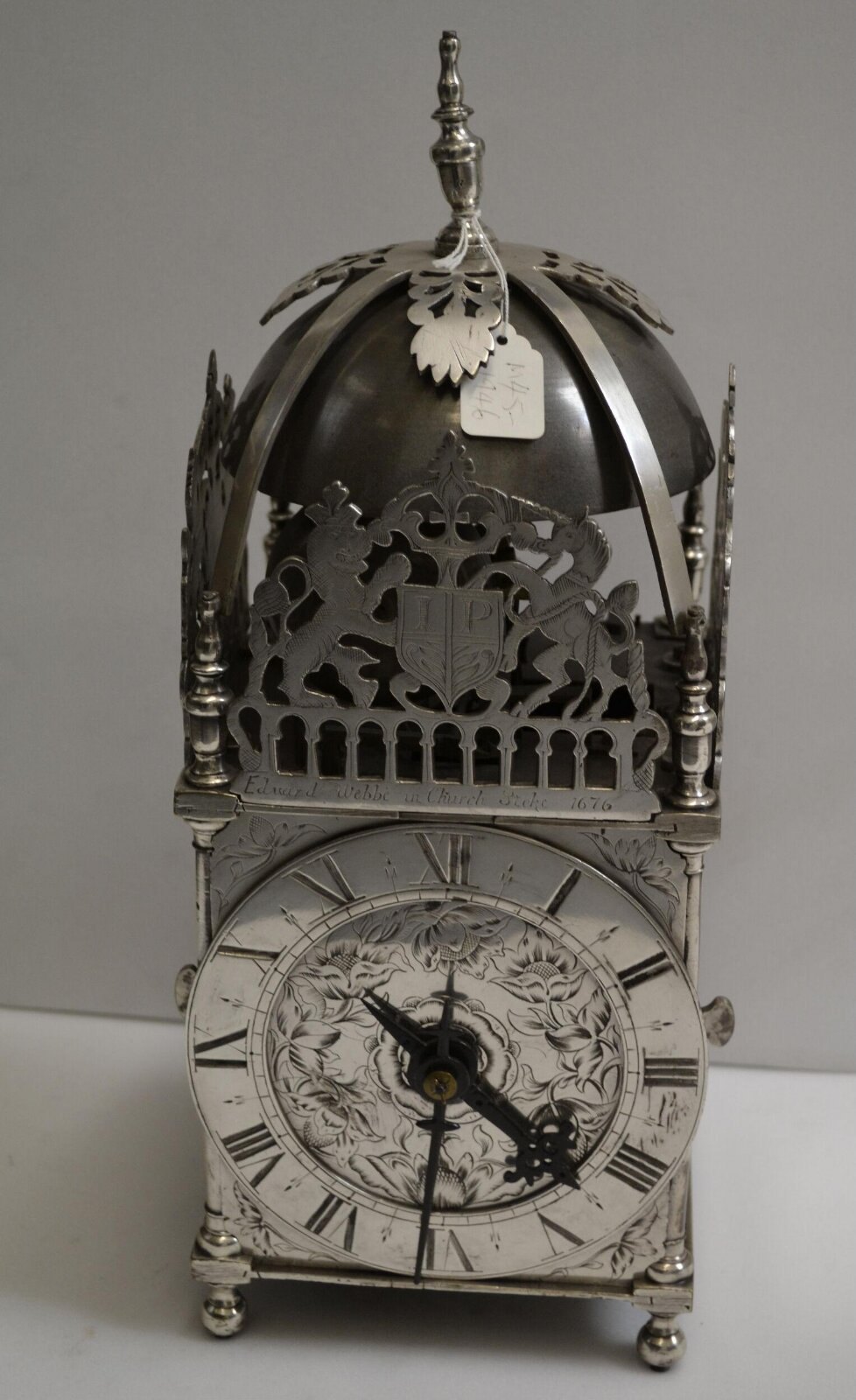
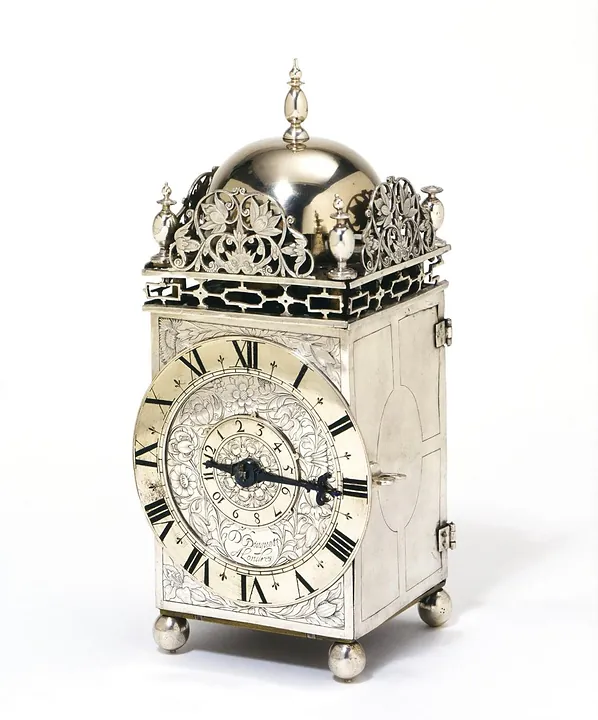
Lantern clock by Edward Webb, England, 1676
- Maker / attribution
- Edward Webb (Clockmaker)
- Date
- 1676
- Historical period
- Early Modern Horology (1600 – 1750)
- Country of origin
- England
- Place
- Church Stoke, Somerset
- Object type
- Lantern clock
- Materials / technique
- Silver, engraved with brass movement
- Dimensions
- Height: 40 cm; Width: 16.8 cm; Depth: 20.4cm
- Holding institution
- Victoria and Albert Museum, London
- Accession / object no.
- M.45:1, 2-1946
- Credit line
- Given by Reverend E G Winstanley
View the source record ↗ (opens another website in a new tab)Suggest a correction
Record summary
Held and catalogued by Victoria and Albert Museum, London (object number M.45:1, 2-1946), this is a lantern clock by Edward Webb, made in Church Stoke, Somerset, England, dated 1676. The Atlas places it in the Early Modern Horology period (1600 – 1750) of its Clocks collection. Materials and techniques recorded by the source: Silver, engraved with brass movement. Recorded dimensions: Height: 40 cm; Width: 16.8 cm; Depth: 20.4cm. The record is illustrated with 2 photographs.
Assembled from the source record's structured fields. Dates and attributions are given as the source states them; where a field is missing the Atlas leaves it blank rather than estimating.
Catalogue description
Summary — Victoria and Albert Museum
A silver lantern clock signed by Edward Webb, and made in Church Stoke, Somerset, where Webb worked between 1660 and 1693. This example is dated 1676. Webb died in 1694.
Physical description — Victoria and Albert Museum
Case: The case rests on four ball feet, and the dial is engraved with flowers and with strawberry leaves. Above is an openwork key-pattern surmounted by the royal supporters flanking a crowned shield engraved with I P. On either side of the case there are similar crestings but unengraved. The cresting above the dial is signed “Edward Webbe in Church Stoke 1676”. The bell-straps rise from four vases, with a fifth vase surmounting the whole assembly. Dial: Silver dial-plate, 15.6 x 13.6cm. Silver applied chapter-ring 15.3cm diameter, 2.5cm broad, with roman hours, quarter-hour marks and fleurs-de-lis as half hour marks. Heavy steel hour and minute hands, the latter an addition, the former probably a renewal. Originally with hour hand only. Movement: Going training front part of movement, the pulley with a ratchet, verge escapement with 15T escape wheel. Bob pendulum 19.8cm long; threaded at bottom but with bob missing. Front bearing of a verge a pivot, rear bearing a knife-edge. Present motion-work: 12:48 reduction to hour hand, 48:16 speed-up to minute hand. At centre, quarter-chiming train on 6 bells, with one peal at first quarter, two different pearls at the second quarter, etc. The count-wheel integral with the chime-barrel (indentations in the open end of the barrel). No ratchet on pulley. Locking-plate striking train at rear of movement (released by a pin from the quarters count-wheel) with outside count-wheel. Pulley with ratchet.
Historical context — Victoria and Albert Museum
Lantern clocks were used as domestic time keepers, wall hung, usually in the hall where the sound of the bell could be heard throughout the house.
Inscriptions & marks
Edward Webbe in Church Stoke 1676
Provenance
Bequeathed by the Reverend E G Winstanley
Historical context
Early Modern Horology (1600 – 1750)
Huygens' pendulum and balance spring transform accuracy; English makers develop the anchor and deadbeat escapements.
Huygens's pendulum (1656–57) improved clock accuracy from about a quarter of an hour to under a minute a day. The anchor escapement (c. 1670) and the long seconds pendulum created the longcase clock; London makers such as Fromanteel, Knibb, Tompion and Quare led European clockmaking, and French makers created the Boulle pendule.
Read the period in the timelineMore clocks from this periodEarlier: Renaissance Horology
Atlas type guide
Lantern, chamber and Gothic clocks
Domestic weight-driven clocks were made in southern Germany, Switzerland, Italy and Flanders from the fifteenth century. These 'Gothic' or chamber clocks have an open iron frame with corner posts, a verge escapement controlled by a foliot or balance wheel, and often an alarm or hour striking on a bell mounted above.
In England the lantern clock appeared around 1600: a brass posted-frame clock with a bell on top under decorative frets, hung on a hook or set on a wall bracket. After about 1658 many were converted to pendulum control, so originality of the escapement is a key question for any surviving example.
What to look for
- Iron (continental) or brass (English) posted frames with turned corner pillars and finials.
- A single hour hand — minute hands are rare before the pendulum era.
- Evidence of conversion: plugged holes, replaced escapement wheels or later pendulums.
- Fret designs and engraving on the dial centre, which help date English lantern clocks.
Dating clues
- Continental Gothic chamber clocks: c. 1450–1650.
- English lantern clocks: c. 1600–1720, with provincial examples later.
- Short 'bob' pendulum conversions after 1658; long pendulums with anchor escapement after c. 1670.
General guidance written by the Atlas editors about this kind of object. It is not a statement about this particular piece; for that, rely on the source record above and on physical examination.
Read next:FoliotAnchor (recoil) escapement
Related records
Clocks · 1688
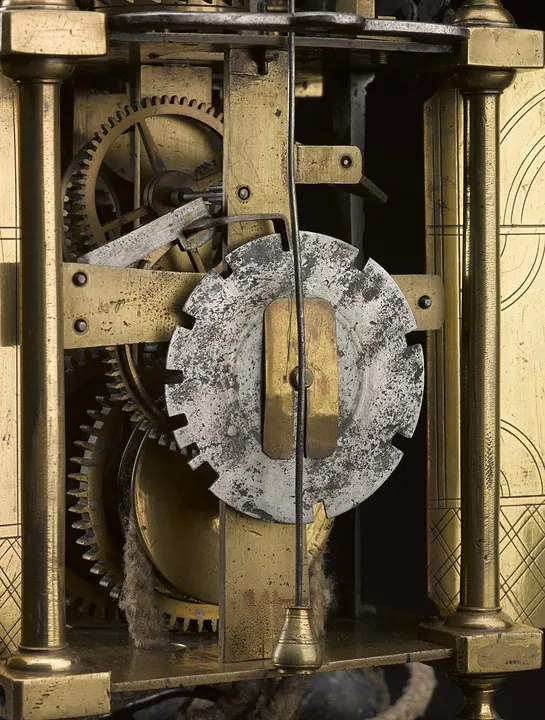
Brass lantern clock by Edward Webb, Chew Stoke, Somerset, England, 1688, (weight missing), with case.
Science Museum Group, London
Clocks · 1660s
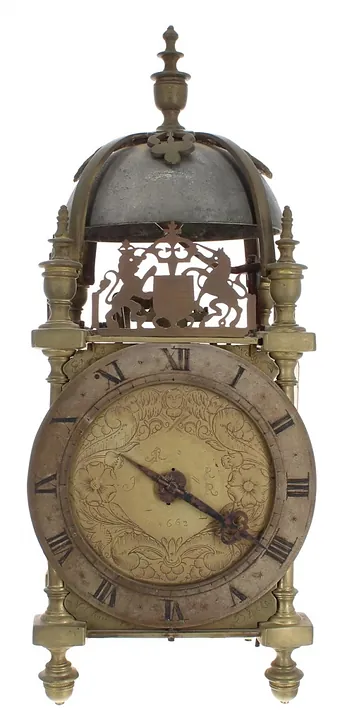
Hook and spike verge lantern clock signed Edward Webb (Snr) (fl. 1660's- 1694)
Gardiner Houlgate (auction house), Corsham
Clocks · 1598–1603
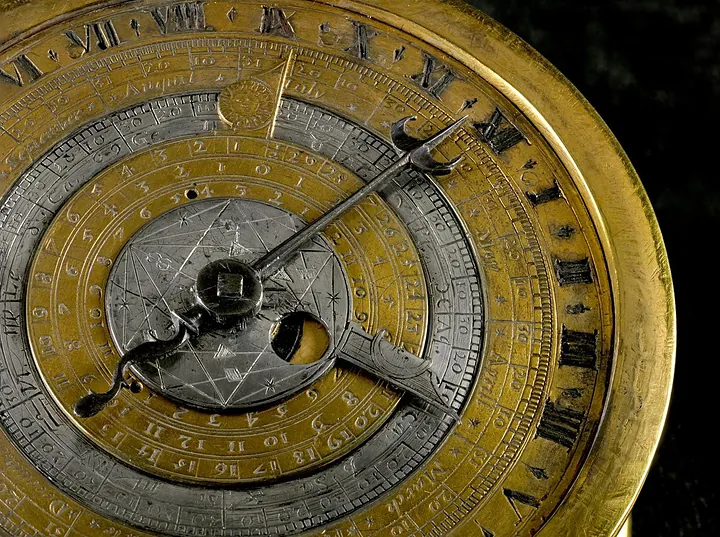
Circular table-clock with calendrical and lunar indications made by Nicholas Vallin in London between 1598 and 1603.
Science Museum Group, London
Clocks · 1611
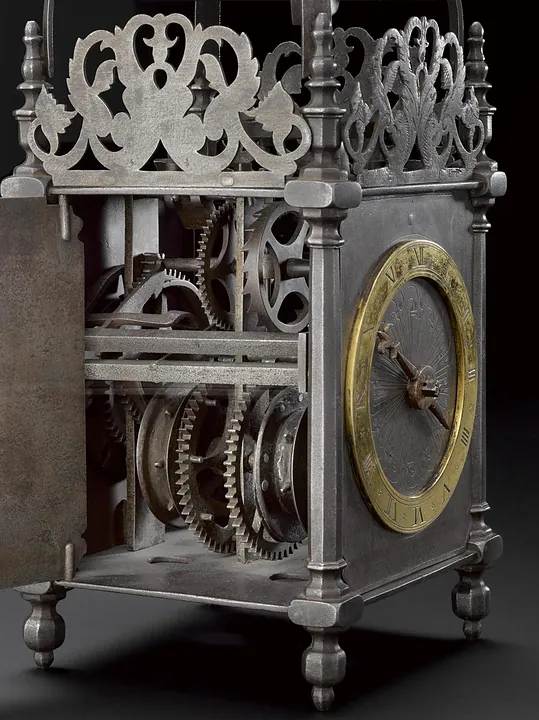
English iron lantern clock, with wheel balance, by John Holloway, Market Lavington, Wiltshire, England, 1611.
Science Museum Group, London
Clocks · 1630
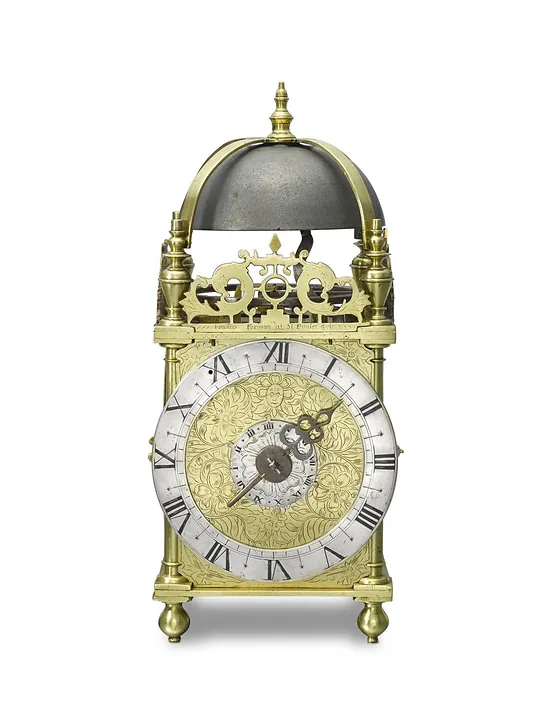
Lantern clock by Francis Forman, England, 1630
Science Museum Group, London
Clocks · 1632–1640
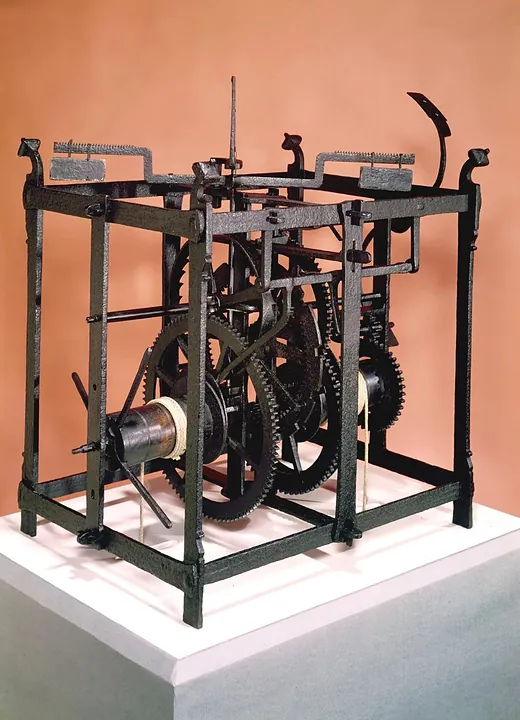
Turret clock, England, 1632–1640
Science Museum Group, London
Clocks · 1645–1655
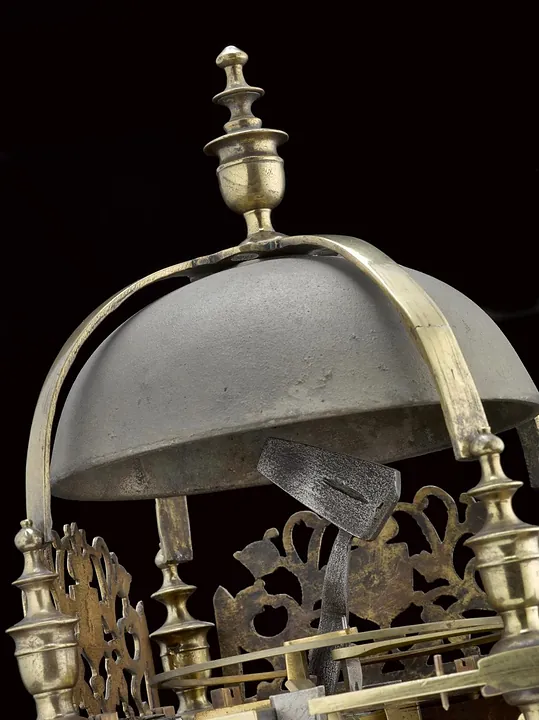
Balance-wheel brass lantern clock, with two driving weights and one counterweight, by Thomas Knifton, Cross Keys, Lothbury, London, England, 1645–1655.
Science Museum Group, London
Clocks · c. 1650
Lantern alarm clock, silver, by David Bouquet, circa 1650
Victoria and Albert Museum, London