
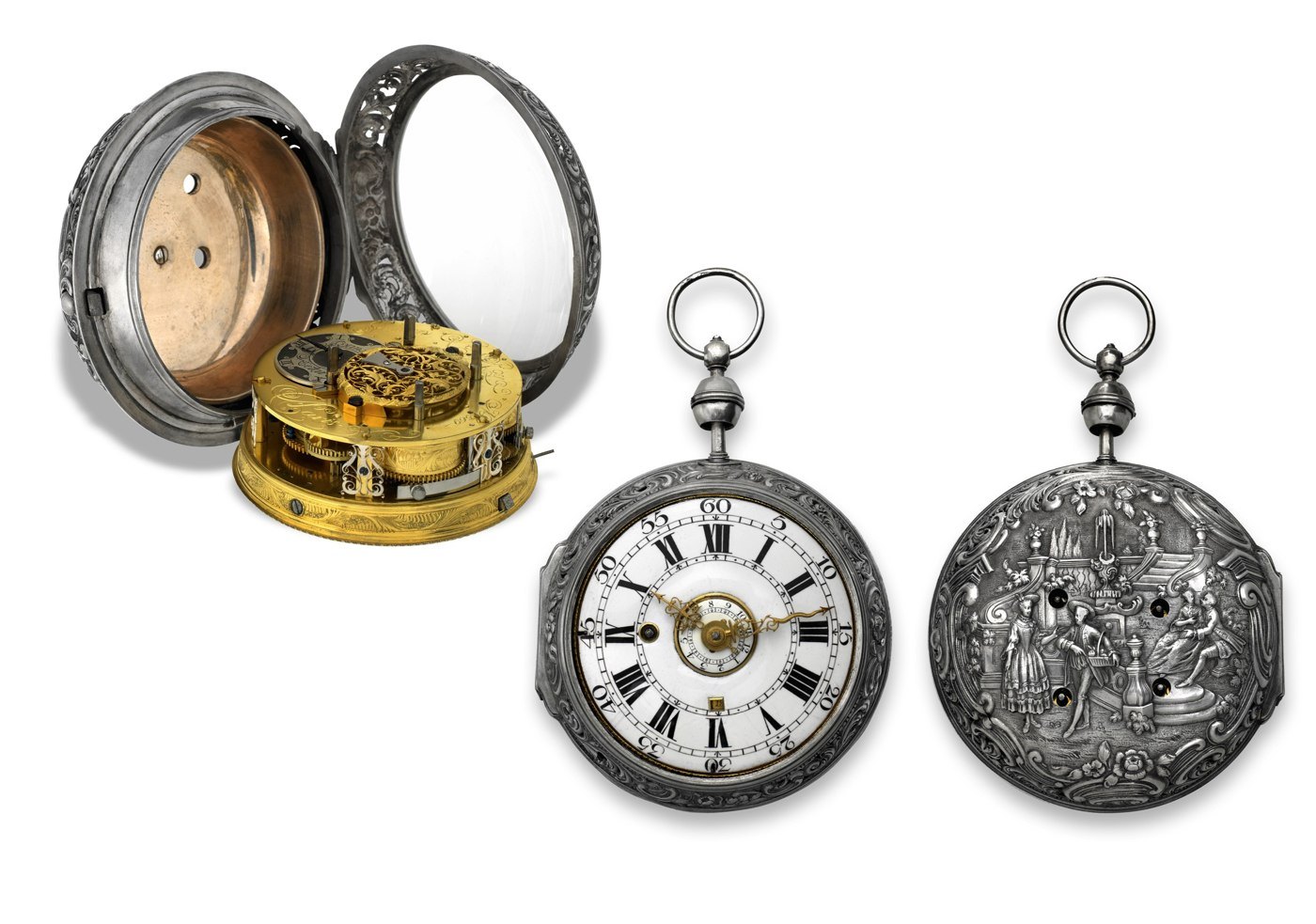
Pocket Watches · Coach watch
Julien Le Roy Four-Train Coach Watch
- Maker / attribution
- Julien Le Roy (source attribution)
- Date
- c. 1740
- Historical period
- Early Modern Horology (1600 – 1750)
- Country of origin
- France/Germany
- Object type
- Coach watch
- Dimensions
- 115 mm
- Holding institution
- Antiquorum
- Accession / object no.
- 365
- Credit line
- Antiquorum
- Catalogue title (original)
- LE ROY - THE ROCOCO GARDEN\nJulien Le Roy à Paris, No. 569. Made in Friedberg, circa 1740.\nVery fine and rare, large, repoussé silver, four-train coach watch with hour and quarter striking and repeat (English)
View the source record ↗ (opens another website in a new tab)Suggest a correction
Record summary
Held and catalogued by Antiquorum (object number 365), this is a coach watch attributed to Julien Le Roy, made in France/Germany, dated c. 1740. The Atlas places it in the Early Modern Horology period (1600 – 1750) of its Pocket Watches collection. Recorded dimensions: 115 mm. The record is illustrated with 1 photograph.
Assembled from the source record's structured fields. Dates and attributions are given as the source states them; where a field is missing the Atlas leaves it blank rather than estimating.
Catalogue description
Original object description
Measuring 115 mm in diameter, this silver four-train coach watch bears the signature of Julien Le Roy of Paris, dates to circa 1740, and is attributed by source records to Friedberg, Germany. The two-body silver case is heavily decorated with pierced, engraved, and chased rococo scrollwork across the body and bezel, while the back cover features a repoussé scene of courting couples within a formal garden setting, suspended from a pendant with a loose barrel and ring. Inside, an 83 mm gilt full-plate movement is constructed with rectangular pillars, pierced silver foliate frets, and a fusee with chain. It runs four separate gear trains that operate the hours, quarters, repeating function, and alarm using polished steel hammers against a shared bell. Timing adjustment is managed through a polished steel endplate and a silver regulator disc marked with radial Roman numerals, while a dial lever permits selection between strike and silent modes. On the white enamel dial, radial Roman numerals indicate the primary hours, encircled by an outer five-minute scale in Arabic figures; an aperture for the date is placed over six o'clock, and an inner central enamel alarm disc is detailed with Arabic hours along with quarter- and half-hour subdivisions.
Inscriptions & marks
569
Historical context
Early Modern Horology (1600 – 1750)
Huygens' pendulum and balance spring transform accuracy; English makers develop the anchor and deadbeat escapements.
The balance spring (c. 1675) improved watches dramatically and introduced the minute hand. English pair-cased verge watches with pierced balance cocks and French oignons were typical; enamel painting at Blois and Geneva, and the repeating watch (1680s), made watches objects of great refinement.
Read the period in the timelineMore pocket watches from this periodEarlier: Renaissance Horology
Atlas type guide
Verge and pair-cased watches
After Christiaan Huygens and Robert Hooke applied the balance spring around 1675, the verge watch became a reasonably reliable timekeeper and the minute hand became standard. Through the eighteenth century the typical English watch was a pair-cased verge: a fusee movement with a pierced, engraved balance cock, housed in an inner case and a separate protective outer case, often of repoussé gold, shagreen, tortoiseshell or enamel.
French watches of the same period were thicker 'oignons', later replaced by elegant thinner watches following Jean-Antoine Lépine's bar-bridge calibre of c. 1770. Dutch, Swiss and German makers supplied international markets, and verge watches were made until the mid-nineteenth century as cheaper alternatives to the cylinder and lever.
What to look for
- The pierced balance cock on the backplate: winged (continental) or with a foot (English); its style dates the watch.
- Fusee and chain visible through the movement; key winding through the dial (early) or case back.
- Hallmarks inside English silver or gold cases, which give a date letter.
- Maker's name and serial number engraved on the backplate; watch papers inside outer cases.
- Enamel dials (after c. 1720) versus earlier champlevé metal dials.
Dating clues
- Champlevé dials: c. 1680–1730; white enamel dials thereafter.
- English case hallmarks give the year of assay to within a year.
- Verge watches persisted in cheap production until c. 1850.
General guidance written by the Atlas editors about this kind of object. It is not a statement about this particular piece; for that, rely on the source record above and on physical examination.
Read next:Verge escapementBalance spring (hairspring)Verge escapement
Related records
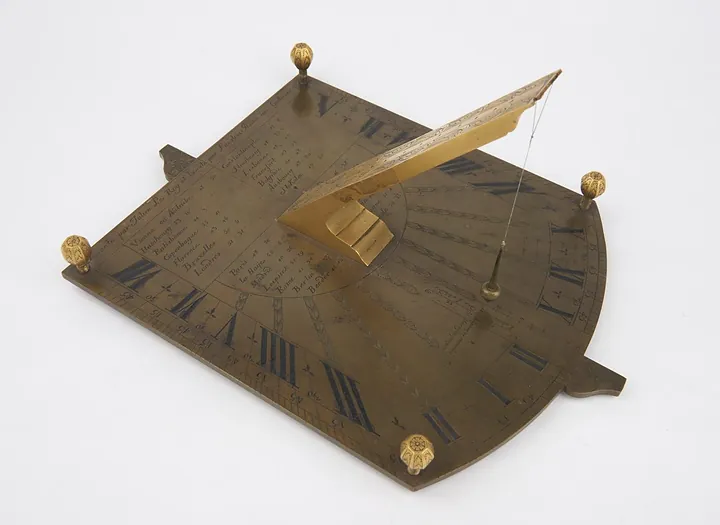
Instruments · 1730–1751
Sundial, Brass, gnomon and heads of levelling screws gilt. Plate 8 in. by 6 7/8 in. Invented by Julien le Roy. Made by Langlois, French. 1730–1751
Science Museum Group, London
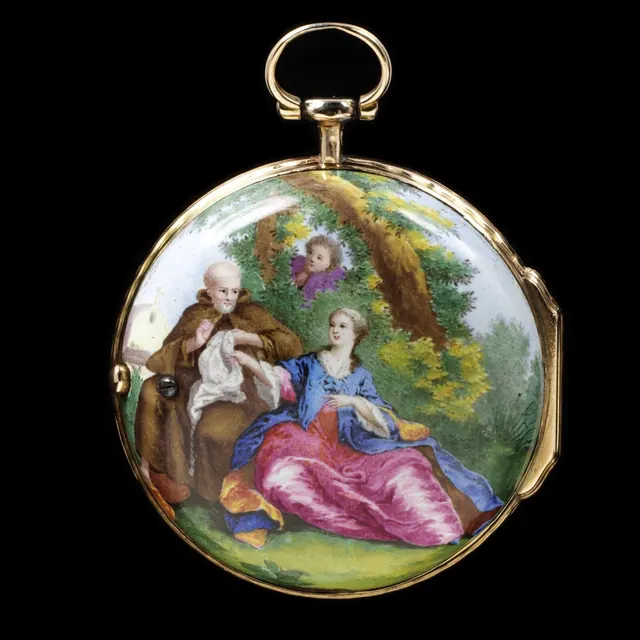
Pocket Watches · c. 1760
Watch by Julien Le Roy, Switzerland, c. 1760
Victoria and Albert Museum, London
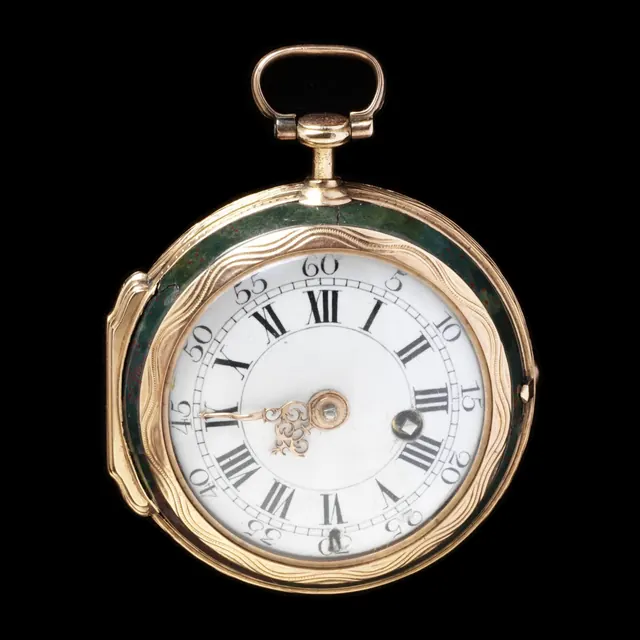
Pocket Watches · c. 1750
Watch by Julien Le Roy, France, c. 1750
Victoria and Albert Museum, London
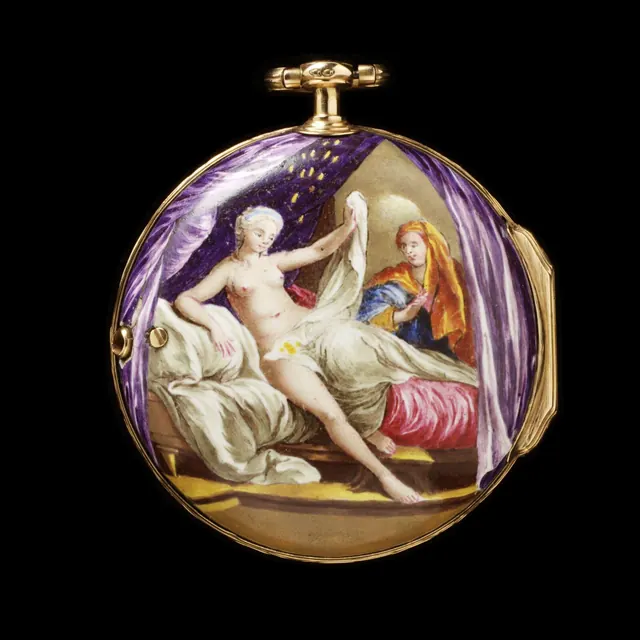
Pocket Watches · c. 1750
Watch by Julien Le Roy, Switzerland, c. 1750
Victoria and Albert Museum, London
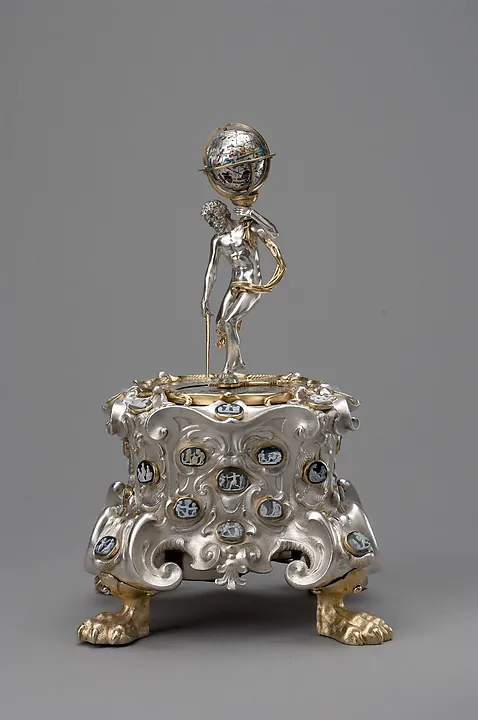
Pocket Watches · 1600–1699
Pocket watch by Georg Ernst, Germany, 1600–1699
Fine Arts Museum Vienna
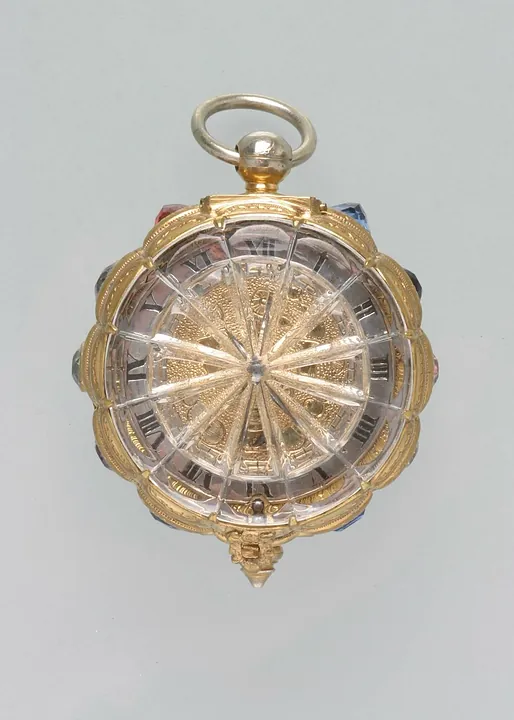
Pocket Watches · c. 1600
Pocket watch by Balthasar de Paep, Belgium, c. 1600
German Clock Museum
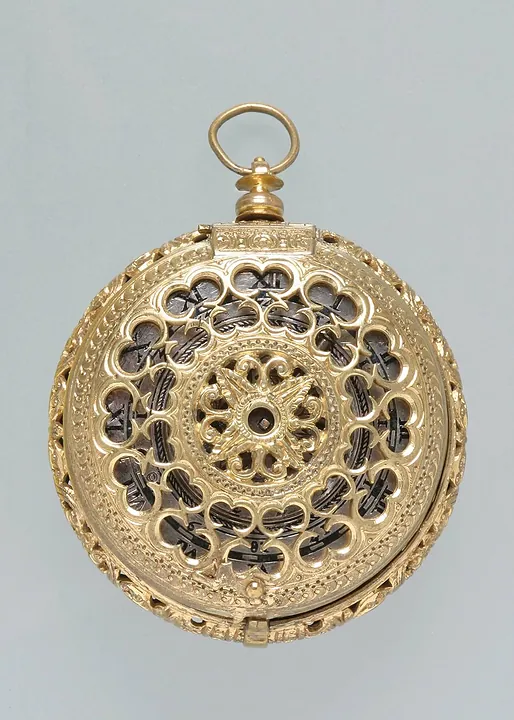
Pocket Watches · c. 1600
Pocket watch by Hans Reinboldt, France, c. 1600
German Clock Museum
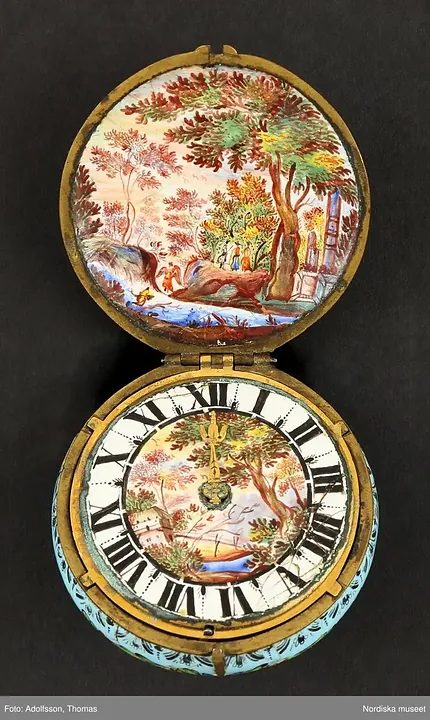
Pocket Watches · 1600–1699
Pocket watch by Johan Etmiller, Germany, 1600–1699
Nordic Museum Foundation