
Clocks · Atmos table clock
Jaeger-LeCoultre 'Atmos' Table Clock with Month and Moon Phases
- Maker / attribution
- Jaeger-LeCoultre (source attribution)
- Date
- c. 2012
- Historical period
- Contemporary Horology (2010 – Present)
- Country of origin
- Switzerland
- Object type
- Atmos table clock
- Materials / technique
- Gilt brass
- Auction house
- Christie's
- Lot
- 329
- Credit line
- Christie's
- Catalogue title (original)
- JAEGER-LECOULTRE, GILT BRASS 'ATMOS' TABLE CLOCK, WITH MONTH AND MOON PHASES, REF. Q5111202, NO: 749'053 | Christie’s (English)
View the source record (auction lot) ↗ (opens another website in a new tab)Suggest a correction
Record summary
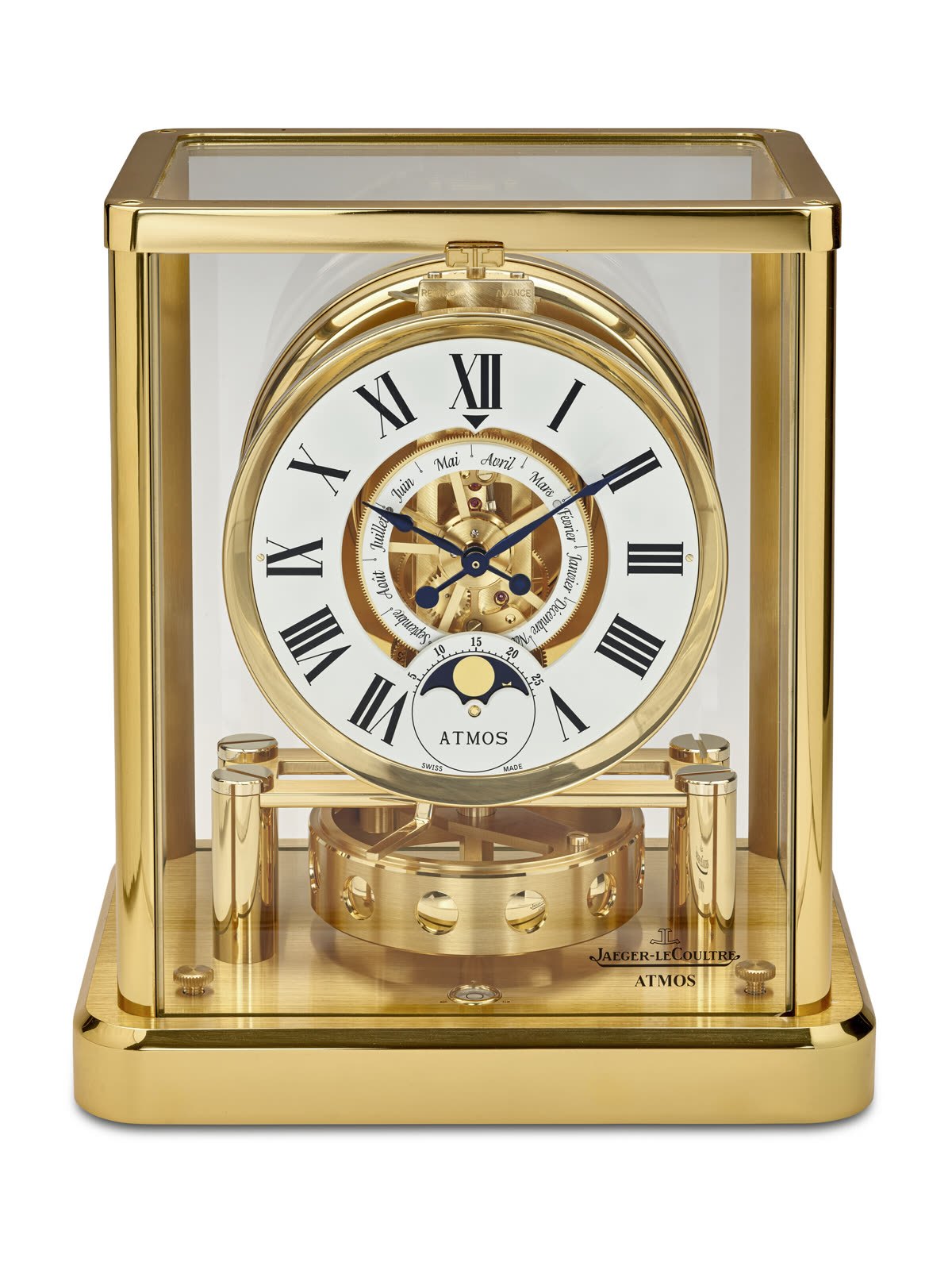
Catalogued by Christie's (lot 329), this is an atmos table clock attributed to Jaeger-LeCoultre, made in Switzerland, dated c. 2012. The Atlas places it in the Contemporary Horology period (2010 – Present) of its Clocks collection. Materials and techniques recorded by the source: Gilt brass. The record is illustrated with 1 photograph.
Assembled from the source record's structured fields. Dates and attributions are given as the source states them; where a field is missing the Atlas leaves it blank rather than estimating.
Catalogue description
Original object description
Categorised as an Atmos table clock, this Swiss-made Jaeger-LeCoultre timepiece carries reference number Q5111202 alongside movement number 749'053, with Christie's attributing its production to circa 2012. It measures 22 cm in height, 20 cm in width, and 15.5 cm in depth, housed inside a gilt-brass case fitted with four glass panels, corner columns, and a stepped base. Centred on the forward section of the internal floor plate rests an integrated bubble spirit level. While lacking an original box, the object is accompanied by product literature and a guarantee certificate dated 2012. Christie's recorded physical blemishes, specifically dents and scratches across the outer metallic components. The silvered dial layout presents blued hands pointing to black Roman numerals, with an open centre displaying a subsidiary calendar ring marked with months in the French language. Set right over the 6 o'clock mark is a lunar phase complication, situated just above the inscribed mark 'ATMOS'. Timekeeping regulation is driven by a suspended, cylindrical torsion balance wheel, with the mechanism drawing its operating power from fluctuations in ambient atmospheric pressure. During its auction assessment, the movement was ticking and operational, though catalogued without guarantees of long-term performance and with a recommendation for mechanical servicing.
Inscriptions & marks
749'053
Historical context
Contemporary Horology (2010 – Present)
Silicon components, connected watches, optical-lattice research clocks and a thriving independent scene.
Today time is distributed by satellite navigation and networks with nanosecond accuracy, while mechanical clocks are made as art, design and craft objects. Contemporary designers explore the clock as sculpture and kinetic art.
Read the period in the timelineMore clocks from this periodEarlier: Mechanical Renaissance
Atlas type guide
Bracket, table and spring-driven clocks
Spring-driven clocks freed timekeeping from the hanging weight. The coiled mainspring, documented from the fifteenth century, made portable table clocks possible; to even out its declining force, makers used the fusee, a conical pulley connected to the barrel by a gut line or chain. Renaissance table clocks from Augsburg and Nuremberg — drum-shaped, square or tower-shaped in gilt brass — were luxury scientific objects, often with astronomical dials and alarms.
After the pendulum, English makers developed the bracket clock: a wooden case with a carrying handle, a short pendulum with a verge escapement, and often repeating work to sound the hours on demand at night. Later examples use the anchor escapement. In the nineteenth century, 'table clock' became a broad term for spring clocks of every nationality.
What to look for
- A fusee in the movement (cone-shaped pulley) and the type of line — gut or chain.
- Verge escapement with a short bob pendulum, often with a decoratively engraved backplate.
- Repeat cords or buttons that make the clock strike again on demand.
- Gilt-brass engraved cases and horizontal dials on Renaissance pieces.
- Case shapes: inverted bell, bell top, break-arch, lancet or balloon.
Dating clues
- Drum and tower table clocks: c. 1520–1650.
- Ebony veneered English bracket clocks with verge escapements: c. 1670–1800.
- Engraved backplates were usual on English clocks until c. 1800, then generally plain.
General guidance written by the Atlas editors about this kind of object. It is not a statement about this particular piece; for that, rely on the source record above and on physical examination.
Related records
Clocks · 1937–1938
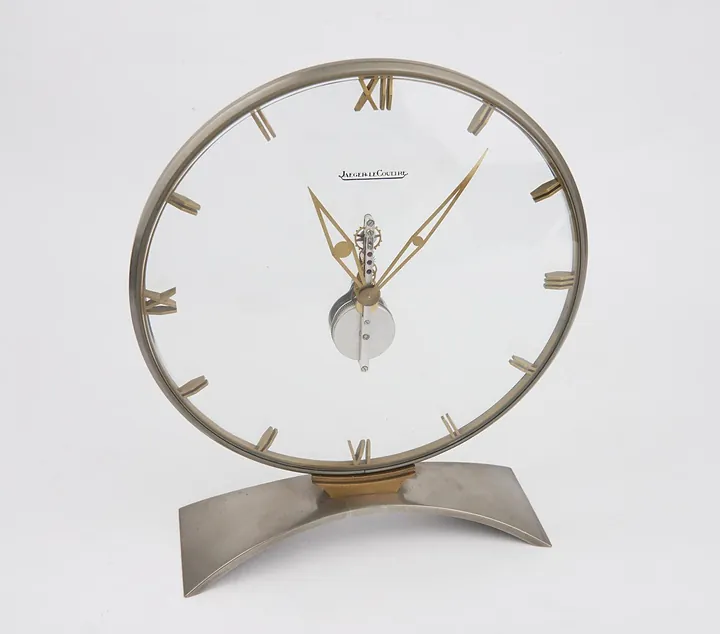
Skeleton clock by Jaeger-LeCoultre, Switzerland, 1937–1938
Science Museum Group, London
Movements & Components · 1953
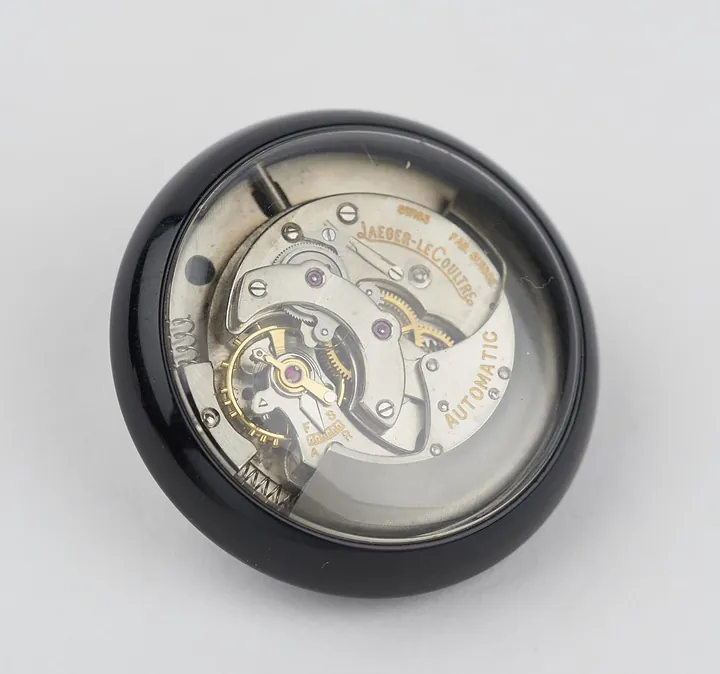
Automatic watch movement, Jaeger-LeCoultre, 1953, Geneva, Switzerland, showing self-winding mechanism
Science Museum Group, London
Wristwatches · 1953
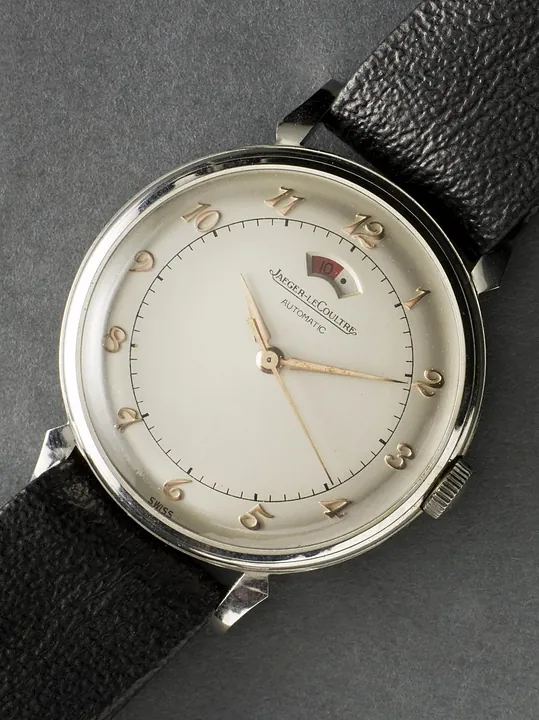
Automatic Wrist-watch, Jaeger-LeCoultre, Geneva, Switzerland, with reserve power indicator complete in steel case, 1953. Back numbered 564556.
Science Museum Group, London
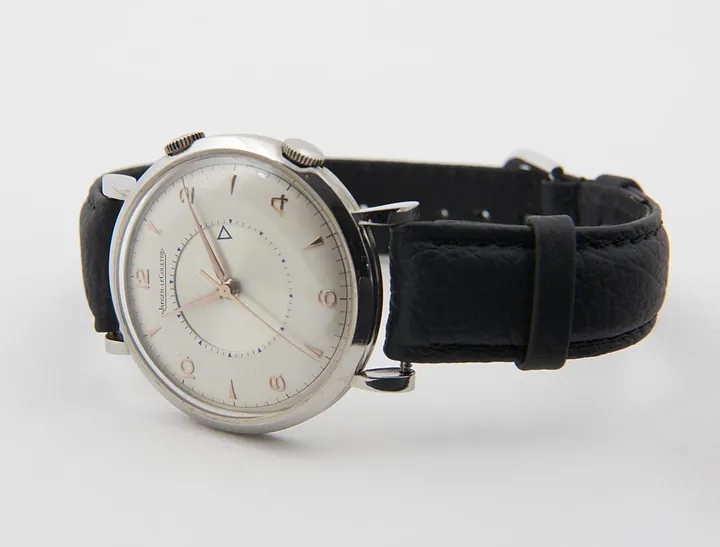
Wristwatches · 1953
Wrist-watch, 'Memovox' alarm, Jaeger-LeCoultre, Geneva, Switzerland, complete in steel case, 1953.
Science Museum Group, London
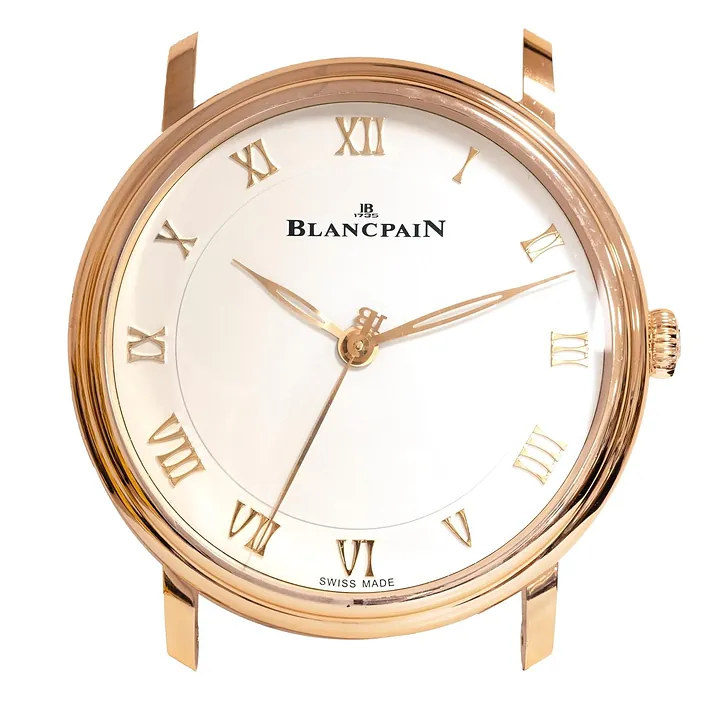
Clocks · c. 2010
Blancpain clock, c. 2010
Antiquorum auction archive, Geneva
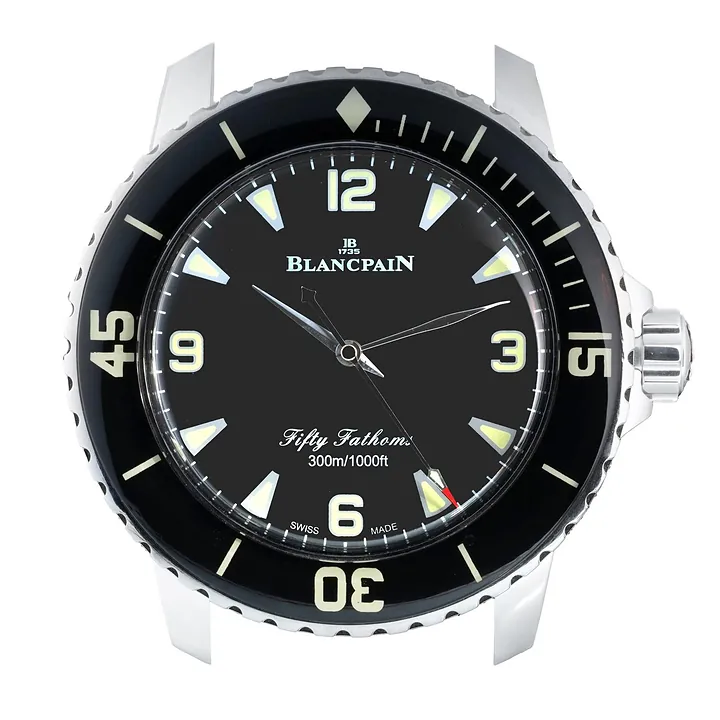
Clocks · c. 2015
Rueg Made for Blancpain Fifty Fathoms, c. 2015
Antiquorum auction archive, Geneva
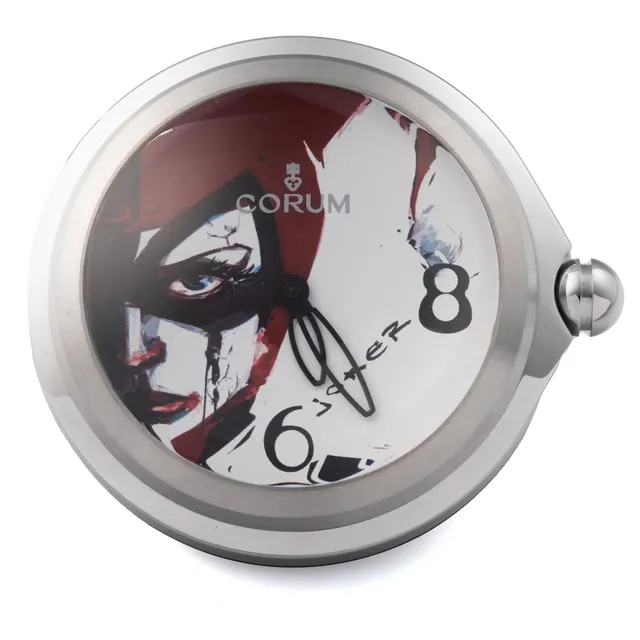
Clocks · c. 2010
Corum table clock, ref. 104636, Bubble Joker Desk Clock made in Limited Edition of 88 Pieces, circa 2010
Antiquorum auction archive, Geneva
Clocks · c. 2010s
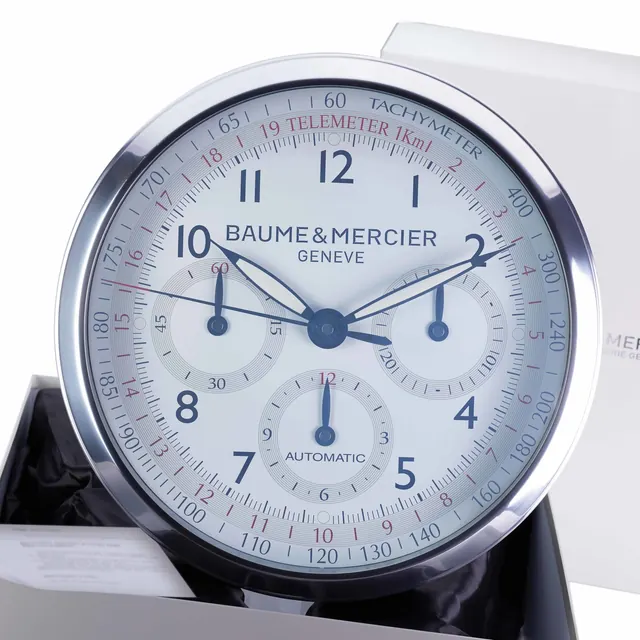
Baume & Mercier wall clock, Wall Clock Quartz, circa 2010s
Antiquorum auction archive, Geneva