
Clocks · Table clock
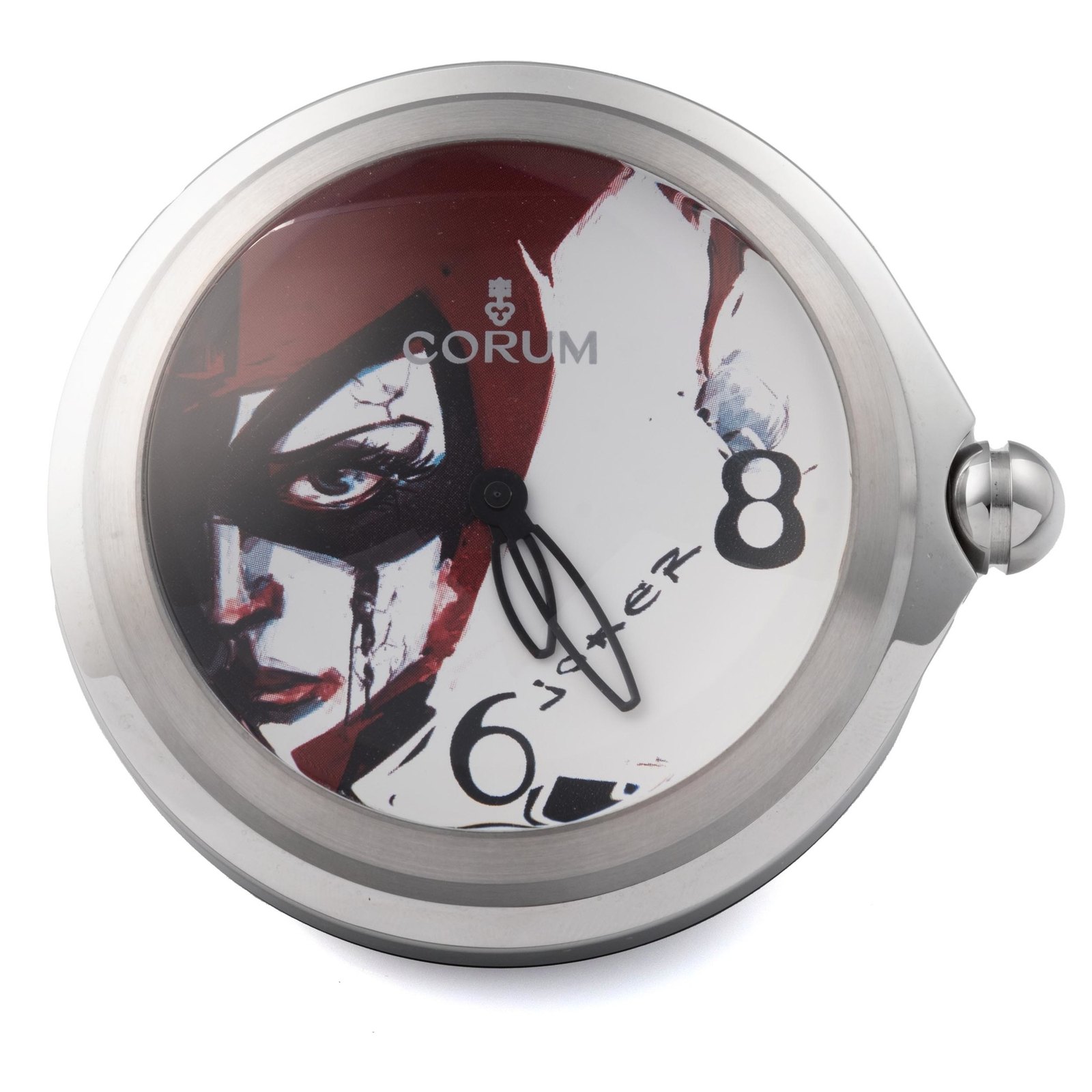
Corum table clock, ref. 104636, Bubble Joker Desk Clock made in Limited Edition of 88 Pieces, circa 2010
- Maker / attribution
- Corum (brand / maker)
- Date
- c. 2010
- Historical period
- Contemporary Horology (2010 – Present)
- Country of origin
- Switzerland
- Object type
- Table clock
- Materials / technique
- stainless steel
- Dimensions
- diameter 80 mm
- Auction house
- Antiquorum auction archive, Geneva
- Lot
- Lot 370-37
- Credit line
- Auction lot record: LOT 37, Monaco,July 13, 2024
- Catalogue title (original)
- CORUM, SWITZERLAND, REF. 104636, BUBBLE JOKER DESK CLOCK, MADE IN LIMITED EDITION OF 88 PIECES, STAINLESS STEEL (English)
View the source record (auction lot) ↗ (opens another website in a new tab)Suggest a correction
Record summary
Catalogued by Antiquorum auction archive, Geneva (lot Lot 370-37), this is a table clock by Corum, made in Switzerland, dated c. 2010. The Atlas places it in the Contemporary Horology period (2010 – Present) of its Clocks collection. Materials and techniques recorded by the source: stainless steel. Recorded dimensions: diameter 80 mm. The record is illustrated with 3 photographs.
Assembled from the source record's structured fields. Dates and attributions are given as the source states them; where a field is missing the Atlas leaves it blank rather than estimating.
Catalogue description
Antiquorum catalogue description
A fine stainless steel, quartz desk clock with a PVD black stand,made in a limited edition tribute to a crazed femme fatale.
Lot specifications (Antiquorum)
Model: BUBBLE JOKER DESK CLOCK; Reference: 104636; Caliber: quartz; Diameter: 80 mm.; Signature: Dial, case and movement; Accessories: Original certificate
Inscriptions & marks
Dial, case and movement
Historical context
Contemporary Horology (2010 – Present)
Silicon components, connected watches, optical-lattice research clocks and a thriving independent scene.
Today time is distributed by satellite navigation and networks with nanosecond accuracy, while mechanical clocks are made as art, design and craft objects. Contemporary designers explore the clock as sculpture and kinetic art.
Read the period in the timelineMore clocks from this periodEarlier: Mechanical Renaissance
Atlas type guide
Bracket, table and spring-driven clocks
Spring-driven clocks freed timekeeping from the hanging weight. The coiled mainspring, documented from the fifteenth century, made portable table clocks possible; to even out its declining force, makers used the fusee, a conical pulley connected to the barrel by a gut line or chain. Renaissance table clocks from Augsburg and Nuremberg — drum-shaped, square or tower-shaped in gilt brass — were luxury scientific objects, often with astronomical dials and alarms.
After the pendulum, English makers developed the bracket clock: a wooden case with a carrying handle, a short pendulum with a verge escapement, and often repeating work to sound the hours on demand at night. Later examples use the anchor escapement. In the nineteenth century, 'table clock' became a broad term for spring clocks of every nationality.
What to look for
- A fusee in the movement (cone-shaped pulley) and the type of line — gut or chain.
- Verge escapement with a short bob pendulum, often with a decoratively engraved backplate.
- Repeat cords or buttons that make the clock strike again on demand.
- Gilt-brass engraved cases and horizontal dials on Renaissance pieces.
- Case shapes: inverted bell, bell top, break-arch, lancet or balloon.
Dating clues
- Drum and tower table clocks: c. 1520–1650.
- Ebony veneered English bracket clocks with verge escapements: c. 1670–1800.
- Engraved backplates were usual on English clocks until c. 1800, then generally plain.
General guidance written by the Atlas editors about this kind of object. It is not a statement about this particular piece; for that, rely on the source record above and on physical examination.
Related records

Wristwatches · c. 2010
Corum Bubble Chrono, ref. 396.150.20, c. 2010
Antiquorum auction archive, Geneva
Wristwatches · c. 2000
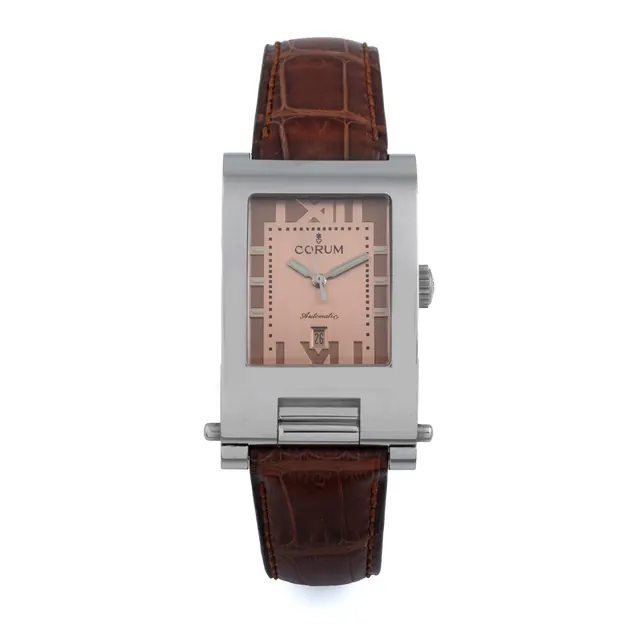
Corum wristwatch, ref. 145.151.20, Tabogan, circa 2000
Antiquorum auction archive, Geneva
Clocks · c. 2000s
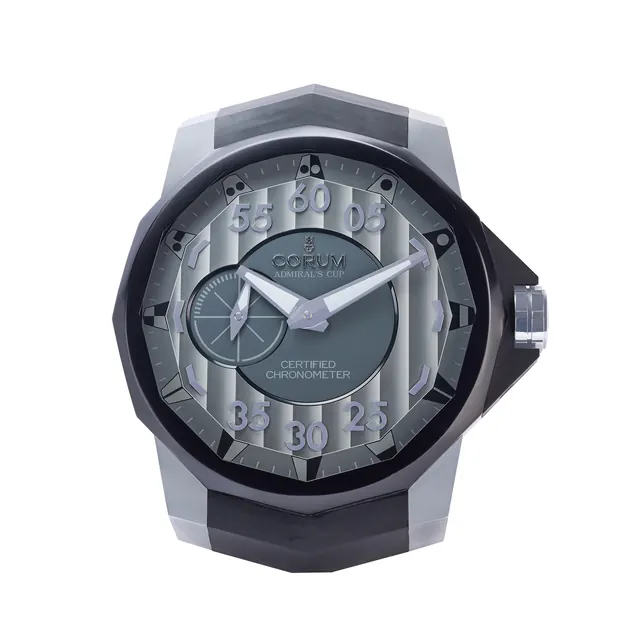
Corum wall clock, Admiral's Cup Electric Wall Clock, circa 2000s
Antiquorum auction archive, Geneva
Wristwatches · c. 2017
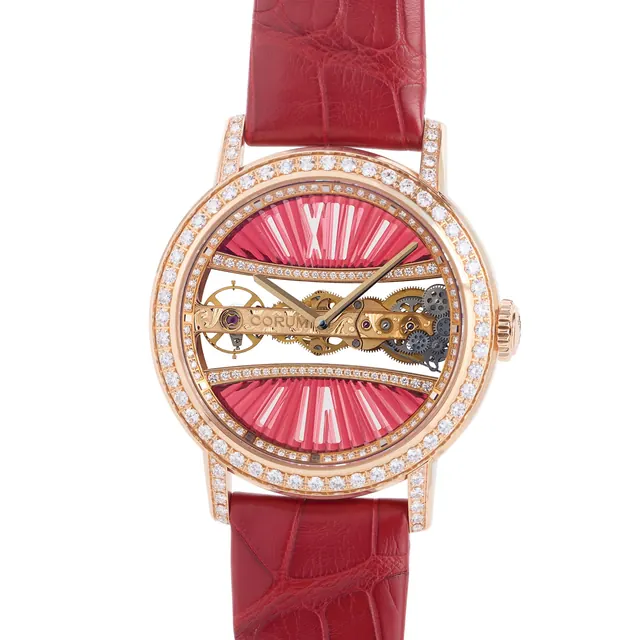
Corum wristwatch, ref. 113.000.85/0F06, Golden Bridge, circa 2017
Antiquorum auction archive, Geneva
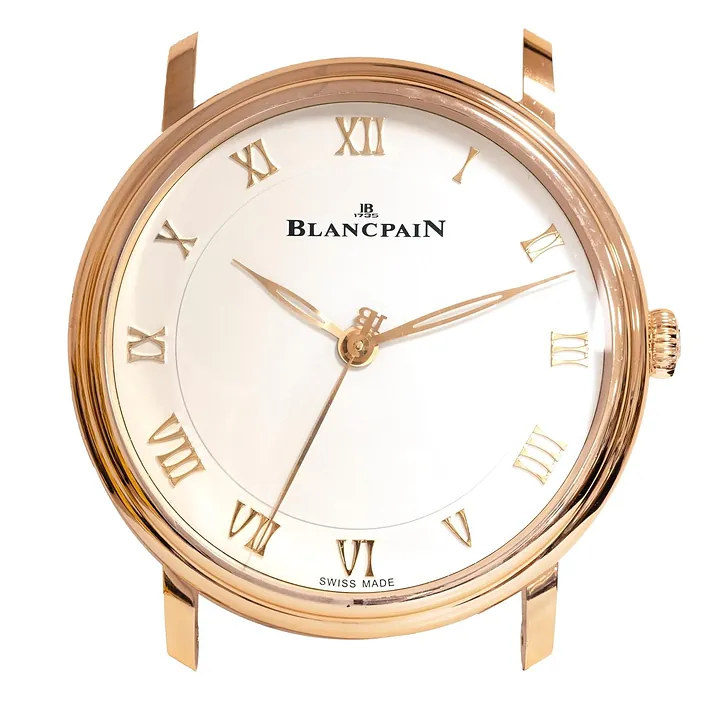
Clocks · c. 2010
Blancpain clock, c. 2010
Antiquorum auction archive, Geneva
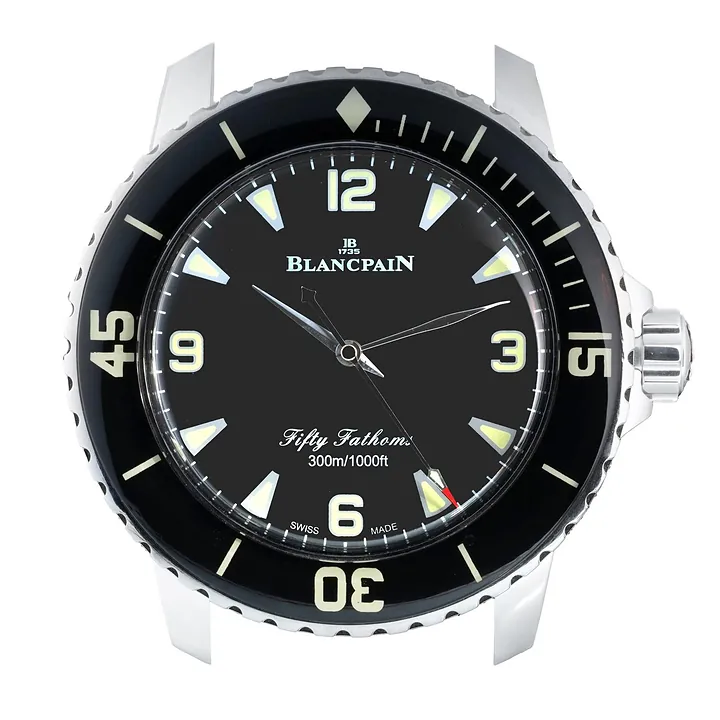
Clocks · c. 2015
Rueg Made for Blancpain Fifty Fathoms, c. 2015
Antiquorum auction archive, Geneva
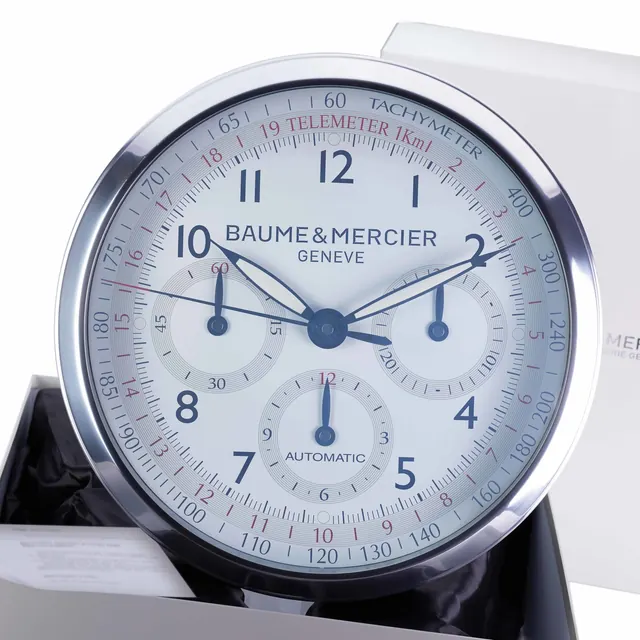
Clocks · c. 2010s
Baume & Mercier wall clock, Wall Clock Quartz, circa 2010s
Antiquorum auction archive, Geneva
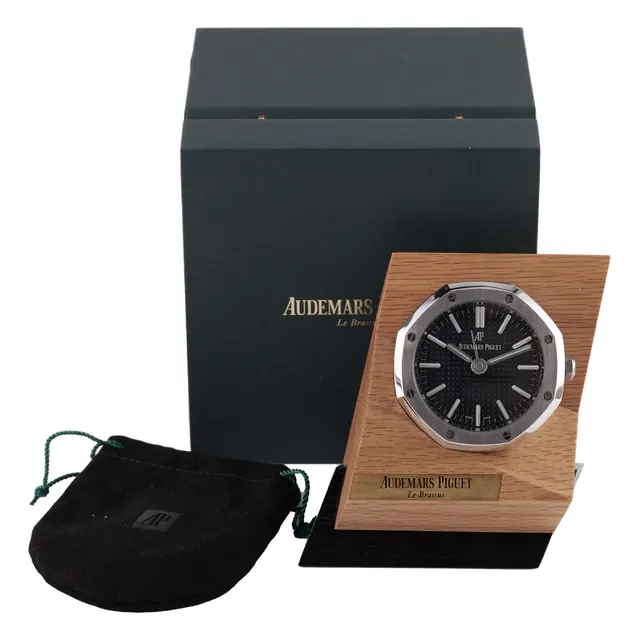
Clocks · c. 2019
Audemars Piguet table clock, Alarm Table Clock, circa 2019
Antiquorum auction archive, Geneva