
Wristwatches · Wristwatch
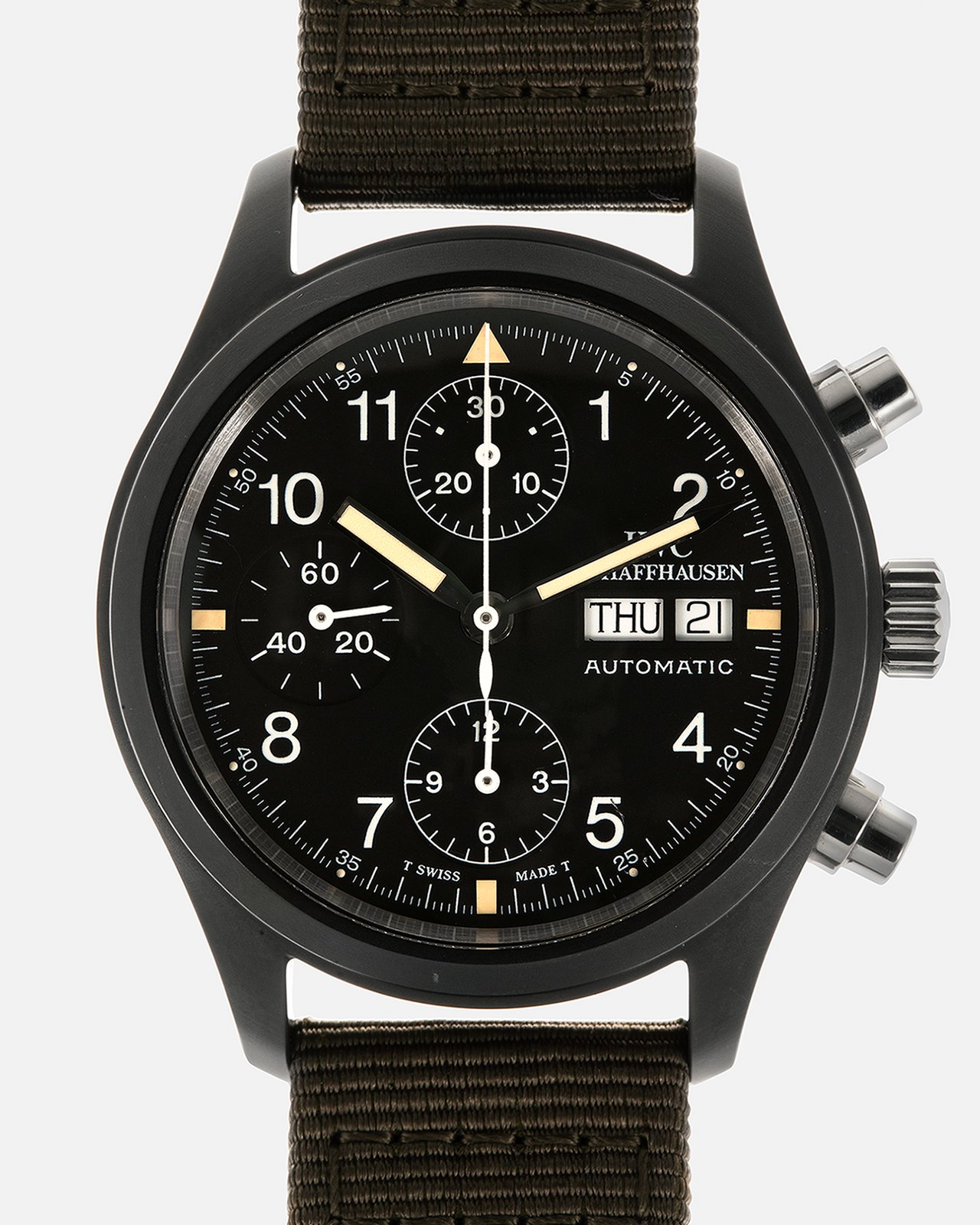
IWC Ceramic Fliegerchronograph 3705, 1990s
- Maker / attribution
- IWC (maker)
- Date
- 1990s
- Historical period
- Mechanical Renaissance (1990 – 2010)
- Country of origin
- Switzerland
- Object type
- Wristwatch
- Materials / technique
- ceramic
- Dimensions
- Case 39 mm
- Stock no.
- Product 7569122132055
- Credit line
- Dealer listing, S.Song Watches (product 7569122132055)
- Catalogue title (original)
- IWC Ceramic Fliegerchronograph 3705 (English)
View the source record (dealer listing) ↗ (opens another website in a new tab)Suggest a correction
Record summary
Catalogued by S.Song Watches (dealer), Seattle (stock number Product 7569122132055), this is a wristwatch by IWC, made in Switzerland, dated 1990s. The Atlas places it in the Mechanical Renaissance period (1990 – 2010) of its Wristwatches collection. Materials and techniques recorded by the source: ceramic. Recorded dimensions: Case 39 mm. The record is illustrated with 6 photographs.
Assembled from the source record's structured fields. Dates and attributions are given as the source states them; where a field is missing the Atlas leaves it blank rather than estimating.
Catalogue description
Dealer description — S.Song Watches
Released in 1994, the IWC Fliegerchronograph 3705 ‘Keramik’ is a shining example of ’90s watchmaking, emerging as the industry gradually recovered from the quartz crisis. Rare and forward-looking, it combines modern technology with a distinctive design that feels unmistakably IWC. Today, it holds a cult-like following among collector circles and a place in IWC’s history as an important and influential pilot watch reference. As far as proportions go, the 3705 combines its deep black ceramic case with highly wearable dimensions measuring 39mm x 14.8mm. Stainless steel crown and pushers add visual contrast to the stealthy blacked-out appearance. Encased within is a black dial featuring gracefully aged tritium markers at 3:00, 6:00, 9:00, and 12:00, accented by crisp white details throughout. Two chronograph sub-dials, a running seconds sub-dial at 9;00, and day and date apertures at 3:00 give the dial an organised layout that remains legible, all while retaining a hint of busy charm. Powered by the venerable automatic Valjoux Cal. 7750, modified to IWC’s exacting standards, the 3705 houses a remarkably robust chronograph movement that has stood the test of time. As for its power reserve, it offers a full charge of up to 44 hours when fully wound. Re-released by IWC in 2021 (the ‘Tribute to 3705’), the 3705 is widely considered by many to be one of the manufacture’s very best offerings from the ‘90s. Its aesthetic, material tech, and overall design ethos firmly secure its place within IWC’s heritage. For collectors seeking an iconic IWC to get into, or to add to their collection, you simply can’t go wrong with the 3705. With its rugged materials, stealthy appearance, and functional design, the 3705 channels the spirit of a pilot’s flight jacket—practical, purposeful, and effortlessly cool.
Historical context
Mechanical Renaissance (1990 – 2010)
Mechanical watches return as cultural objects; independent watchmaking flourishes.
Mechanical watches returned as cultural and luxury objects. Complications, tourbillons and new materials proliferated; independent watchmakers such as George Daniels, F.P. Journe and Philippe Dufour revived artisanal watchmaking; collecting vintage watches became a major field.
Read the period in the timelineMore wristwatches from this periodEarlier: Quartz Revolution
Atlas type guide
Chronographs and split-seconds watches
A chronograph is a watch with an additional seconds hand that can be started, stopped and returned to zero independently of the timekeeping. Louis Moinet built an early example in 1816 and Nicolas Rieussec a recording 'chronographe' in 1821; Adolphe Nicole's heart-shaped reset cam (patented 1862) made the modern return-to-zero possible. Split-seconds (rattrapante) chronographs add a second hand that can be stopped for intermediate times; flyback chronographs restart instantly.
Chronographs were essential tools for doctors (pulsometer scales), artillery (telemeter), engineers and sport. In wristwatches, Valjoux, Venus, Lemania and later the automatic chronographs of 1969 (Zenith El Primero, the Chronomatic Calibre 11 group and Seiko 6139) are milestones.
What to look for
- Push-pieces on the case band or a single button in the crown (monopusher).
- Subsidiary registers for minutes and hours; tachymeter, telemeter or pulsometer scales.
- Column wheel versus cam control visible in the movement.
- Calibre markings of specialist makers (Valjoux, Lemania, Venus, Landeron).
Dating clues
- Pocket chronographs with heart cam reset: after 1862.
- Wrist chronographs: from c. 1910; two-button designs from the 1930s.
- Automatic chronographs: from 1969.
General guidance written by the Atlas editors about this kind of object. It is not a statement about this particular piece; for that, rely on the source record above and on physical examination.
Read next:Flyback chronographChronograph
Related records
Pocket Watches · c. 1950
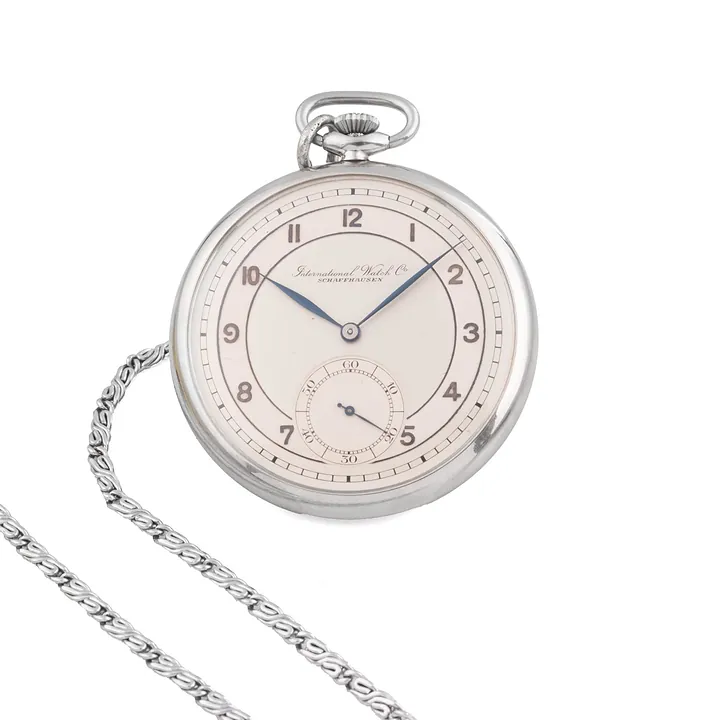
IWC Pocket Watch, c. 1950
Antiquorum auction archive, Geneva
Pocket Watches · c. 1980
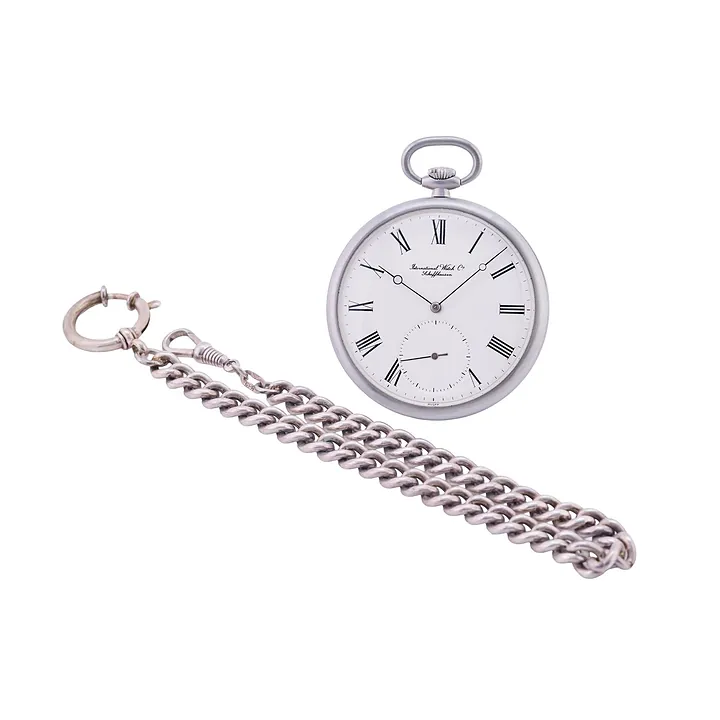
IWC pocket watch, ref. 5301, c. 1980
Antiquorum auction archive, Geneva
Wristwatches · originally sold in April 2016 (per the lot record)
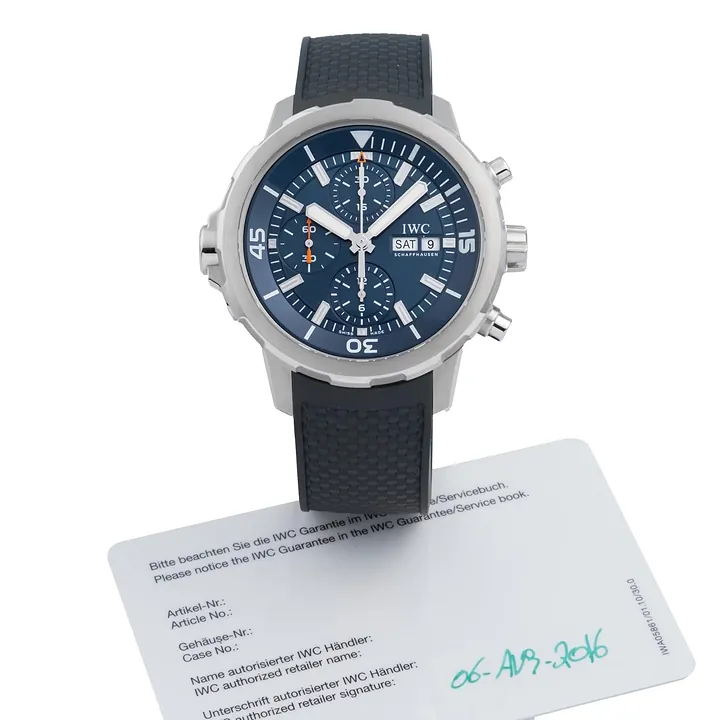
IWC Aquatimer Chronograph Cousteau, ref. IW3768, originally sold in April 2016
Antiquorum auction archive, Geneva
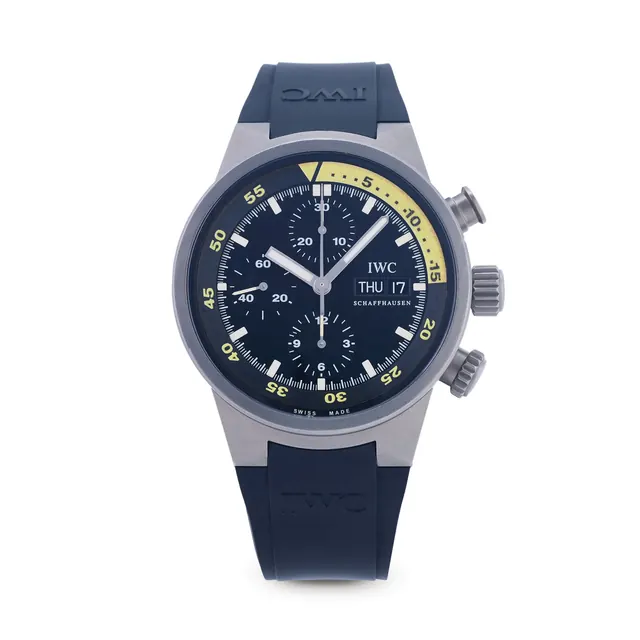
Wristwatches · c. 2010s
IWC wristwatch, ref. IW371918, Aquatimer, circa 2010s
Antiquorum auction archive, Geneva

Wristwatches · 2008
Wristwatch by Breitling?, 2008
Museum Rotterdam

Wristwatches · c. 1990s
Audemars Piguet Bamboo, c. 1990s
Antiquorum auction archive, Geneva

Wristwatches · c. 1990
Audemars Piguet Huitieme Perpetual Calendar, ref. 25696PT, c. 1990
Antiquorum auction archive, Geneva

Wristwatches · c. 1990
Breitling Chronomat, ref. b13050.1, c. 1990
Antiquorum auction archive, Geneva