
Wristwatches · Wristwatch
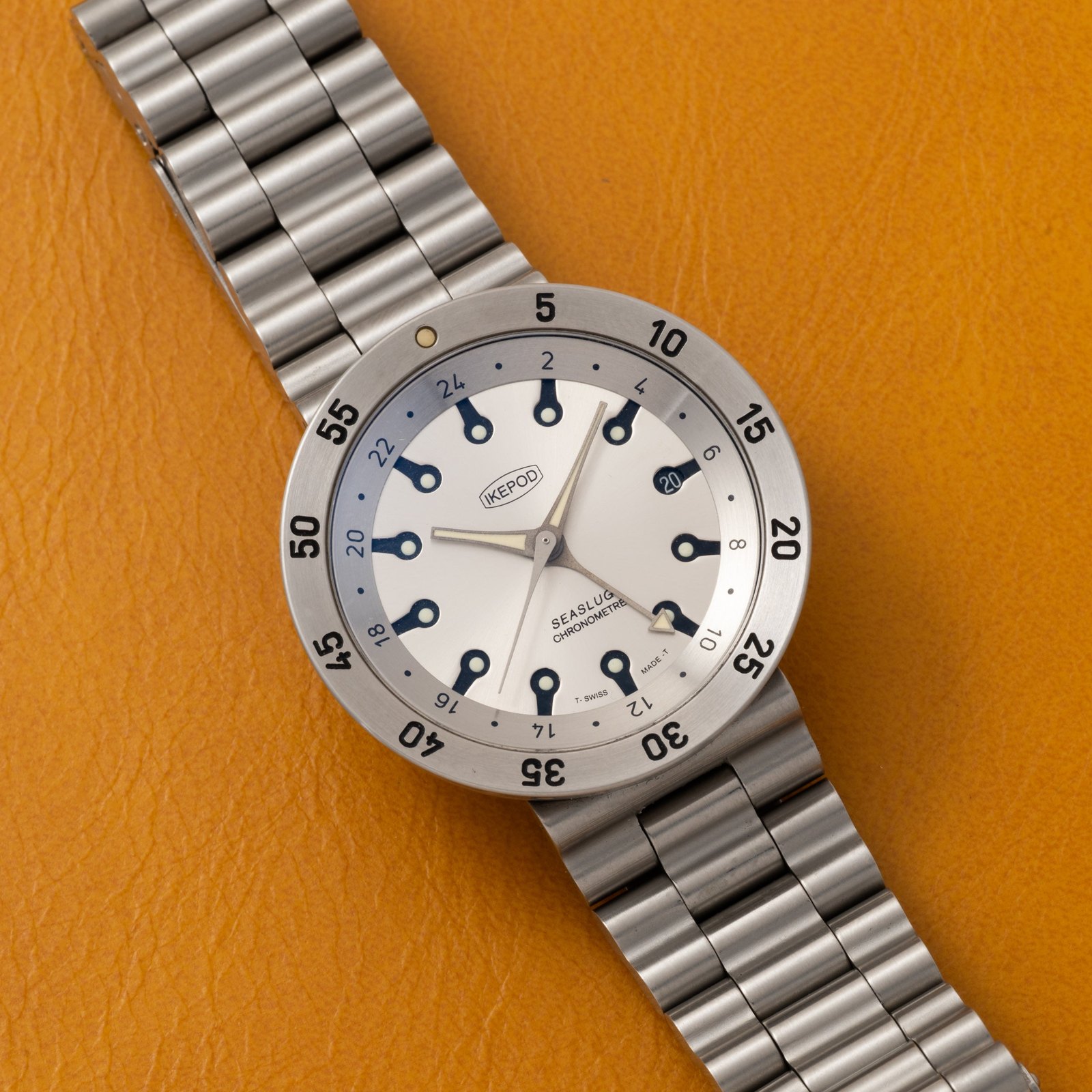
Ikepod Seaslug, 2018
- Maker / attribution
- Ikepod (maker)
- Date
- 2018
- Historical period
- Contemporary Horology (2010 – Present)
- Country of origin
- Unrecorded in source
- Object type
- Wristwatch
- Dimensions
- Case 39 mm
- Stock no.
- 40992474
- Credit line
- Dealer listing, Analog/Shift (40992474)
- Catalogue title (original)
- Ikepod Seaslug (English)
View the source record (dealer listing) ↗ (opens another website in a new tab)Suggest a correction
Record summary
Catalogued by Analog/Shift (dealer), New York (stock number 40992474), this is a wristwatch by Ikepod, dated 2018. The Atlas places it in the Contemporary Horology period (2010 – Present) of its Wristwatches collection. Recorded dimensions: Case 39 mm. The record is illustrated with 6 photographs.
Assembled from the source record's structured fields. Dates and attributions are given as the source states them; where a field is missing the Atlas leaves it blank rather than estimating.
Catalogue description
Dealer description — Analog/Shift
In the watch world, just a few key industrial designers reign supreme. Gérald Genta, of course, is one who comes to mind immediately. Another is Marc Newson. The Australian wunderkind has become a legend in his own time, having designed everything from award-winning furniture to glassware to shotguns. In the horological sphere, however, he is most well known for Ikepod, his envelope-pushing watch brand that helped to usher in the trend of oversized timepieces in the 1990s. Known for their orb-like case shape with hooded lugs, unique handsets, often plentiful complications, and large size, Ikepod watches were ahead of their time. Having begun and ceased operations several times over the past few decades, Ikepod now operates without Newson, who went on to co-design the Apple Watch. Vintage, Newson-era Ikepods, however, are hot-ticket collector items these days, beloved for their quirky designs and attention to detail. This particular Ikepod Seaslug, dates to 2018 and represents a unique design-forward outgrowth of Newson's original vision. The case features a bulbous 39mm stainless steel case that wears much better than most Ikepods on small wrists. The watch preserves the same striking details we have come to know and love from Ikepod, with a few notable design quirks. This watch features a GMT function, a date window, and general time display. The watch still has this futuristic feel to it that is unlike anything else out there. Powered by self-winding ETA 2893, this piece is outfitted with an integrated stainless steel bracelet with a rounded and scalloped link profile. Quirky, idiosyncratic, and mesmerizing, it’s that rare breed of contemporary watch that invites a closer look ... from a living designer legend!
Historical context
Contemporary Horology (2010 – Present)
Silicon components, connected watches, optical-lattice research clocks and a thriving independent scene.
Smartwatches became the world's best-selling watches, while mechanical watchmaking focuses on craft, innovation (silicon components, new escapements) and independent makers.
Read the period in the timelineMore wristwatches from this periodEarlier: Mechanical Renaissance
Atlas type guide
Wristwatches
Bracelet watches were worn by women from the early nineteenth century — Breguet made one for Caroline Murat, Queen of Naples, in 1810–12 — but the wristwatch only became a man's instrument with military use and aviation in the early twentieth century. Between the World Wars it overtook the pocket watch; the 1920s and 1930s brought rectangular Art Deco cases, water-resistant cases and the first automatic winding systems.
After 1945 the wristwatch became a carrier of identity — dress watches, sports and dive watches, chronographs, calendars — produced by Swiss, American, Japanese, German, Soviet and Chinese industries. The quartz revolution after 1969 and the mechanical renaissance since the 1990s, including the rise of independent watchmakers, complete the story.
What to look for
- The reference number (between the lugs or inside the case back) and serial number, the starting point for dating.
- The calibre: its maker and number are often stamped under the dial or on the bridge.
- Originality of dial, hands and crown — refinished ('redial') dials are common.
- Case material marks: 18K/750, 14K/585, stainless steel, gold-filled, plated.
Dating clues
- Wire-lug cases: before c. 1925.
- Water-resistant screw-down cases: from 1926.
- Quartz movements: from 1969; sapphire crystals widespread after c. 1980.
General guidance written by the Atlas editors about this kind of object. It is not a statement about this particular piece; for that, rely on the source record above and on physical examination.
Related records
Wristwatches · mid 2000s
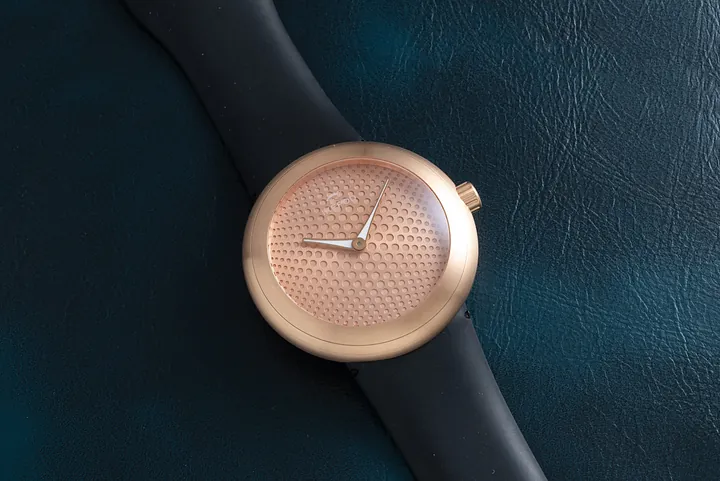
Ikepod Horizon, mid 2000s
Analog/Shift (dealer), New York
Wristwatches · early 2000s
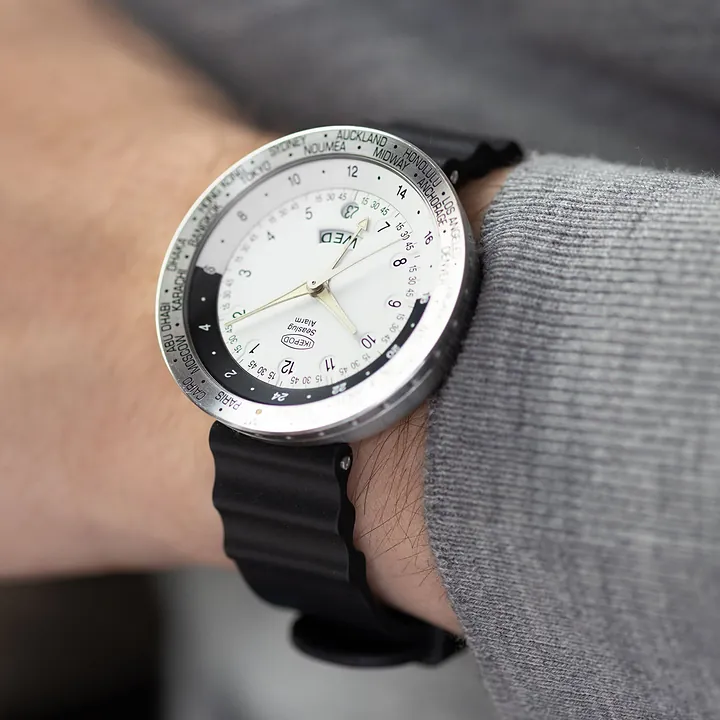
Ikepod Seaslug Alarm day-date World Timer, early 2000s
Bulang & Sons (dealer), Copenhagen
Wristwatches · c. 2000s
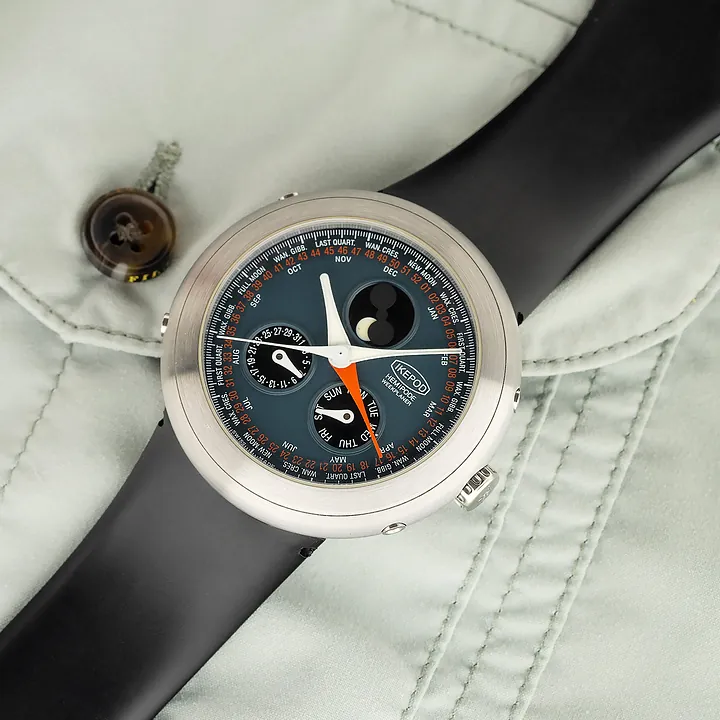
Ikepod Hemipode Weekplanner
Collectors Corner NY (dealer), New York
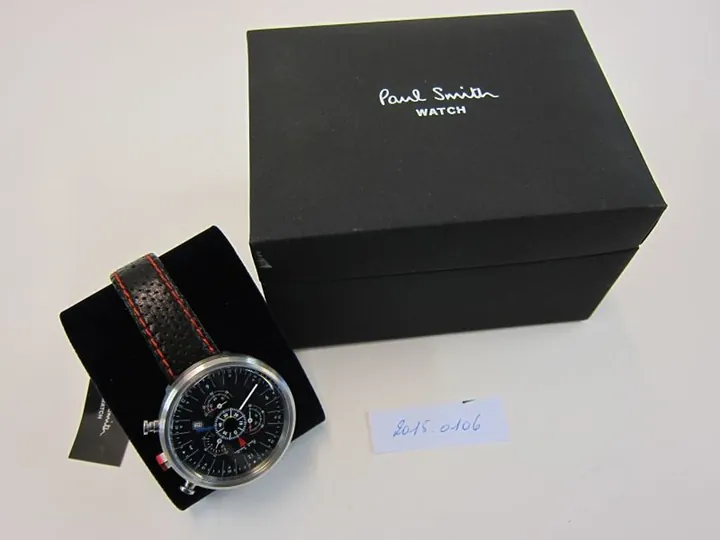
Wristwatches · 2010
Wristwatch, 2010
Modemuseum Hasselt
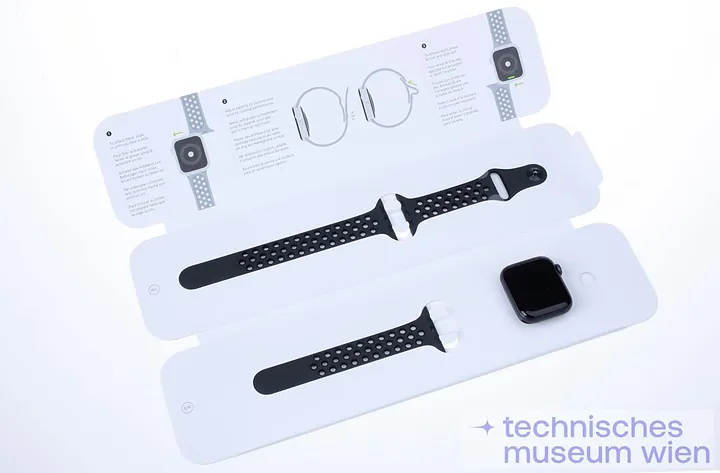
Wristwatches · 2018 (Series 4 released in September 2018; '1977' in the source is the model number A1977)
Apple Watch Series 4 (GPS, 40 mm, model A1977), 2018
Vienna Museum of Science and Technology
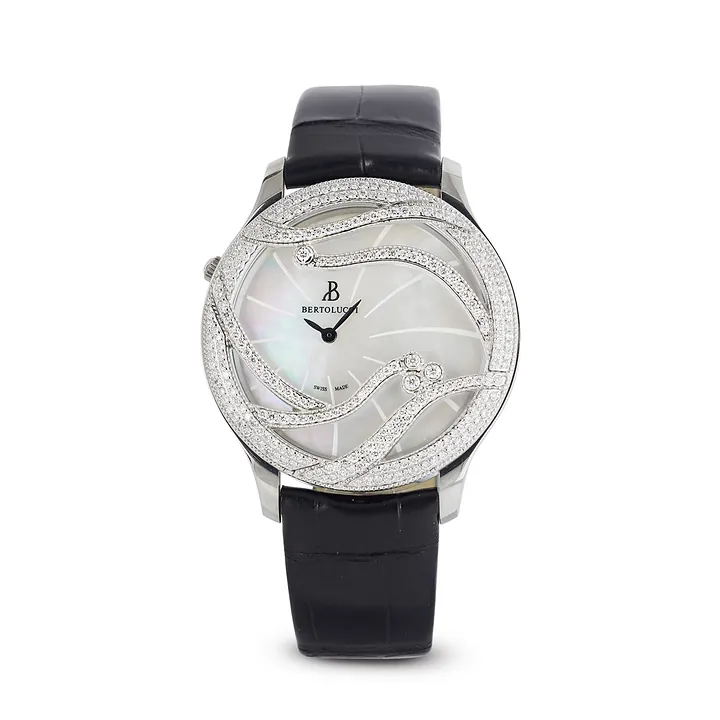
Wristwatches · c. 2010s
Bertolucci Stria III, ref. 11513.50.45.B88.6C1.501, c. 2010s
Antiquorum auction archive, Geneva
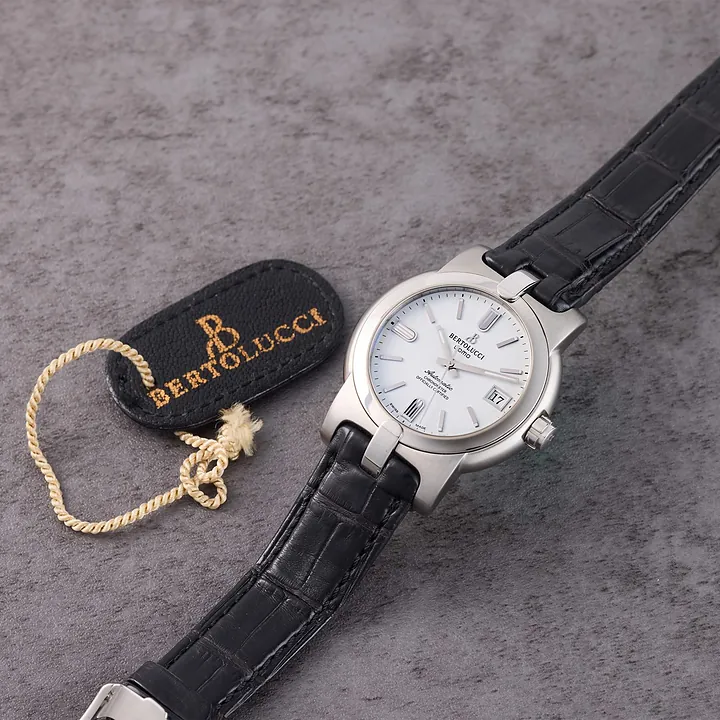
Wristwatches · c. 2010s
Bertolucci Uoma, ref. 824.51.41.10B, c. 2010s
Antiquorum auction archive, Geneva

Wristwatches · c. 2010s
Breguet Type XXI, ref. 3810, c. 2010s (Antiquorum Lot 381-24)
Antiquorum auction archive, Geneva