
Wristwatches · Wristwatch
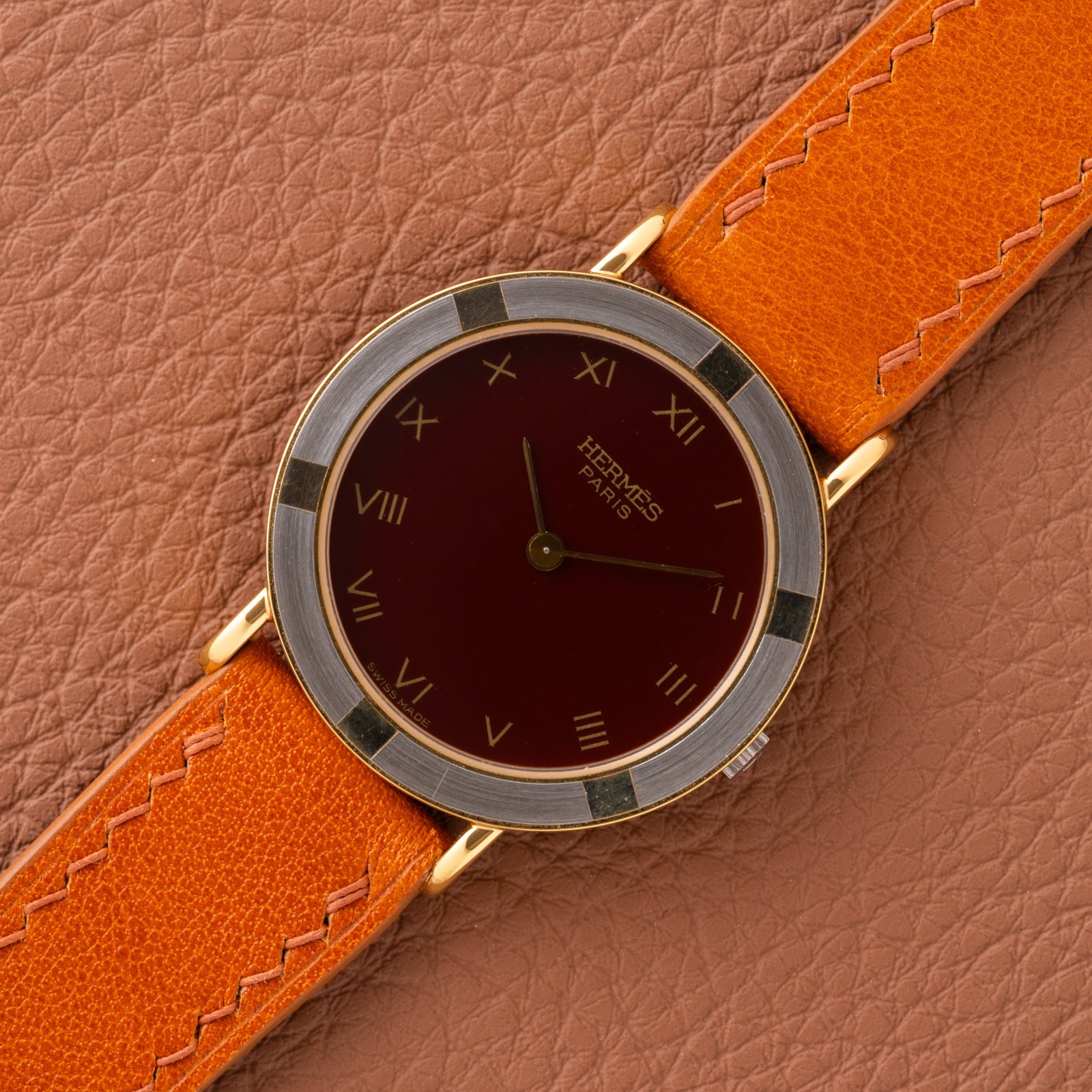
Hermès Dress Watch Burgundy Dial, 1990s
- Maker / attribution
- Hermes (maker)
- Date
- 1990s
- Historical period
- Mechanical Renaissance (1990 – 2010)
- Country of origin
- Unrecorded in source
- Object type
- Wristwatch
- Dimensions
- Case 30 mm
- Stock no.
- Product 8533506687159
- Credit line
- Dealer listing, Huntington Company (product 8533506687159)
- Catalogue title (original)
- 1990s Hermès Dress Watch Burgundy Dial (English)
View the source record (dealer listing) ↗ (opens another website in a new tab)Suggest a correction
Record summary
Catalogued by Huntington Company (dealer) (stock number Product 8533506687159), this is a wristwatch by Hermes, dated 1990s. The Atlas places it in the Mechanical Renaissance period (1990 – 2010) of its Wristwatches collection. Recorded dimensions: Case 30 mm. The record is illustrated with 6 photographs.
Assembled from the source record's structured fields. Dates and attributions are given as the source states them; where a field is missing the Atlas leaves it blank rather than estimating.
Catalogue description
Dealer description — Huntington Company
History and Significance Hermès has long approached watchmaking differently than most traditional Swiss brands. Rather than focusing purely on mechanical complexity, the brand has always emphasized design, proportion, and how a watch integrates into a broader lifestyle. That perspective is clear in pieces like this, where the emphasis is placed on balance, tone, and wearability rather than technical showmanship. This watch reflects a period where Hermès was refining its identity in horology, leaning into clean, minimal cases paired with distinctive dial colors and thoughtful details. The 30mm sizing feels intentional, staying true to classic dress-watch proportions while remaining versatile across a wide range of wrists. The burgundy dial is the standout here. It shifts subtly in different lighting, reading deep and understated indoors while taking on a warmer, almost wine-like tone in natural light. Paired with the gold-tone case and two-tone bezel, the overall look feels cohesive without being overly formal. Writer’s Thoughts Simple but perfect in every way. The dial color carries most of the personality, a deep burgundy color with gold Roman numerals. At 30mm, it wears like a true dress piece, but it doesn’t feel small on the wrist. Our Promise Every watch is thoroughly vetted, carefully described with complete transparency, and guaranteed authentic. Each piece is offered in honest condition, ensuring collectors receive a timepiece that reflects both originality and integrity. Specifications Brand: Hermès Model: Dress Watch Year: circa 1990s Case Material: Gold tone Case Size: 30mm Dial: Burgundy dial with Roman numerals Movement: Quartz Strap/Bracelet: Leather strap Buckle/Clasp: Tang buckle Contents: Watch only Condition Case: Shows light wear consistent with age, with good overall presence. Dial: Dial is clean with rich burgundy tone and no imperfections. Hands: Hands are clean and match the dial numerals. Crystal: Crystal has no scratches or chips. Strap/Bracelet: Strap is new.
Historical context
Mechanical Renaissance (1990 – 2010)
Mechanical watches return as cultural objects; independent watchmaking flourishes.
Mechanical watches returned as cultural and luxury objects. Complications, tourbillons and new materials proliferated; independent watchmakers such as George Daniels, F.P. Journe and Philippe Dufour revived artisanal watchmaking; collecting vintage watches became a major field.
Read the period in the timelineMore wristwatches from this periodEarlier: Quartz Revolution
Atlas type guide
Wristwatches
Bracelet watches were worn by women from the early nineteenth century — Breguet made one for Caroline Murat, Queen of Naples, in 1810–12 — but the wristwatch only became a man's instrument with military use and aviation in the early twentieth century. Between the World Wars it overtook the pocket watch; the 1920s and 1930s brought rectangular Art Deco cases, water-resistant cases and the first automatic winding systems.
After 1945 the wristwatch became a carrier of identity — dress watches, sports and dive watches, chronographs, calendars — produced by Swiss, American, Japanese, German, Soviet and Chinese industries. The quartz revolution after 1969 and the mechanical renaissance since the 1990s, including the rise of independent watchmakers, complete the story.
What to look for
- The reference number (between the lugs or inside the case back) and serial number, the starting point for dating.
- The calibre: its maker and number are often stamped under the dial or on the bridge.
- Originality of dial, hands and crown — refinished ('redial') dials are common.
- Case material marks: 18K/750, 14K/585, stainless steel, gold-filled, plated.
Dating clues
- Wire-lug cases: before c. 1925.
- Water-resistant screw-down cases: from 1926.
- Quartz movements: from 1969; sapphire crystals widespread after c. 1980.
General guidance written by the Atlas editors about this kind of object. It is not a statement about this particular piece; for that, rely on the source record above and on physical examination.
Related records
Wristwatches · originally sold on 10 August 2000 (per the lot record)
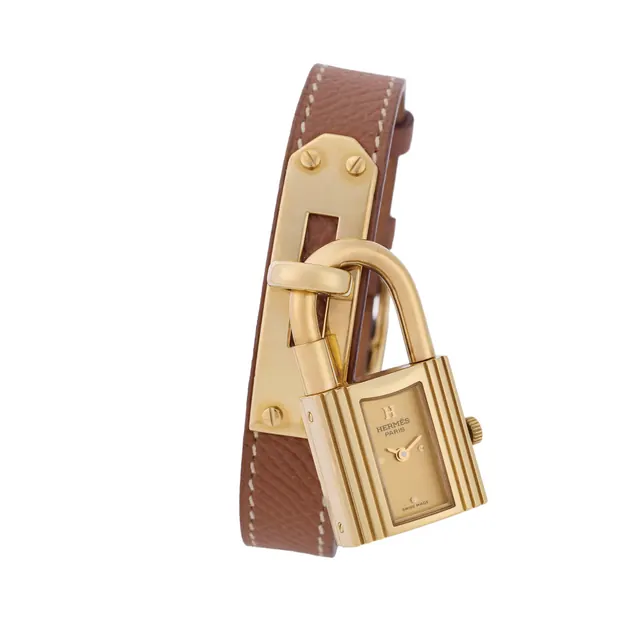
Hermes wristwatch, ref. 3901, Kelly-Cadenas, originally sold on 10 August 2000
Antiquorum auction archive, Geneva
Wristwatches · 1990s
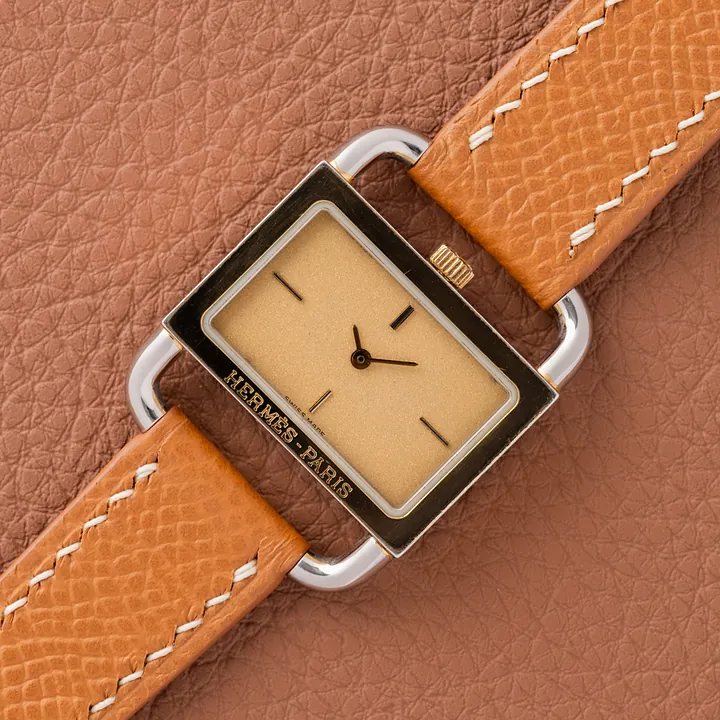
Hermès Etrier Two Tone, 1990s
Huntington Company (dealer)
Wristwatches · 1979
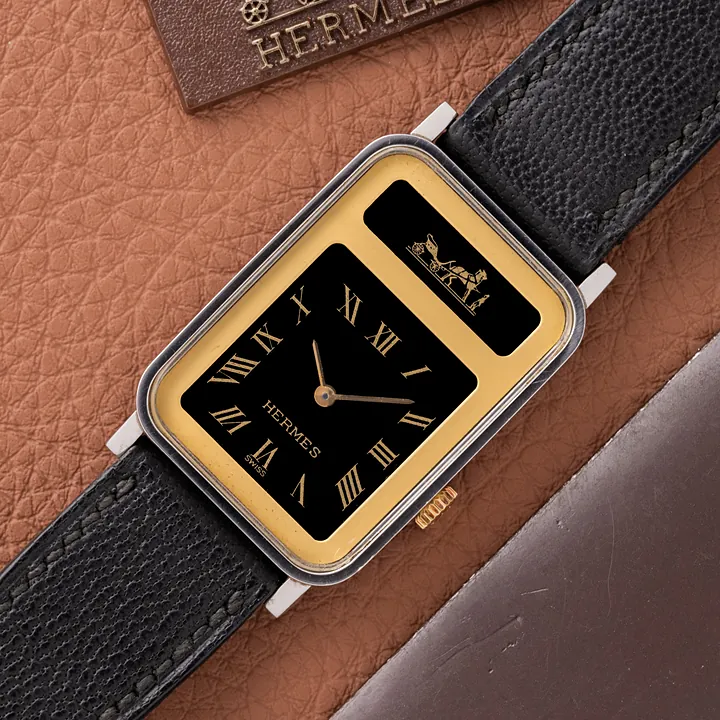
Hermès Calèche Black Tank Manual Wind, 1979
Huntington Company (dealer)
Wristwatches · 1970s
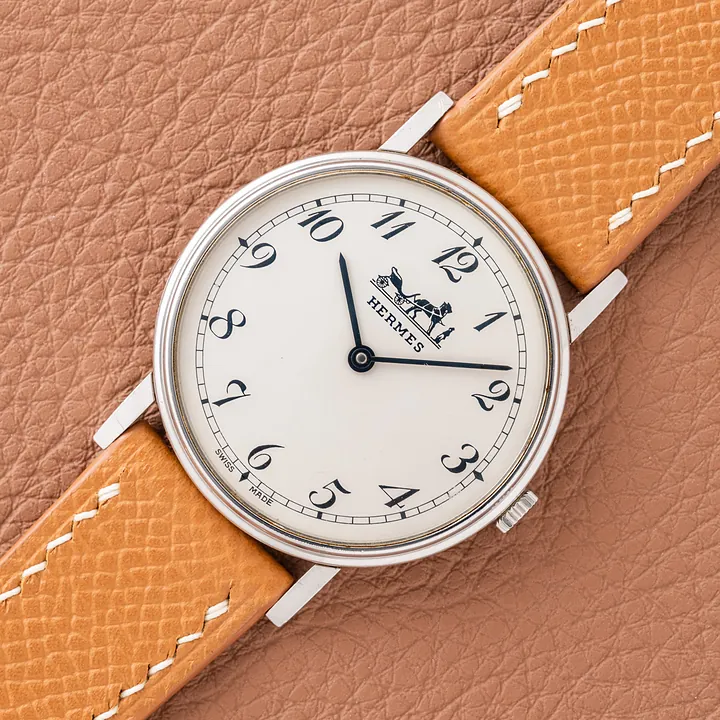
Hermès Rare Ultra Slim Dress Watch, 1970s
Huntington Company (dealer)
Wristwatches · 1999
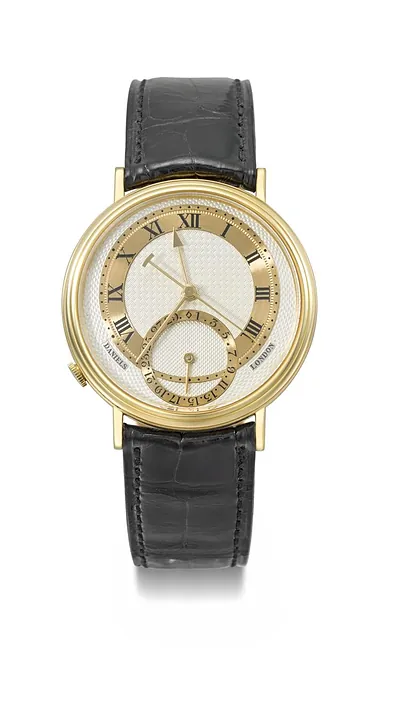
'Millennium' co-axial wristwatch by George Daniels and Omega, England, 1999
Science Museum Group, London

Wristwatches · 2008
Wristwatch by Breitling?, 2008
Museum Rotterdam
Wristwatches · 2008
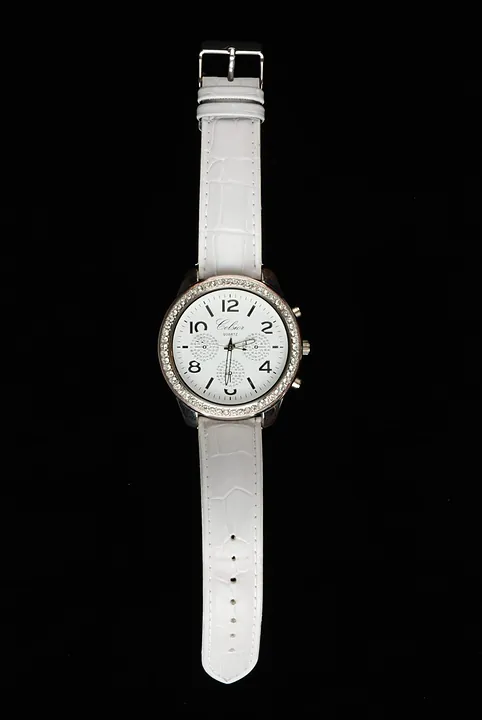
Wristwatch by Celsior Quartz, 2008
Museum Rotterdam
Wristwatches · 2008
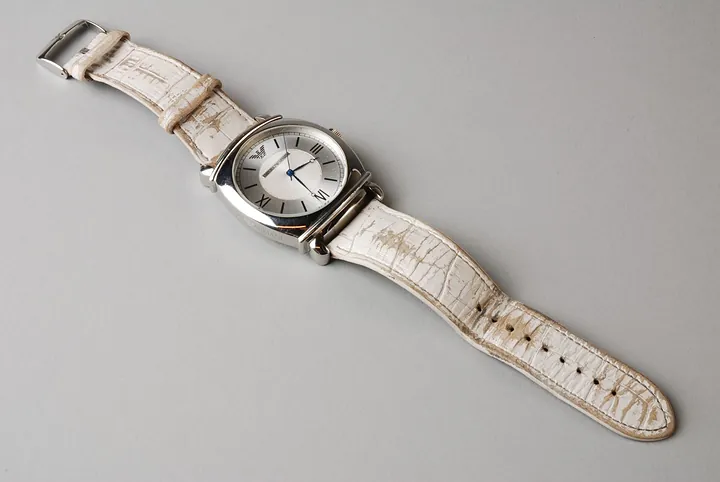
Wristwatch possibly by Emporio Armani, 2008
Museum Rotterdam