
Wristwatches · Wristwatch
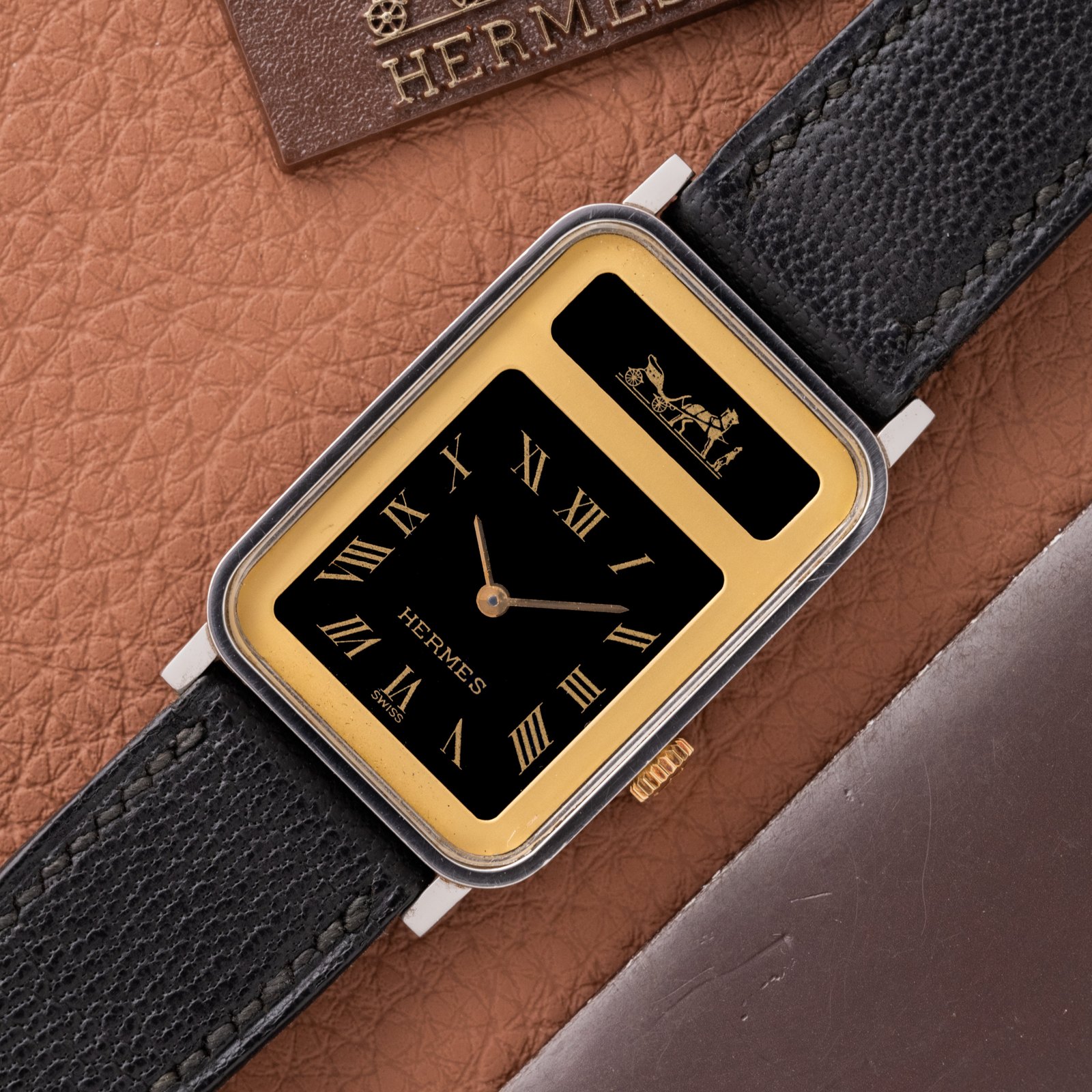
Hermès Calèche Black Tank Manual Wind, 1979
- Maker / attribution
- Hermes (maker)
- Date
- 1979
- Historical period
- Quartz Revolution (1969 – 1990)
- Country of origin
- Unrecorded in source
- Object type
- Wristwatch
- Dimensions
- Case 23 mm
- Stock no.
- Product 8806111772855
- Credit line
- Dealer listing, Huntington Company (product 8806111772855)
- Catalogue title (original)
- 1979 Hermès Calèche Black Tank Manual Wind - Box and Papers (English)
View the source record (dealer listing) ↗ (opens another website in a new tab)Suggest a correction
Record summary
Catalogued by Huntington Company (dealer) (stock number Product 8806111772855), this is a wristwatch by Hermes, dated 1979. The Atlas places it in the Quartz Revolution period (1969 – 1990) of its Wristwatches collection. Recorded dimensions: Case 23 mm. The record is illustrated with 6 photographs.
Assembled from the source record's structured fields. Dates and attributions are given as the source states them; where a field is missing the Atlas leaves it blank rather than estimating.
Catalogue description
Dealer description — Huntington Company
History and Significance The Calèche belongs to an earlier chapter of Hermès watchmaking that feels increasingly interesting today. Long before the brand's modern watches became widely discussed by collectors, Hermès was already approaching watches through the same design-first lens found throughout its leather goods, jewelry, and accessories. The Calèche is a particularly elegant example of that philosophy. Its elongated rectangular form feels unmistakably Parisian without borrowing too heavily from the better-known rectangular watches of other maisons. The name itself comes from one of the most recognizable symbols in Hermès history. The duc carriage and horse motif, known as the "Duc attelé, groom à l'attente," became closely associated with the house and inspired the Calèche name across several Hermès creations. On the wrist, however, the watch is remarkably restrained. Rather than leaning heavily on equestrian imagery, the design allows the case shape, dial, and typography to carry the identity. The black lacquer dial is the strongest visual element. Against the steel case, it gives the Calèche a much sharper and more graphic appearance than a conventional silver dress dial would have produced. The gold-tone crown introduces a small contrasting detail without turning the watch into a traditional two-tone design. It is exactly the sort of subtle styling decision that makes older Hermès watches feel more like designed objects than exercises in conventional Swiss watchmaking. Finding a Calèche accompanied by its original presentation material adds another dimension to the watch. These pieces were not historically collected with the same intensity as comparable watches from traditional Swiss manufactures, so boxes, papers, straps, and buckles were often separated from the watch over time. A surviving set provides a much more complete picture of how Hermès originally presented the Calèche. For an already uncommon model, that completeness makes the watch considerably more interesting. Writer's Thoughts Vintage Hermès watches are at their best when they feel unmistakably like Hermès rather than an attempt to compete with traditional watch brands. The Calèche gets that balance exactly right. It is elegant, slightly unusual, and immediately stylish without needing a complicated movement or an elaborate dial. The rectangular proportions and black lacquer surface give it a personality that feels completely different from the typical Swiss dress watch. The spidering in the lacquer dial is especially charming. Rather than hiding the watch's age, the fine cracking gives the glossy black surface a texture that could only develop naturally over time. Combined with how well preserved the rest of the watch is, it creates a wonderful contrast between age and preservation. Add the original box, papers, strap, and buckle, and this becomes the sort of complete vintage Hermès package that rarely seems to survive intact. Our Promise Every watch is thoroughly vetted, carefully described with complete transparency, and guaranteed authentic. Each piece is offered in honest condition, ensuring collectors receive a timepiece that reflects both originality and integrity. Specifications Brand: Hermès Model: Calèche Year: 1979 Case Material: Stainless steel Case Size: 23mm x 33mm Dial: Black lacquer dial Movement: Manual Strap/Buckle: Original Hermès strap Buckle/Clasp: Original steel buckle Contents: Box, papers, and tag Condition Case: Stainless steel case is exceptionally well preserved and presents in near-mint condition. Dial: Black lacquer dial displays attractive spidering throughout from age while retaining a strong glossy appearance. Hands: Hands remain clean and well preserved. Crystal: Crystal presents exceptionally well with minimal signs of wear. Strap/Buckle: Original Hermès strap remains with the watch and presents well. Buckle/Clasp: Original Hermès steel buckle remains present and is well preserved.
Historical context
Quartz Revolution (1969 – 1990)
Seiko's Astron begins mass quartz timekeeping; traditional industries contract sharply.
Quartz and digital watches transformed the market after 1969. Swiss employment collapsed, Japanese and Hong Kong production soared, and the Swatch (1983) helped the Swiss industry recover; mechanical watches survived as luxury goods.
Read the period in the timelineMore wristwatches from this periodEarlier: Modern Mechanical Horology
Atlas type guide
Wristwatches
Bracelet watches were worn by women from the early nineteenth century — Breguet made one for Caroline Murat, Queen of Naples, in 1810–12 — but the wristwatch only became a man's instrument with military use and aviation in the early twentieth century. Between the World Wars it overtook the pocket watch; the 1920s and 1930s brought rectangular Art Deco cases, water-resistant cases and the first automatic winding systems.
After 1945 the wristwatch became a carrier of identity — dress watches, sports and dive watches, chronographs, calendars — produced by Swiss, American, Japanese, German, Soviet and Chinese industries. The quartz revolution after 1969 and the mechanical renaissance since the 1990s, including the rise of independent watchmakers, complete the story.
What to look for
- The reference number (between the lugs or inside the case back) and serial number, the starting point for dating.
- The calibre: its maker and number are often stamped under the dial or on the bridge.
- Originality of dial, hands and crown — refinished ('redial') dials are common.
- Case material marks: 18K/750, 14K/585, stainless steel, gold-filled, plated.
Dating clues
- Wire-lug cases: before c. 1925.
- Water-resistant screw-down cases: from 1926.
- Quartz movements: from 1969; sapphire crystals widespread after c. 1980.
General guidance written by the Atlas editors about this kind of object. It is not a statement about this particular piece; for that, rely on the source record above and on physical examination.
Related records
Wristwatches · originally sold on 10 August 2000 (per the lot record)
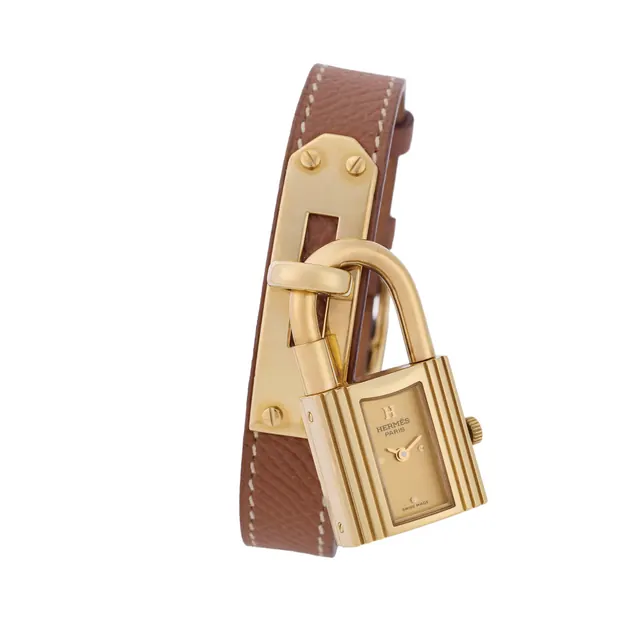
Hermes wristwatch, ref. 3901, Kelly-Cadenas, originally sold on 10 August 2000
Antiquorum auction archive, Geneva
Wristwatches · 1990s
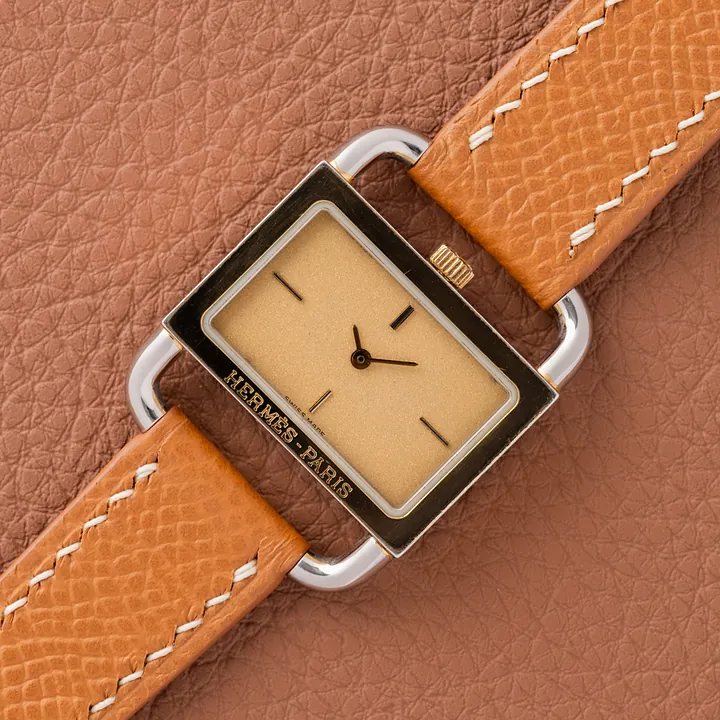
Hermès Etrier Two Tone, 1990s
Huntington Company (dealer)
Wristwatches · 1970s
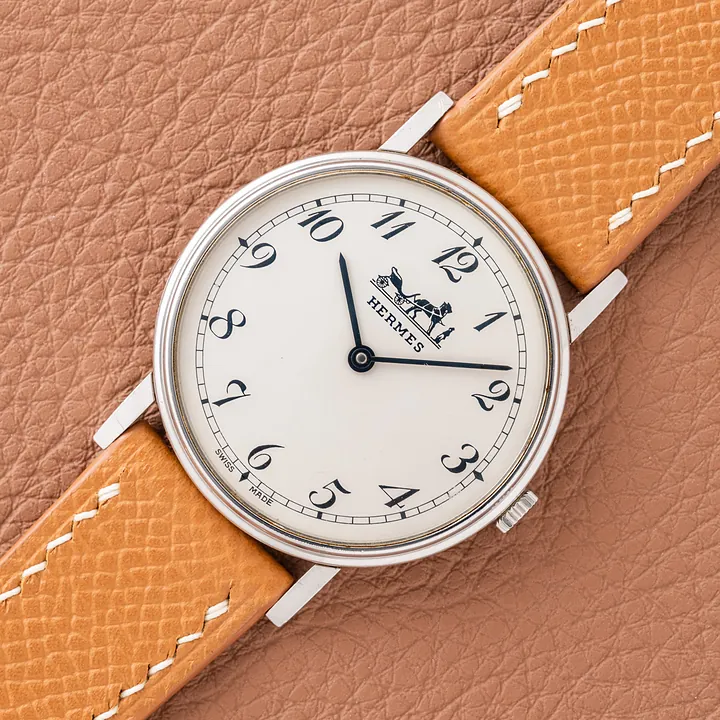
Hermès Rare Ultra Slim Dress Watch, 1970s
Huntington Company (dealer)
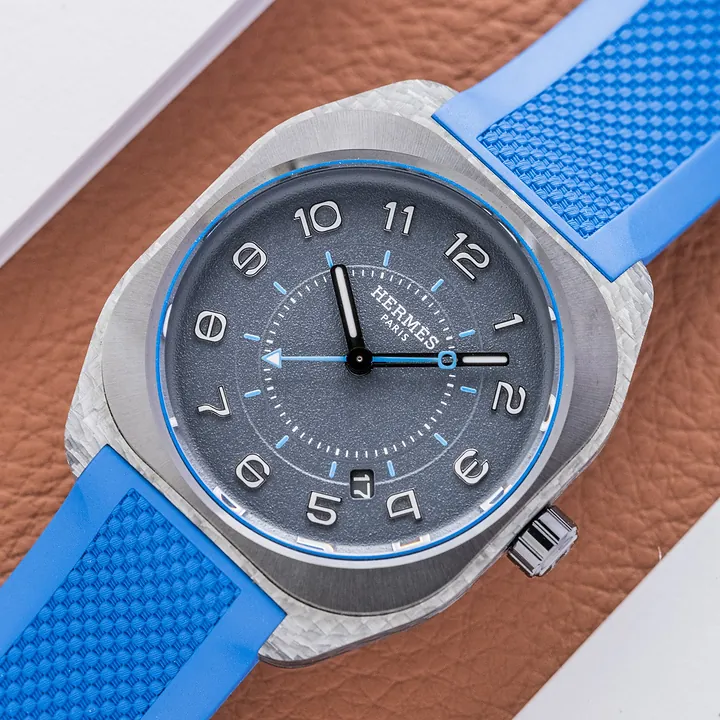
Wristwatches · 2024
Hermès H08 Glass Fiber and Ceramic (Ref. SP1.746a), 2024
Huntington Company (dealer)

Wristwatches · 1970
Wristwatch by Heno, Switzerland, 1970
Museum Rotterdam
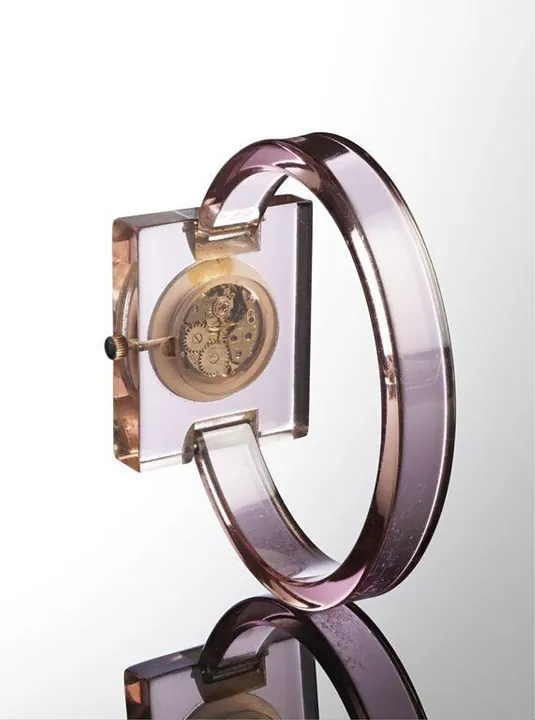
Wristwatches · 1970s
Wristwatch, plastic, by Gucci; Italy, 1970s.
Victoria and Albert Museum, London
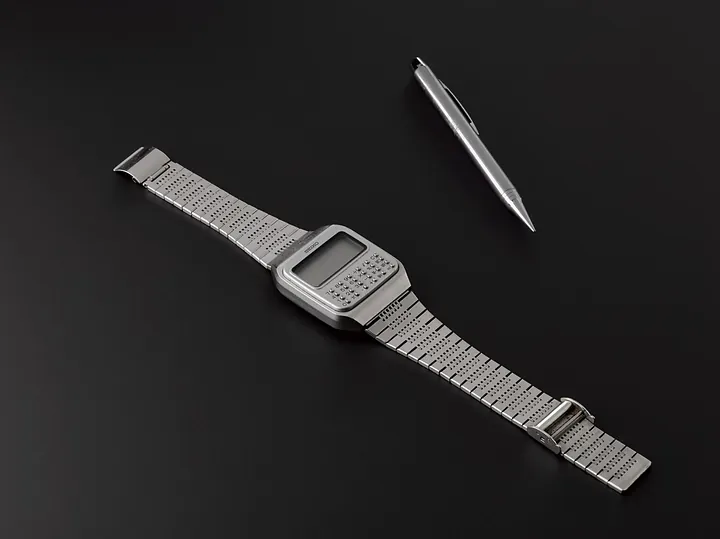
Wristwatches · 1978
Calculator wristwatch by Suwa Seikosha Co. Limited, Japan, 1978
Science Museum Group, London
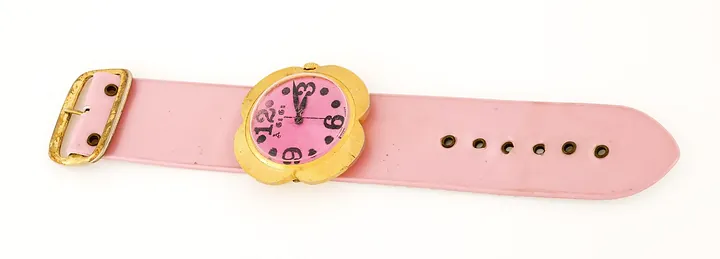
Wristwatches · 1980
Wristwatch, 1980 (no. 71413)
Museum Rotterdam