
Wristwatches · Wristwatch
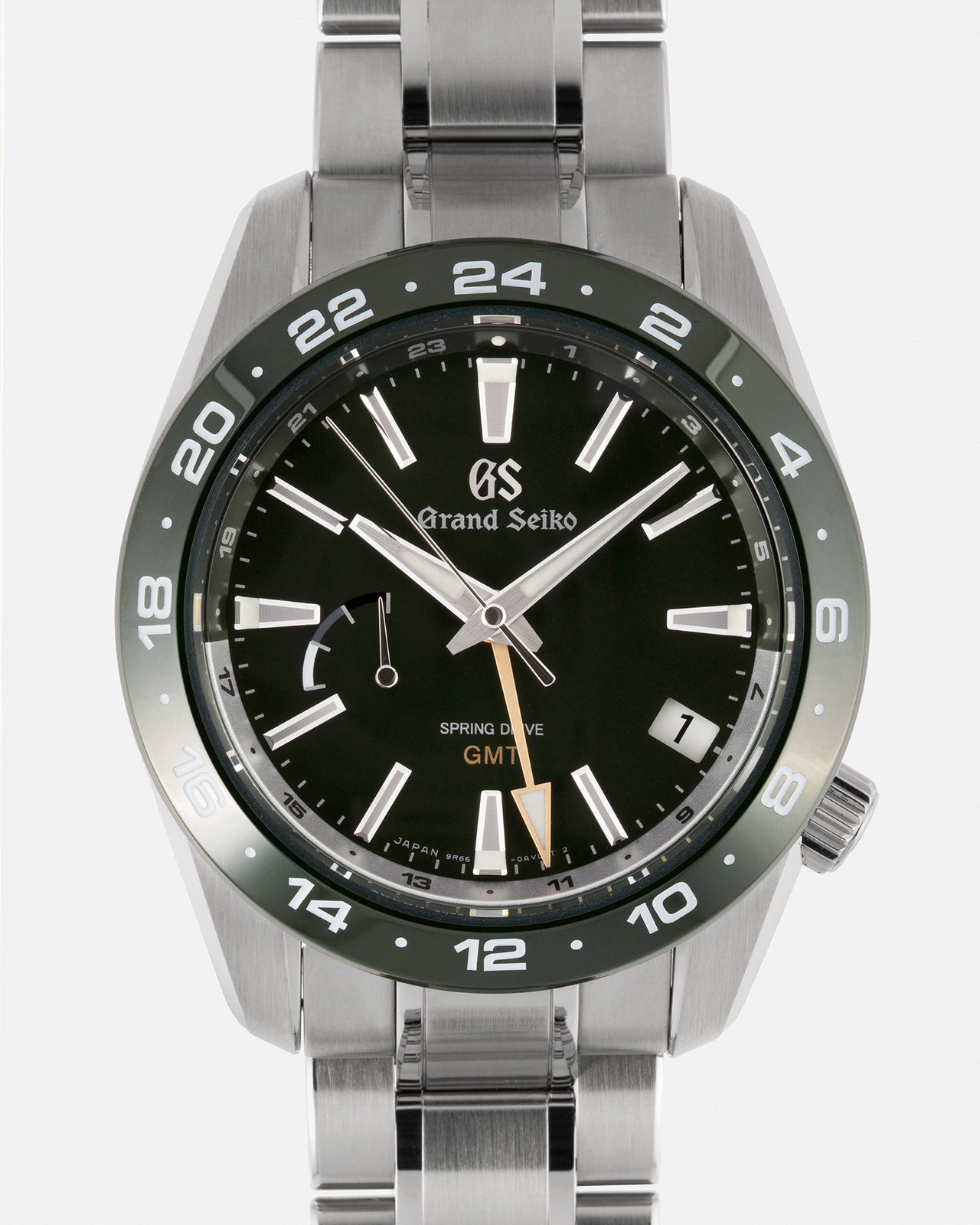
Grand Seiko Sport SBGE257 Spring Drive, 2020
- Maker / attribution
- Grand Seiko (maker)
- Date
- 2020
- Historical period
- Contemporary Horology (2010 – Present)
- Country of origin
- Japan
- Object type
- Wristwatch
- Stock no.
- Product 4684007899223
- Credit line
- Dealer listing, S.Song Watches (product 4684007899223)
- Catalogue title (original)
- Grand Seiko Sport SBGE257 Spring Drive (English)
View the source record (dealer listing) ↗ (opens another website in a new tab)Suggest a correction
Record summary
Catalogued by S.Song Watches (dealer), Seattle (stock number Product 4684007899223), this is a wristwatch by Grand Seiko, made in Japan, dated 2020. The Atlas places it in the Contemporary Horology period (2010 – Present) of its Wristwatches collection. The record is illustrated with 6 photographs.
Assembled from the source record's structured fields. Dates and attributions are given as the source states them; where a field is missing the Atlas leaves it blank rather than estimating.
Catalogue description
Dealer description — S.Song Watches
Coming into their own in recent years, Grand Seiko has successfully become the thorn in Swiss watchmaking’s side that Seiko envisaged all of those years ago when they decided to start their luxury division in 1960. While the name “Seiko” hasn’t exactly conjured up particularly luxurious imagery in recent years, a shift in thinking thanks to some incredible horological engineering has propelled Grand Seiko into the ranks of Rolex, Omega and others. Today, Grand Seiko is undeniably positioned to become the next hot brand as collectors finally accept their watches can stand toe-to-toe with just about any Swiss brand out there, and the SBGE257 is a perfect example of that. Released in 2020, the SBGE257 combines the latest in Grand Seiko technology with their most up-to-date aesthetics to create a truly contemporary timepiece. Utilising aspects that Grand Seiko are renowned for and design cues from competing brands, the SBGE257 is effectively the ultimate watch. Powered by Grand Seiko’s infamously innovating Spring Drive technology, the SBGE257’s cal. 9R66 movement integrates the accuracy of quartz technology, that the Japanese pioneered, with the aesthetics and craftsmanship of mechanical horology. Bursting onto the market in 2006, the self-winding cal. 9R66 was so far ahead of its time that 15 years later, it still transcends the competition. With 72 hours of power reserve and an accuracy of +/- 15 seconds a month the 9R66 is virtually without fault. Beyond the movement, however, we have what Grand Seiko is most appreciated for, their dials. Coloured in a rich matte forest green, the dial is staggeringly beautiful. Featuring a rehaut half-board with green and silver halves to indicate night and day, the SBGE257’s GMT function is only used as a subtle design influence. Furthermore, the SBGE257’s dial seamlessly integrates its date function into itself as a false 4 o’clock hour marker, providing some balance to the power reserve indicator positioned at 8 o’clock. Finally, the SBGE257 features a subtle pop of colour in the form of a yellow GMT hand and matching yellow GMT inscription. While some brands use the GMT function as a major piece of the design influence by giving their timepiece a two-tone bezel, Grand Seiko has opted to give the SBGE257 a solid forest green polished ceramic bezel to match its dial. Furthermore, the SBGE257 features a complex case construction to further exemplify Grand Seiko’s commitment to craftsmanship. With Zaratsu polished banana-shaped sides and bevelled lugs, the SBGE257’s case is as technically challenging as one could imagine, rounding off an incredible timepiece.
Historical context
Contemporary Horology (2010 – Present)
Silicon components, connected watches, optical-lattice research clocks and a thriving independent scene.
Smartwatches became the world's best-selling watches, while mechanical watchmaking focuses on craft, innovation (silicon components, new escapements) and independent makers.
Read the period in the timelineMore wristwatches from this periodEarlier: Mechanical Renaissance
Atlas type guide
Quartz, digital and electronic watches
Electronic watches arrived in three steps. The Hamilton Electric 500 (1957) was the first battery-powered wristwatch, still with a balance; Bulova's Accutron (1960) used a tuning fork. On 25 December 1969 Seiko released the Astron 35SQ, the first quartz wristwatch, closely followed by the Swiss Beta 21 group. In 1972 Hamilton's Pulsar introduced the LED digital watch, and LCD displays soon made digital watches cheap.
The 'Quartz Crisis' that followed devastated the Swiss mechanical industry, which lost two-thirds of its workforce between 1970 and 1984 before recovering with the Swatch (1983) and the luxury mechanical revival. Solar, radio-controlled, kinetic and connected smartwatches continue the electronic line.
What to look for
- Battery hatch in the case back and calibre markings with 'Quartz' or a crystal frequency.
- Display technology: LED (red, push-button) versus LCD (always-on).
- Tuning-fork hum and a smoothly sweeping seconds hand on Accutrons.
- Model and reference numbers, often printed on the back.
Dating clues
- Electric balance watches: from 1957.
- Tuning-fork watches: 1960–c. 1977.
- Quartz analogue: from December 1969; LED digital: 1972–c. 1978; LCD from 1973.
General guidance written by the Atlas editors about this kind of object. It is not a statement about this particular piece; for that, rely on the source record above and on physical examination.
Read next:Seiko calibre 35A (Astron)
Related records
Wristwatches · 1967
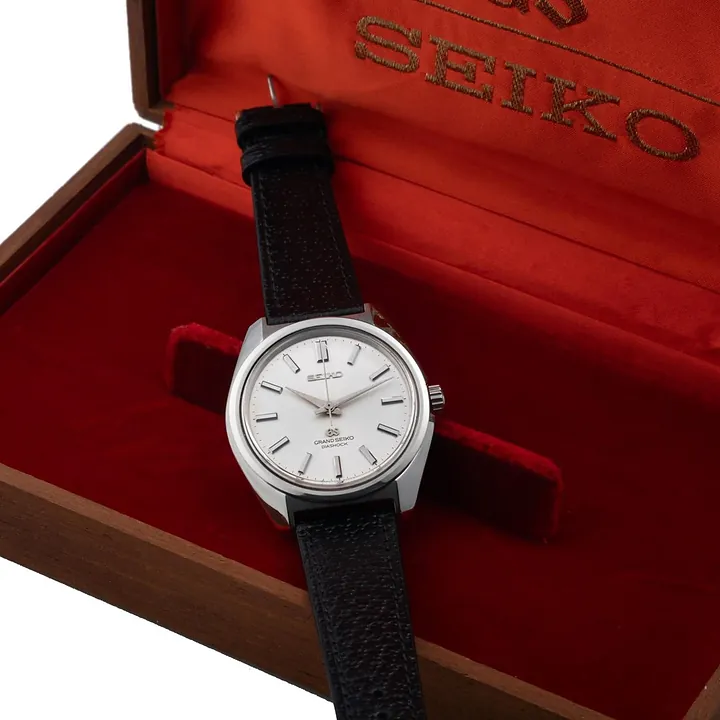
Grand Seiko 44 GS, ref. 4420-9000, 1967
Antiquorum auction archive, Geneva
Wristwatches · c. 1967
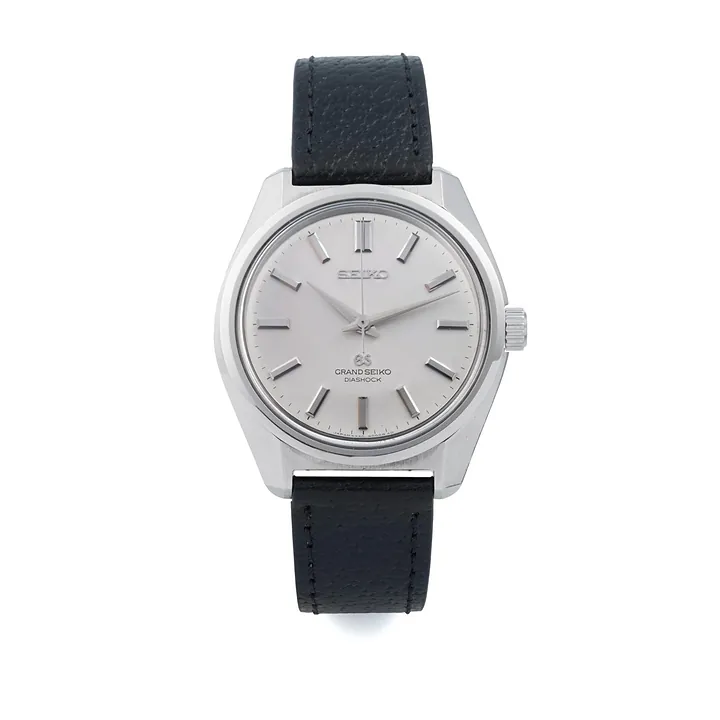
Grand Seiko 44 GS, ref. 4420-9000, c. 1967
Antiquorum auction archive, Geneva
Wristwatches · c. 2020s
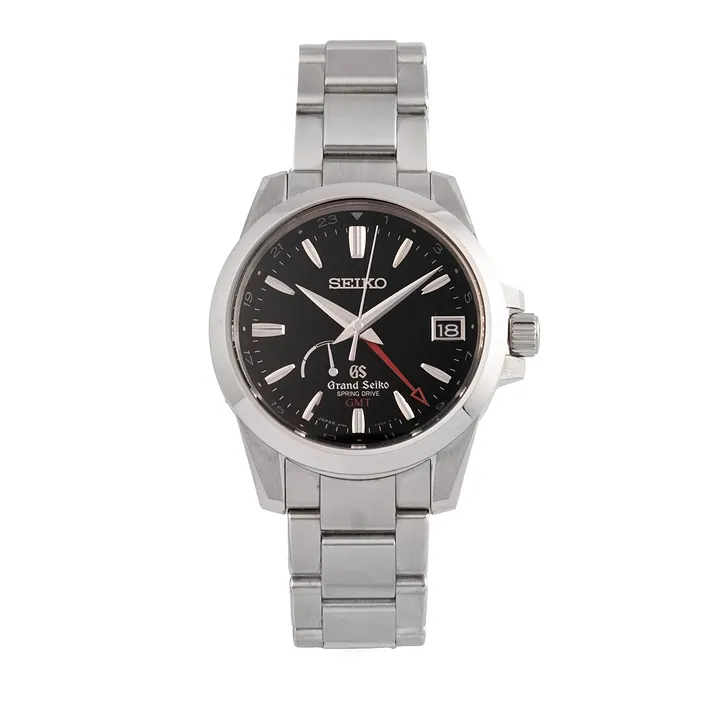
Grand Seiko Spring Drive GMT, ref. 9R66-0AE0, c. 2020s
Antiquorum auction archive, Geneva
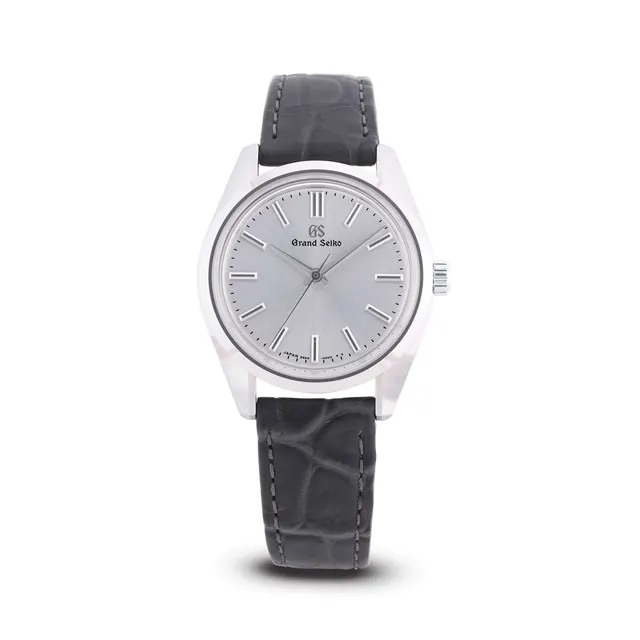
Wristwatches · originally sold in September 2022 (per the lot record)
Grand Seiko wristwatch, ref. SBGW291, Heritage Collection, originally sold in September 2022
Antiquorum auction archive, Geneva
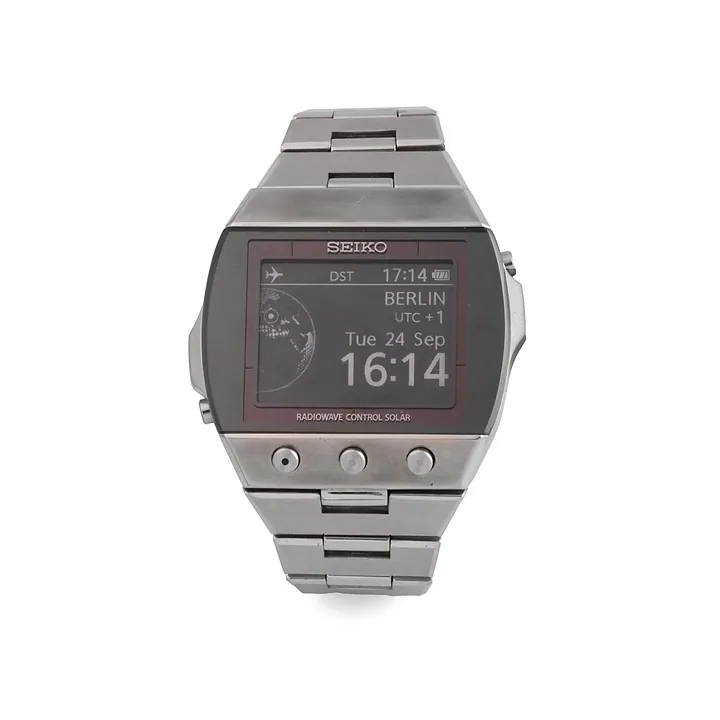
Wristwatches · Sold in 2011
Seiko Brights Spirit, ref. S770, Sold in 2011
Antiquorum auction archive, Geneva
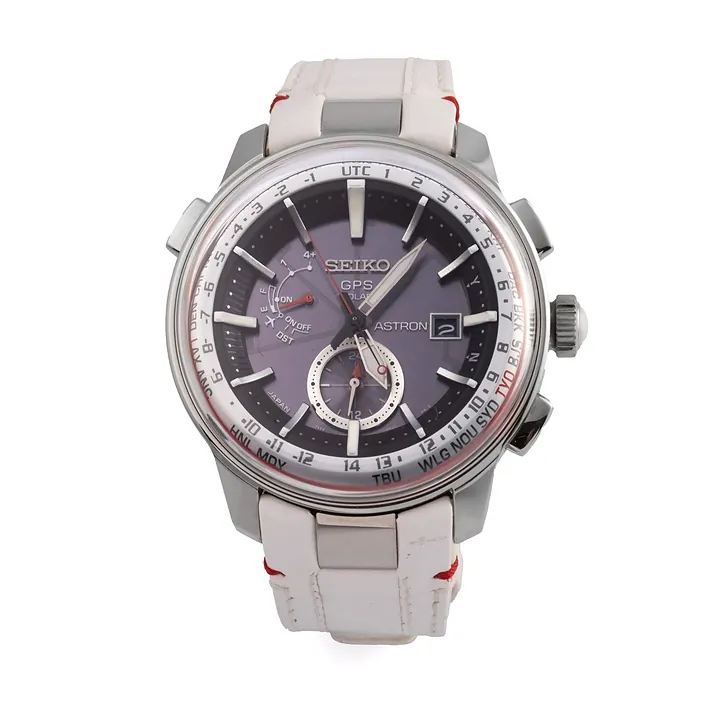
Wristwatches · originally sold in 2014 (per the lot record)
Seiko Astron GPS Solar, ref. SBXA045, originally sold in 2014
Antiquorum auction archive, Geneva
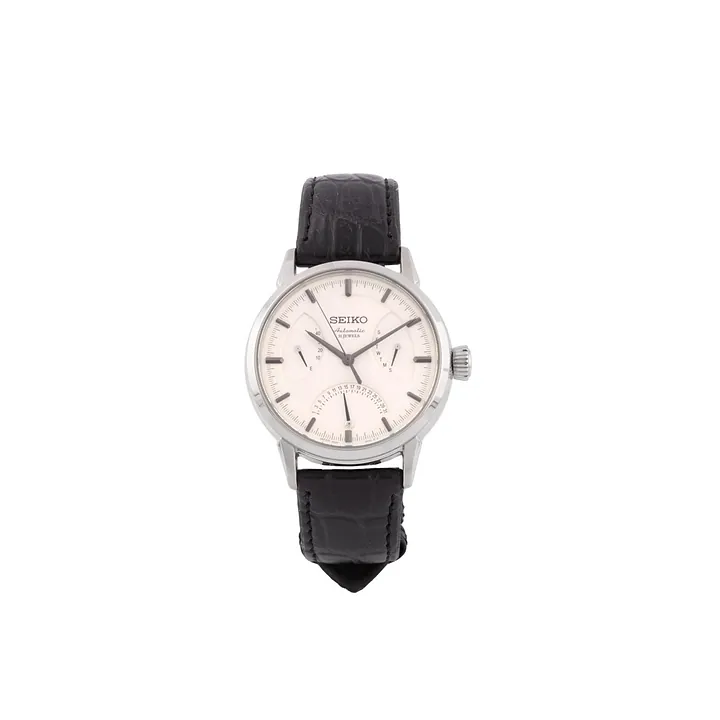
Wristwatches · c. 2015
Seiko Presage, c. 2015
Antiquorum auction archive, Geneva
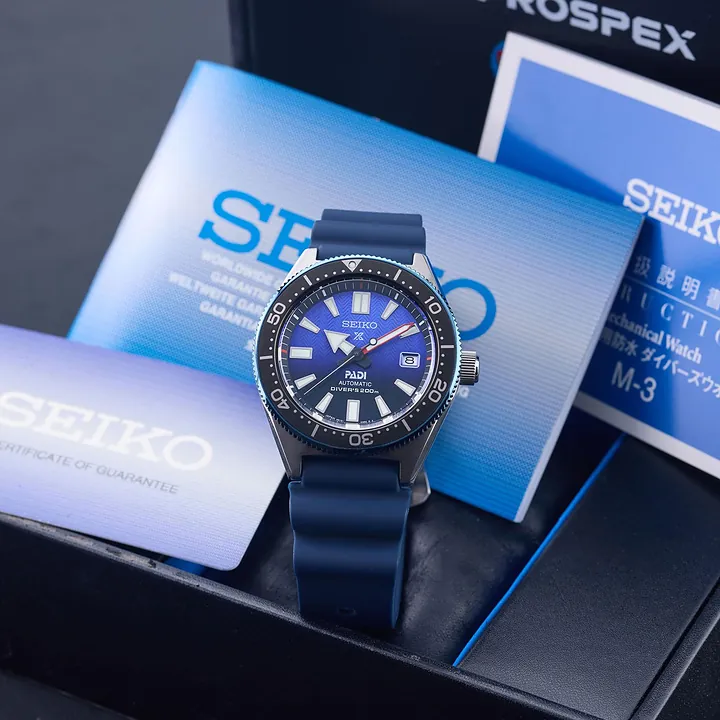
Wristwatches · originally sold in 2018 (per the lot record)
Seiko Prospex Padi Special Edition, ref. SBDC055, originally sold in 2018
Antiquorum auction archive, Geneva