
Pocket Watches · Alarm watch
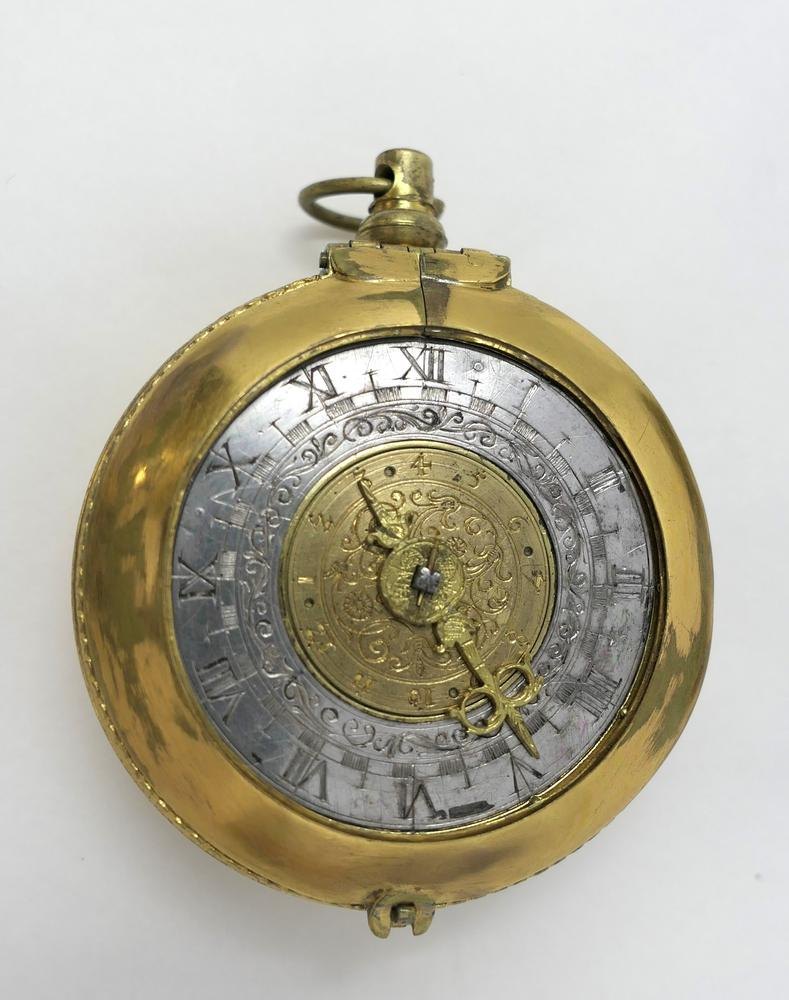
Gilt-brass cased verge watch with alarm [chapter ring and alarm setting disc not original]
- Maker / attribution
- AMW (unidentified) (Made by)
- Date
- 1625–1635
- Historical period
- Early Modern Horology (1600 – 1750)
- Country of origin
- Germany
- Place
- Germany
- Object type
- Alarm watch
- Materials / technique
- leather, gold, brass
- Dimensions
- Diameter: 54.60 millimetres (inner case) Diameter: 61 millimetres (outer case)
- Holding institution
- British Museum
- Accession / object no.
- 1958,1201.2237
- Credit line
- British Museum, London
- Catalogue title (original)
- Gilt-brass cased verge watch with alarm [chapter ring and alarm setting disc not original] (English)
View the source record ↗ (opens another website in a new tab)Suggest a correction
Record summary
Held and catalogued by British Museum (object number 1958,1201.2237), this is an alarm watch by AMW (unidentified), made in Germany, dated 1625–1635. The Atlas places it in the Early Modern Horology period (1600 – 1750) of its Pocket Watches collection. Materials and techniques recorded by the source: leather, gold, brass. Recorded dimensions: Diameter: 54.60 millimetres (inner case) Diameter: 61 millimetres (outer case). The record is illustrated with 6 photographs.
Assembled from the source record's structured fields. Dates and attributions are given as the source states them; where a field is missing the Atlas leaves it blank rather than estimating.
Catalogue description
Description — British Museum
Cases: Circular gilt-brass case with integral back and hinged bezel. The back is plain. The band consists upper and lower mouldings, wavy and plain, bordering a pierced colonnade of pillars, each one slightly waisted and with a short double cross-bar and plain rectangular plinth and capital. The hinged bezel, now lacking its glass, is not original. At the top a turned gilt-brass pendant with loose ring. Outer tooled leather case with brass hinge and brass closing hooks (one now missing). Lined with red velvet. : DIAL Gilt-brass dial with two bayonet lugs for attachment to the movement. Within a wide, raised rim 12 touch-pins surround a riveted silver chapter ring with Roman hours I-XII, T-shaped half-hour and a quarters circle of alternate hatched and plain rectangles with an engraved scroll pattern around the inside. Within a raised ring, the gilt-brass alarm-setting disc is engraved 1-12 and has four pin-holes to aid rotation. The central area is engraved with scrolls. A second plain brass disc underlies the alarm-setting disc. Neither disc is original. The pierced gilt-brass hand is possibly a replacement. No case catch; dial plate hinged to case at XII. Movement frame: Circular gilt-brass plates with four baluster pillars riveted to the front plate. Screwed-on potence and screwed-on counter-potence. Hatched border around back-plate. Separate bridges screwed to the front plate with gilt-brass screws. The whole of the dial side of the front plate is gilded. Separate bridge on the back plate. Mainspring & set-up: Gilt-brass barrel with pinned-on cap and square hole for mainspring hooking. Two holes for gut-line attachment. Ratchet and click set-up with a elaborately pierced and engraved gilt-brass click. Fusee & stop-work: Gilt-brass fusee for gut-line with English stop-work, the block turned to match the pillars. Train: Four wheel train of gilt-brass wheels, the second wheel and third pinion recessed into the front plate and running in a separate bridge. Second, third and contrate wheels with four crossings. Escapement & balance: Verge escapement with screwed-on balance cock pierced and engraved with foliate scrolls. Also with hog's bristle regulation mounted on a pierced and engraved lever. Alarm train: Powered by a fixed barrel with engraved decoration on the visible side. Three wheel train of solid steel wheels, the second wheel and contrate pinion recessed into the front plate and running in a separate bridge. Steel crown wheel running between screwed-on potence and screwed-on counter-potence. Steel verge with semi-circular hammer pivoting between the front plate and a separate pierced and engraved bridge screwed to the back plate. The alarm is released by a sprung lever operating with a cam running on the dial wheel. : TRAIN COUNT Going train Great wheel:48 Second wheel:40 pinion:6 [pinion not original] Third wheel:35 pinion:5 Contrate wheel:30 pinion:5 Crown wheel:15 pinion:5 : Beats per hour: : Alarm train Great wheel:32 Second wheel:24 pinion:8 Contrate wheel:18 pinion:6 Crown wheel:9 pinion:6. Motion work: Pinion of report: 15 Dial wheel: 45 Fusee:6.5 turns. Duration: 26 hours.
Curator's comments — British Museum
1. The quality of the engraving on the silver chapter ring compared with the general quality of the watch suggests that this ring is not original. Although the dial feet - which are visible on the front of the dial- use the original holes in the dial plate. 2. The lid is very thin and is of a different shape from the case back. It is most likely a replacement, 3. Three other items are known with this maker's mark:- a. A square spring-driven table clock in the British Museum [reg.no. b. A crucifix table clock in Stuttgart. c. A clock formerly in the Sarsin collection - Cat.no 195.
Inscriptions & marks
signature; AMW within a shield [on the back plate]
Provenance
Previous owner/ex-collection:, Courtenay Adrian Ilbert; Purchased through:, Christie's; Acquired 1958
Historical context
Early Modern Horology (1600 – 1750)
Huygens' pendulum and balance spring transform accuracy; English makers develop the anchor and deadbeat escapements.
The balance spring (c. 1675) improved watches dramatically and introduced the minute hand. English pair-cased verge watches with pierced balance cocks and French oignons were typical; enamel painting at Blois and Geneva, and the repeating watch (1680s), made watches objects of great refinement.
Read the period in the timelineMore pocket watches from this periodEarlier: Renaissance Horology
Atlas type guide
Verge and pair-cased watches
After Christiaan Huygens and Robert Hooke applied the balance spring around 1675, the verge watch became a reasonably reliable timekeeper and the minute hand became standard. Through the eighteenth century the typical English watch was a pair-cased verge: a fusee movement with a pierced, engraved balance cock, housed in an inner case and a separate protective outer case, often of repoussé gold, shagreen, tortoiseshell or enamel.
French watches of the same period were thicker 'oignons', later replaced by elegant thinner watches following Jean-Antoine Lépine's bar-bridge calibre of c. 1770. Dutch, Swiss and German makers supplied international markets, and verge watches were made until the mid-nineteenth century as cheaper alternatives to the cylinder and lever.
What to look for
- The pierced balance cock on the backplate: winged (continental) or with a foot (English); its style dates the watch.
- Fusee and chain visible through the movement; key winding through the dial (early) or case back.
- Hallmarks inside English silver or gold cases, which give a date letter.
- Maker's name and serial number engraved on the backplate; watch papers inside outer cases.
- Enamel dials (after c. 1720) versus earlier champlevé metal dials.
Dating clues
- Champlevé dials: c. 1680–1730; white enamel dials thereafter.
- English case hallmarks give the year of assay to within a year.
- Verge watches persisted in cheap production until c. 1850.
General guidance written by the Atlas editors about this kind of object. It is not a statement about this particular piece; for that, rely on the source record above and on physical examination.
Related records
Pocket Watches · 1600–1699
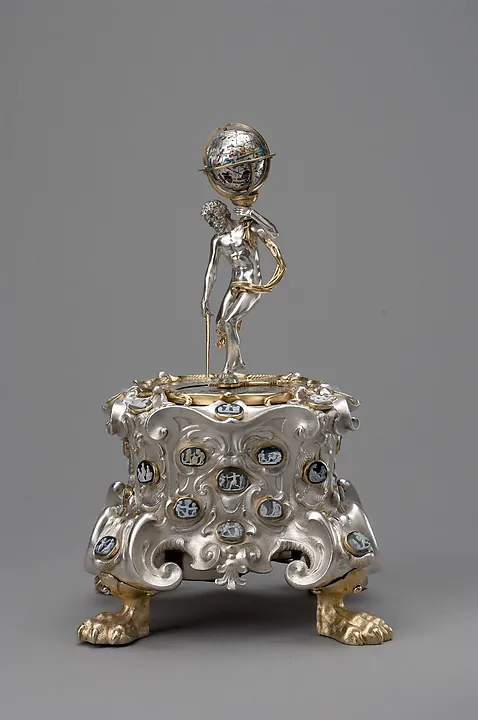
Pocket watch by Georg Ernst, Germany, 1600–1699
Fine Arts Museum Vienna
Pocket Watches · 1600–1699
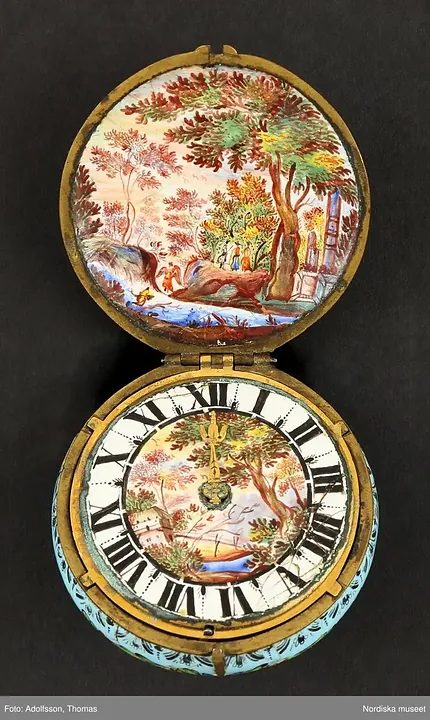
Pocket watch by Johan Etmiller, Germany, 1600–1699
Nordic Museum Foundation
Pocket Watches · early 17th century
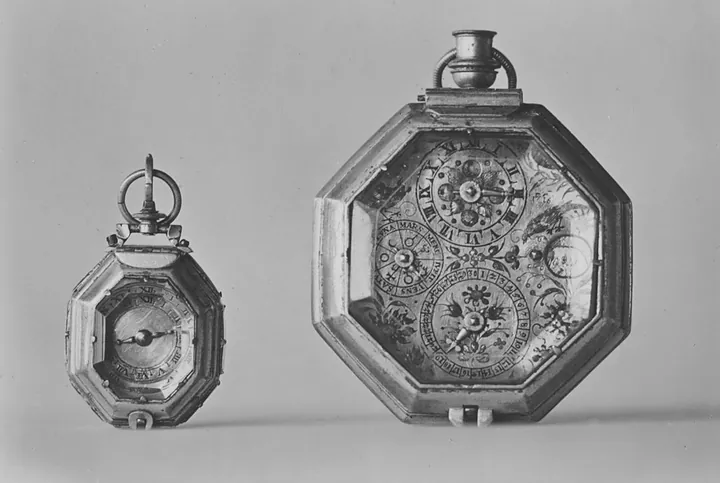
Watch with gilt brass case, crystal and blue glass panels signed 'Conradt Kreizer', Germany, early 17th century
Victoria and Albert Museum, London
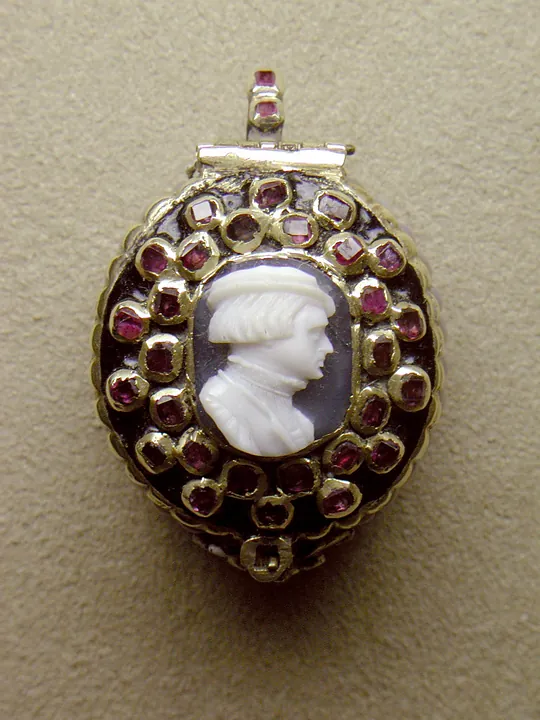
Pocket Watches · watch c. 1650, cameo 16th–17th century
Watch by Wilhelm Peffenhauser, Germany, watch c. 1650, cameo 16th–17th century
The Metropolitan Museum of Art, New York
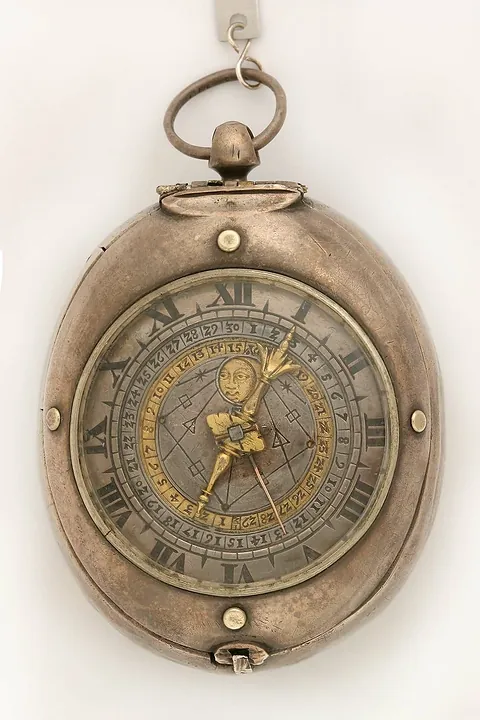
Pocket Watches · c. 1650
Pocket watch by Johann Sayller, Germany, c. 1650
German Clock Museum
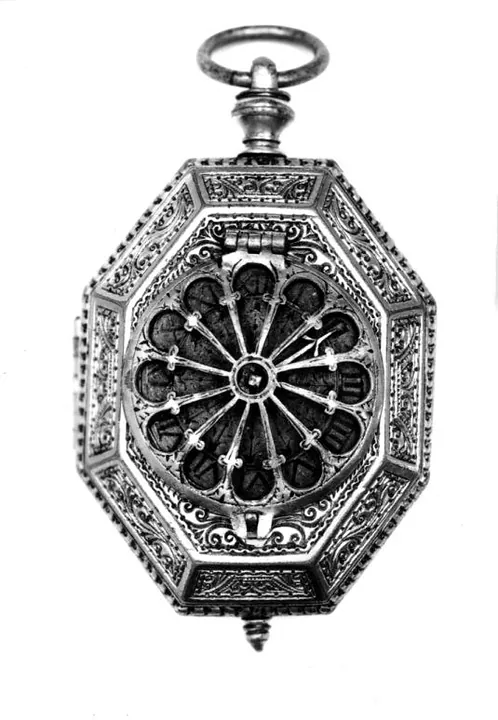
Pocket Watches · 1650–1699
Pocket watch, Germany, 1650–1699
Badisches Landesmuseum Karlsruhe
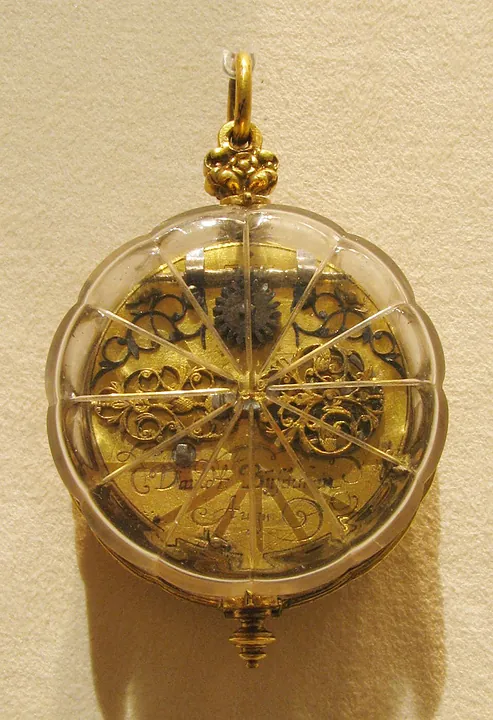
Pocket Watches · probably after 1657
Watch by David Buschman, Germany, probably after 1657
The Metropolitan Museum of Art, New York
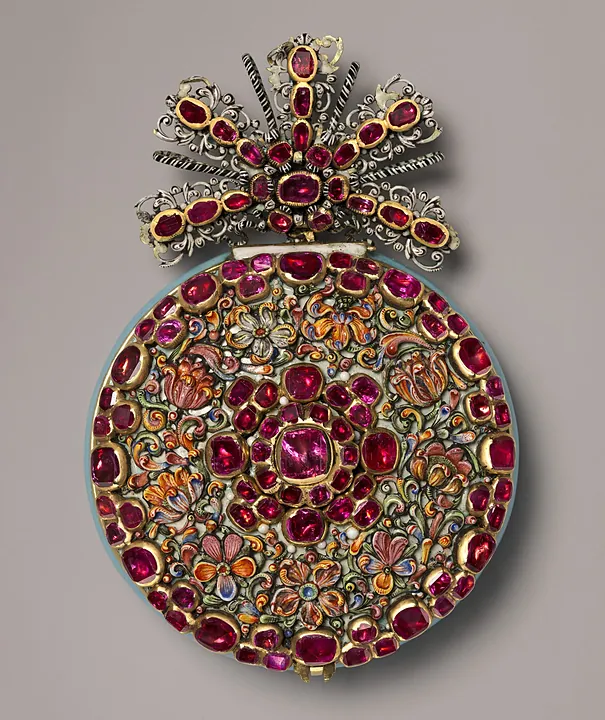
Pocket Watches · c. 1670
Watch by Nicolaus Rugendas the Younger, Germany, c. 1670
The Metropolitan Museum of Art, New York