
Wristwatches · Wristwatch
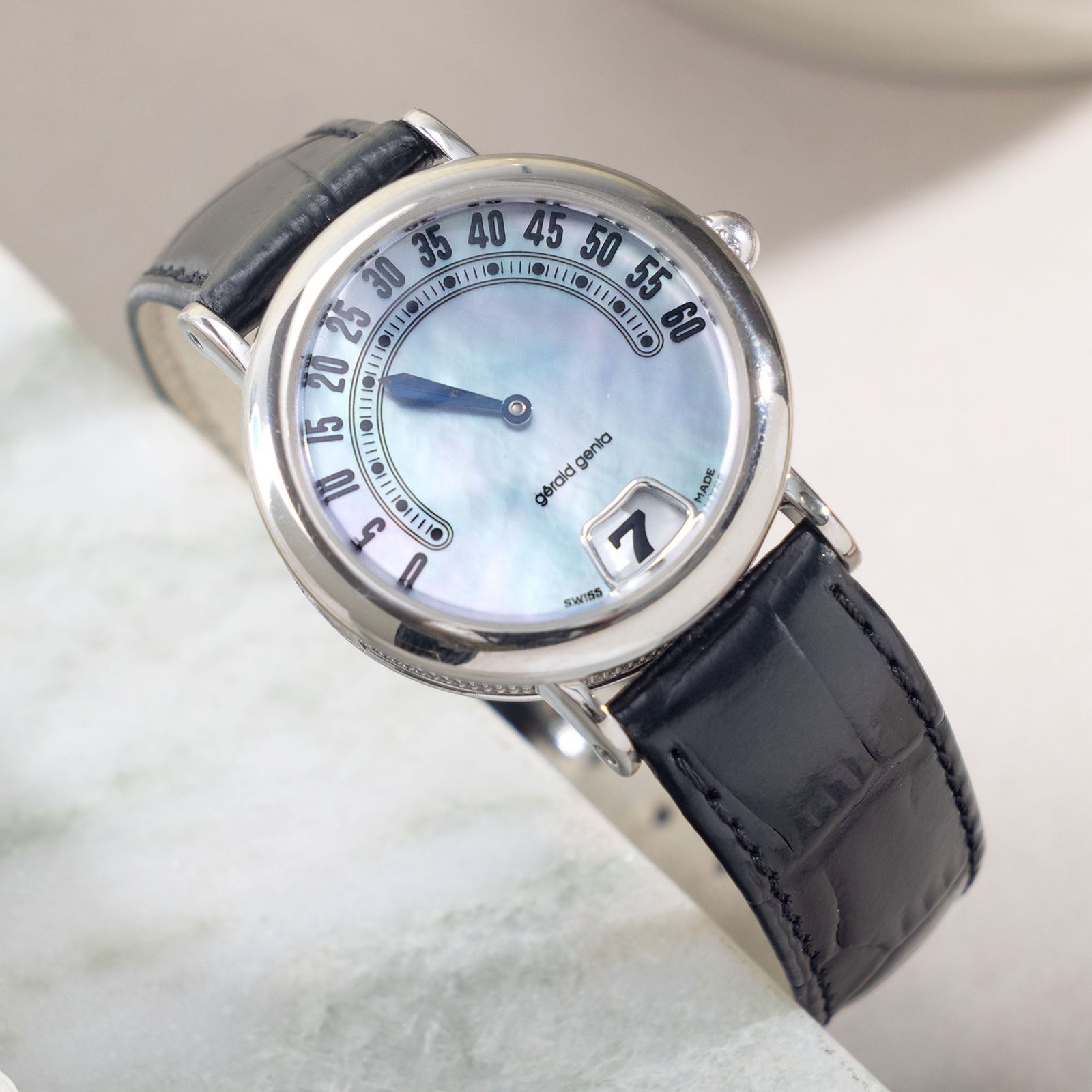
Gerald Genta Jumping hours Dresswatch with MOP dial in 18 k white gold ref G.35247, late 1990s
- Maker / attribution
- Gerald Genta (maker)
- Date
- late 1990s
- Historical period
- Mechanical Renaissance (1990 – 2010)
- Country of origin
- Switzerland
- Object type
- Wristwatch
- Materials / technique
- white gold
- Dimensions
- Case 28 mm
- Stock no.
- W-2799
- Credit line
- Dealer listing, Bulang & Sons (W-2799)
- Catalogue title (original)
- Gerald Genta Jumping hours Dresswatch with MOP dial in 18 k white gold ref G.35247 (English)
View the source record (dealer listing) ↗ (opens another website in a new tab)Suggest a correction
Record summary
Catalogued by Bulang & Sons (dealer), Copenhagen (stock number W-2799), this is a wristwatch by Gerald Genta, made in Switzerland, dated late 1990s. The Atlas places it in the Mechanical Renaissance period (1990 – 2010) of its Wristwatches collection. Materials and techniques recorded by the source: white gold. Recorded dimensions: Case 28 mm. The record is illustrated with 6 photographs.
Assembled from the source record's structured fields. Dates and attributions are given as the source states them; where a field is missing the Atlas leaves it blank rather than estimating.
Catalogue description
Dealer description — Bulang & Sons
We love to offer you guys some off the beaten track watches , as you might already know ! As watch enthusiasts, you know the magic Gerald Genta brings to the table. Renowned for designing icons like the Audemars Piguet Royal Oak, Patek Philippe Nautilus, and Cartier Pasha, Genta's influence on the watch world is unparalleled. Yet, his brand's unique and playful creations often steal the spotlight ! Founded in 1969, the Gerald Genta brand is synonymous with innovation and elegance, offering everything from simple timepieces to highly complex grand sonneries and tourbillons. Today, we present a delightful example of Genta’s genius—a dress watch that combines classic style with a touch of whimsy. This elegant timepiece features a petite 28mm coin-edge case, quintessential Genta-setting crown, and “officer style” lugs, reminiscent of trench watches worn by officers in World War I. The highlight is the stunning mother of pearl dial, adorned with a single blued hand that indicates the minutes, while the jumping hour is displayed in the 6 o’clock aperture. Driven by a reliable quartz movement, this watch has been fully checked and fitted with a fresh battery. The watch comes on shown strap, making this cute yet sophisticated watch a perfect addition to your collection. Look how much fun this cute watch is , nonetheless from the designer with an unrivaled contribution to the watch industry ! Let us get this beauty with you ! Specifications: - Reference G.35247 - 28 mm 18 k white gold case - Serial 335xxx dates to the late 1990s - Mother of pearl dial with blued hands - Coming on shown strap - Quartz movement fully checked by our watch maker and fresh battery fitted
Historical context
Mechanical Renaissance (1990 – 2010)
Mechanical watches return as cultural objects; independent watchmaking flourishes.
Mechanical watches returned as cultural and luxury objects. Complications, tourbillons and new materials proliferated; independent watchmakers such as George Daniels, F.P. Journe and Philippe Dufour revived artisanal watchmaking; collecting vintage watches became a major field.
Read the period in the timelineMore wristwatches from this periodEarlier: Quartz Revolution
Atlas type guide
Wristwatches
Bracelet watches were worn by women from the early nineteenth century — Breguet made one for Caroline Murat, Queen of Naples, in 1810–12 — but the wristwatch only became a man's instrument with military use and aviation in the early twentieth century. Between the World Wars it overtook the pocket watch; the 1920s and 1930s brought rectangular Art Deco cases, water-resistant cases and the first automatic winding systems.
After 1945 the wristwatch became a carrier of identity — dress watches, sports and dive watches, chronographs, calendars — produced by Swiss, American, Japanese, German, Soviet and Chinese industries. The quartz revolution after 1969 and the mechanical renaissance since the 1990s, including the rise of independent watchmakers, complete the story.
What to look for
- The reference number (between the lugs or inside the case back) and serial number, the starting point for dating.
- The calibre: its maker and number are often stamped under the dial or on the bridge.
- Originality of dial, hands and crown — refinished ('redial') dials are common.
- Case material marks: 18K/750, 14K/585, stainless steel, gold-filled, plated.
Dating clues
- Wire-lug cases: before c. 1925.
- Water-resistant screw-down cases: from 1926.
- Quartz movements: from 1969; sapphire crystals widespread after c. 1980.
General guidance written by the Atlas editors about this kind of object. It is not a statement about this particular piece; for that, rely on the source record above and on physical examination.
Related records
Wristwatches · 1990s
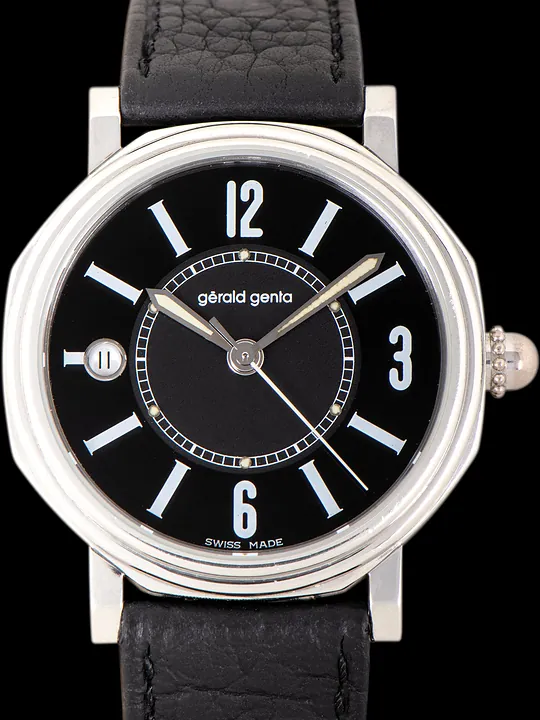
Gerald Genta Octo (Ref. G35587) Black Dial, 1990s
Craft & Tailored (dealer), Los Angeles
Wristwatches · c. 1990s
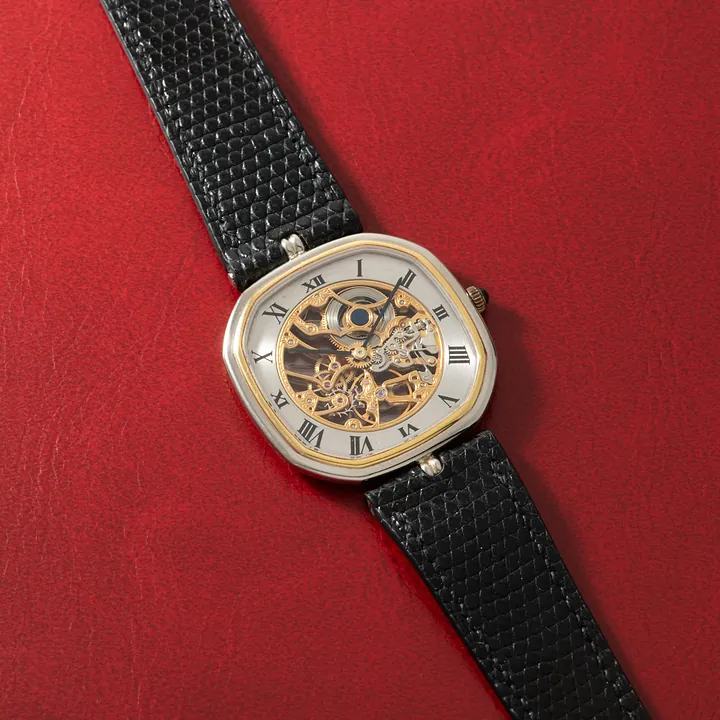
Gérald Genta Octagonal 'Cushion' Skeleton, c. 1990s
Analog/Shift (dealer), New York
Wristwatches · early 2000s
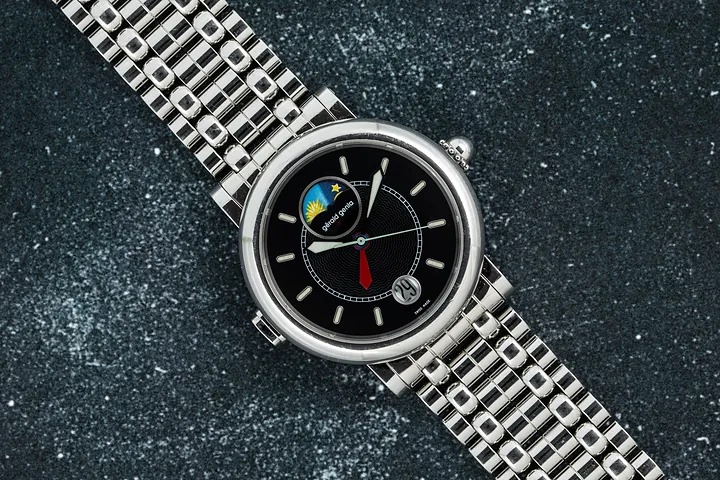
Gerald Genta Night & Day, early 2000s
Analog/Shift (dealer), New York
Wristwatches · 1990s
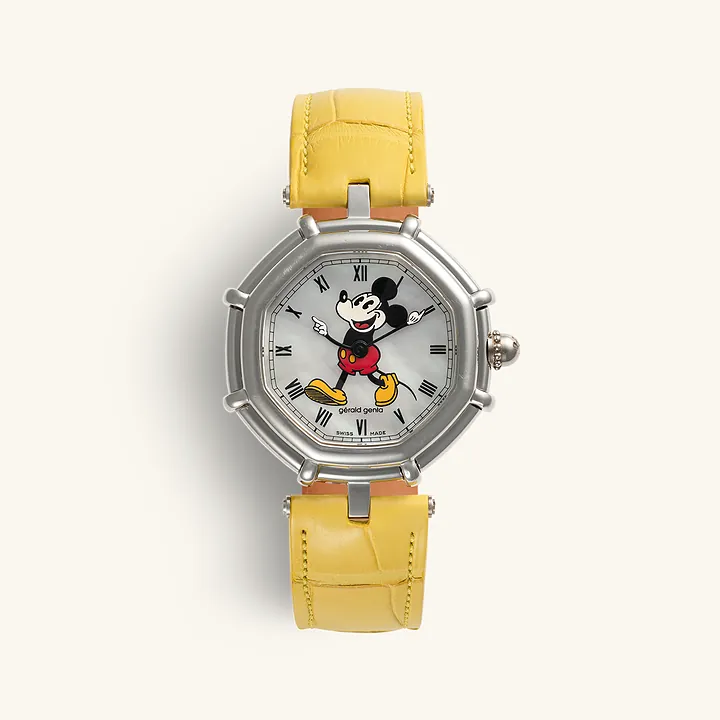
Gerald Genta Disney Automatic, ref. G.3487.7, 1990s
Watches of Knightsbridge (dealer), London

Wristwatches · 2008
Wristwatch by Breitling?, 2008
Museum Rotterdam

Wristwatches · c. 1990s
Audemars Piguet Bamboo, c. 1990s
Antiquorum auction archive, Geneva

Wristwatches · c. 1990
Audemars Piguet Huitieme Perpetual Calendar, ref. 25696PT, c. 1990
Antiquorum auction archive, Geneva

Wristwatches · c. 1990
Breitling Chronomat, ref. b13050.1, c. 1990
Antiquorum auction archive, Geneva