
Wristwatches · Wristwatch
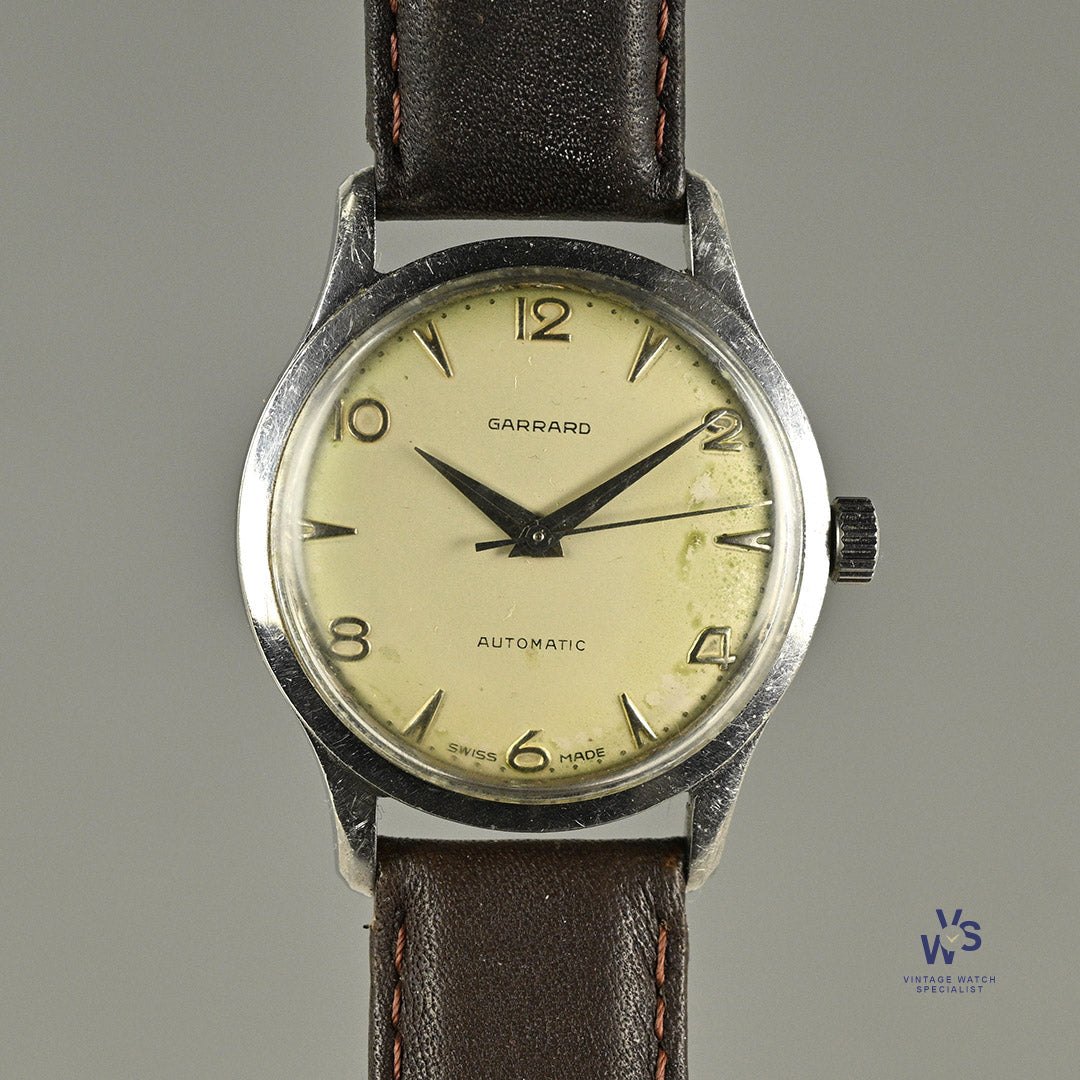
Garrard Automatic Stainless Steel Watch, circa 1950s
- Maker / attribution
- Garrard (maker)
- Date
- c. 1950s
- Historical period
- Modern Mechanical Horology (1945 – 1969)
- Country of origin
- Unrecorded in source
- Object type
- Wristwatch
- Materials / technique
- stainless steel
- Dimensions
- Case 33.5 mm
- Stock no.
- vws4410cs
- Credit line
- Dealer listing, Vintage Watch Specialist (vws4410cs)
- Catalogue title (original)
- Garrard Automatic Stainless Steel Watch c.1950s (English)
View the source record (dealer listing) ↗ (opens another website in a new tab)Suggest a correction
Record summary
Catalogued by Vintage Watch Specialist (dealer), United Kingdom (stock number vws4410cs), this is a wristwatch by Garrard, dated c. 1950s. The Atlas places it in the Modern Mechanical Horology period (1945 – 1969) of its Wristwatches collection. Materials and techniques recorded by the source: stainless steel. Recorded dimensions: Case 33.5 mm. The record is illustrated with 6 photographs.
Assembled from the source record's structured fields. Dates and attributions are given as the source states them; where a field is missing the Atlas leaves it blank rather than estimating.
Catalogue description
Dealer description — Vintage Watch Specialist
Garrard is a name with an extraordinary place in British luxury history. Established in London in 1735, the company became internationally renowned for its fine jewellery, silverware and royal commissions, eventually serving as Crown Jeweller for much of the nineteenth and twentieth centuries. Although best known for its jewellery and ceremonial craftsmanship, Garrard also offered wristwatches, combining the prestige of its British heritage with the expertise of established Swiss movement manufacturers. During the middle decades of the twentieth century, Garrard-branded watches reflected the elegant, understated styling that characterised the post-war period. Clean dials, applied hour markers and relatively modest case dimensions were typical of the era, with automatic movements becoming increasingly desirable as watchmaking technology developed. Rather than manufacturing every component in-house, Garrard made use of Swiss movements, including those produced by ETA, one of Switzerland's most important movement manufacturers. The ETA 2451 belongs to the generation of automatic mechanical movements developed during the 1950s, when self-winding wristwatches were becoming an increasingly popular alternative to traditional hand-wound models. Today, vintage Garrard watches offer collectors an interesting combination of British retailing heritage, Swiss mechanical watchmaking and classic mid-century design. What’s on Offer Here we have a particularly charming Garrard Automatic stainless-steel dress watch, Reference 54222, dating from approximately the 1950s . The first thing that catches the eye is the beautifully aged dial, which has developed a warm ivory tone over the decades. Originally a much lighter finish, it now displays natural patina, with some more pronounced ageing towards the outer edge, particularly between 2 and 5 o'clock. Far from detracting from the watch, this gives it an unmistakably vintage appearance and a character that only comes with age. The dial features an attractive arrangement of applied Arabic numerals at the even hours, alternating with elegant faceted markers. The combination creates a distinctive mid-century design, complemented by slender dauphine-style hands and a central seconds hand. The Garrard signature sits neatly beneath 12 o'clock, while the word Automatic appears above 6 o'clock. The overall effect is wonderfully restrained, with just enough decorative detail to make the dial particularly interesting. The stainless-steel case measures approximately 33.5mm across and 41mm lug-to-lug , offering the elegant proportions associated with dress watches of the period. Its gently curved lugs and polished bezel give the watch a classic profile, while the case displays the expected marks of wear acquired over its long life. The screw-down caseback also shows age-related marks, consistent with its vintage condition. The watch is fitted with a Plexiglass crystal and presented on a brown leather strap with contrasting stitching, a combination that works particularly well with the warmth of the dial. Inside is the ETA Calibre 2451 , a Swiss automatic mechanical movement with 17 jewels and an approximate 42-hour power reserve. This dependable movement represents an interesting period in the development of self-winding wristwatches. Condition Details: Crystal: Excellent Dial: Good Bezel: Very Good Case: Good Movement: Not Serviced Overall: Good
Historical context
Modern Mechanical Horology (1945 – 1969)
Tool watches for divers, pilots and astronauts; electric watches anticipate the electronic age.
The classic era of the mechanical wristwatch: dive watches, chronographs for motor racing and space flight, GMT watches for jet travel, slim dress watches, automatic calendars, and the rise of Japanese manufacturers alongside Swiss, American, German and Soviet industries.
Read the period in the timelineMore wristwatches from this periodEarlier: Golden Age of Mechanical Watchmaking
Atlas type guide
Automatic (self-winding) watches
Self-winding watches use the wearer's motion to wind the mainspring. Abraham-Louis Perrelet and Breguet made 'perpétuelle' pocket watches with oscillating weights in the late eighteenth century, but the principle only became practical in the wristwatch. John Harwood patented a bumper automatic in 1923; Rolex's Perpetual rotor (1931) winding in one direction, and later bidirectional rotors (Eterna, Felsa Bidynator), established the modern form. Micro-rotors (Universal Genève, Buren) and peripheral rotors made automatic watches thinner.
What to look for
- A semicircular rotor turning 360° over the movement, or a 'bumper' weight that rebounds between springs.
- 'Automatic', 'Perpetual' or 'Self-winding' on the dial.
- A sealed screw-back case, since automatic watches are wound less often by the crown.
Dating clues
- Bumper automatics: 1923–c. 1955.
- Full rotors: from 1931 (Rolex); widespread after c. 1950.
- Micro-rotors: from 1954–1958.
General guidance written by the Atlas editors about this kind of object. It is not a statement about this particular piece; for that, rely on the source record above and on physical examination.
Related records
Pocket Watches · 1965
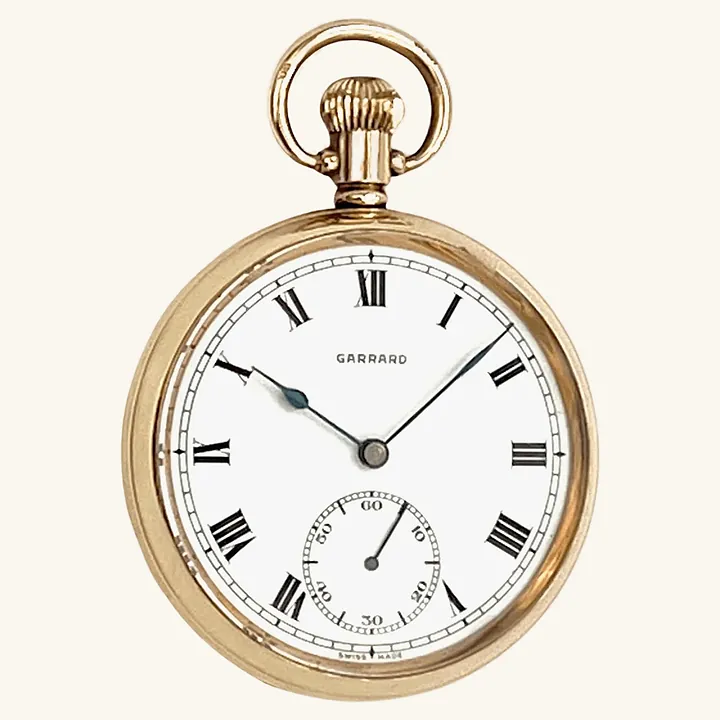
9 Carat Solid Gold Pocket Watch by Garrard, 1965
WatchMuseum.org shop
Wristwatches · 1964
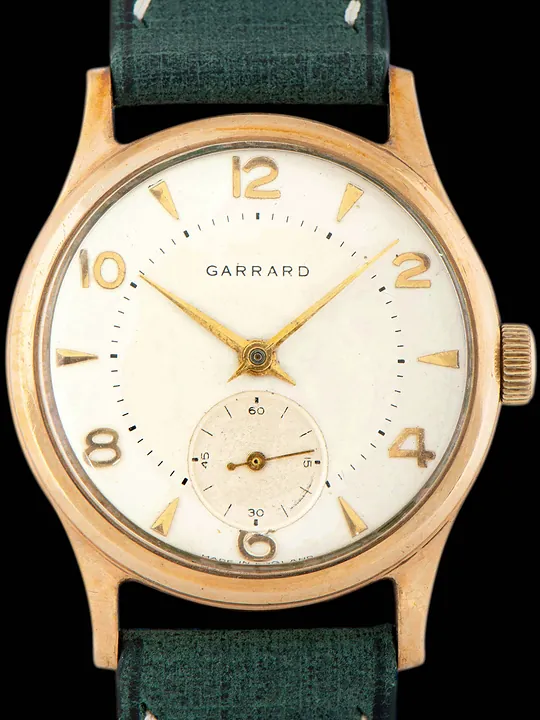
Garrard 'Dennison Aquatite' 9K YG Dress Watch Awarded By Ford Motor Company, 1964
Craft & Tailored (dealer), Los Angeles

Wristwatches · 1945
Wristwatch by Eterna, 1945
Museum Rotterdam

Wristwatches · c. 1945
Breitling Premier, ref. 790, c. 1945
Antiquorum auction archive, Geneva

Wristwatches · c. 1945
Universal Genève Uni-Compax, ref. 22492, c. 1945
Antiquorum auction archive, Geneva
Wristwatches · c. 1950s
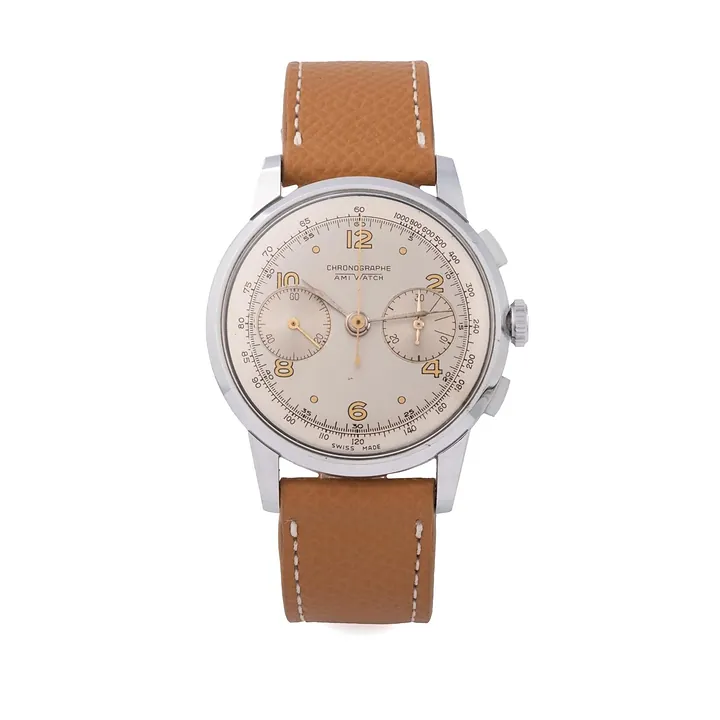
Ami Watch Chronographe, c. 1950s
Antiquorum auction archive, Geneva

Wristwatches · c. 1950s
Baume & Mercier wristwatch, c. 1950s
Antiquorum auction archive, Geneva
Wristwatches · c. 1955
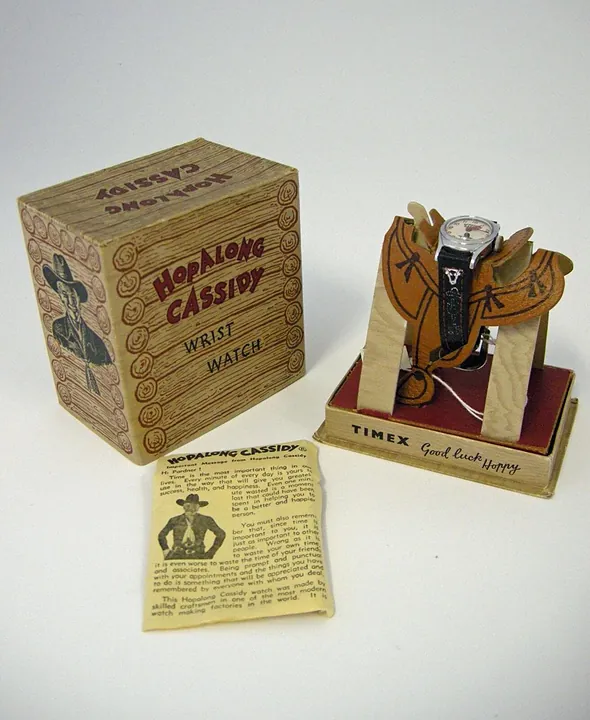
Child's wrist watch by Timex, Dundee, c. 1955
Victoria and Albert Museum, London