Wristwatches · Child's wrist watch
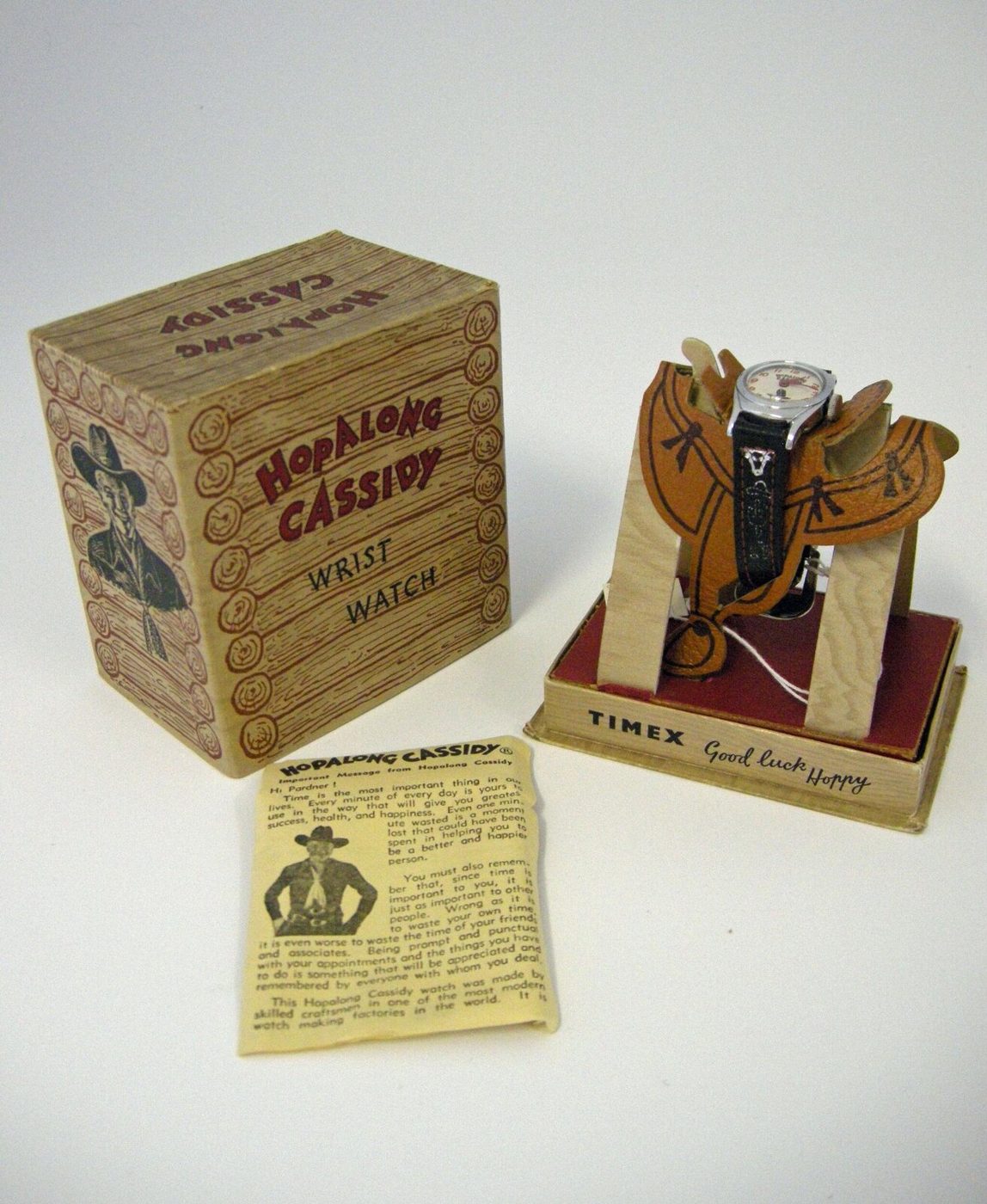
Child's wrist watch by Timex, Dundee, ca. 1955
- Maker / attribution
- Timex (manufacturer)
- Date
- ca. 1955
- Historical period
- Modern Mechanical Horology (1945 – 1969)
- Country of origin
- Unrecorded in source
- Place
- Dundee
- Object type
- Child's wrist watch
- Materials / technique
- Metal, embossed leather and glass; printed paper; cardboard, covered, cut and folded and slotted together
- Dimensions
- Diameter: 18 mm (watch face); Width: 11 mm (strap); Length: 150 mm (watch); Height: 99 mm (instructions); Width: 146 mm (instructions)
- Holding institution
- Victoria and Albert Museum, London
- Accession / object no.
- B.156:1 to 5-2010
- Catalogue title (original)
- Hopalong Cassidy
Record summary
Held and catalogued by Victoria and Albert Museum, London (object number B.156:1 to 5-2010), this is a child's wrist watch by Timex, made in Dundee, dated ca. 1955. The Atlas places it in the Modern Mechanical Horology period (1945 – 1969) of its Wristwatches collection. Materials and techniques recorded by the source: Metal, embossed leather and glass; printed paper; cardboard, covered, cut and folded and slotted together. Recorded dimensions: Diameter: 18 mm (watch face); Width: 11 mm (strap); Length: 150 mm (watch); Height: 99 mm (instructions); Width: 146 mm (instructions). The record is illustrated with 3 photographs.
Assembled from the source record's structured fields. Dates and attributions are given as the source states them; where a field is missing the Atlas leaves it blank rather than estimating.
Catalogue description
V&A — Summary
This 'Hopalong' Cassidy character wrist watch, designed specifically to be worn by children, was manufactured by Timex, probably at their factory in Dundee, Scotland, in the mid-1950s. It retains its original instruction booklet and guarantee, and is still in its original cardboard box, printed to resemble a log cabin and with a saddle-shaped presentation support for the watch to match with the cowboy theme. This watch is an excellent example, in good condition, of the post-war boom in children's consumer culture, particularly as it relates to the rise of 'tie-in' products associated with television programmes aimed specifically at children. The 'Hopalong' Cassidy character was a prominent part of this new consumer culture in the United States and elsewhere. The character originally appeared in novels, but, from 1935, was the star of 66 feature films and subsequently radio shows, comic strips and television, being one of the very first internationally-distributed U.S. television programmes. William Boyd, the actor who played Cassidy, bought the rights to the character and licensed a wide range of character tie-ins throughout the world, including this watch.
V&A — Physical description
Child's wristwatch with white face, silver-coloured body and black strap in its original packaging, comprised of a cardboard saddle-shaped insert covered to resemble leather, support and base, and cardboard box base and lid decorated to resemble a wooden cabin with pictures of the actor William Boyd as Hopalong Cassidy, and paper instruction leaflet. Wrist watch with silver-coloured metal body, curved glass front, black leather strap with silver-coloured metal buckle. The face of the watch has numbers, minute marks, an hour and minute hand all painted red, with a black and white picture of the head and shoulders of Hopalong Cassidy, wearing a Stetson, replacing the number six on the face. A large, round and toothed winding bevel, also in metal, is attached to the right-hand side of the body. The straps, attached to the body by metal pins, have red stitching running down each side and across either end, as well as four pictograms on each strap depicting, in order from the watch body, a cows head looking straight on, a Stetson hat, a cactus and a horseshoe. These have been lightly embossed into the strap and coloured with silver paint, much of which has now rubbed off. The longer strap has seven holes at regular intervals running down its centre, and a silver-coloured metal tag, decorated with an embossed diamond and plant motif, folded onto it, at the end. The shorter strap has been looped at the end, to secure the buckle and strap guard, both of which are of polished silver-coloured metal and again embossed on one side with a diamond and plant design. The buckle is large compared with the watch body, and flared and curved in shape. Instruction leaflet and guarantee, with text printed double-sided in black and red ink, including handwritten text, in blue ink, detailing the retailer's name, address and date of purchase. The paper is folded once to form a four-page booklet, with a black and white photographic image of the actor William Boyd as Hopalong Cassidy on the front page. Cardboard box insert constructed from three separate pieces held in place by tabs. The base is red, folded along each side to provide its height, and covered on its uppermost side to resemble leather. The support consists of cardboard, covered on one side to resemble a light-coloured wood grain and folded once to form a horizontal 'body', with its four 'legs' fitting into the base at two slots on each of its two longer edges. A further piece of cardboard, folded and cut to form the shape of a saddle and stirrups, covered on one side to resemble brown leather and painted with darker brown details and decoration in the form of bows around the sides of the 'saddle', sits upon this support. The 'stirrups' also attach to the base by means of two slots. Cardboard box base, formed by a shallow box glued onto a slightly larger flat base, the whole covered on the outside by paper to resemble wood grain, and with text printed in black on each of its four sides and underside of base. Cardboard box lid, covered on the outside with printed brown paper to resemble a log cabin, the details of the wood grain being picked out in darker brown. With a black and white picture of the Hopalong Cassidy in Stetson on each end, and red and black text on the two sides and top.
V&A — Object history
This watch was produced by Timex in Great Britain in the mid-1950s, and purchased from a shop by its first owner in 1955. It was designed specifically for a child to wear, and is accompanied by an instruction booklet which includes a 'letter' from Hopalong reminding the owner that every minute is precious and can be used to 'better' yourself. It was bought at auction by the V&A Museum of Childhood in 2010. Historical significance: This watch is an excellent example, in good condition, of the post-war boom in children's consumer culture, particularly as it relates to the rise of 'tie-in' products associated with television programmes aimed at specifically children. The 'Hopalong' Cassidy character was a prominent part of consumer culture, particularly in the United States but also all over the world. The character originally appeared in novels, but from 1935 was the star of 66 feature films and subsequently radio, comic strips and television, being one of the very first internationally-distributed U.S. television programmes. The actor who played Cassidy, William Boyd, also bought the rights to the character, and went on to licence a wide range of tie-ins, including this watch.
Inscriptions & marks
'Good luck / from / Hoppy / TIMEX / GREAT BRITAIN'; 'MADE IN GREAT BRITAIN'; 'SHOCK RESISTANT'; 'FULLY GUARANTEED'; 'TIMEX Good luck Hoppy'; 'HOPALONG / CASSIDY'; 'HOPALONG / CASSIDY / WRIST / WATCH'
Historical context
Modern Mechanical Horology (1945 – 1969)
Tool watches for divers, pilots and astronauts; electric watches anticipate the electronic age.
The classic era of the mechanical wristwatch: dive watches, chronographs for motor racing and space flight, GMT watches for jet travel, slim dress watches, automatic calendars, and the rise of Japanese manufacturers alongside Swiss, American, German and Soviet industries.
Read the period in the timelineMore wristwatches from this periodEarlier: Golden Age of Mechanical Watchmaking
Atlas type guide
Wristwatches
Bracelet watches were worn by women from the early nineteenth century — Breguet made one for Caroline Murat, Queen of Naples, in 1810–12 — but the wristwatch only became a man's instrument with military use and aviation in the early twentieth century. Between the World Wars it overtook the pocket watch; the 1920s and 1930s brought rectangular Art Deco cases, water-resistant cases and the first automatic winding systems.
After 1945 the wristwatch became a carrier of identity — dress watches, sports and dive watches, chronographs, calendars — produced by Swiss, American, Japanese, German, Soviet and Chinese industries. The quartz revolution after 1969 and the mechanical renaissance since the 1990s, including the rise of independent watchmakers, complete the story.
What to look for
- The reference number (between the lugs or inside the case back) and serial number, the starting point for dating.
- The calibre: its maker and number are often stamped under the dial or on the bridge.
- Originality of dial, hands and crown — refinished ('redial') dials are common.
- Case material marks: 18K/750, 14K/585, stainless steel, gold-filled, plated.
Dating clues
- Wire-lug cases: before c. 1925.
- Water-resistant screw-down cases: from 1926.
- Quartz movements: from 1969; sapphire crystals widespread after c. 1980.
General guidance written by the Atlas editors about this kind of object. It is not a statement about this particular piece; for that, rely on the source record above and on physical examination.
Related records
Wristwatches · 1900–1999
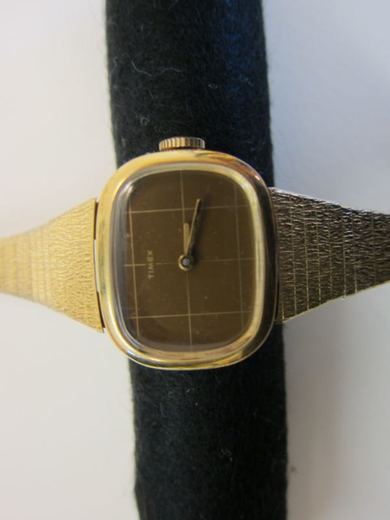
Wristwatch by Timex, 1900–1999
Modemuseum Hasselt
Wristwatches · 1949-1992
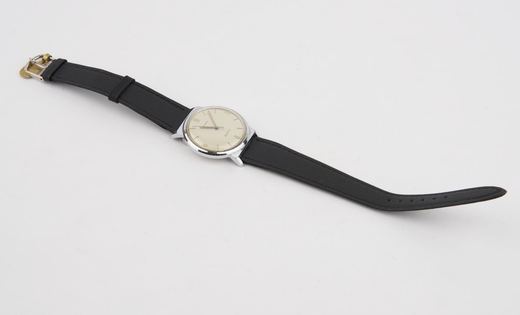
Timex `Electric' wristwatch, with electrically operated balance wheel mechanism, United States, 1949-1992
Science Museum Group, London
Wristwatches · 1900–1999
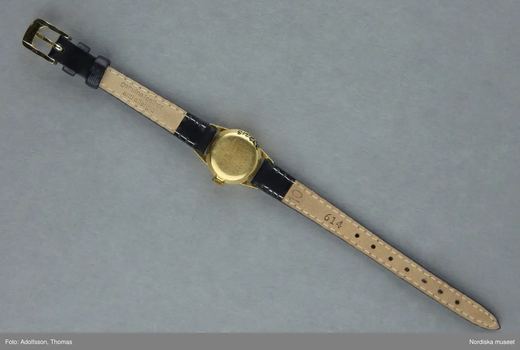
Wristwatch by Certina, Switzerland, 1900–1999
Nordic Museum Foundation
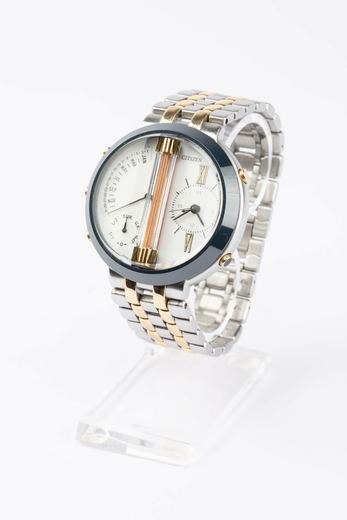
Wristwatches · 1900–1999
Wristwatch by Citizen, Japan, 1900–1999
German Clock Museum
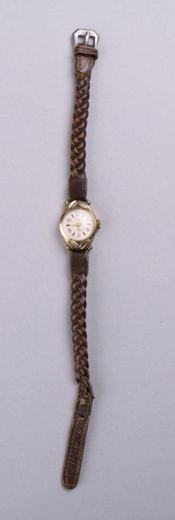
Wristwatches · 1900–1999
Wristwatch by Civis, 1900–1999
Modemuseum Hasselt
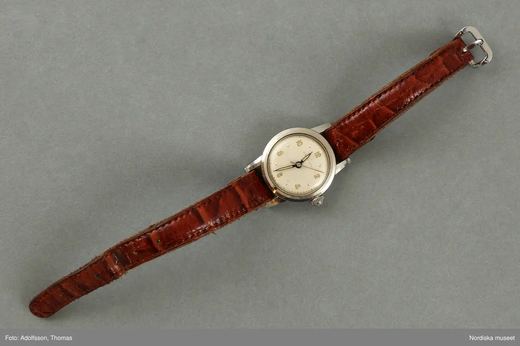
Wristwatches · 1900–1999
Wristwatch by Eterna, Sweden, 1900–1999
Nordic Museum Foundation
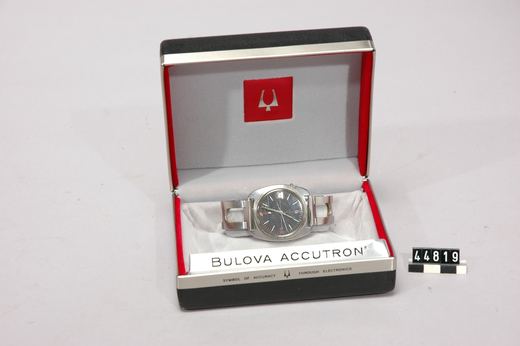
Wristwatches · 1900–1999
Wristwatch by Max Hetzel, 1900–1999
Swedish National Museum of Science and Technology
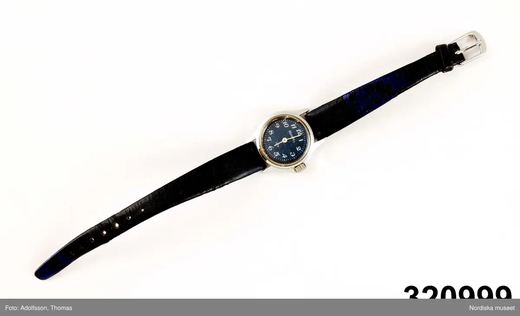
Wristwatches · 1900–1999
Wristwatch by Nivada, Sweden, 1900–1999
Nordic Museum Foundation