
Clocks · Mantel clock
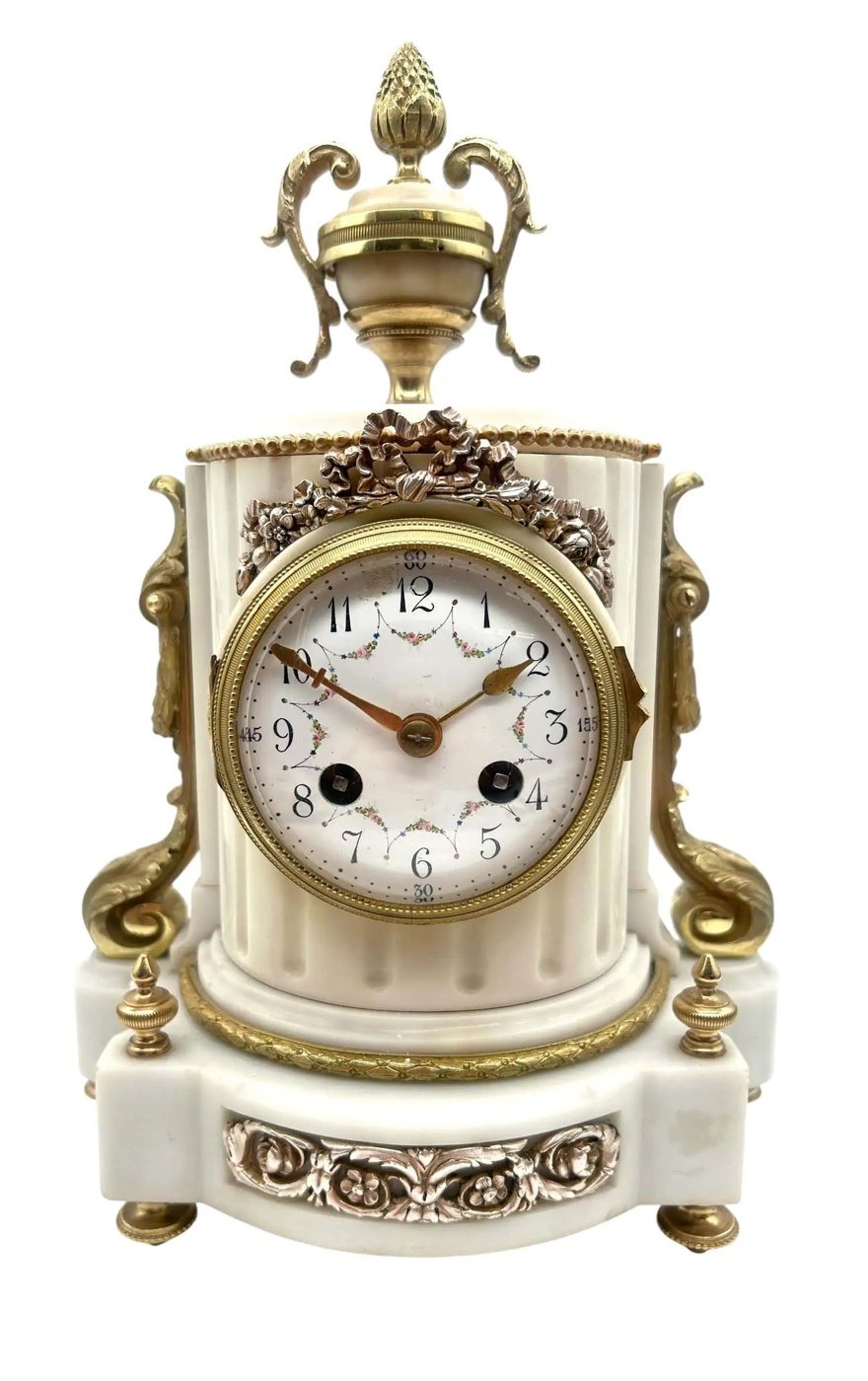
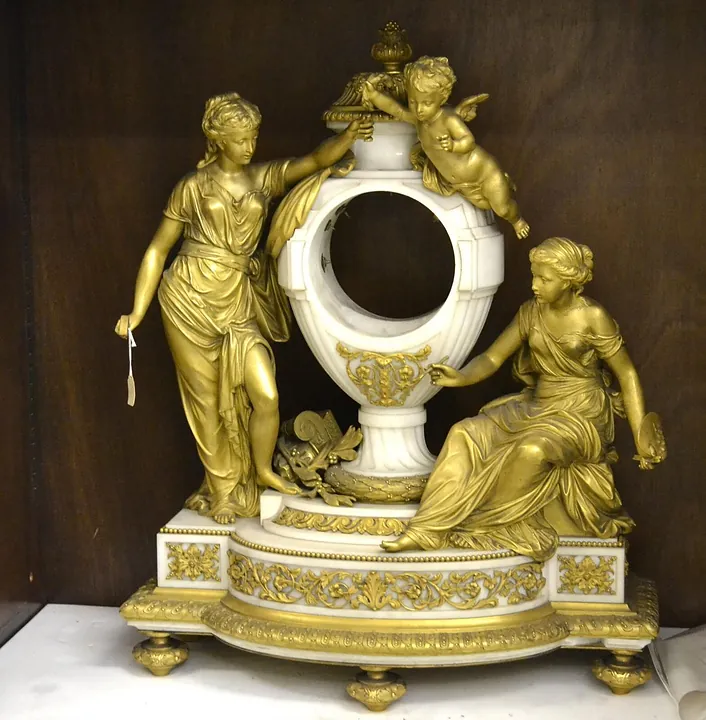
French Mantel Clock with Ormolu Mounts
- Maker / attribution
- Unrecorded in source
- Date
- c. 1890
- Historical period
- Industrial Revolution (1850 – 1900)
- Country of origin
- France
- Object type
- Mantel clock
- Dimensions
- 31cm x 20cm x 13cm
- Holding institution
- Vintage Clocks UK
- Accession / object no.
- french-mantel-clock-with-ormolu-mounts-0c0dc2e528
- Credit line
- Vintage Clocks UK
- Catalogue title (original)
- Solid White Marble French Mantel Clock With Ormolu Mounts – 8 Day Striking Mantle clock Circa 1890 (English)
View the source record ↗ (opens another website in a new tab)Suggest a correction
Record summary
Held and catalogued by Vintage Clocks UK (object number french-mantel-clock-with-ormolu-mounts-0c0dc2e528), this is a mantel clock, made in France, dated c. 1890. The Atlas places it in the Industrial Revolution period (1850 – 1900) of its Clocks collection. Recorded dimensions: 31cm x 20cm x 13cm. The record is illustrated with 1 photograph.
Assembled from the source record's structured fields. Dates and attributions are given as the source states them; where a field is missing the Atlas leaves it blank rather than estimating.
Catalogue description
Original object description
Catalogued under inventory reference Jn66 and dating to around 1890, this French mantel clock measures 31 cm in height, 20 cm in width, and 13 cm in depth. The case is carved from solid white stone—identified as either Carrara or statuary marble—formed as a fluted column on a stepped rectangular base with classical bracket feet. It is dressed in gilt-brass ormolu mounts, comprising beaded bezels, side handles, an ornamental floral mount over the dial, and a mixed finial of bronze and marble. Hand-painted flower sprays and black Arabic numbers decorate the white enamel dial. The eight-day mechanism strikes both the hour and half-hour, operates in serviced working order, and preserves its original finishes on the stone and ormolu without revealing any maker's signature.
Historical context
Industrial Revolution (1850 – 1900)
American interchangeable-parts manufacture; railroad time standards; Swiss and German factory systems.
Factory production transformed the clock into an everyday object. American makers (Seth Thomas, Ansonia, Waterbury) and German factories (Junghans, Gustav Becker, Lenzkirch) sold millions of shelf, wall and alarm clocks worldwide; France produced standardised Paris movements and carriage clocks; electric time distribution began.
Read the period in the timelineMore clocks from this periodEarlier: Precision & Scientific Horology
Atlas type guide
Mantel and French pendule clocks
The mantel clock — the French pendule de cheminée — is as much decorative art as timekeeper. From the late seventeenth century Parisian clockmakers worked with cabinet-makers, bronze founders and gilders (ciseleurs-doreurs) to create cases in Boulle marquetry, gilt bronze and marble, while the movements were often supplied by specialist makers. Clocks of the Louis XIV, Louis XV and Louis XVI periods, and Empire clocks with allegorical figures, set fashions copied across Europe.
The nineteenth century industrialised the type. The 'Paris movement', a standardised round movement with silk-thread or Brocot suspension and count-wheel striking, was made in huge numbers by firms such as Japy and Vincenti, and fitted into cases of every style and material.
What to look for
- Round 'Paris' movements with makers' stamps (e.g. Japy Frères, Vincenti, S. Marti) and medal marks from exhibitions.
- Suspension type: silk thread (earlier) or Brocot adjustable suspension (after c. 1840).
- Visible Brocot escapement on the dial in later clocks.
- Fire-gilt (mercury) gilding on bronzes versus later electro-gilding.
- Signed dials naming a retailer rather than the movement maker.
Dating clues
- Silk-suspension Paris movements: c. 1800–1850.
- Brocot suspension and visible escapements: after c. 1840.
- Exhibition medal stamps on movements give dates after the medal year.
General guidance written by the Atlas editors about this kind of object. It is not a statement about this particular piece; for that, rely on the source record above and on physical examination.
Read next:Anchor (recoil) escapement
Related records
Clocks · 1840–1878
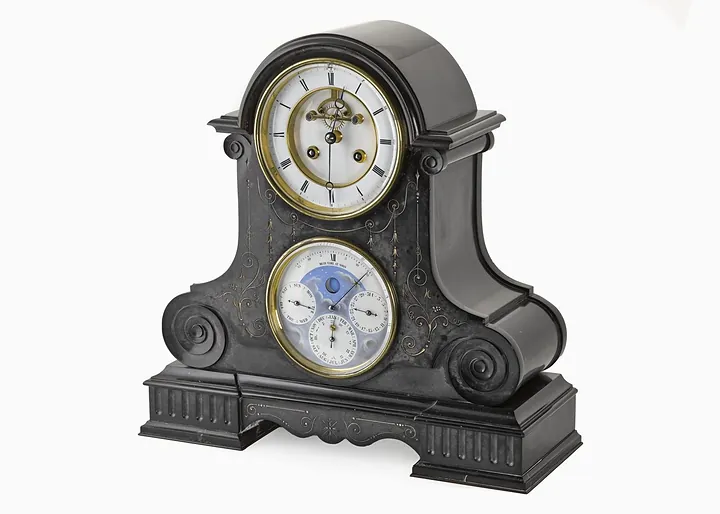
Mantel clock by A. Brocot, France, 1840–1878
Science Museum Group, London
Clocks · c. 1855
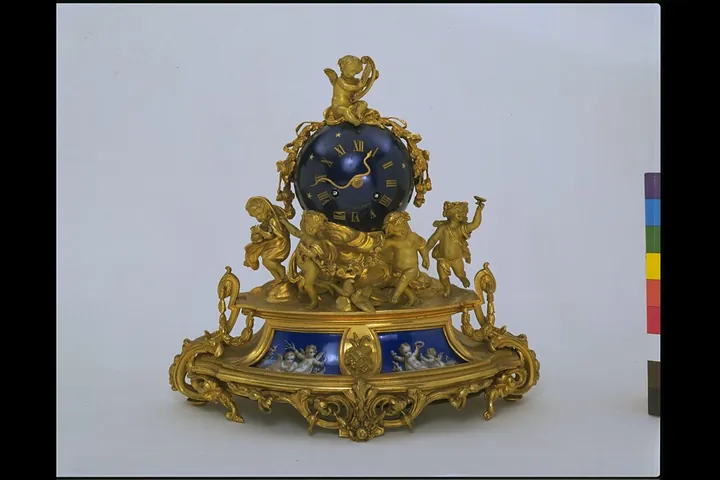
Ormolu and enamel clock, Paris, ca.1855, made by Lévy Frères.
Victoria and Albert Museum, London
Clocks · c. 1850
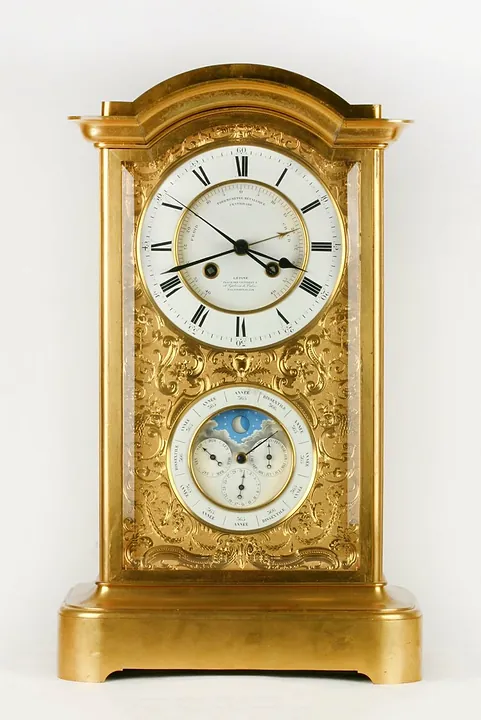
Table clock, France, c. 1850
German Clock Museum
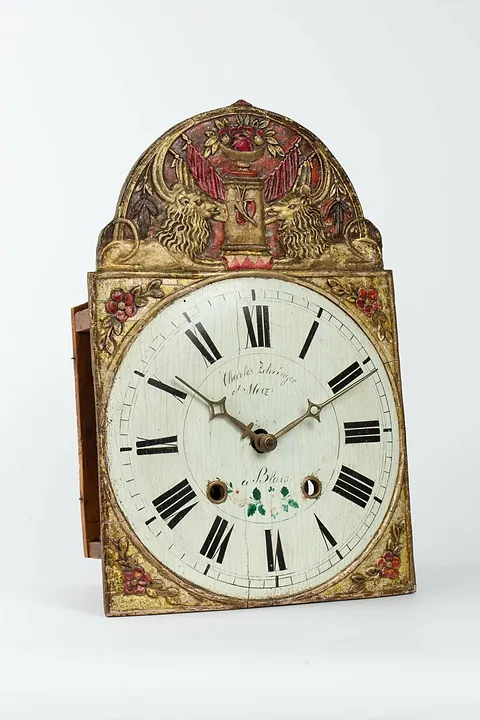
Clocks · c. 1850
Wall clock by Charles et Merz Zehringer, France, c. 1850
German Clock Museum
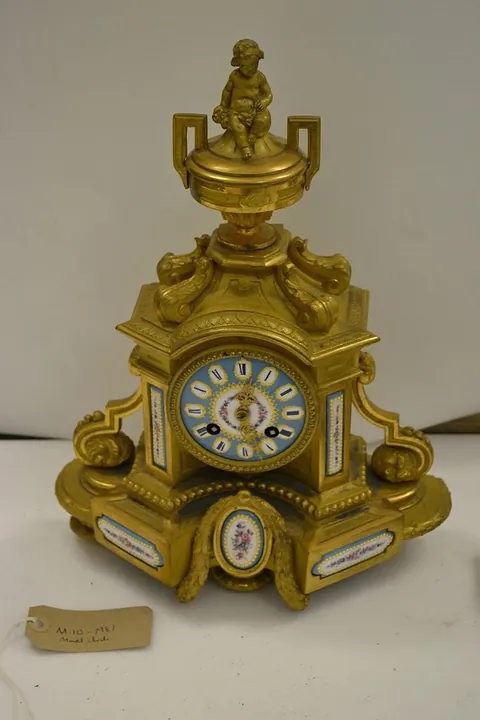
Clocks · c. 1860
Mantel clock, French, c. 1860
Victoria and Albert Museum, London
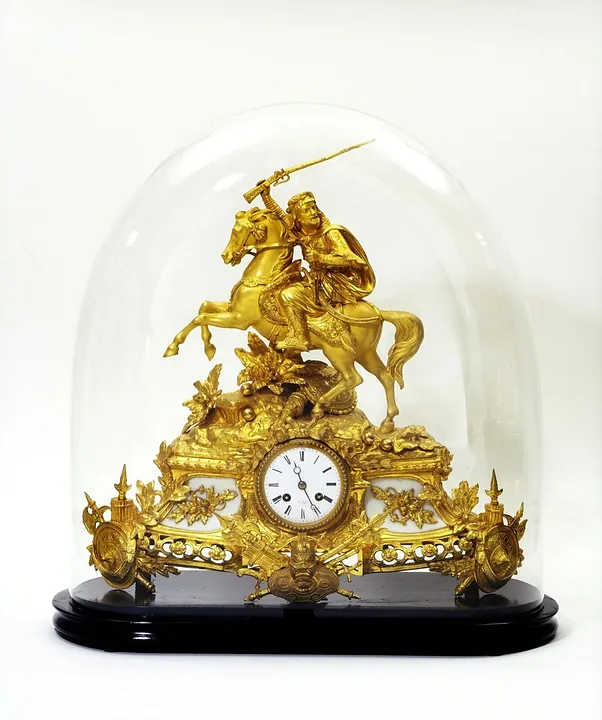
Clocks · c. 1860
[*] French Clock under glass dome
Victoria and Albert Museum, London
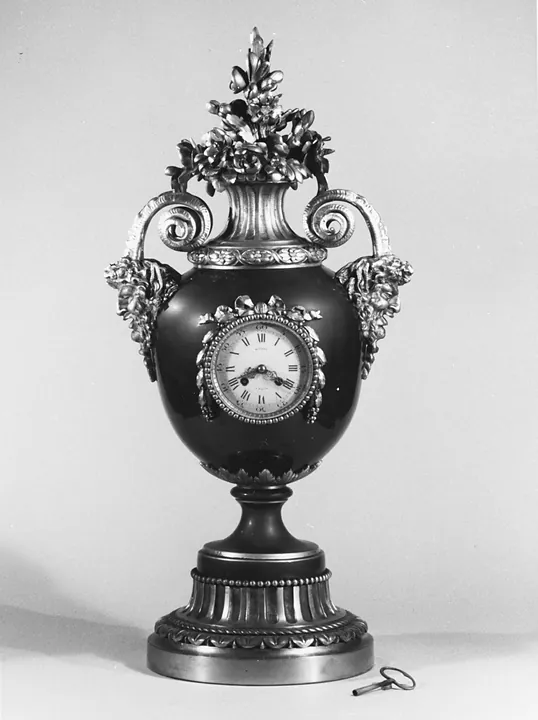
Clocks · c. 1860
Clock by Auguste-Emile Rinquet-Leprince, France, c. 1860
The Metropolitan Museum of Art, New York
Clocks · 1860–1870
Clock by Raingo Frères, France, 1860–1870
Victoria and Albert Museum, London