
Wristwatches · Wristwatch
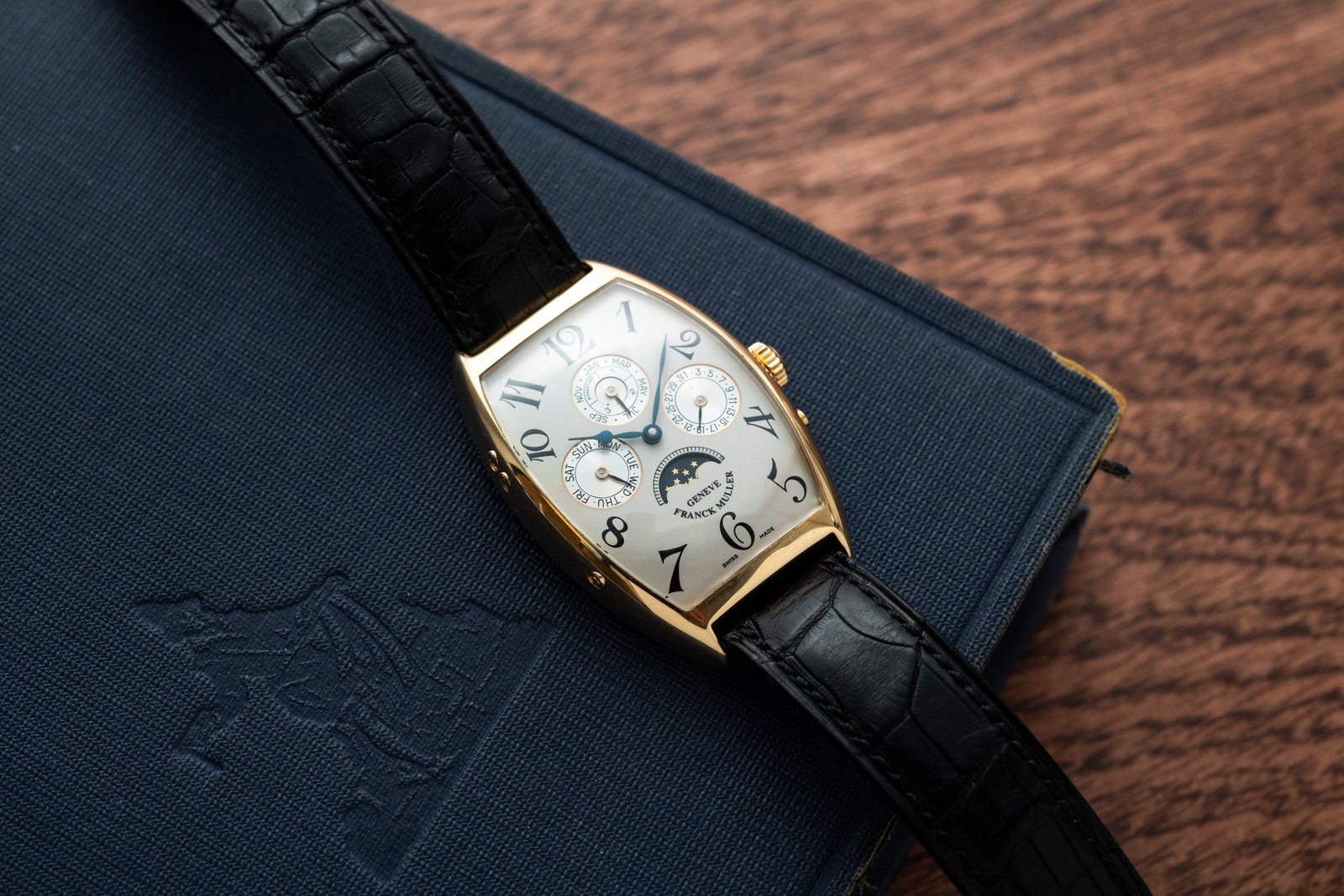
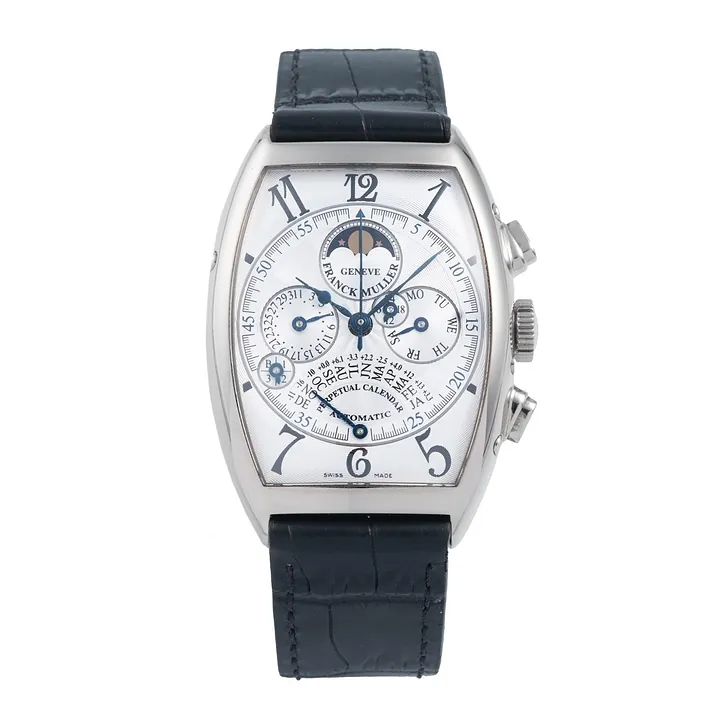
Franck Muller Curvex Perpetual Calendar, 2000s
- Maker / attribution
- Franck Muller (maker)
- Date
- 2000s
- Historical period
- Mechanical Renaissance (1990 – 2010)
- Country of origin
- Switzerland
- Object type
- Wristwatch
- Dimensions
- Case 31 mm
- Stock no.
- 40991629
- Credit line
- Dealer listing, Analog/Shift (40991629)
- Catalogue title (original)
- Franck Muller Curvex Perpetual Calendar (English)
View the source record (dealer listing) ↗ (opens another website in a new tab)Suggest a correction
Record summary
Catalogued by Analog/Shift (dealer), New York (stock number 40991629), this is a wristwatch by Franck Muller, made in Switzerland, dated 2000s. The Atlas places it in the Mechanical Renaissance period (1990 – 2010) of its Wristwatches collection. Recorded dimensions: Case 31 mm. The record is illustrated with 6 photographs.
Assembled from the source record's structured fields. Dates and attributions are given as the source states them; where a field is missing the Atlas leaves it blank rather than estimating.
Catalogue description
Dealer description — Analog/Shift
In the world of haute horlogerie , where time is not just measured but celebrated , Franck Muller stands as an overlooked luminary. Established in 1991, the brand's vision was clear: to create timepieces that transcend the mundane, leaning on expressions of individuality and above all, elevating timekeeping to an art form. Muller the man and Muller the brand have brought a lot to the world of modern horology, and his colorful, mid-1990s/early-2000s tonneau-shaped dress watch collection perfectly exhibits a design language that walks a fine line between classical and whimsical. Incorporate the highly respected mechanical craftsmanship of a perpetual calendar and moonphase complication and you have the Franck Muller 2850 QP. This particular Franck Muller Perpetual Calendar Moonphase 2850 QP, dates to the 2000s, and is housed in a 31mm x 38mm 18k yellow gold case with a curved sapphire crystal, an unsigned crown and corrector pushers located along the case flanks. The satin silver dial features Frank Muller’s playful ‘Arabic’ markers with a set of silver radial sub-registers, a moonphase by way of a crescent aperture display and matching ‘spade’ hands. Powered by a FM Calibre automatic-winding movement featuring a perpetual calendar highlighting leap year indicator and moonphase, and fitted to a signed alligator strap with a matching gold tang buckle, this particular FM is a handsome thing that tastefully blends all the signature features we’ve come to know from the brand. Despite their under-the-radar profile, Franck Muller timepieces are still some of the best in the world with respect to dressy complications, and this wildly fun limited edition — marking a quarter-century of the Swiss brand's eccentric watchmaking — is no exception.
Historical context
Mechanical Renaissance (1990 – 2010)
Mechanical watches return as cultural objects; independent watchmaking flourishes.
Mechanical watches returned as cultural and luxury objects. Complications, tourbillons and new materials proliferated; independent watchmakers such as George Daniels, F.P. Journe and Philippe Dufour revived artisanal watchmaking; collecting vintage watches became a major field.
Read the period in the timelineMore wristwatches from this periodEarlier: Quartz Revolution
Atlas type guide
Calendar, moon-phase and perpetual calendar watches
Calendar complications range from a simple date to the perpetual calendar, which automatically allows for months of different lengths and leap years until 2100. Pocket watches with perpetual calendars were made in the eighteenth and nineteenth centuries; Patek Philippe made the first perpetual calendar wristwatch in 1925, and series production followed in 1941. The annual calendar (Patek Philippe, 1996) needs correction only once a year.
Moon-phase displays use a disc with two moons and 59 teeth advanced daily, approximating the 29.5-day lunation; more precise trains reduce the error to one day in over a century.
What to look for
- Apertures or subsidiary dials for day, date, month and leap year.
- Moon disc under a 'bosom' shaped aperture.
- Recessed correctors on the case band for setting the calendar.
Dating clues
- Triple-date wristwatches: popular c. 1940–1955.
- Perpetual calendar wristwatches: from 1925 (unique) and 1941 (series).
General guidance written by the Atlas editors about this kind of object. It is not a statement about this particular piece; for that, rely on the source record above and on physical examination.
Related records
Wristwatches · c. 1996-99
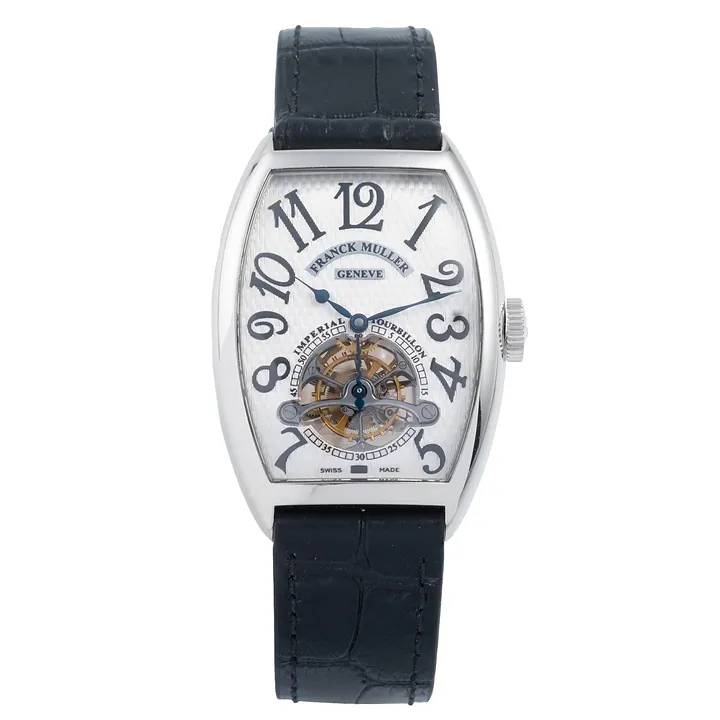
Franck Muller Imperial Tourbillon, ref. 5850T, c. 1996-99
Antiquorum auction archive, Geneva
Wristwatches · c. 2005
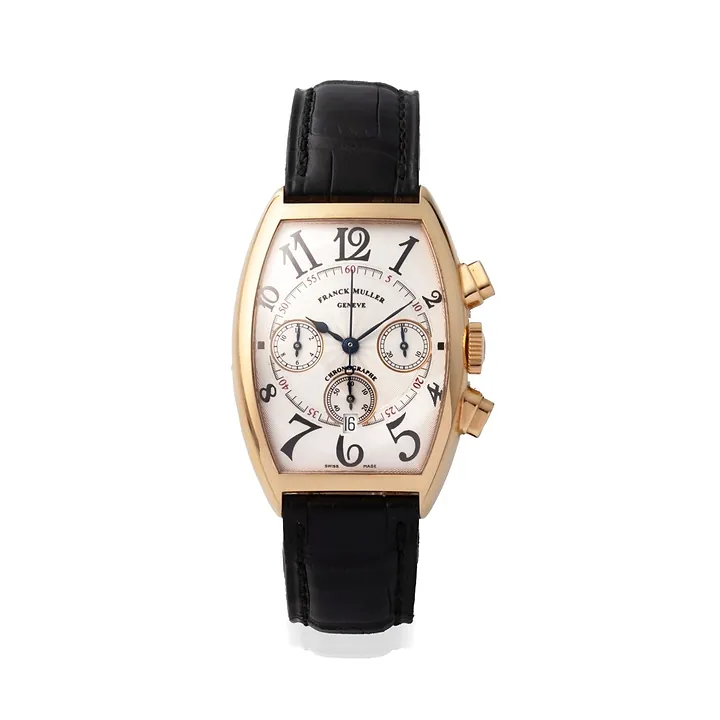
Franck Muller Casablanca Chronograph, ref. 5850 CC AT, c. 2005
Antiquorum auction archive, Geneva
Wristwatches · c. 2010-2020
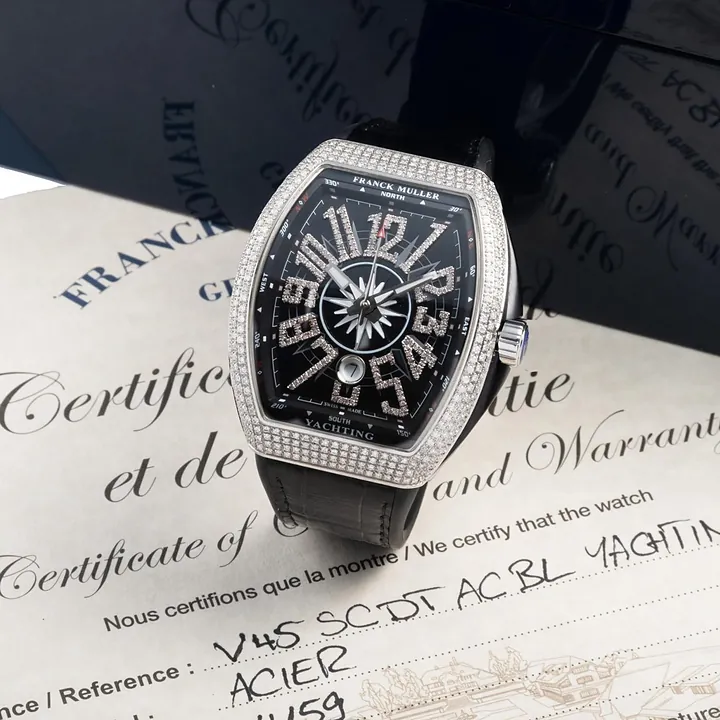
Franck Muller Vanguard Yachting, ref. V45SCDT, c. 2010-2020
Antiquorum auction archive, Geneva
Wristwatches · Sold in August 2016
Franck Muller wristwatch, ref. 6850 QPE, Sold in August 2016
Antiquorum auction archive, Geneva

Wristwatches · 2008
Wristwatch by Breitling?, 2008
Museum Rotterdam

Wristwatches · c. 1990s
Audemars Piguet Bamboo, c. 1990s
Antiquorum auction archive, Geneva

Wristwatches · c. 1990
Audemars Piguet Huitieme Perpetual Calendar, ref. 25696PT, c. 1990
Antiquorum auction archive, Geneva

Wristwatches · c. 1990
Breitling Chronomat, ref. b13050.1, c. 1990
Antiquorum auction archive, Geneva