
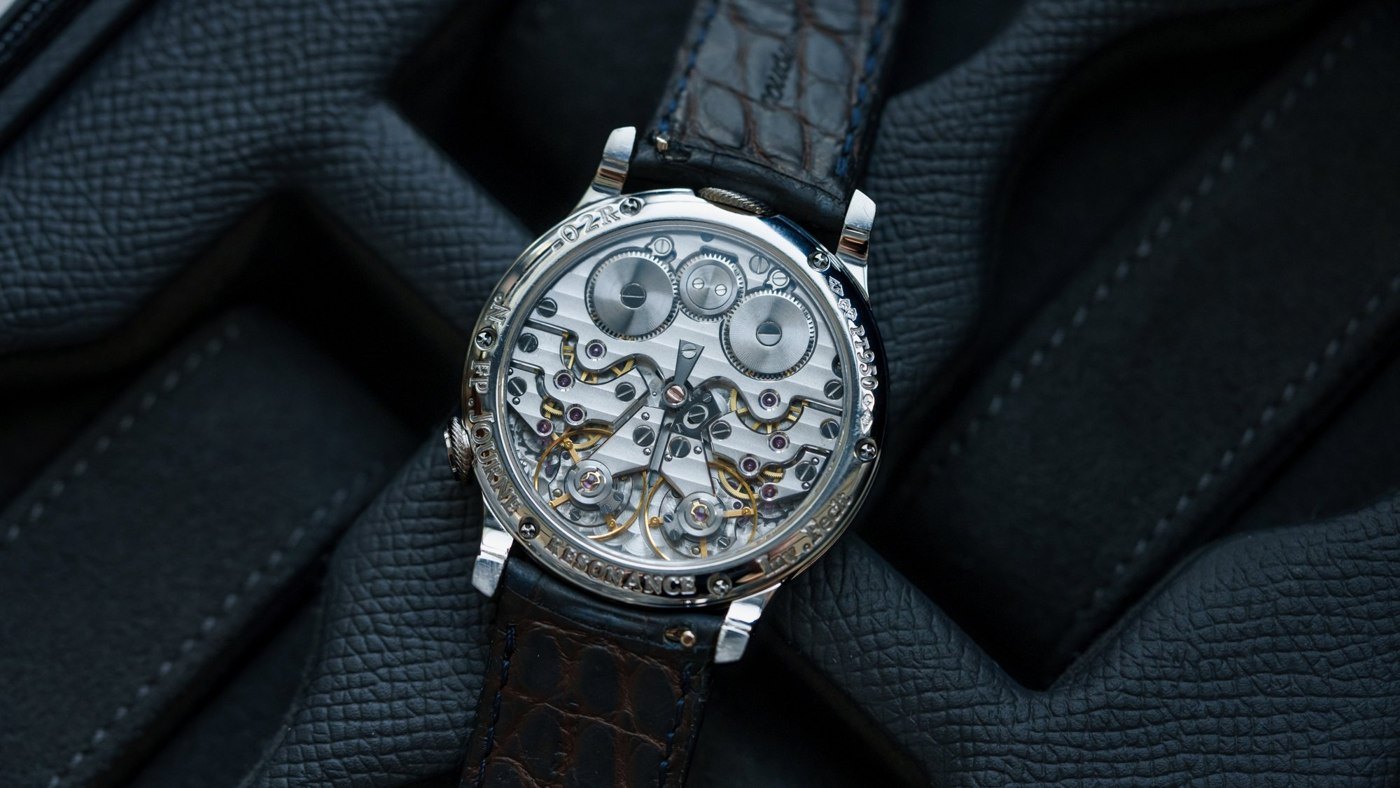
Pocket Watches · Manual-winding watch with resonance complication
F.P. Journe Chronomètre à Résonance
- Maker / attribution
- F.P. Journe (source attribution)
- Date
- c. 1998 to early 2000s
- Historical period
- Mechanical Renaissance (1990 – 2010)
- Country of origin
- Switzerland
- Object type
- Manual-winding watch with resonance complication
- Materials / technique
- Platinum
- Holding institution
- Hairspring
- Accession / object no.
- f-p-journe-chronometre-a-resonance-03bca9f391
- Credit line
- Hairspring
- Catalogue title (original)
- ساعت مچی F.P. Journe مدل Chronomètre à Résonance قاب پلاتین (English)
View the source record ↗ (opens another website in a new tab)Suggest a correction
Record summary
Held and catalogued by Hairspring (object number f-p-journe-chronometre-a-resonance-03bca9f391), this is a manual-winding watch with resonance complication attributed to F.P. Journe, made in Switzerland, dated c. 1998 to early 2000s. The Atlas places it in the Mechanical Renaissance period (1990 – 2010) of its Pocket Watches collection. Materials and techniques recorded by the source: Platinum. The record is illustrated with 1 photograph.
Assembled from the source record's structured fields. Dates and attributions are given as the source states them; where a field is missing the Atlas leaves it blank rather than estimating.
Catalogue description
Original object description
Originating from the model's earliest manufacturing series launched in 1998, this F.P. Journe Chronomètre à Résonance features a 38mm platinum case paired with an early brass caliber. The textured yellow gold dial incorporates two separate time displays, each furnished with individual hands and markers. An exhibition case back displays two independent balance assemblies coupled through acoustic resonance. Fewer than 467 units of this initial brass-movement variant were ever constructed. The archival record omits details regarding previous servicing, operational precision, or the presence of original certificates and packaging.
Original object description
The 38mm platinum housing contains a textured yellow gold dial furnished with two independent timekeeping dials, each detailed with guilloché centers and blued steel hands alongside an integrated power-reserve arc. The case holds François-Paul Journe's dual-gear-train system utilizing acoustic resonance.
Original object description
Powering the watch is the original brass movement characteristic of the earliest production tier, engineered with two independent balance systems that synchronize through physical resonance to improve chronometric stability. Production totals for this early brass-movement edition remained under 467 examples.
Original object description
This piece remains preserved in unadjusted, original state, exhibiting the natural surface patina characteristic of brass movements produced prior to the switch to solid-gold calibers. Reflecting its historical importance and state of preservation, the watch was requested by the brand for inclusion in a 2025 exhibition in Miami. Documentation and data regarding performance, historical wear, and original boxes or papers are absent.
Historical context
Mechanical Renaissance (1990 – 2010)
Mechanical watches return as cultural objects; independent watchmaking flourishes.
Collectors' interest in antique pocket watches grew, and a few houses made new pocket watches with grand complications as technical showpieces.
Read the period in the timelineMore pocket watches from this periodEarlier: Quartz Revolution
Atlas type guide
Pocket chronometers and precision watches
A pocket chronometer is a watch built to observatory standards, traditionally with a detent escapement like a marine chronometer. English makers such as John Arnold and Thomas Earnshaw made the first pocket chronometers in the 1780s. In the nineteenth century the term increasingly referred to any watch that had passed official rating trials at observatories in Kew, Neuchâtel, Geneva or Besançon, and the Swiss lever chronometer became dominant.
Tourbillon and karrusel watches belong to the same world of precision. Breguet patented the tourbillon in 1801 to average out positional errors; Bahne Bonniksen's karrusel (1892) was a cheaper English alternative. Rating certificates (bulletins de marche) that accompany such watches are historical documents in their own right.
What to look for
- Detent escapement (no pallets; a fine spring detent locks the escape wheel).
- Observatory certificates, competition results or 'Chronometer' marking on the dial.
- Tourbillon carriage visible through an aperture or on the movement.
- Fine finishing: jewelled holes in gold chatons, diamond endstones.
Dating clues
- English pocket chronometers: c. 1780–1900.
- Observatory trials at Neuchâtel from 1866, Geneva from 1873, Kew from 1884.
- Karrusels: 1892–c. 1915.
General guidance written by the Atlas editors about this kind of object. It is not a statement about this particular piece; for that, rely on the source record above and on physical examination.
Read next:Spring detent (chronometer) escapementTourbillonDetached lever escapement
Related records
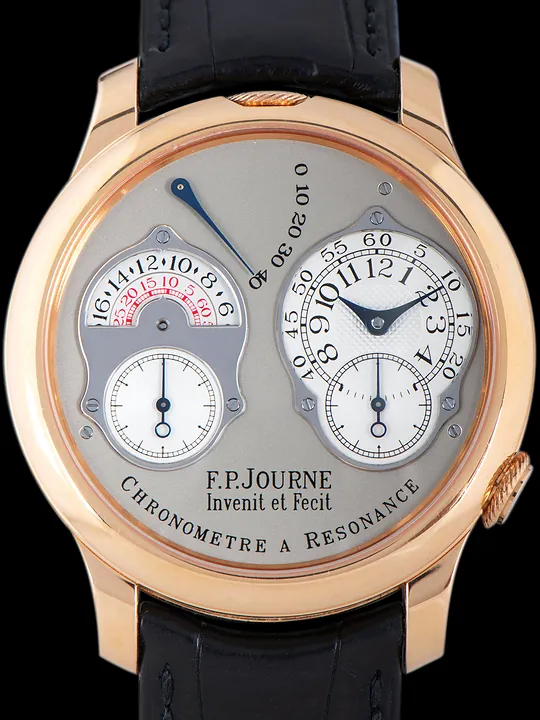
Wristwatches · 2012
F.P. Journe Résonance "Parking Meter" 18K RG (Ref. RT) Grey Dial, 2012
Craft & Tailored (dealer), Los Angeles
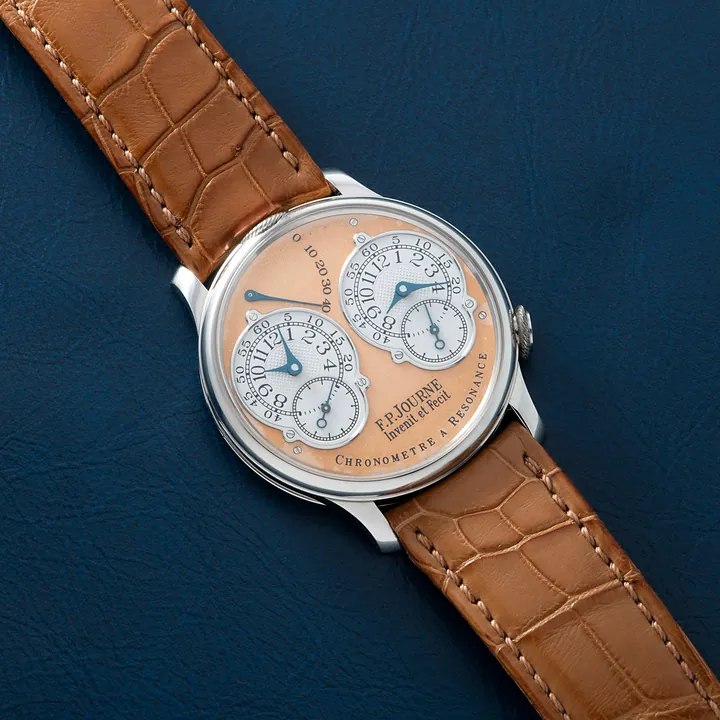
Wristwatches · 2003
F.P. Journe Chronomètre à Résonance 'Brass Movement', 2003
Analog/Shift (dealer), New York
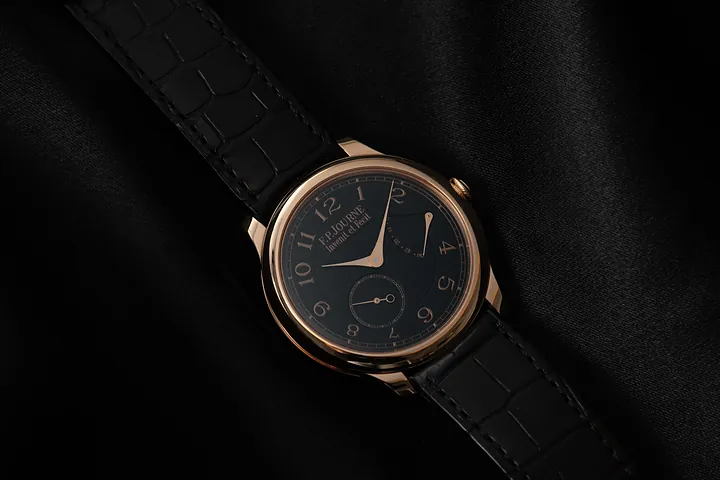
Wristwatches · 2019
F.P. Journe Chronométre Souverain Boutique Edition, 2019
Analog/Shift (dealer), New York
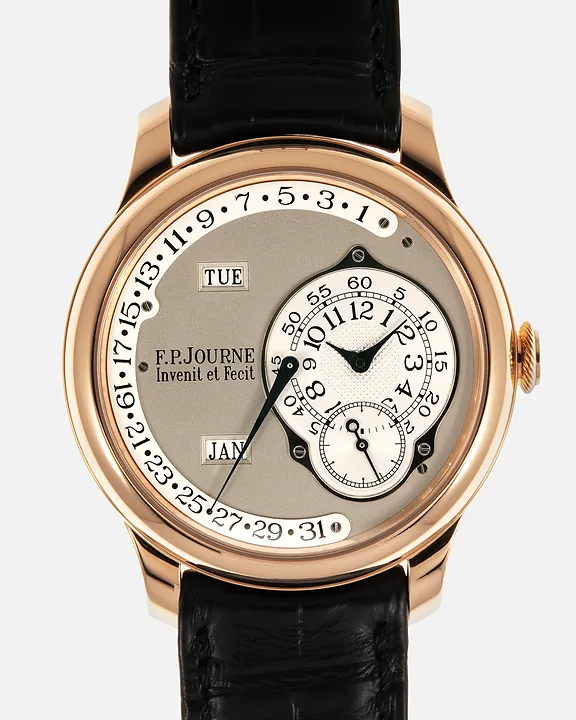
Wristwatches · 2006
F.P. Journe Octa Calendrier RG Grey 40mm, 2006
S.Song Watches (dealer), Seattle
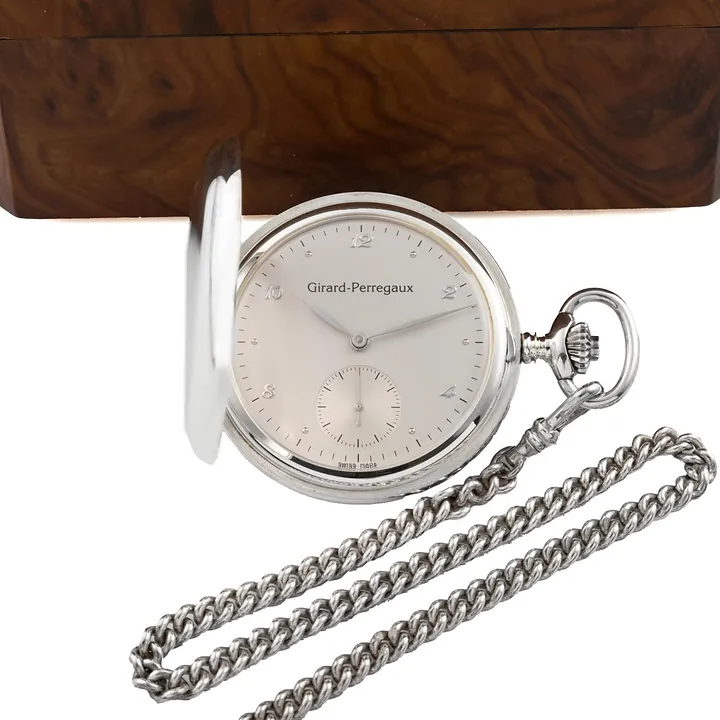
Pocket Watches · c. 1998
Girard Perregaux pocket watch, c. 1998
Antiquorum auction archive, Geneva
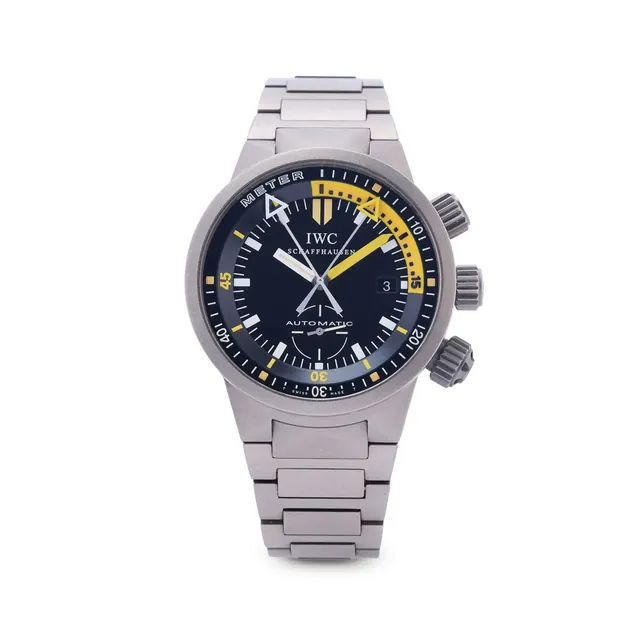
Pocket Watches · c. 2000s
IWC pocket watch, ref. 3527, Deep One Diver's Watch, circa 2000s
Antiquorum auction archive, Geneva
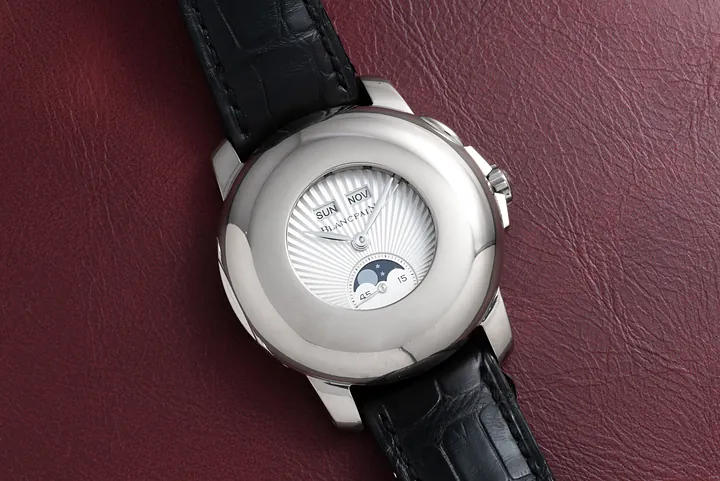
Pocket Watches · c. 1990
Blancpain Half Hunter Complete Calendar Moonphase LE, c. 1990
Analog/Shift (dealer), New York
Pocket Watches · 2007
Rolex Pro Hunter Seadweller Reference 16600 Black DLC Coated, 2007
Bulang & Sons (dealer), Copenhagen