
Instruments · Marine chronometer
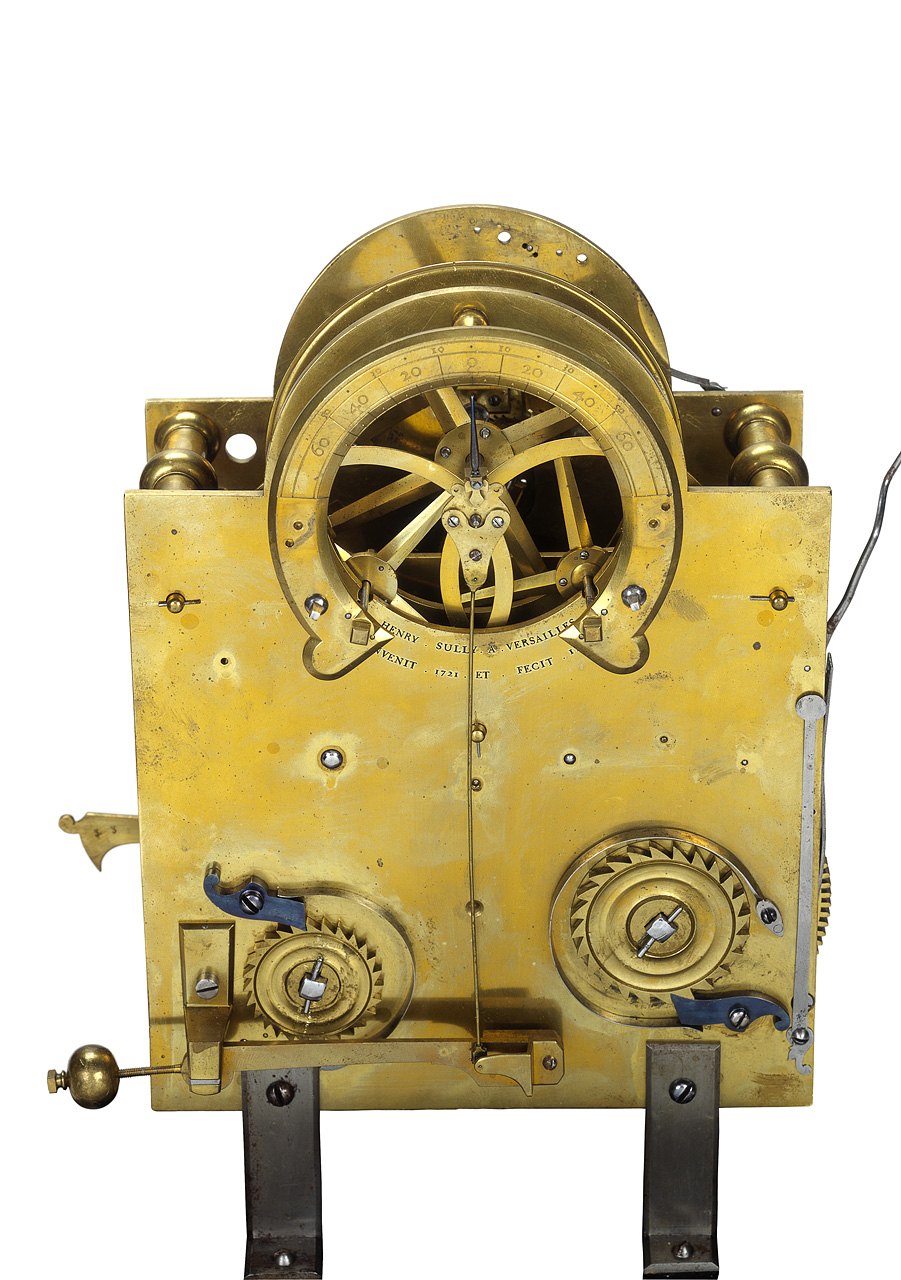
Experimental marine timekeeper by Henry Sully
- Maker / attribution
- Henry Sully (maker)
- Date
- 1724
- Historical period
- Early Modern Horology (1600 – 1750)
- Country of origin
- Unrecorded in source
- Object type
- Marine chronometer
- Materials / technique
- oak
- Dimensions
- Display: 550 mm x 675 mm x 290 mm;Overall: 105 mm x 95 mm x 47 mm x 23.5 kg
- Holding institution
- Royal Museums Greenwich
- Accession / object no.
- ZBA2248
- Credit line
- National Maritime Museum, Greenwich, London. Acquired with the assistance of the Heritage Lottery Fund, The Art Fund, the Worshipful Company of Clockmakers and the Garfield Weston Foundation.
- Catalogue title (original)
- Experimental marine timekeeper (English)
View the source record ↗ (opens another website in a new tab)Suggest a correction
Record summary
Held and catalogued by Royal Museums Greenwich (object number ZBA2248), this is a marine chronometer by Henry Sully, dated 1724. The Atlas places it in the Early Modern Horology period (1600 – 1750) of its Instruments collection. Materials and techniques recorded by the source: oak. Recorded dimensions: Display: 550 mm x 675 mm x 290 mm;Overall: 105 mm x 95 mm x 47 mm x 23.5 kg. The record is illustrated with 4 photographs.
Assembled from the source record's structured fields. Dates and attributions are given as the source states them; where a field is missing the Atlas leaves it blank rather than estimating.
Catalogue description
Catalogue description — Royal Museums Greenwich
Henry Sully, Versailles, c.1724 No.8 Eight-day marine timekeeper movement ZBA2248 Case The timekeeper is now housed in a modern oak case, suspended from above in a modern brass gimbal. This mounting is based on the arrangement for Clock ‘C’ shown in an engraving in Sully’s Description abrégée du temps (Sully III). When the clock first surfaced in the horological world in 1997, it was only a movement, mounted to a horizontal board and protected under a glass case. Dial and hands The 25mm (10-inch) Ø, brass dial has a silvered chapter ring with engraved roman hour numerals, arabic five-minute figures and diamond half hour markers. The finely matted and gilt dial centre has a calendar aperture below the centre and a seconds indication above. The chapter ring is attached by six feet, pinned from behind. The dial back has been relieved to make room for the rack tail, and circles have been scribed for the calendar advancing pallet. The earlier winding hole for the going train, which came through the matting on the right hand side of the dial centre, has been carefully plugged and matted, and the calendar ring, on the back of the dial, passes about one third of the way over this original hole. The hands are polished, blued-steel. The minute hand is of a waisted-poker type, paired with a similar hour hand that originally took the form of a fleur-de-lis (the emblem of the French monarchy), now with the ‘ears’ broken off (probably during the French Revolution). The blued-steel seconds hand is also of a waisted-poker form with a counter-poised tail. Movement The large, two-train, quarter-striking latched-plate movement has 5 knopped pillars, and originally had going barrels on both trains, but was adapted to have a fusee on the going side. There are numerous filled holes and plugs in the plates. The third and fourth wheels and the upper striking train all run under a sub-frame mounted within the main frame on four slender, baluster pillars screwed to the front plate. At 1724, this is perhaps the earliest example of screwed pillars in clockwork. In the context of its period, the general level of finish is excellent. All of the movement parts are nicely flat polished. There is an amplitude scale mounted at the top of the backplate, each ten degrees stamped in arabic, alternately higher and lower on the scale, starting with 0 at the top centre, and going up to 60 on either side. The lower part of the scale also acts as the support for the rear pivots of the balance’s rear anti-friction wheels. The backplate is stamped neatly around the upper opening: HENRY . SULLY. A . VERSAILLES . / INVENIT . 1721 . ET . FECIT . 1724 . On the lower part of the backplate are mounted the ratchet wheel and blued-steel click and click spring for the striking side, and a similar ratchet arrangement for the set-up of the going side barrel. The latches on the front plate have all been numbered with stamped figures, on both latch and plate (some have been re-numbered at a later date). On the dial side of the front plate, the post for the calendar’s 24-hour wheel has been repositioned. The front plate is scratched: Enderlin de Bale / fait en 1724 / Pour Monsieur / de Sully ; netoyes en Novembre, 1729 ; Ate. Mottet. / en decembre. 1827 / St germain : en Lay. ; m nerve Saint augustin N31 ; Alibert 1855 / Mai , &: Reparee le 5e Mars / 1952 / par A MAILLARD . Under the going train barrel the plate is scratched: toutlemonbe [sic] / octbre 1817 and 3 . Striking barrel scratched: Alibert 1855 , toutlemonde 22 fevrier 1811 ; seuus [?] Jules Gourand Septembre 1867 . The cap is scratched: Pinson le 4 marse / 1788. The fusee was originally designed for a gut line but has been converted to chain, and back to gut, in the past. The cavity for the knot remains in the fusee, but the hole has been plugged, and there are three plugged holes in the barrel wall. The groove has also been recut for chain. It has a single steel click mounted accessibly on the great wheel. The high-numbered, five wheel (incl great wheel), 8 day going train, employs a contrate as the fourth, driving the escape wheel at 90°. The signed going train mainspring is of blued-steel and has a round hooking hole with a fixed hook in the barrel. The stopwork is of conventional English type, activated by the last turn of the gut on the fusee. The 8 day, two-bell, quarter-striking train is controlled by rack and snail. The design is continental, and of a type published by Antoine Thiout in 1741 [FN: Thiout, Vol.2, plate 18]. The snail incorporates one, two and three blows for the quarters. A mechanism shifts the hammer with its arbor from the low bell (for sounding the hours) to a high bell (for sounding the quarters). The shift is actuated by a ramp on the minute wheel that tilts a ‘see-saw’ lever (with a roller acting on the ramp) to move the hammer arbor sideways for the hour blows. A double pallet on the front pivot of the gathering pallet wheel acts on the underside of the rack which has two sets of teeth, one on the underside for being gathered and one on top for being locked on the rack hook. The movement parts are stamped 8 throughout: the inside of the backplate, the inside of front plate, the inside surface of the anti-friction (a/f) wheel subframe, the inside of the train sub-frame, the lower potence for the escape wheel, the front escape wheel cock, both a/f wheels, the upper and lower cocks for the hammer-shift arbor, the fusee, the great wheel, the centre wheel, the third wheel, the contrate wheel, the cannon wheel, the minute wheel, the hour wheel cock, the lifting lever cock, the minute wheel cock, the rack cock, the striking great wheel (on the barrel), the stop-work cover, the stop-work pawl, the striking ratchet wheel, the intermediate wheel, the pin wheel, the 5th wheel of the striking train (remains of an 8 on edge of crossing), the balance bridge, the balance bridge bar, the back of the dial plate and the back of the chapter ring. There are two dots on the
Historical context
Early Modern Horology (1600 – 1750)
Huygens' pendulum and balance spring transform accuracy; English makers develop the anchor and deadbeat escapements.
Pocket sundials, Butterfield dials and sandglasses remained essential companions to imperfect clocks; navigators used sandglasses and the log line; observatories began to combine telescopes with pendulum clocks.
Read the period in the timelineMore instruments from this periodEarlier: Renaissance Horology
Atlas type guide
Marine chronometers
A marine chronometer is a precision timekeeper carried at sea to find longitude: the navigator compares local noon, observed with a sextant, with the time at a reference meridian kept by the chronometer. Each hour of difference corresponds to fifteen degrees of longitude. John Harrison proved the method in the 1760s; Pierre Le Roy, Ferdinand Berthoud, John Arnold and Thomas Earnshaw then developed the detent escapement and the compensation balance that made chronometers practical to manufacture.
By the nineteenth century London, Liverpool, Le Locle and Glashütte supplied navies and merchant fleets. A typical box chronometer has a spring-detent escapement, a fusee to equalise mainspring torque, a bimetallic compensation balance with a helical balance spring, and is mounted in gimbals inside a wooden box so that it stays level.
What to look for
- Gimbals and a three-tier wooden box with a glazed inner lid.
- A power-reserve ('up and down') indicator on the dial, usually showing 56 hours on two-day instruments.
- Spring-detent escapement and a cylindrical (helical) balance spring visible through the movement.
- Admiralty or navy marks (broad arrow), and rating certificates from observatories.
- The maker's number on the dial and movement; many makers' registers survive, allowing dating.
Dating clues
- Earnshaw-type spring-detent chronometers became standard after about 1800.
- Auxiliary compensation devices on the balance appear from the mid-nineteenth century.
- Quartz and radio time signals ended routine use of mechanical chronometers in the 1970s and 1980s.
General guidance written by the Atlas editors about this kind of object. It is not a statement about this particular piece; for that, rely on the source record above and on physical examination.
Read next:Spring detent (chronometer) escapementBalance spring (hairspring)Detent escapement
Related records
Instruments · 1724
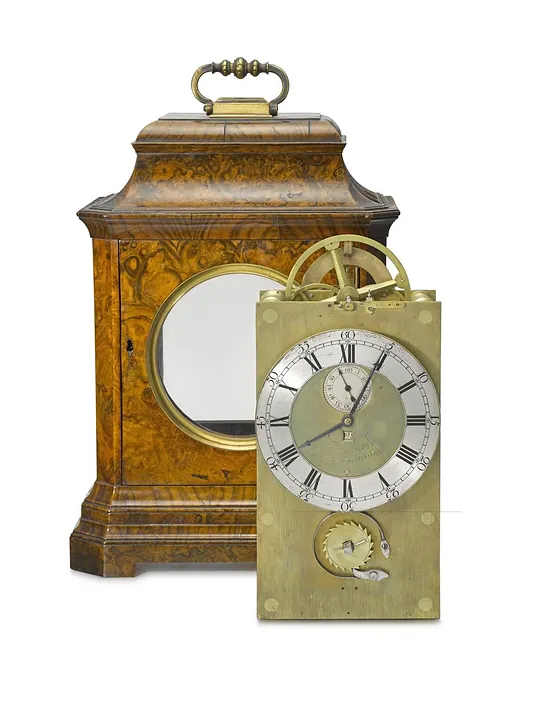
Marine chronometer by Henry Sully, France, 1724
Science Museum Group, London
Instruments · 1575–1625
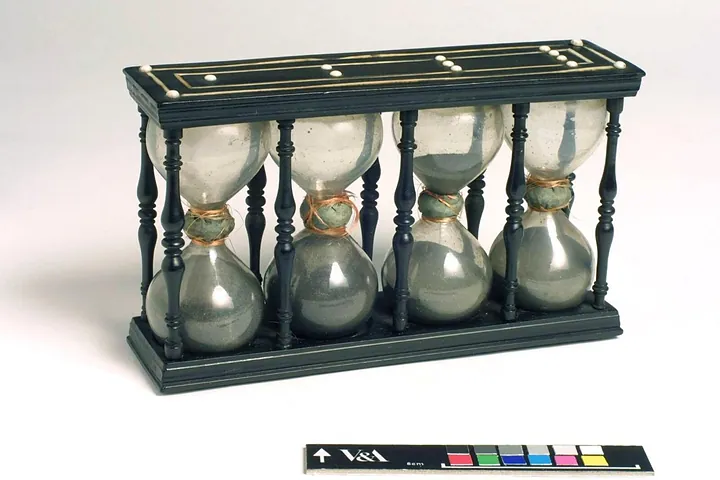
Sand-glass set (x4) fitted into an ebony case, inlaid with ivory. Italian, c1600
Victoria and Albert Museum, London
Instruments · 1578–1631
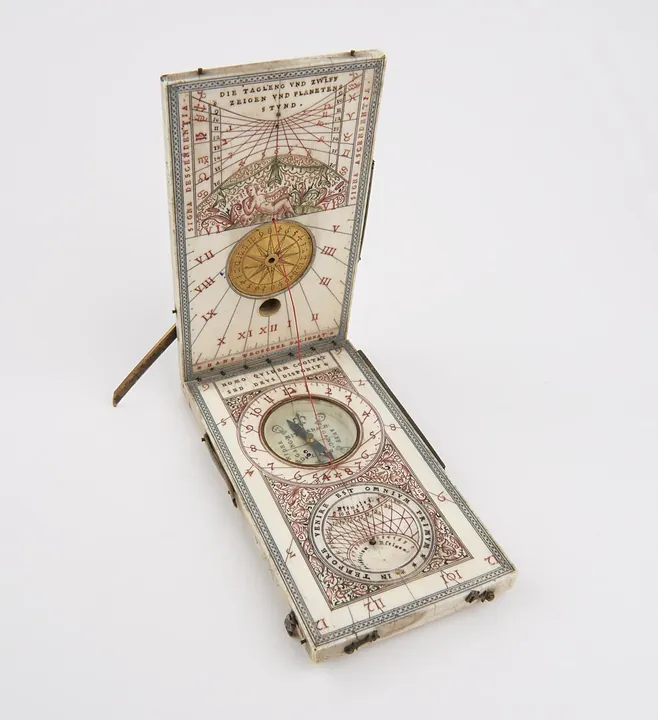
Tablet sun-dial 532-68, V & A M. reg, ivory inscribed "Hans Troschel faciebat", German, 6in by 3 1/4 in, 1578–1631
Science Museum Group, London
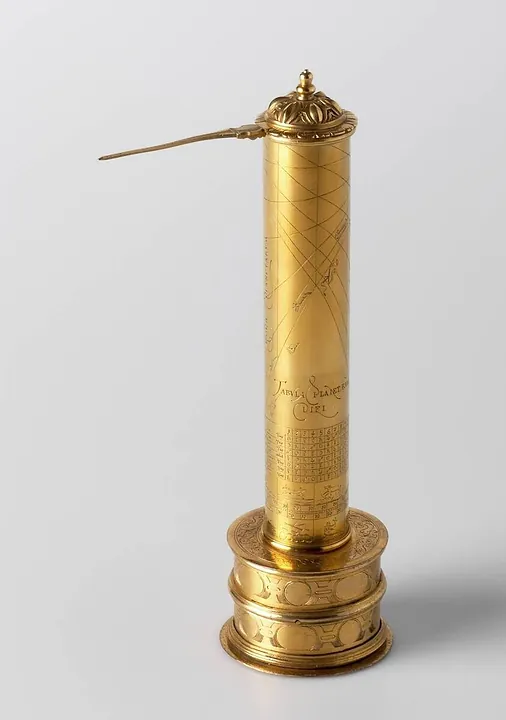
Instruments · 1593–1613
Sundial, Czech Republic, 1593–1613
MAK – Museum of Applied Arts
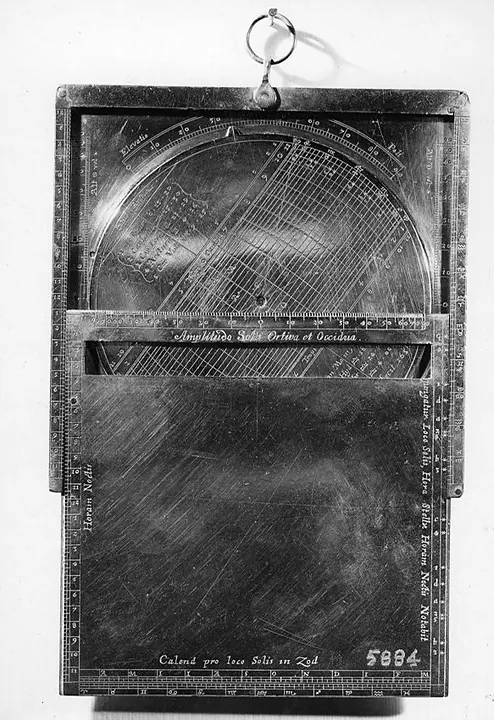
Instruments · 1600–1699
Astrolabe by Henry Sutton, Belgium, 1600–1699
Royal Institute for Cultural Heritage
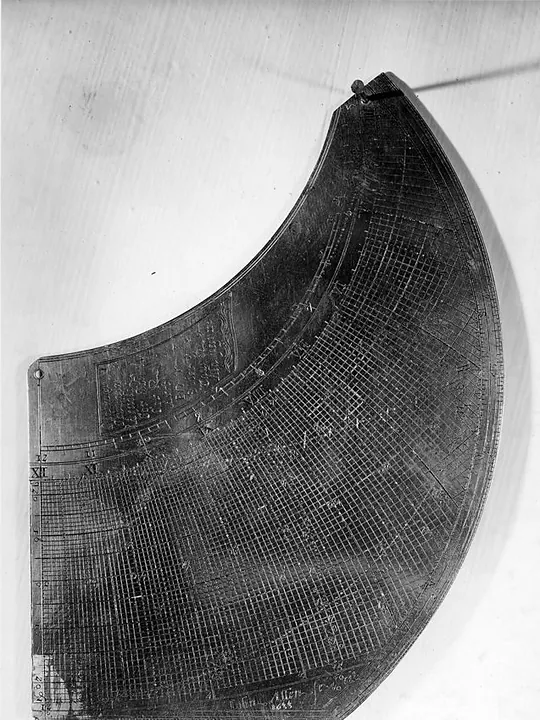
Instruments · 1600–1699
Astrolabe by John Allen, Belgium, 1600–1699
Royal Institute for Cultural Heritage
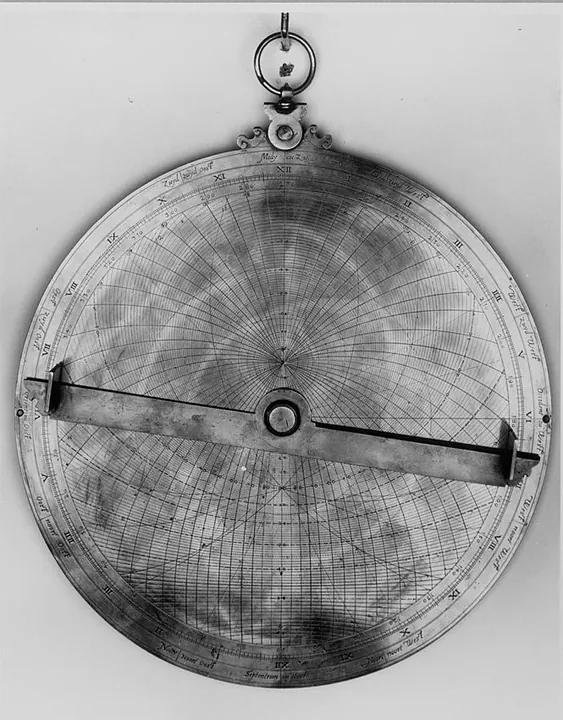
Instruments · 1600–1699
Astrolabe by Lambert Damery, Belgium, 1600–1699 (no. AP_10277393)
Royal Institute for Cultural Heritage
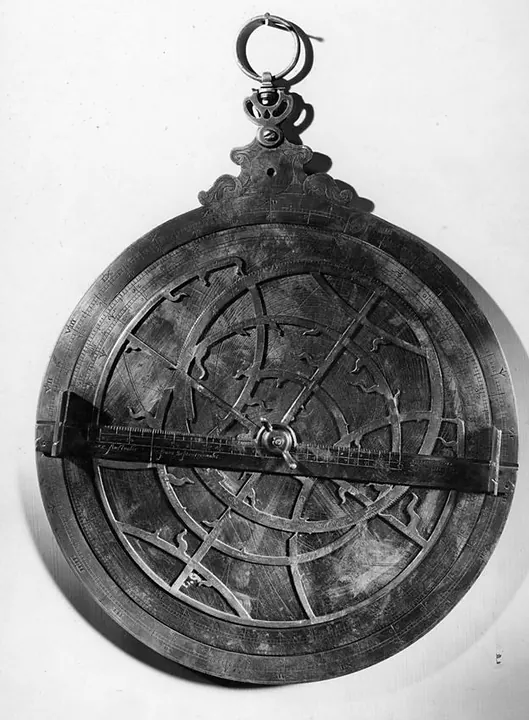
Instruments · 1600–1699
Astrolabe by Lambert Damery, Belgium, 1600–1699 (no. AP_10368156)
Royal Institute for Cultural Heritage