
Clocks · Skeleton clock
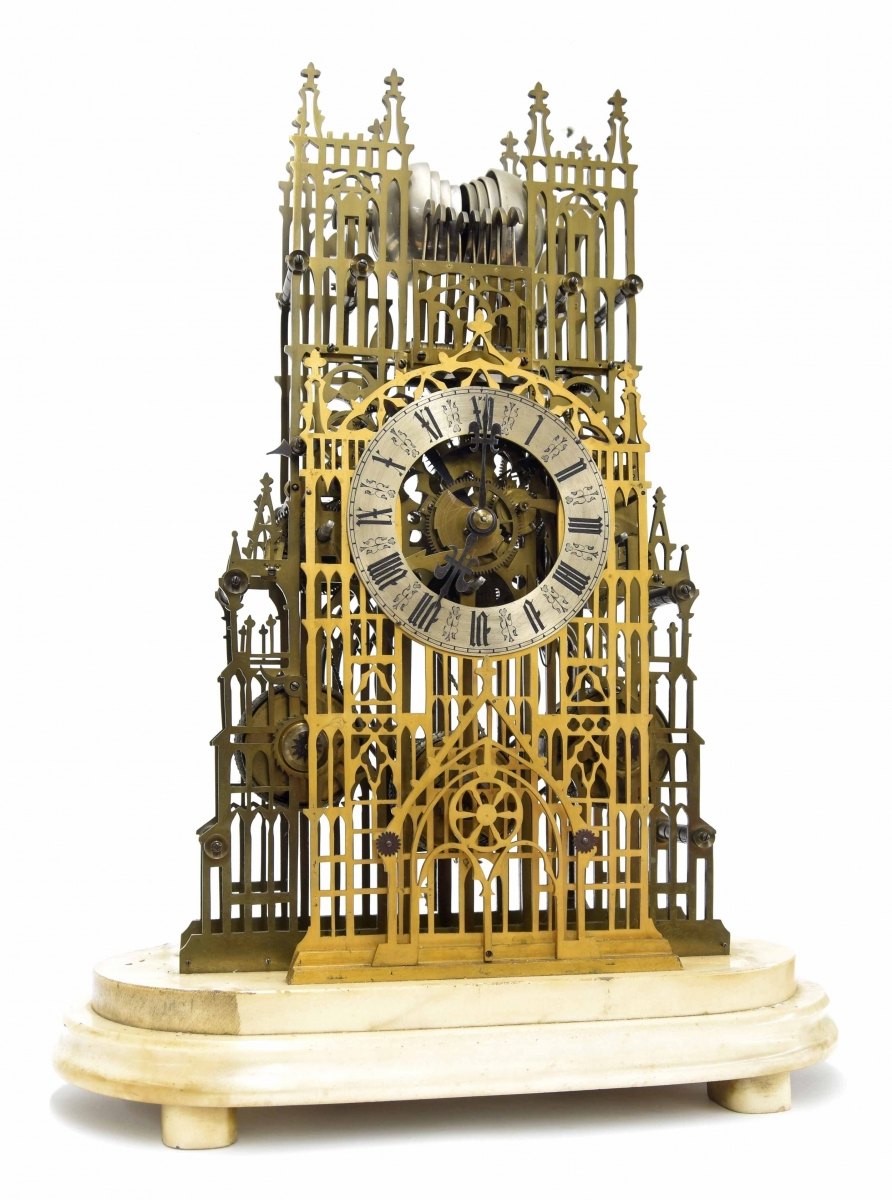
English brass triple fusee Westminster Abbey skeleton clock, circa 1870
- Maker / attribution
- Unrecorded in source
- Date
- c. 1870
- Historical period
- Industrial Revolution (1850 – 1900)
- Country of origin
- England
- Object type
- Skeleton clock
- Materials / technique
- brass
- Dimensions
- Height 26 in (66 cm)
- Auction house
- Gardiner Houlgate (auction house), Corsham
- Lot
- Sale 5, lot 1339
- Credit line
- Auction lot record: lot 1339, Fine Clocks, Gardiner Houlgate (26th May 2022)
- Catalogue title (original)
- Fine and impressive English brass triple fusee Westminster Abbey skeleton clock in the manner of Evans of Handsworth circa 1870, the 5.75" silvered chapter ring enclosing a skeletonised centre, the mo (English)
View the source record (auction lot) ↗ (opens another website in a new tab)Suggest a correction
Record summary
Catalogued by Gardiner Houlgate (auction house), Corsham (lot Sale 5, lot 1339), this is a skeleton clock, made in England, dated c. 1870. The Atlas places it in the Industrial Revolution period (1850 – 1900) of its Clocks collection. Materials and techniques recorded by the source: brass. Recorded dimensions: Height 26 in (66 cm). The record is illustrated with 1 photograph.
Assembled from the source record's structured fields. Dates and attributions are given as the source states them; where a field is missing the Atlas leaves it blank rather than estimating.
Catalogue description
Lot description — Gardiner Houlgate
Fine and impressive English brass triple fusee Westminster Abbey skeleton clock in the manner of Evans of Handsworth circa 1870, the 5.75" silvered chapter ring enclosing a skeletonised centre, the movement with anchor escapement striking the quarters on eight bells and the hours on a gong, with twin mercury jar pendulum, upon a stepped white marble plinth with rounded ends and under a glass dome, 26" high overall, clock 20" high (marble base adapted to accommodate associated dome, both at fault) **This clock has been in the same family for over eighty years and is sold with a copy of the original purchase receipt dated 25th January 1941
Historical context
Industrial Revolution (1850 – 1900)
American interchangeable-parts manufacture; railroad time standards; Swiss and German factory systems.
Factory production transformed the clock into an everyday object. American makers (Seth Thomas, Ansonia, Waterbury) and German factories (Junghans, Gustav Becker, Lenzkirch) sold millions of shelf, wall and alarm clocks worldwide; France produced standardised Paris movements and carriage clocks; electric time distribution began.
Read the period in the timelineMore clocks from this periodEarlier: Precision & Scientific Horology
Atlas type guide
Skeleton clocks
A skeleton clock displays its movement: the plates are pierced to a minimum so that wheels, escapement and fusee can be seen, usually under a glass dome. French makers produced fine skeleton clocks in the late eighteenth century; in Victorian England they became popular showpieces, with frames in the shapes of cathedrals and famous buildings.
What to look for
- Pierced brass plates in scroll or architectural shapes.
- A glass dome and wooden or marble base.
- Fusee movements and sometimes passing strike on a bell.
Dating clues
- French skeleton clocks: c. 1780–1830.
- English cathedral-style skeleton clocks: c. 1840–1890.
General guidance written by the Atlas editors about this kind of object. It is not a statement about this particular piece; for that, rely on the source record above and on physical examination.
Related records
Clocks · 1830–1870
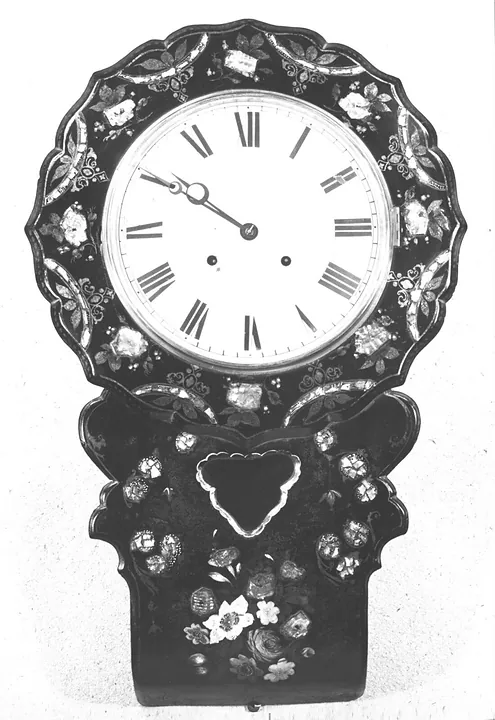
Wall clock in a papier mâché case with painted decoration. English, mid 19th century.
Victoria and Albert Museum, London
Clocks · 1840–1900
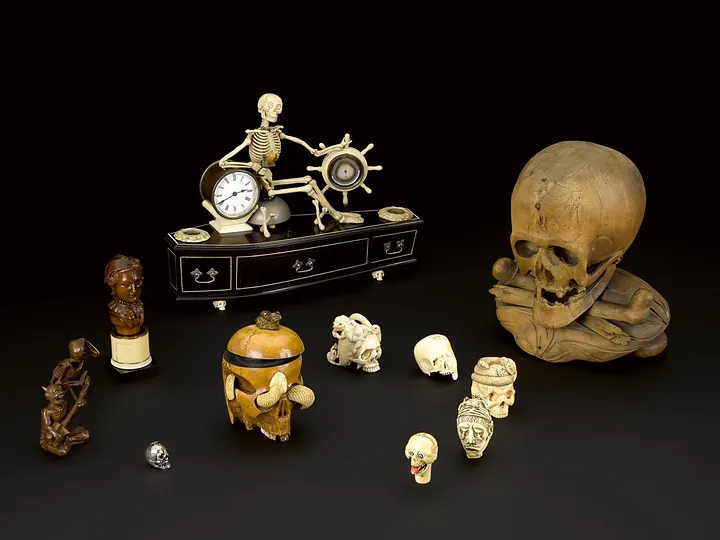
Alarm clock, mounted on model of coffin with skeleton, probably English, 1840–1900
Science Museum Group, London
Clocks · 1840–1880
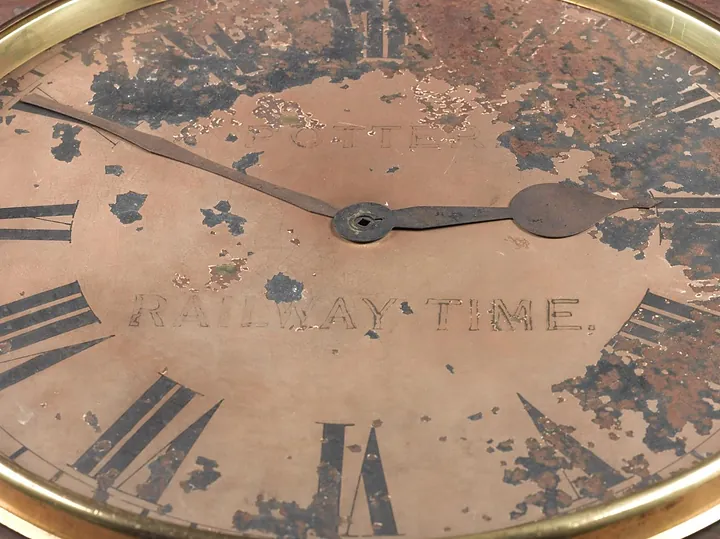
Clock dial marked "Potter, Railway Time" with two hands, unknown maker, British, 1840–1880
Science Museum Group, London
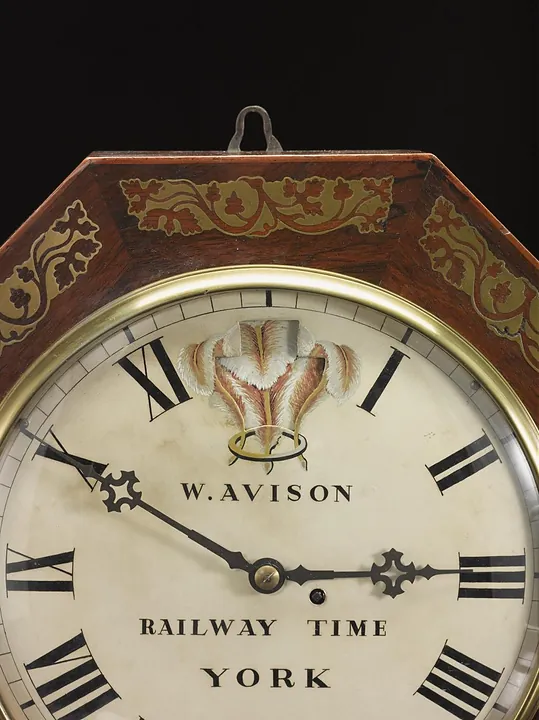
Clocks · 1840–1880
Wall Clock in octagonal case with Prince of Wales Feathers above makers name "W. Avison, Railway Time, York", made by William Avison, England, 1840–1880.
Science Museum Group, London
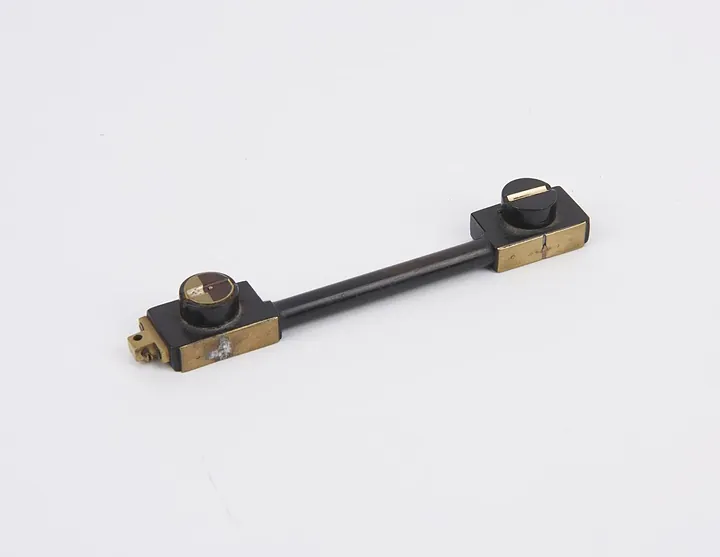
Clocks · 1841–1870
Contact bar from electric clock, unsigned, London, England, 1841–1870
Science Museum Group, London
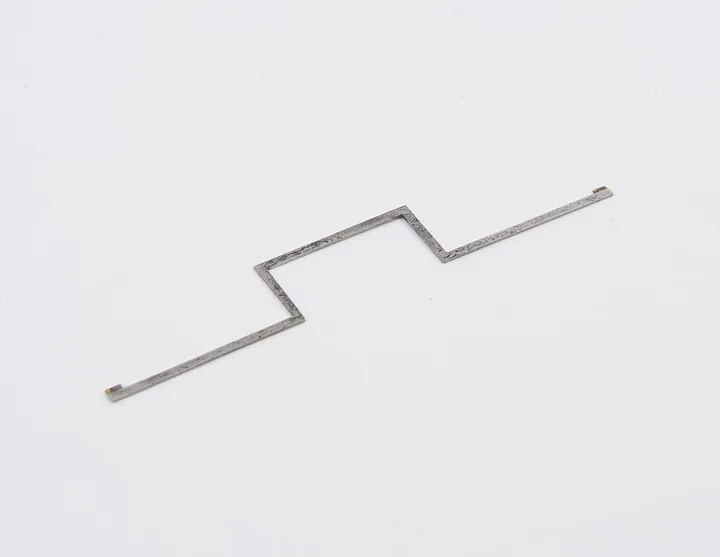
Clocks · 1841–1870
Contactor from electric clock, unsigned, London, England, 1841–1870
Science Museum Group, London
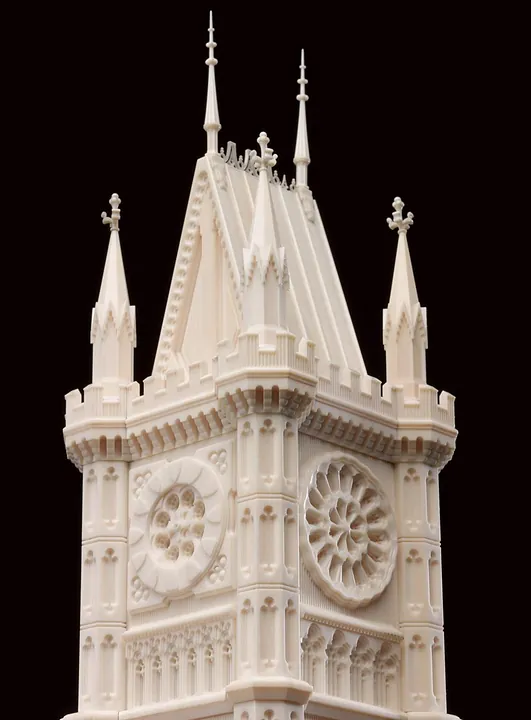
Clocks · 1843–1884
One ivory gothic clock tower & travelling case, by Holtzapffel and Company, London, England, 1843–1884
Science Museum Group, London
Clocks · 1845–1855
Clock by W. H. Darker, England, 1845–1855
Science Museum Group, London