
Clocks · Regulator
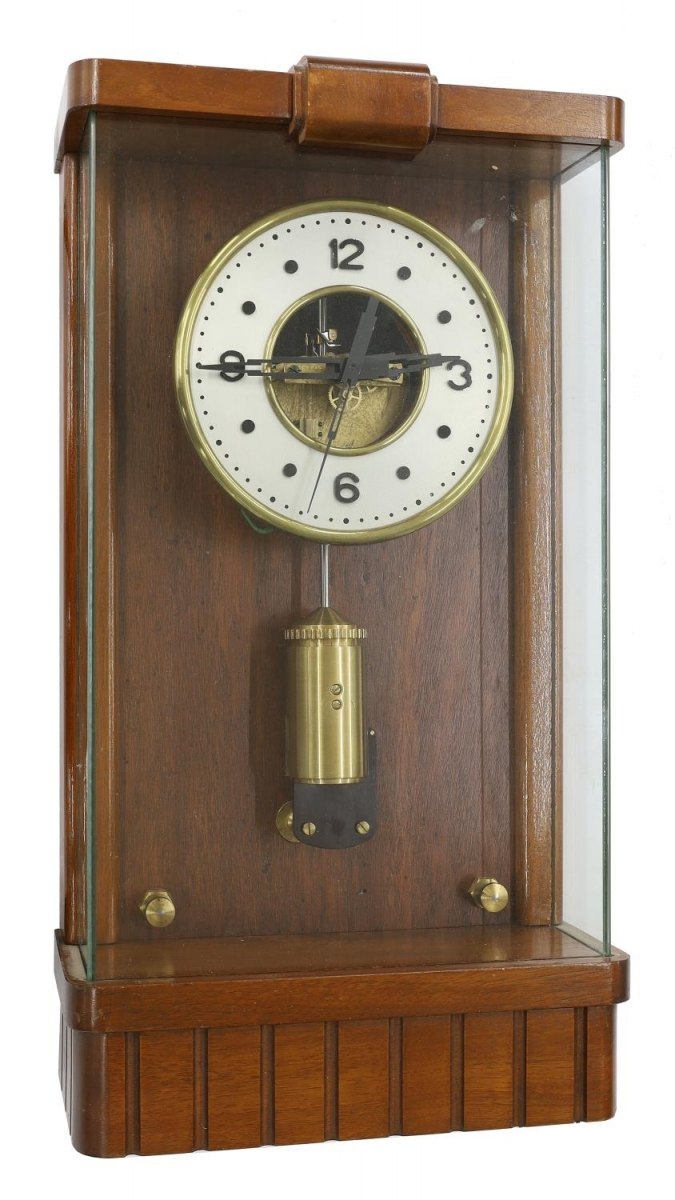
Electromagnetic regulator wall clock by the École d'Horlogerie de Cluses, circa 1940s
- Maker / attribution
- Unrecorded in source
- Date
- c. 1940s
- Historical period
- Golden Age of Mechanical Watchmaking (1900 – 1945)
- Country of origin
- Unrecorded in source
- Object type
- Regulator
- Dimensions
- Height 21.25 in (54 cm)
- Auction house
- Gardiner Houlgate (auction house), Corsham
- Lot
- Sale 42, lot 1002
- Credit line
- Auction lot record: lot 1002, Fine Clocks & Related Items, Gardiner Houlgate (22nd October 2026)
- Catalogue title (original)
- Rare electromagnetic regulator wall clock by the École d'Horlogerie de Cluses, Haute Savoie region, France, circa 1940s, the 7” silvered centre seconds chapter ring with Arabic numerals with black fin (English)
View the source record (auction lot) ↗ (opens another website in a new tab)Suggest a correction
Record summary
Catalogued by Gardiner Houlgate (auction house), Corsham (lot Sale 42, lot 1002), this is a regulator, dated c. 1940s. The Atlas places it in the Golden Age of Mechanical Watchmaking period (1900 – 1945) of its Clocks collection. Recorded dimensions: Height 21.25 in (54 cm). The record is illustrated with 3 photographs.
Assembled from the source record's structured fields. Dates and attributions are given as the source states them; where a field is missing the Atlas leaves it blank rather than estimating.
Catalogue description
Lot description — Gardiner Houlgate
Rare electromagnetic regulator wall clock by the École d'Horlogerie de Cluses, Haute Savoie region, France, circa 1940s, the 7” silvered centre seconds chapter ring with Arabic numerals with black finished stylised hands, the movement assembly mounted on its original, vibration isolating cast metal stand, stamped with ENH, within a mahogany rectangular case with detachable wooden glazed hood, 21.25” high, 11.5” wide, depth 5.5” **An electromagnetic regulator clock most likely manufactured at the Imperial School of Horology (École d'Horlogerie de Cluses). This precision clock features a stationary wafer thin electromagnetic coil housed inside a fixed, central Tufnol insulating plate. Its heavy brass cylindrical pendulum is engineered with a deep slot, allowing the bob to precisely straddle and swing along the arc of the Tufnol plate without mechanical contact. The pendulum, carrying a pawl, turns a countwheel that both drives the train and closes the leaf spring pin contacts, mounted on the movement to impulse the pendulum every second. ** From the David Read Collection
Historical context
Golden Age of Mechanical Watchmaking (1900 – 1945)
The wristwatch displaces the pocket watch; waterproof cases, self-winding and grand complications.
Between 1900 and 1945 clocks were electrified: master-clock systems ran factories and offices, synchronous mains clocks entered homes, and the Shortt free-pendulum clock set new standards of accuracy before the first quartz clocks (1927). Art Deco design reshaped mantel and table clocks.
Read the period in the timelineMore clocks from this periodEarlier: Industrial Revolution
Atlas type guide
Regulators, wall and Vienna clocks
A regulator is a precision pendulum clock used as a time standard in observatories, workshops and railway offices. Typical features are a deadbeat or Graham escapement, a temperature-compensated pendulum (mercury jar, gridiron or later invar), maintaining power and a regulator dial that separates hours, minutes and seconds. George Graham's deadbeat escapement (c. 1715) and his mercury pendulum, together with Harrison's gridiron, set the pattern for two centuries.
Wall clocks span a much wider range: the elegant Viennese Laterndluhr and Dachluhr of the Biedermeier period, the Dutch stoelklok and staartklok, English 'dial' clocks used in schools, offices and railway stations, and mass-produced spring and weight wall clocks from Germany (Gustav Becker, Junghans, Kienzle) and America.
What to look for
- Deadbeat escapement and compensated pendulum (gridiron rods, mercury jar or wood rod).
- A regulator dial with a large central minute hand and separate hour and seconds dials.
- Vienna regulators: glazed cases, slender pendulum, small weights, enamel two-piece dials.
- German factory trademarks stamped on the backplate (e.g. Gustav Becker anchor and crown, Junghans star).
Dating clues
- Graham-type deadbeat regulators: from c. 1720.
- Viennese Laterndluhr: c. 1800–1850.
- German factory 'Vienna-style' regulators: c. 1870–1930; Gustav Becker serial numbers allow close dating.
General guidance written by the Atlas editors about this kind of object. It is not a statement about this particular piece; for that, rely on the source record above and on physical examination.
Read next:Deadbeat escapementAnchor (recoil) escapementGrasshopper escapement
Related records
Clocks · 1890–1930
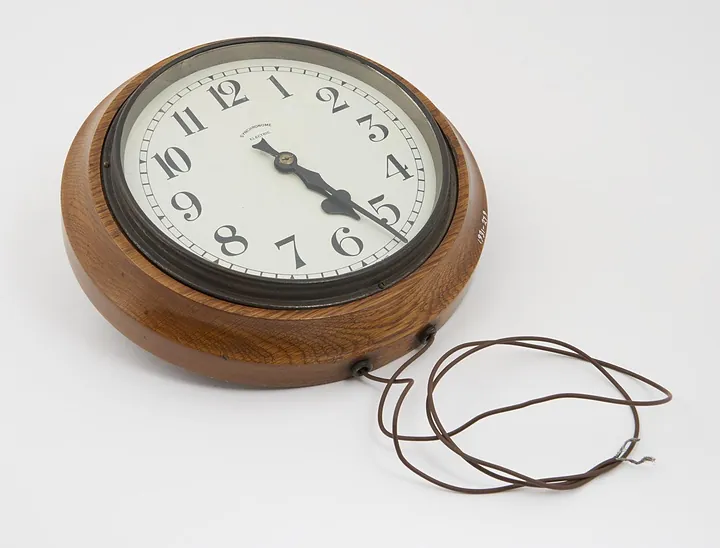
Clock with 8-inch impulse dial, by the Synchronome Company Limited, England, 1890–1930.
Science Museum Group, London
Clocks · c.1900
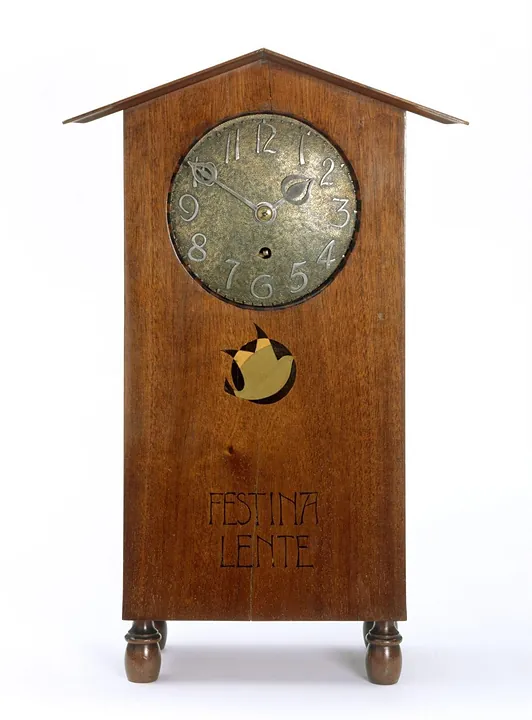
Clock by Mackay Hugh Baillie Scott, Bedfordshire, c.1900
Victoria and Albert Museum, London
Clocks · c. 1900
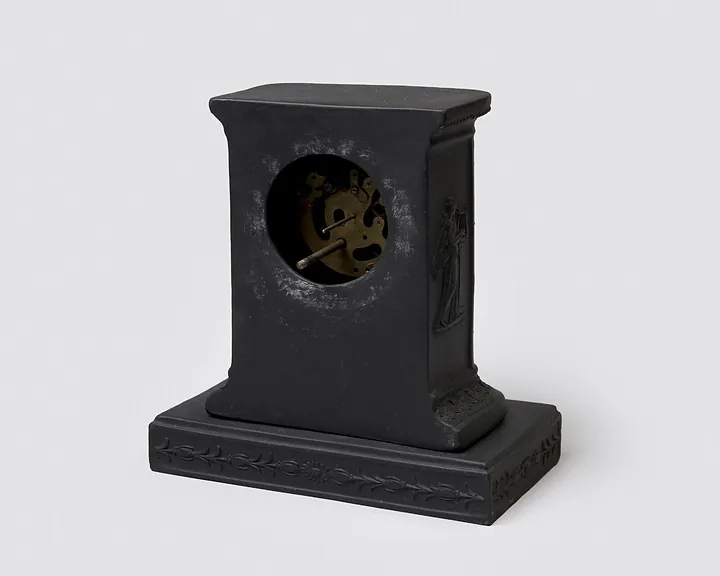
Clock, black basalt, brass, Josiah Wedgwood and Sons, Etruria, c. 1900
Victoria and Albert Museum, London
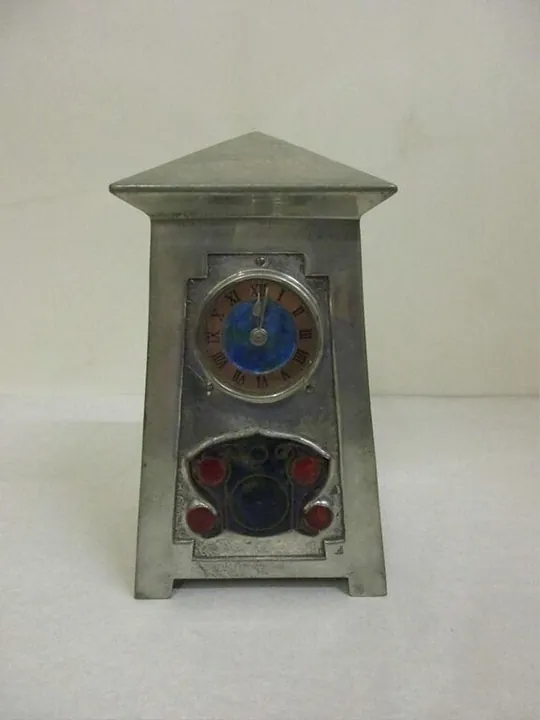
Clocks · c.1903-1904
Clock, pewter, made for Liberty& Co., England. 1903-4.
Victoria and Albert Museum, London
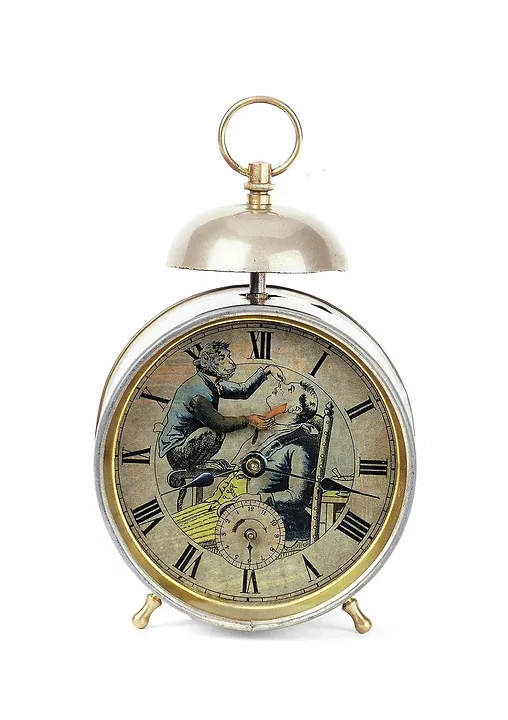
Clocks · c. 1900
Alarm clock by Union Clock Company, Germany, c. 1900
German Clock Museum
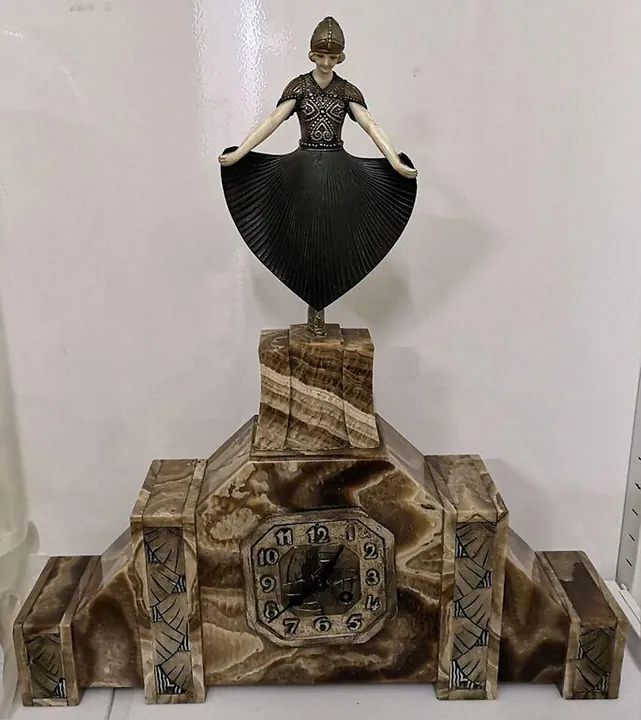
Clocks · 20th century
Base Metal, 20th c. Bronze, marble and ivory clock by Chiparus
Victoria and Albert Museum, London
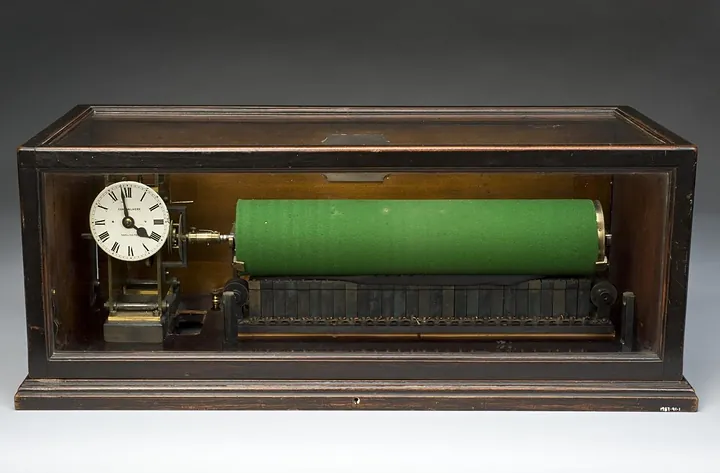
Clocks · 1900–1939
Clock by Cox-Walkers of Darlington, England, 1900–1939
Science Museum Group, London
Clocks · 1900–1999
Clock by Französisch (Schule), 1900–1999
Fine Arts Museum Vienna