
Clocks · Bracket clock
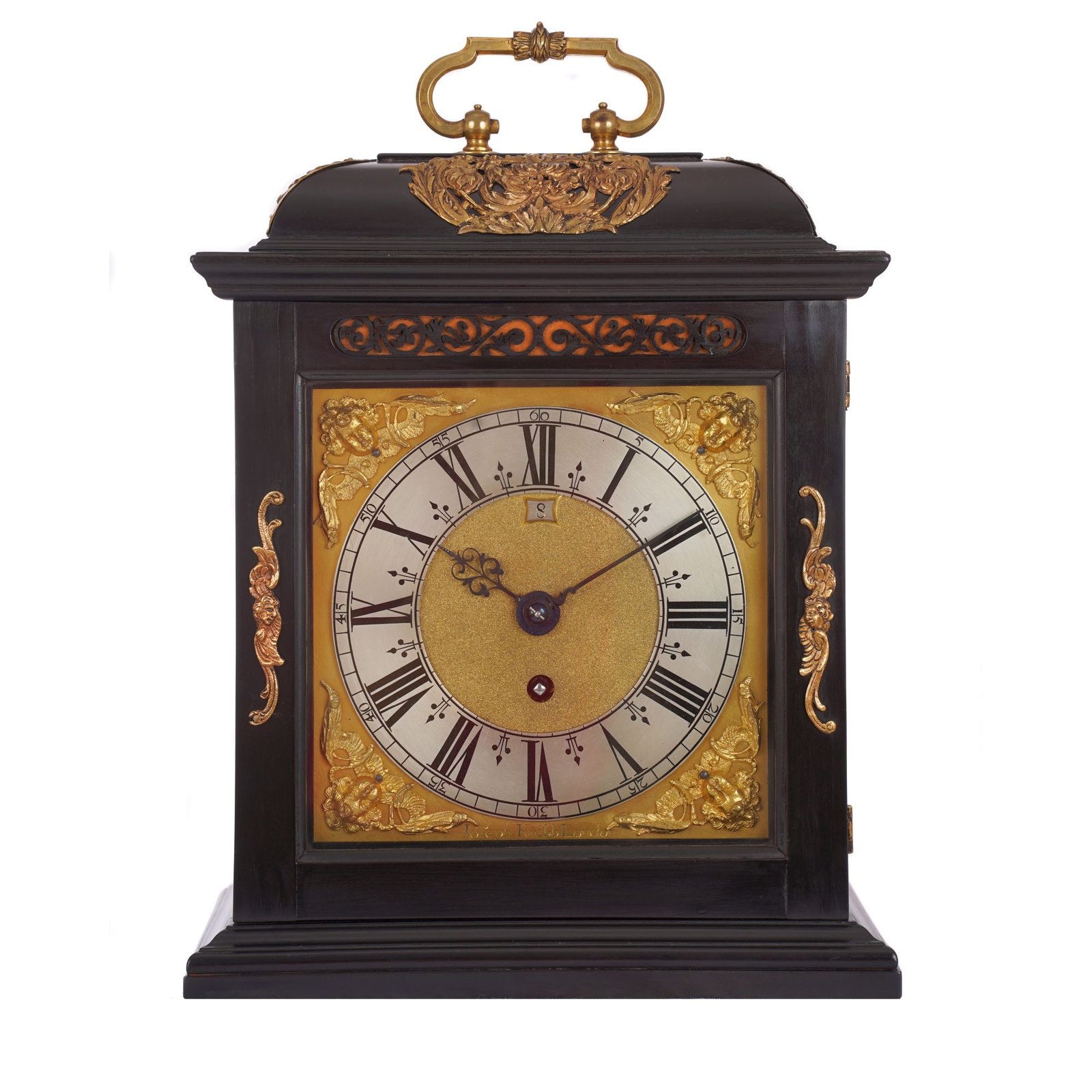
Ebonised timepiece table clock by Joseph Knibb
- Maker / attribution
- Joseph Knibb (maker)
- Date
- c. 1680
- Historical period
- Early Modern Horology (1600 – 1750)
- Country of origin
- England
- Object type
- Bracket clock
- Materials / technique
- ebonised
- Stock no.
- Product 1470
- Credit line
- Dealer listing, The Antique Clock Company (product 1470)
- Catalogue title (original)
- JOSEPH KNIBB EBONISED TIMEPIECE TABLE CLOCK (English)
View the source record (dealer listing) ↗ (opens another website in a new tab)Suggest a correction
Record summary
Catalogued by The Antique Clock Company (dealer), Dorset (stock number Product 1470), this is a bracket clock by Joseph Knibb, made in England, dated c. 1680. The Atlas places it in the Early Modern Horology period (1600 – 1750) of its Clocks collection. Materials and techniques recorded by the source: ebonised. The record is illustrated with 6 photographs.
Assembled from the source record's structured fields. Dates and attributions are given as the source states them; where a field is missing the Atlas leaves it blank rather than estimating.
Catalogue description
Dealer description — The Antique Clock Company
Ebonised Timepiece Table Clock by “Joseph Knibb London” A very fine and rare example by this master of English clock making. Movement: The 8-day fusee timepiece movement with tic-tac escapement, short bob pendulum and six latched pillars, with a Tulip engraved narrow rectangular back plate signed “Joseph Knibb Londini fecit”. Case: The case is of ebony veneer over an oak carcase with typical Knibb foliate-tied gilded handle, finished with Knibb S-scroll and mask escutcheons to the glazed front door, pierced wooden fret above and having glazed sides and back door. Dial: The six inch square gilt brass dial is finely matted and signed “Joseph Knibb London” to the lower edge. It has chased gilt wing and cherub spandrels and a silvered engraved chapter ring with Knibb half hour divisions and a beautifully cut pair of blued steel Knibb hands. Height: 11.5 ” x Width: 10 ” x Depth: 6 “ *This clock is delivered and set up for free within the UK. We regularly ship clocks all over the world with our approved and well-established Antiques and Fine Art Packers & Shippers. Please ask for a quote should you require this service.
Historical context
Early Modern Horology (1600 – 1750)
Huygens' pendulum and balance spring transform accuracy; English makers develop the anchor and deadbeat escapements.
Huygens's pendulum (1656–57) improved clock accuracy from about a quarter of an hour to under a minute a day. The anchor escapement (c. 1670) and the long seconds pendulum created the longcase clock; London makers such as Fromanteel, Knibb, Tompion and Quare led European clockmaking, and French makers created the Boulle pendule.
Read the period in the timelineMore clocks from this periodEarlier: Renaissance Horology
Atlas type guide
Bracket, table and spring-driven clocks
Spring-driven clocks freed timekeeping from the hanging weight. The coiled mainspring, documented from the fifteenth century, made portable table clocks possible; to even out its declining force, makers used the fusee, a conical pulley connected to the barrel by a gut line or chain. Renaissance table clocks from Augsburg and Nuremberg — drum-shaped, square or tower-shaped in gilt brass — were luxury scientific objects, often with astronomical dials and alarms.
After the pendulum, English makers developed the bracket clock: a wooden case with a carrying handle, a short pendulum with a verge escapement, and often repeating work to sound the hours on demand at night. Later examples use the anchor escapement. In the nineteenth century, 'table clock' became a broad term for spring clocks of every nationality.
What to look for
- A fusee in the movement (cone-shaped pulley) and the type of line — gut or chain.
- Verge escapement with a short bob pendulum, often with a decoratively engraved backplate.
- Repeat cords or buttons that make the clock strike again on demand.
- Gilt-brass engraved cases and horizontal dials on Renaissance pieces.
- Case shapes: inverted bell, bell top, break-arch, lancet or balloon.
Dating clues
- Drum and tower table clocks: c. 1520–1650.
- Ebony veneered English bracket clocks with verge escapements: c. 1670–1800.
- Engraved backplates were usual on English clocks until c. 1800, then generally plain.
General guidance written by the Atlas editors about this kind of object. It is not a statement about this particular piece; for that, rely on the source record above and on physical examination.
Related records
Clocks · c. 1680–85
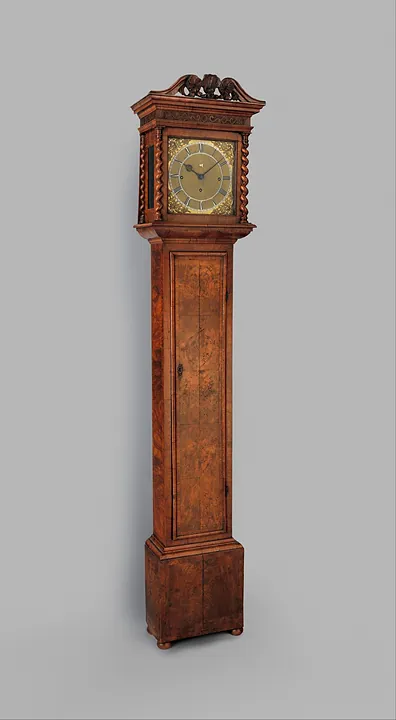
Longcase clock with calendar by Joseph Knibb, England, c. 1680–85
The Metropolitan Museum of Art, New York
Clocks · c.1690
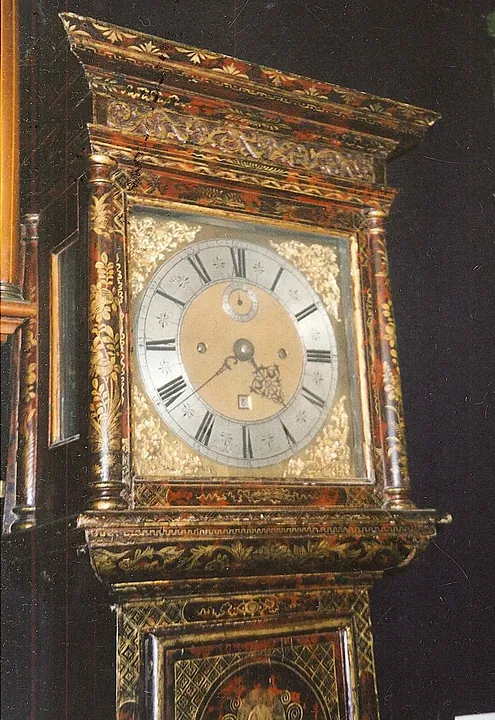
Longcase clock by Joseph Knibb, England, c.1690
Victoria and Albert Museum, London
Pocket Watches · 1670-5
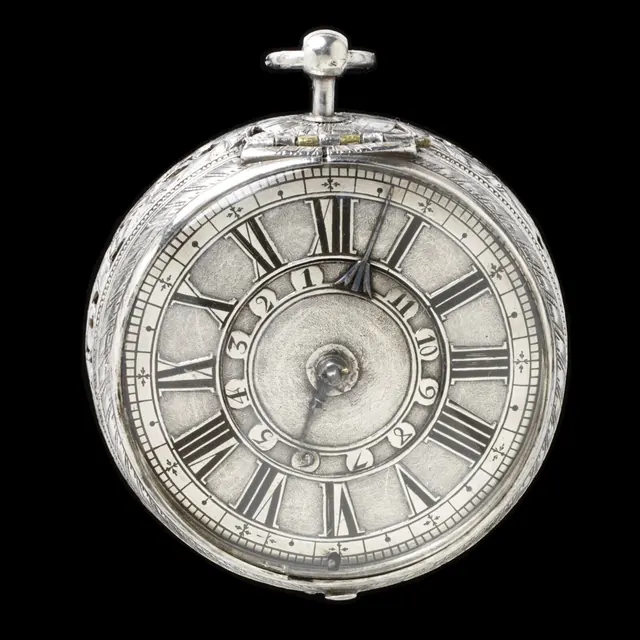
Watch by Joseph Knibb, England, 1670-5
Victoria and Albert Museum, London
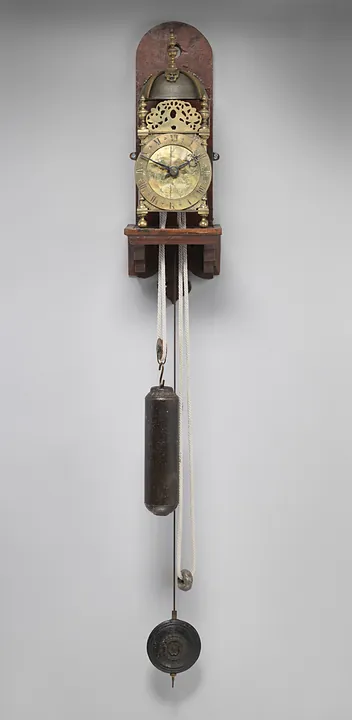
Clocks · c. 1675
Lantern clock
The Metropolitan Museum of Art, New York
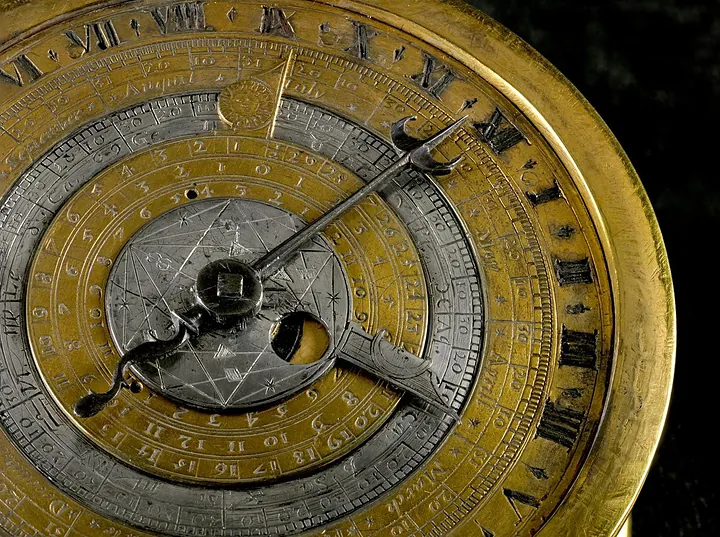
Clocks · 1598–1603
Circular table-clock with calendrical and lunar indications made by Nicholas Vallin in London between 1598 and 1603.
Science Museum Group, London
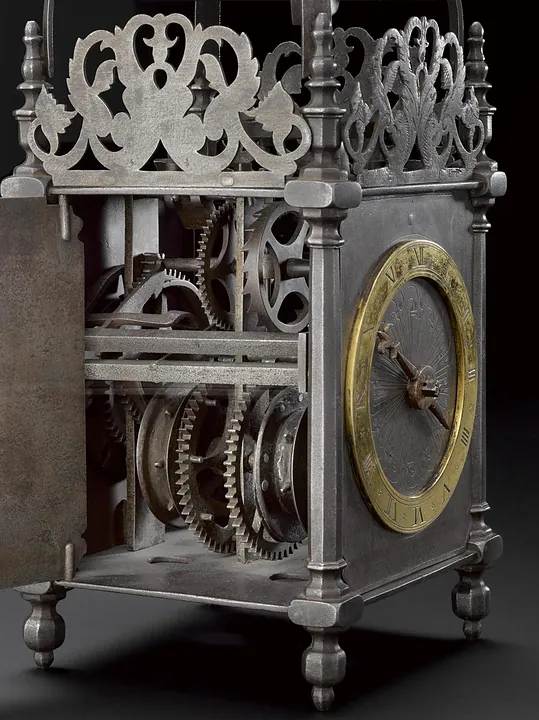
Clocks · 1611
English iron lantern clock, with wheel balance, by John Holloway, Market Lavington, Wiltshire, England, 1611.
Science Museum Group, London
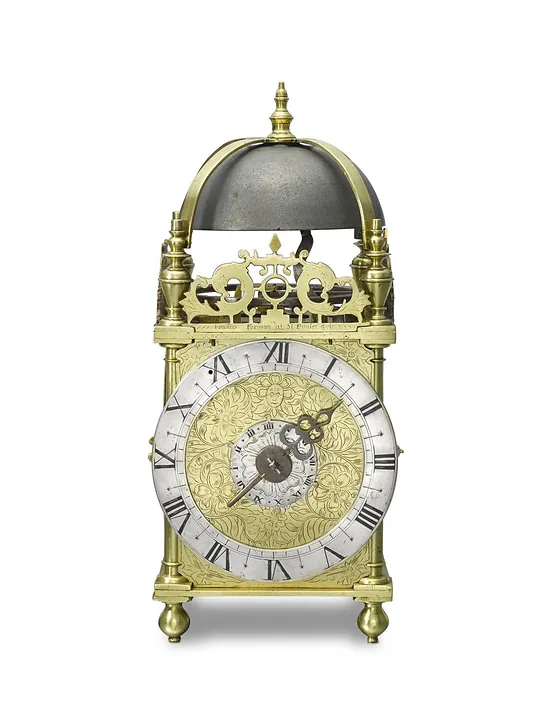
Clocks · 1630
Lantern clock by Francis Forman, England, 1630
Science Museum Group, London
Clocks · 1632–1640
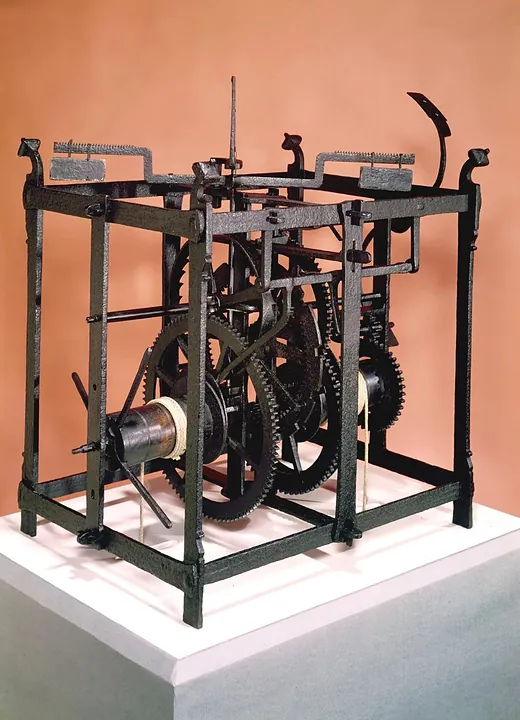
Turret clock, England, 1632–1640
Science Museum Group, London