
Clocks · Carriage clock
Drocourt Gorge Case Repeater and Alarm Carriage Clock
- Maker / attribution
- P. R. Drocourt (source attribution)
- Date
- c. 1850
- Historical period
- Industrial Revolution (1850 – 1900)
- Country of origin
- France
- Object type
- Carriage clock
- Holding institution
- Horlogerieclocks Zwolle / Proantic
- Accession / object no.
- 1300096
- Credit line
- Horlogerieclocks Zwolle / Proantic
- Catalogue title (original)
- Proantic: Repeater And Alarm Carriage Clock (English)
View the source record ↗ (opens another website in a new tab)Suggest a correction
Record summary
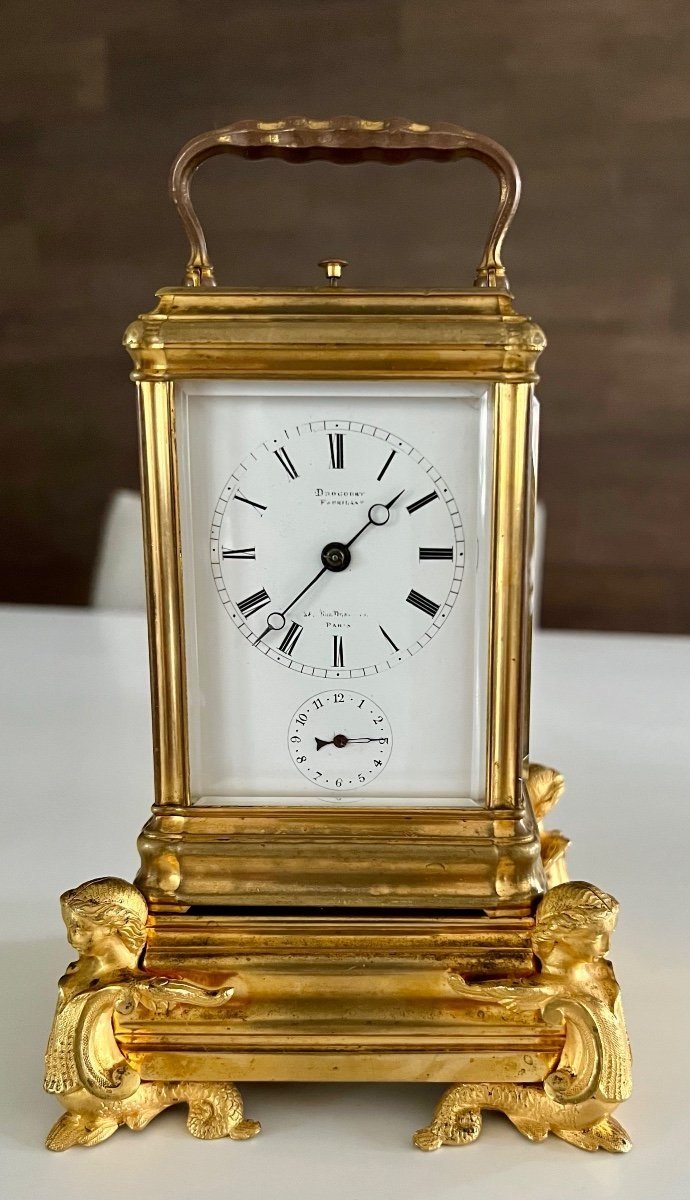
Held and catalogued by Horlogerieclocks Zwolle / Proantic (object number 1300096), this is a carriage clock attributed to P. R. Drocourt, made in France, dated c. 1850. The Atlas places it in the Industrial Revolution period (1850 – 1900) of its Clocks collection. The record is illustrated with 1 photograph.
Assembled from the source record's structured fields. Dates and attributions are given as the source states them; where a field is missing the Atlas leaves it blank rather than estimating.
Catalogue description
Original object description
Encased within a gilt-brass Gorge pattern housing, this carriage clock by P. R. Drocourt rests atop a separate gilded base fitted with corner figural supports. Black Roman numerals and pierced moon-tipped hands indicate the hours on the white enamel dial, beneath which is an auxiliary alarm dial graduated in Arabic numerals. Inscribed on the dial face is the maker's mark for Drocourt Fabricant in Paris, which is also stated to appear on the lower plate. According to vendor documentation, the movement bears serial number 4257, incorporates an alarm, sounds the half hours, and features a repeating mechanism activated on demand.
Case Architecture and Stand
The gilt-brass Gorge housing is fitted with an overhead swinging handle, a top repeat button, and stands upon a separate gilded plinth base. This auxiliary basement is carried on corner supports shaped as winged sea-creatures or fish-tailed mermen. While presented by the vendor as a scarce, original factory stand that complements the clock, physical inspection of the cast components and joins would be required to establish whether it was manufactured concurrently with the case.
Dial Configuration and Inscriptions
The main dial of white enamel displays Roman numerals for the hours, open-moon Breguet hands, and a peripheral minute index, with a smaller subsidiary enamel dial beneath graduated in Arabic numerals for setting the alarm. It is signed "Drocourt Fabricant, rue debelleyme paris", an address the vendor notes as somewhat rubbed, accompanied by a faint, undisclosed hairline fissure at the lower right edge.
Movement Details and Seller Claims
Although internal mechanical elements such as the backplate and platform escapement cannot be verified in photographs, vendor statements indicate that the mechanism functions, includes an alarm, and strikes both on the passing half hour and on request. The seller dates the clock to approximately 1850, notes that it carries low serial number 4257, reports that the Rue Debelleyme signature is repeated on the bottom plate, and provides two winding keys.
Inscriptions & marks
4257
Historical context
Industrial Revolution (1850 – 1900)
American interchangeable-parts manufacture; railroad time standards; Swiss and German factory systems.
Factory production transformed the clock into an everyday object. American makers (Seth Thomas, Ansonia, Waterbury) and German factories (Junghans, Gustav Becker, Lenzkirch) sold millions of shelf, wall and alarm clocks worldwide; France produced standardised Paris movements and carriage clocks; electric time distribution began.
Read the period in the timelineMore clocks from this periodEarlier: Precision & Scientific Horology
Atlas type guide
Carriage and travel clocks
The carriage clock is a portable spring clock with a balance-wheel escapement and a brass case with glass panels and a carrying handle. Abraham-Louis Breguet made early examples around 1800, and from the 1830s Paul Garnier and other French makers industrialised production, with the small towns of Saint-Nicolas-d'Aliermont and the Franche-Comté supplying movements for retailers worldwide.
Typical features include a platform escapement mounted horizontally on top of the movement (usually a lever, sometimes cylinder or Garnier's chaff-cutter), striking or repeating work, and alarms. English carriage clocks, generally larger and with fusees, were made by firms such as Frodsham and Dent. Travel clocks in folding leather cases became popular in the twentieth century.
What to look for
- A platform escapement visible through the top glass.
- Case styles: corniche, gorge, anglaise, obis or engraved cases.
- Repeat buttons on top and strike/silent levers.
- Stamps of movement makers (e.g. Drocourt, Jacot, Margaine, Richard & Co.) on the backplate.
Dating clues
- Early carriage clocks with Breguet or Garnier features: c. 1800–1850.
- Mass-produced French carriage clocks: c. 1850–1914.
- Folding travel clocks and alarm travel clocks: mostly 1920–1970.
General guidance written by the Atlas editors about this kind of object. It is not a statement about this particular piece; for that, rely on the source record above and on physical examination.
Read next:Detached lever escapement
Related records
Clocks · 1840–1878
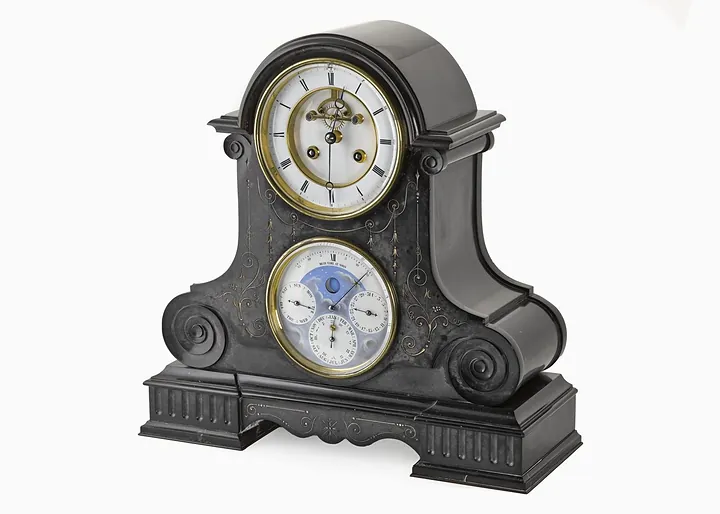
Mantel clock by A. Brocot, France, 1840–1878
Science Museum Group, London
Clocks · c. 1855
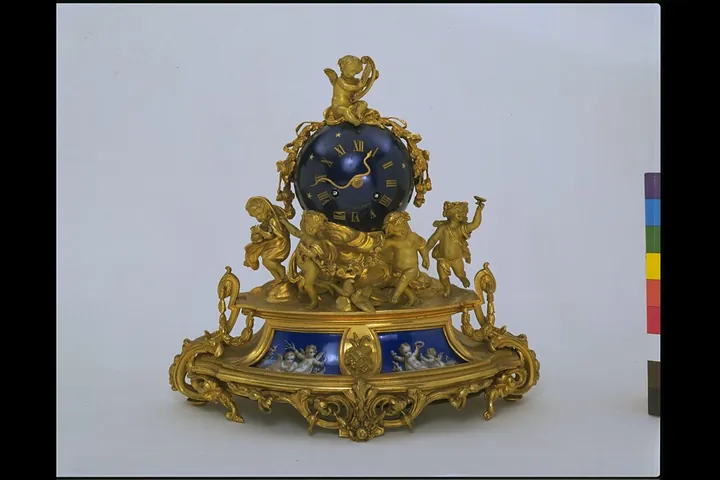
Ormolu and enamel clock, Paris, ca.1855, made by Lévy Frères.
Victoria and Albert Museum, London
Clocks · c. 1850
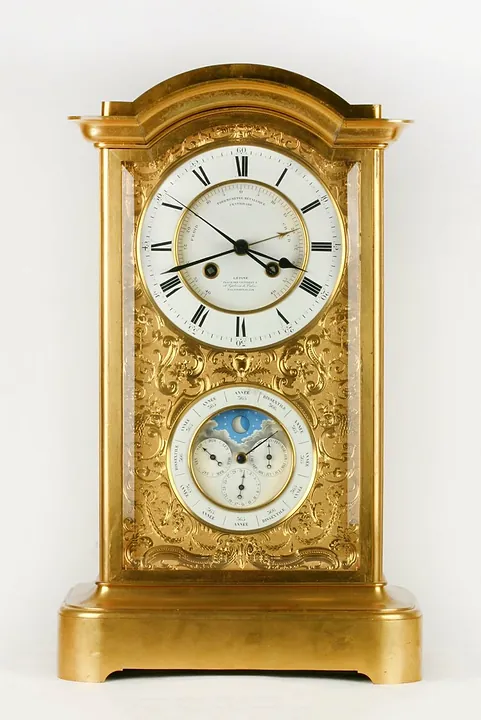
Table clock, France, c. 1850
German Clock Museum
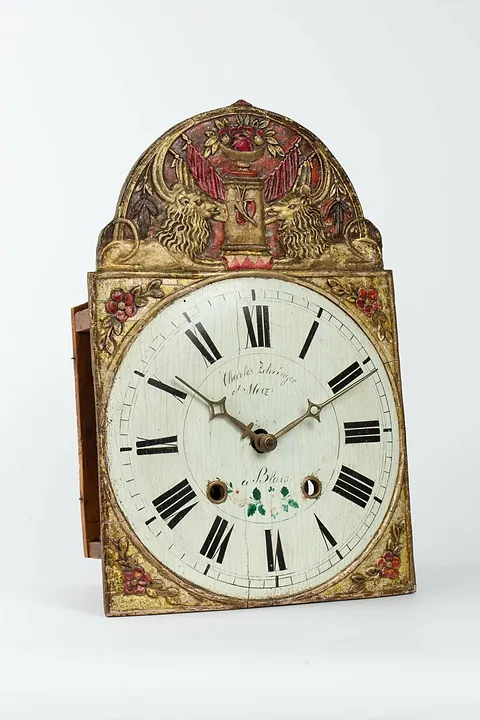
Clocks · c. 1850
Wall clock by Charles et Merz Zehringer, France, c. 1850
German Clock Museum
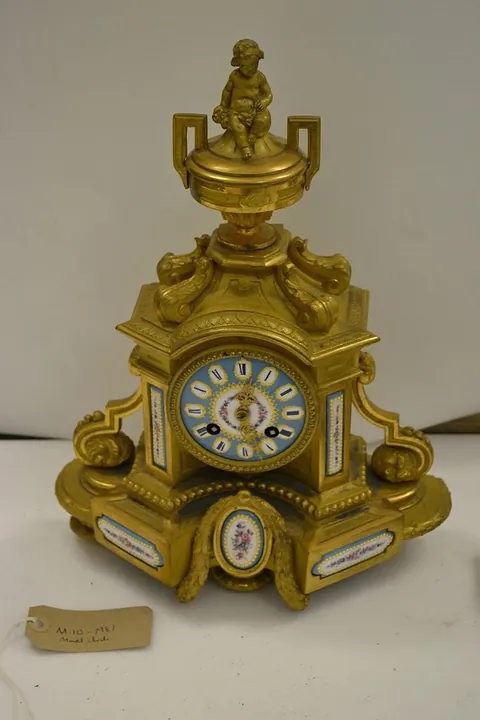
Clocks · c. 1860
Mantel clock, French, c. 1860
Victoria and Albert Museum, London
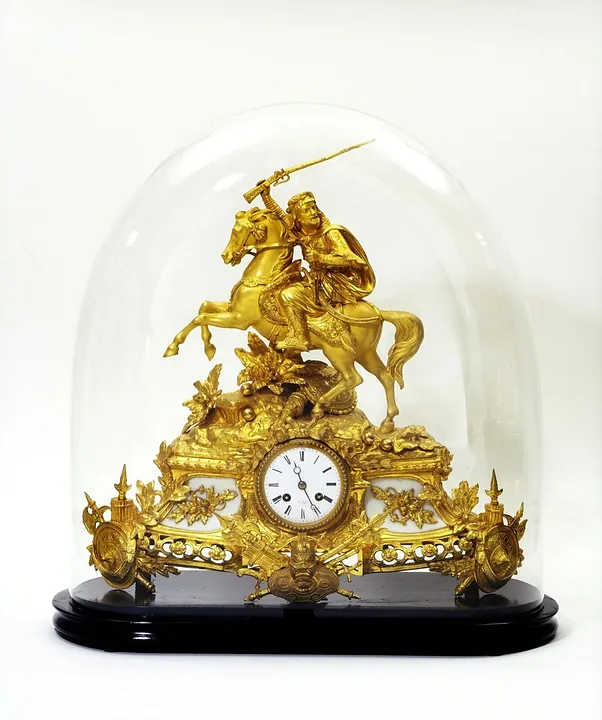
Clocks · c. 1860
[*] French Clock under glass dome
Victoria and Albert Museum, London
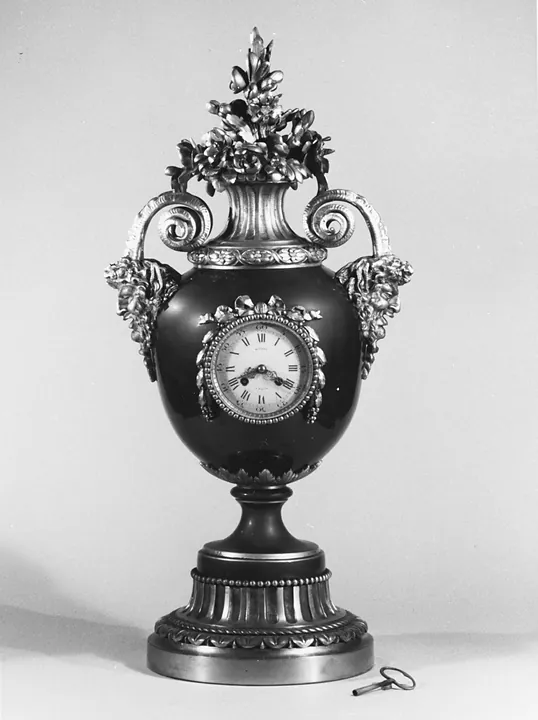
Clocks · c. 1860
Clock by Auguste-Emile Rinquet-Leprince, France, c. 1860
The Metropolitan Museum of Art, New York
Clocks · 1860–1870
Clock by Raingo Frères, France, 1860–1870
Victoria and Albert Museum, London