
Pocket Watches · Pocket watch
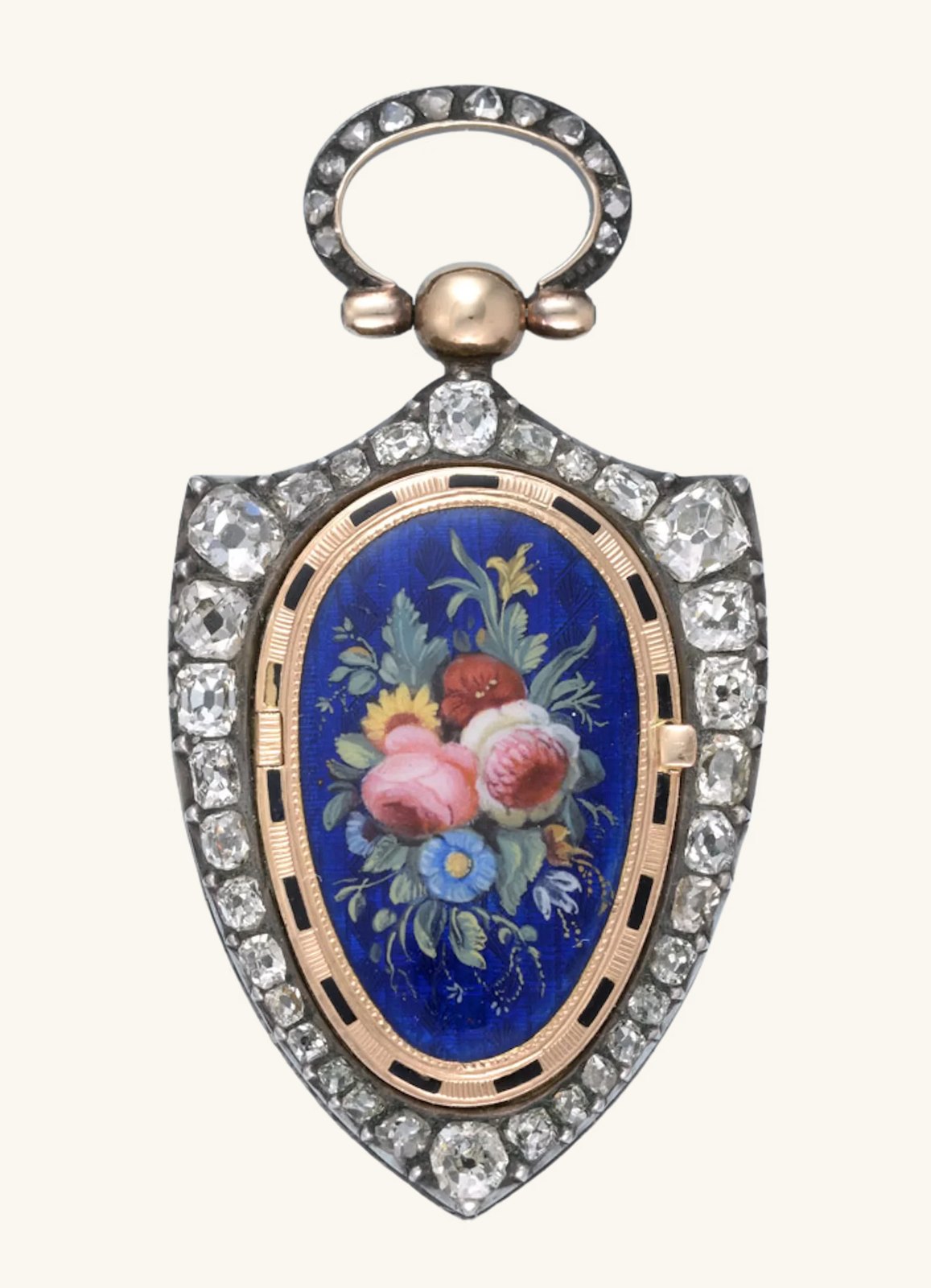
Diamond Set Visible Balance Pendant Watch
- Maker / attribution
- Unrecorded in source
- Date
- 19th century
- Historical period
- Precision & Scientific Horology (1750 – 1850)
- Country of origin
- Unrecorded in source
- Object type
- Pocket watch
- Materials / technique
- diamond
- Dealer
- WatchMuseum.org shop
- Stock no.
- Product 1324
- Credit line
- Dealer listing, WatchMuseum.org shop (product 1324)
- Catalogue title (original)
- Diamond Set Visible Balance Pendant Watch (English)
View the source record (dealer listing) ↗ (opens another website in a new tab)Suggest a correction
Record summary
Catalogued by WatchMuseum.org shop (stock number Product 1324), this is a pocket watch, dated 19th century. The Atlas places it in the Precision & Scientific Horology period (1750 – 1850) of its Pocket Watches collection. Materials and techniques recorded by the source: diamond. The record is illustrated with 6 photographs.
Assembled from the source record's structured fields. Dates and attributions are given as the source states them; where a field is missing the Atlas leaves it blank rather than estimating.
Catalogue description
Dealer description — WatchMuseum.org shop
Step into the enchanting world of horological artistry with this breathtaking 19th-century Swiss pendant watch, a true testament to timeless craftsmanship and elegance. This extraordinary piece showcases a visible diamond set balance within a shield-shaped gold and enamel case, exuding opulence and sophistication. The delicate balance, adorned with four small diamonds and a diamond endstone, dances above a blue steel ground, beautifully complemented by a polished steel cross. The watch’s small white enamel dial, featuring Arabic numerals and blue steel hands, is framed by an intricate blue and white champlevé enamel mask adorned with two serpents, all safeguarded by a rock crystal cabochon. The full plate cylinder movement, meticulously designed to mirror the slender form of the case, enhances the watch’s exceptional allure. Graduated diamonds of varying cuts embellish the front and back borders of the case, while a diamond-set gold bow adds a final touch of luxury. The hinged gold back, adorned with polychrome enamel floral designs over a translucent dark blue enamel engine-turned ground, further elevates its aesthetic appeal. This remarkable timepiece is accompanied by a small red morocco presentation box and a slender gold key set with three diamonds, mirroring the case’s shape. An anonymous Swiss creation from circa 1810, measuring 21 x 33 mm, this pendant watch is a rare and captivating piece of watchmaking history that will undoubtedly captivate collectors and enthusiasts alike. Presented here is an exquisite and unique Swiss pendant watch from the early 19th century. The watch features a visible diamond set balance in a shield-shaped case made of gold and enamel, with a slender bar supporting a diamond endstone and a four-arm balance bearing four small diamonds. The balance appears above a blue steel ground decorated with a polished steel cross, with a small white enamel dial showing Arabic numerals and blue steel hands. The balance and dial are framed by a blue and white champleve enamel mask bearing two serpents. A rock crystal cabochon serves to protect the dial and balance. This particular watch is made even more exceptional thanks to the full plate cylinder movement, which follows the form of the case and is very slender. The front and back borders of the case are set with graduated diamonds of varying cuts, with a diamond set gold bow completing the luxurious look. The hinged gold back is decorated with polychrome enamel floral designs over a translucent dark blue enamel engine turned ground. The watch comes with a small red morocco presentation box, and a slender gold key set with three diamonds, with the top reflecting the shape of the case. Overall, this is a very rare and attractive piece of watchmaking history that is sure to appeal to collectors and enthusiasts alike. Anonymous Swiss Circa 1810 Dimensions 21 x 33 mm
Historical context
Precision & Scientific Horology (1750 – 1850)
Harrison solves longitude; Mudge invents the lever; Breguet's Paris workshop defines the modern watch.
From 1750 to 1850 the watch became a precision instrument. Mudge's lever escapement, the cylinder escapement, Lépine's thin bar calibre, Breguet's innovations (overcoil, tourbillon, perpétuelle) and the pocket chronometer of Arnold and Earnshaw all date from this period, while verge watches remained common in cheaper production.
Read the period in the timelineMore pocket watches from this periodEarlier: Early Modern Horology
Atlas type guide
Early spring-driven watches
Portable spring-driven timepieces appeared in southern Germany, France and Italy in the early sixteenth century; Peter Henlein of Nuremberg is traditionally credited, although the historical record is complex. These early watches were worn as pendants or carried, had iron or brass movements with a verge escapement and a foliot or small balance, and used a stackfreed or fusee to equalise spring force. They indicated hours only and were notoriously inaccurate.
From the later sixteenth century watches were made in Blois, Paris, Geneva, London and Augsburg in oval, octagonal, cruciform, skull and other 'form' cases of rock crystal, gilt brass, silver and enamel. They were jewellery and status objects as much as timekeepers.
What to look for
- A single hour hand and often a touch-pin hour ring for feeling the time.
- Stackfreed (a cam and spring) instead of a fusee on German watches.
- Pierced and engraved cocks over the balance, fine gut fusee lines.
- Rock-crystal, enamelled or engraved form cases.
Dating clues
- Drum-shaped German watches: c. 1530–1580.
- Oval and form watches: c. 1580–1650.
- Before c. 1675 there is no balance spring; watches can vary by many minutes a day.
General guidance written by the Atlas editors about this kind of object. It is not a statement about this particular piece; for that, rely on the source record above and on physical examination.
Related records
Pocket Watches · 1800–1899
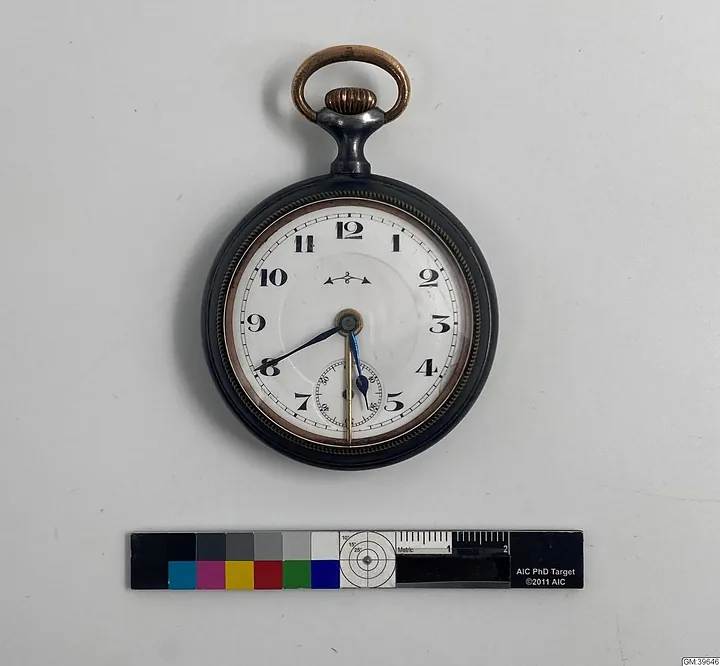
Alarm pocket watch by Eterna w, Gothenburg, 1800–1899
Museum of Gothenburg
Pocket Watches · 1820
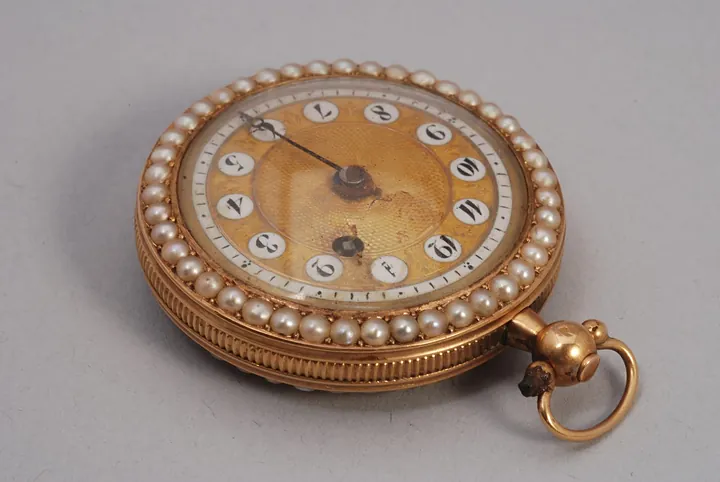
Pocket watch by Chevalier & Cochet, 1820
Museum Rotterdam
Pocket Watches · c. 1740–60
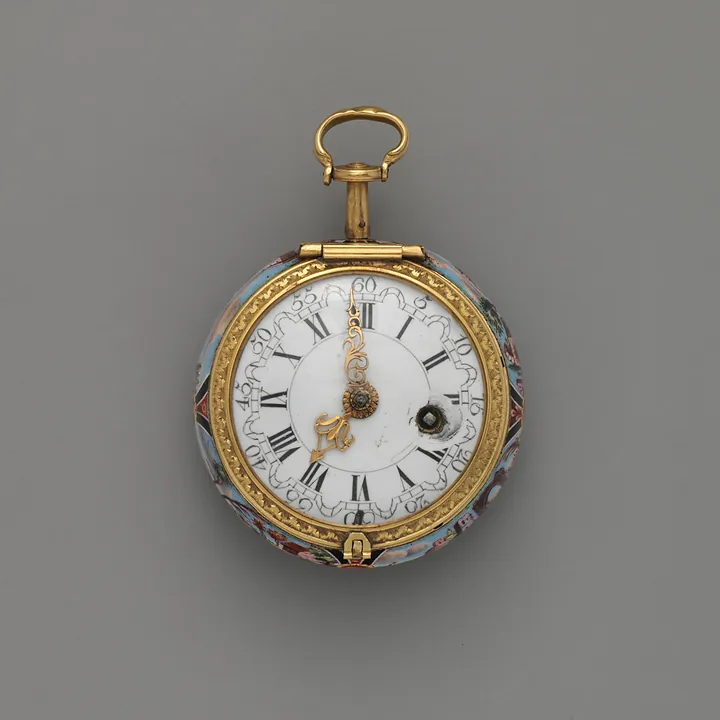
Watch by Charles Cabrier II, England, c. 1740–60 (The Met 17.190.1458)
The Metropolitan Museum of Art, New York
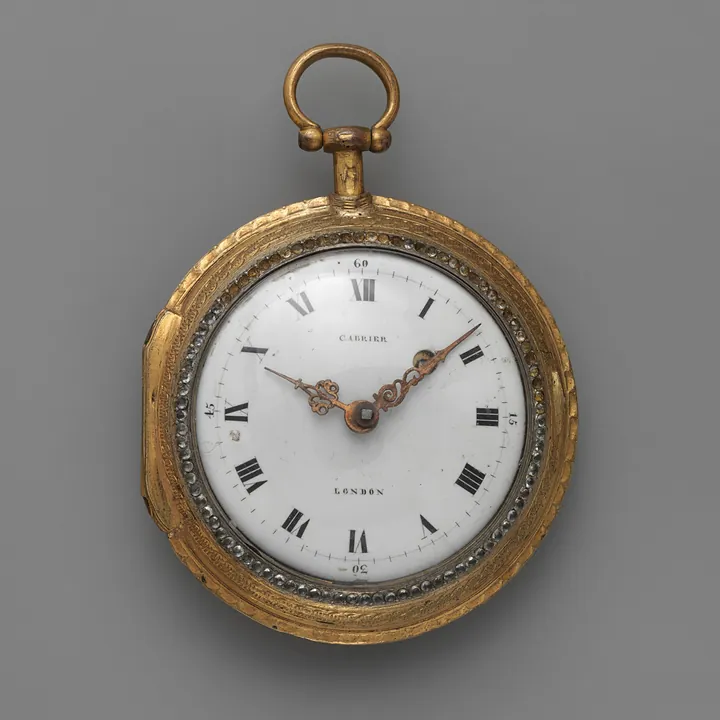
Pocket Watches · c. 1740–60
Watch by Charles Cabrier II, England, c. 1740–60 (The Met 17.190.1461)
The Metropolitan Museum of Art, New York
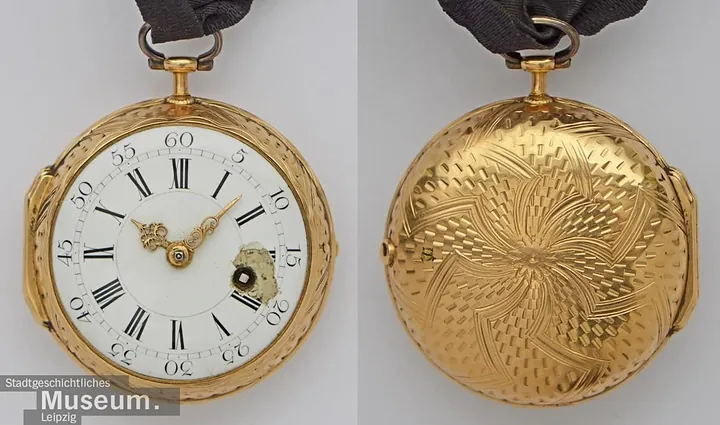
Pocket Watches · 1745–1755
Pocket watch by Jean Baptiste Baillon, France, 1745–1755
Museum of City History Leipzig
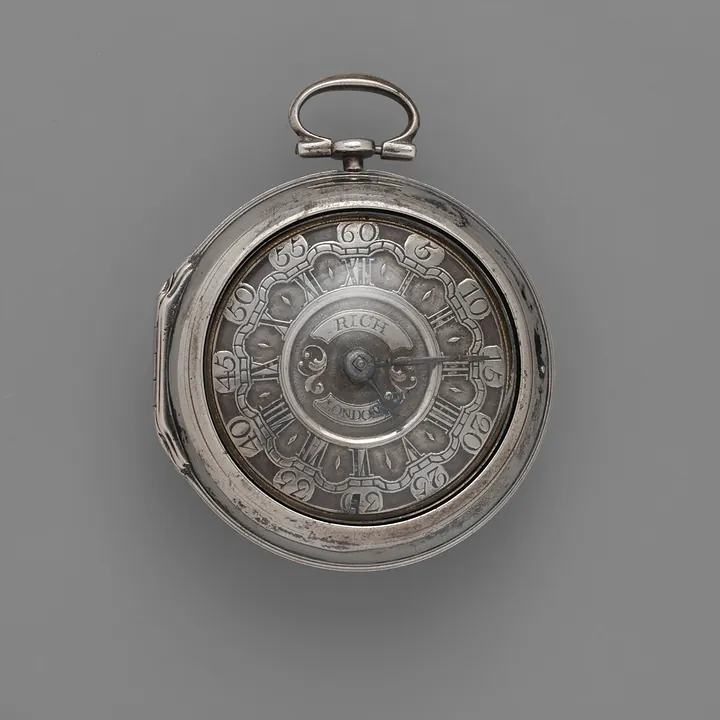
Pocket Watches · c. 1751–52
Watch by John Rich, England, c. 1751–52
The Metropolitan Museum of Art, New York
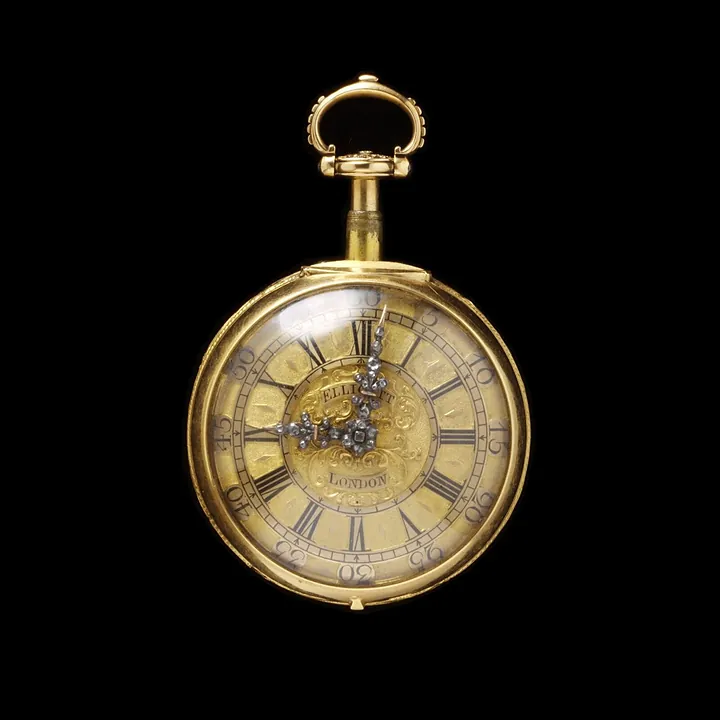
Pocket Watches · c. 1753
Gold watch, signed 'Jno. Ellicott, London, 3719', the inner case pierced and engraved, with a casemaker's mark 'JB', London, about 1753
Victoria and Albert Museum, London
Pocket Watches · 1750–1810
Astronomical watch by George Margetts No.3043 in pair case, 1750–1810
Science Museum Group, London