
Wristwatches · Wristwatch
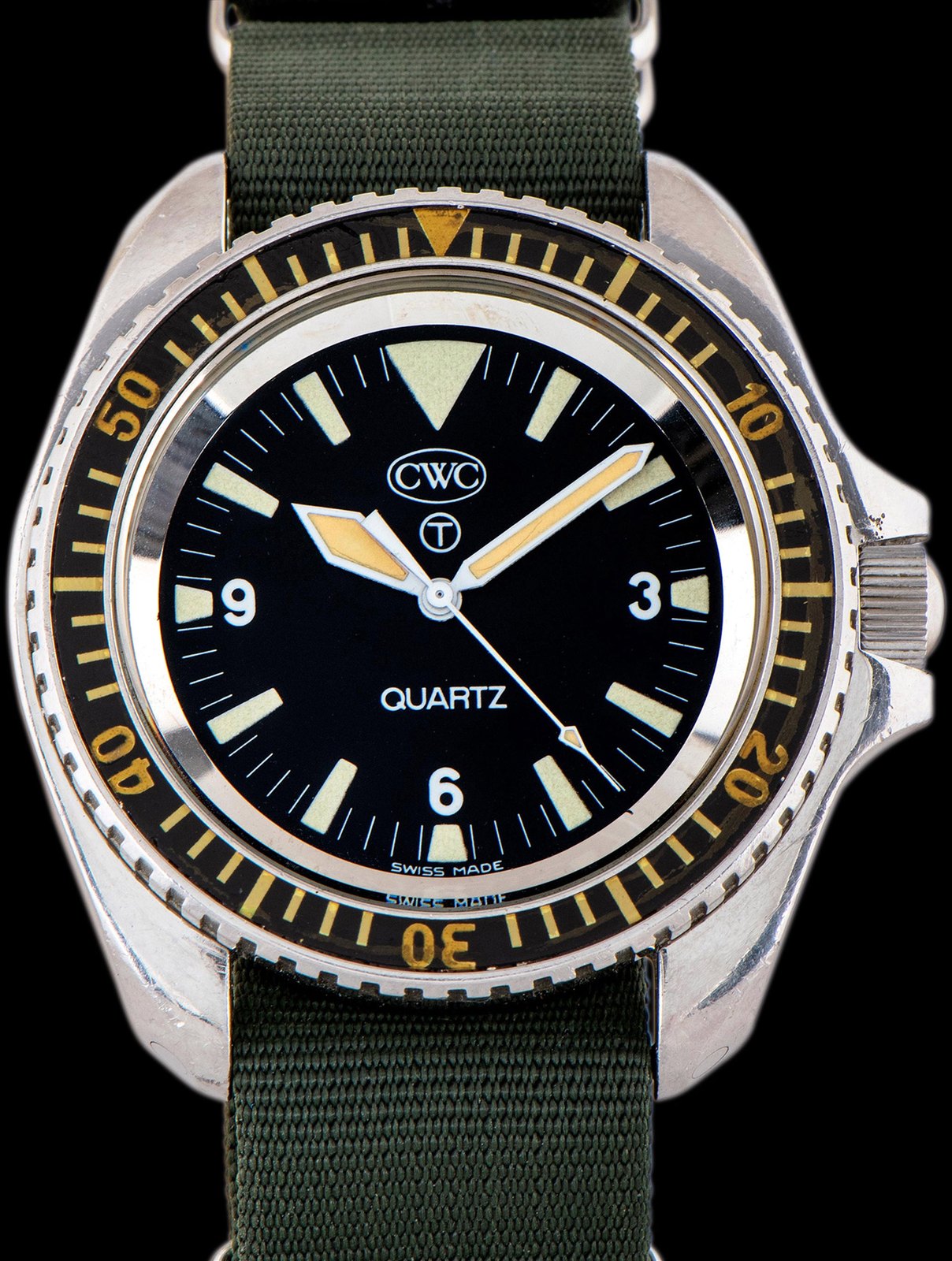
CWC Royal Navy Diver 0552/6645-99-7573314, 1986
- Maker / attribution
- CWC (maker)
- Date
- 1986
- Historical period
- Quartz Revolution (1969 – 1990)
- Country of origin
- Unrecorded in source
- Object type
- Wristwatch
- Stock no.
- CWCRND86-1
- Credit line
- Dealer listing, Craft & Tailored (CWCRND86-1)
- Catalogue title (original)
- 1986 CWC Royal Navy Diver 0552/6645-99-7573314 (English)
View the source record (dealer listing) ↗ (opens another website in a new tab)Suggest a correction
Record summary
Catalogued by Craft & Tailored (dealer), Los Angeles (stock number CWCRND86-1), this is a wristwatch by CWC, dated 1986. The Atlas places it in the Quartz Revolution period (1969 – 1990) of its Wristwatches collection. The record is illustrated with 6 photographs.
Assembled from the source record's structured fields. Dates and attributions are given as the source states them; where a field is missing the Atlas leaves it blank rather than estimating.
Catalogue description
Dealer description — Craft & Tailored
Founded in 1972, Cabot Watch Company (CWC) was established with the goal of producing purpose-built military timepieces for the British Ministry of Defense. Over the following decades, the company became one of the MOD's principal suppliers, manufacturing wristwatches for a variety of British military branches and earning a reputation for rugged, no-nonsense tool watches designed for operational use. In 1980, CWC was awarded the contract to replace the legendary Rolex-issued Royal Navy Submariner, commonly referred to today as the "MilSub." The first generation of CWC Royal Navy divers featured an automatic movement, a dial inspired by the Omega Seamaster 300, and an acrylic bezel insert. In 1983, the specification evolved to a quartz movement, improving reliability and reducing maintenance while retaining the proven Monnin-style case design closely associated with the Heuer Ref. 844 and other professional dive watches of the era. Quartz Royal Navy divers remained in military service for nearly two decades before being gradually superseded by the CWC SBS diver in the early 2000s. Today, these issued Royal Navy watches are recognized as some of the most historically significant British military wristwatches of the modern era, combining authentic military provenance with relatively low production numbers and an unmistakably utilitarian aesthetic. The 1986 CWC Royal Navy Diver represents one of the rarest early military-issued quartz dive watches produced for the British Ministry of Defense, and the last to use an acrylic bezel. Designed as the successor to the Rolex-issued "MilSub," these watches were built with reliability and serviceability in mind, earning a place on the wrists of Royal Navy divers throughout the 1980s and into the early 2000s. Introduced as part of CWC's evolution from the earlier automatic Royal Navy diver, the 1986 specification features the updated CWC-signed dial with an enlarged circled "T," "QUARTZ" designation, and the dependable ETA 555.115 quartz movement housed inside the rugged M.R.P. SA-made Monnin-style case, a design shared with several iconic professional dive watches of the era, including the Heuer Ref. 844. What distinguishes the 1986 contract is its rarity. Research published by CWC Addict indicates that approximately 850 early quartz Royal Navy divers were produced between the 1983, 1985, and 1986 contracts, with only around 100 examples dating to 1986 . As these watches were gradually withdrawn from service and replaced by the CWC SBS diver in the early 2000s, comparatively few remained in circulation. Today, the early Royal Navy CWC divers occupy an important place in military watch collecting. Their direct connection to the British Ministry of Defense, limited production, and unmistakably utilitarian design have made them increasingly sought-after by collectors, with 1983, 1985, and 1986 examples among the most elusive of the entire Royal Navy quartz series. SPECS Stock # CWCRND86-1 Brand CWC Style Military Diver Model 0552/6645-99-7573314 Serial 82X/86 Size Men's Material Stainless Steel Dial Matte Black Millimeters 42 Strap Modern Phoenix Green Strap CASE & BRACELET The case remains in sharp, unpolished condition, exhibiting honest wear and patina consistent with military use and service. The fixed strap bars remain fully intact, showing no evidence of bending or damage. The watch is fitted with the correct bezel insert for the 1985–1986 production period, featuring the distinctive orange-yellow luminous numerals unique to these later early-contract examples. The screw-down caseback retains crisp, fully legible military issue markings, including the original NSN and issuance numbers. The watch comes supplied on a new green Phoenix NATO Strap. DIAL & HANDS The original matte black dial remains in excellent condition, free from any notable degradation or distracting marks. The tritium lume has aged to a pale green coloration, while the original handset has developed a slightly deeper yellow patina, a characteristic often observed on well-preserved examples from this period. When examined under UV, the tritium lume on the dial displays no evidence of repair or degradation, and the hands feature some superficial surface cracking and remain stable. ACCESSORIES
Historical context
Quartz Revolution (1969 – 1990)
Seiko's Astron begins mass quartz timekeeping; traditional industries contract sharply.
Quartz and digital watches transformed the market after 1969. Swiss employment collapsed, Japanese and Hong Kong production soared, and the Swatch (1983) helped the Swiss industry recover; mechanical watches survived as luxury goods.
Read the period in the timelineMore wristwatches from this periodEarlier: Modern Mechanical Horology
Atlas type guide
Dive and water-resistant watches
Keeping water and dust out of a wristwatch was a long-standing challenge. Rolex's screw-down Oyster case (1926) and Omega's Marine (1932) were landmarks; in the early 1950s Blancpain's Fifty Fathoms and Rolex's Submariner defined the professional dive watch with rotating bezels for timing dives, luminous dials and high water resistance. The ISO 6425 standard (1982) later codified what a 'diver's watch' must do.
Dive watches became icons of post-war design and exploration, and their evolution — helium escape valves, ceramic bezels, saturation-diving depth ratings — records the history of underwater work.
What to look for
- Unidirectional or bidirectional rotating bezel with minute markings.
- Screw-down crown and case back; depth rating printed on the dial.
- Luminous hands and markers (radium before c. 1960, tritium c. 1960–1998, then Super-LumiNova).
- Reference numbers on the case between the lugs or inside the back.
Dating clues
- Screw-down Oyster cases: from 1926.
- Professional dive watches: from 1953.
- Tritium 'T' marks on dials: c. 1960–1998.
General guidance written by the Atlas editors about this kind of object. It is not a statement about this particular piece; for that, rely on the source record above and on physical examination.
Related records
Wristwatches · c. 1985
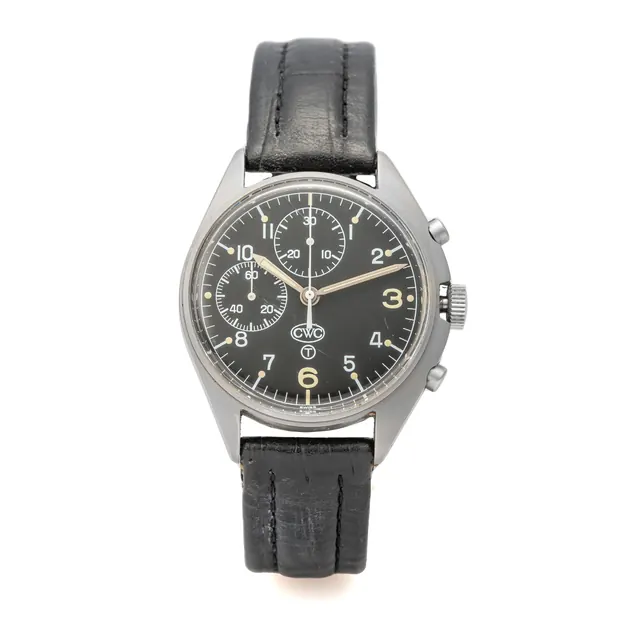
Cwc wristwatch, Military Chronograph, circa 1985
Antiquorum auction archive, Geneva
Wristwatches · 2005
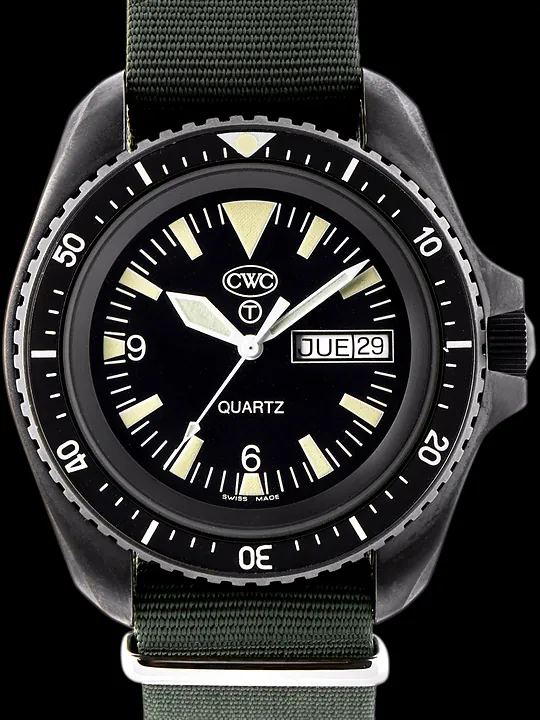
CWC Royal Navy SBS Diver W10/6645-99-7995443, 2005
Craft & Tailored (dealer), Los Angeles
Wristwatches · 1993
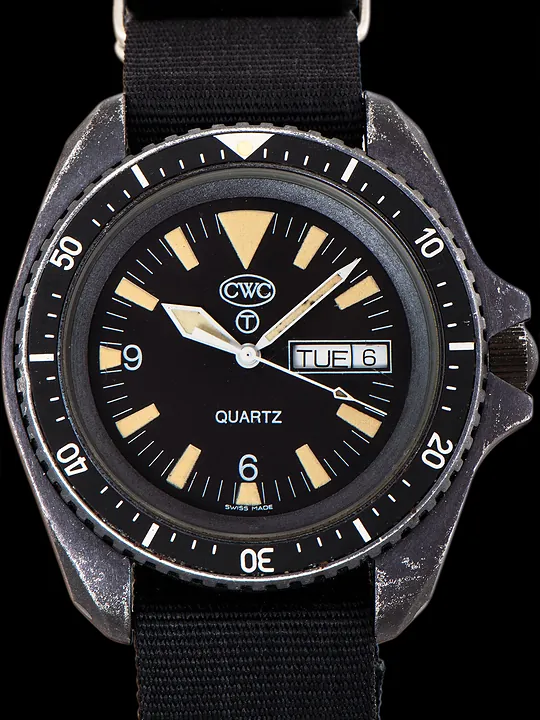
CWC Royal Navy SBS Diver 0555/6645-99-7995443, 1993
Craft & Tailored (dealer), Los Angeles
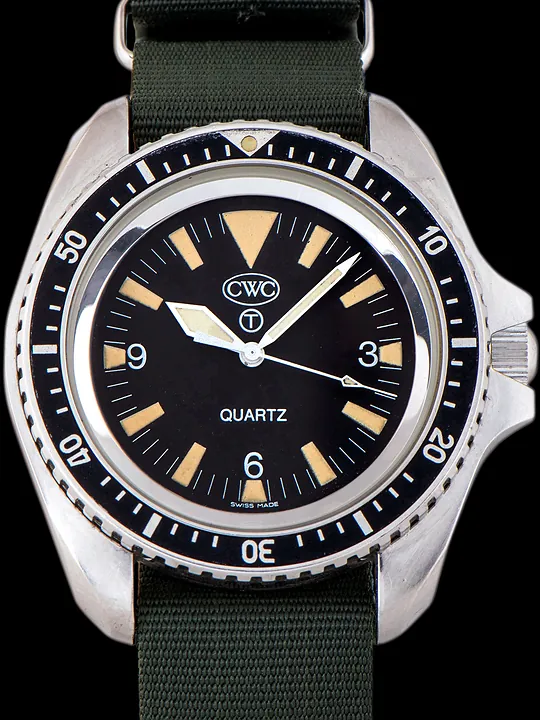
Wristwatches · 1995
CWC Royal Navy Diver 0555/6645-99-7573314, 1995
Craft & Tailored (dealer), Los Angeles

Wristwatches · 1970
Wristwatch by Heno, Switzerland, 1970
Museum Rotterdam
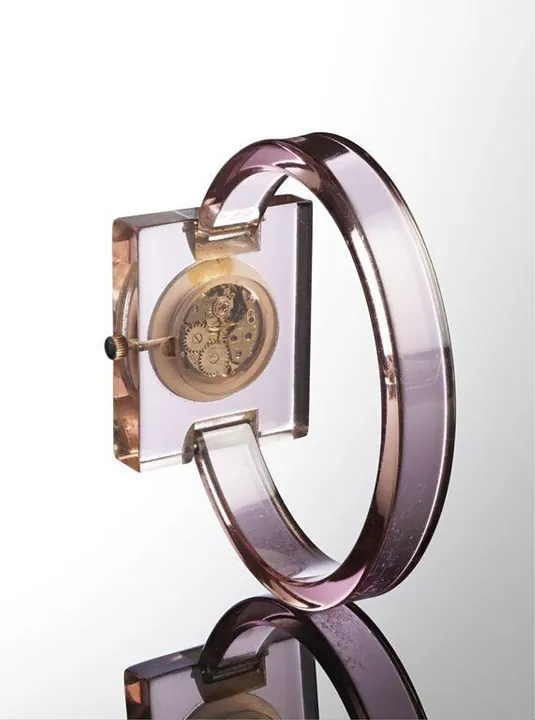
Wristwatches · 1970s
Wristwatch, plastic, by Gucci; Italy, 1970s.
Victoria and Albert Museum, London
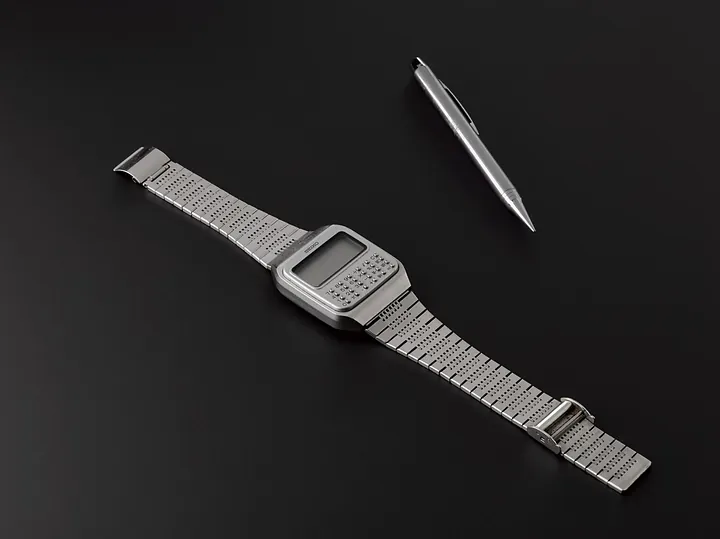
Wristwatches · 1978
Calculator wristwatch by Suwa Seikosha Co. Limited, Japan, 1978
Science Museum Group, London
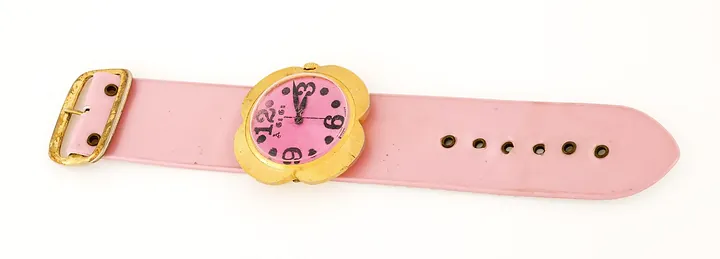
Wristwatches · 1980
Wristwatch, 1980 (no. 71413)
Museum Rotterdam