
Wristwatches · Wristwatch
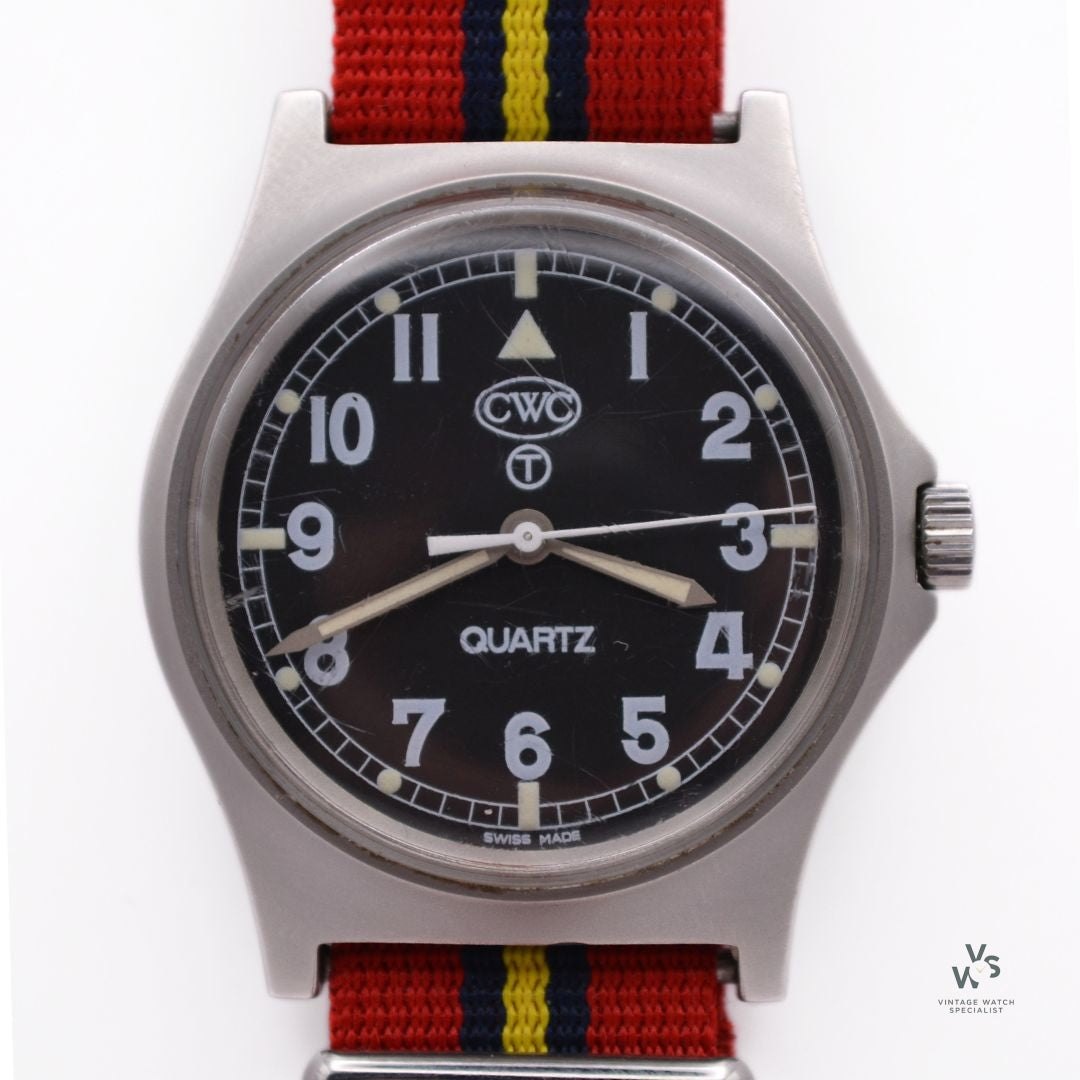
CWC G10 Quartz, Military Field Watch, Caseback 6645-99, circa 1990
- Maker / attribution
- CWC (maker)
- Date
- c. 1990
- Historical period
- Mechanical Renaissance (1990 – 2010)
- Country of origin
- Unrecorded in source
- Object type
- Wristwatch
- Stock no.
- VWS2868cs
- Credit line
- Dealer listing, Vintage Watch Specialist (VWS2868cs)
- Catalogue title (original)
- CWC G10 Quartz - Military Field Watch - Caseback 6645-99 - C.1990 (English)
View the source record (dealer listing) ↗ (opens another website in a new tab)Suggest a correction
Record summary
Catalogued by Vintage Watch Specialist (dealer), United Kingdom (stock number VWS2868cs), this is a wristwatch by CWC, dated c. 1990. The Atlas places it in the Mechanical Renaissance period (1990 – 2010) of its Wristwatches collection. The record is illustrated with 6 photographs.
Assembled from the source record's structured fields. Dates and attributions are given as the source states them; where a field is missing the Atlas leaves it blank rather than estimating.
Catalogue description
Dealer description — Vintage Watch Specialist
A Fantastic Vintage CWC Quartz Military Field Watch With Original Military Caseback Markings, Tritium Dial c.1990 CWC, or Cabot Watch Company, is a British watch company with a notable history, particularly in supplying military watches. CWC was founded in 1972 by Ray Mellor, a former director of Hamilton Watch Company in the UK. The company aimed to provide high-quality watches for military and civilian use. CWC gained prominence by securing contracts to supply watches to the British military. One of its early notable contracts was with the Ministry of Defence (MoD) to provide timepieces for the British Armed Forces. These watches were designed to meet the stringent specifications and durability required by military personnel. CWC produced both quartz and mechanical watches for military use. The company's watches were known for their robust construction, water resistance, and reliability in challenging conditions. The quartz models were particularly popular due to their accuracy and low maintenance requirements. What's On Offer This watch is in really nice condition given it is over 30 years old! The dial is well preserved and in good condition, rich black with bold white Arabic numerals as are synonymous with most military watches. The lume on the hour plots and hands has aged to a beautiful pale vanilla colour. The CWC signature, T for Tritium and Quartz denotation complete a nice dial which is encapsulated underneath shatterproof Plexiglas. There are some signs of wear to the crystal, but nothing we wouldn't expect to see given its age. The caseback reveals original military markings which read 6645-99 5415317. This watch is in nice shape and benefits from a recently replaced battery. A fantastic vintage military piece and worthy of any collection.
Historical context
Mechanical Renaissance (1990 – 2010)
Mechanical watches return as cultural objects; independent watchmaking flourishes.
Mechanical watches returned as cultural and luxury objects. Complications, tourbillons and new materials proliferated; independent watchmakers such as George Daniels, F.P. Journe and Philippe Dufour revived artisanal watchmaking; collecting vintage watches became a major field.
Read the period in the timelineMore wristwatches from this periodEarlier: Quartz Revolution
Atlas type guide
Military, pilot and travel watches
The wristwatch owes much of its adoption by men to warfare and aviation. Wristlets — small pocket watches soldered with lugs and worn on a strap — were used in colonial campaigns and became standard equipment in the First World War, with protective grilles over the crystal ('shrapnel guards'). Louis Cartier's Santos (1904), designed for the aviator Alberto Santos-Dumont, is often cited as an early purpose-made pilot's watch.
In the Second World War governments specified watches in detail: the German B-Uhr observation watches, the American A-11, and the British 'W.W.W.' (the 'Dirty Dozen' set of 1945). After the war, jet travel brought GMT and world-time watches, which show two or more time zones at once — Louis Cottier's world-time mechanism and the Rolex GMT-Master (1955) are examples.
What to look for
- Military markings on the case back: broad arrow, issue numbers, 'W.W.W.', 'A.T.P.'
- High-legibility black dials with luminous Arabic numerals; oversized crowns for gloved hands.
- 24-hour hands and rotating 24-hour bezels or city rings on GMT/world-time watches.
- Wire lugs on early wristlets converted from pocket watches.
Dating clues
- Wire-lug wristlets: c. 1900–1925.
- Military specifications of the Second World War: 1939–1945.
- GMT and world-time wristwatches: mainly after 1950.
General guidance written by the Atlas editors about this kind of object. It is not a statement about this particular piece; for that, rely on the source record above and on physical examination.
Related records
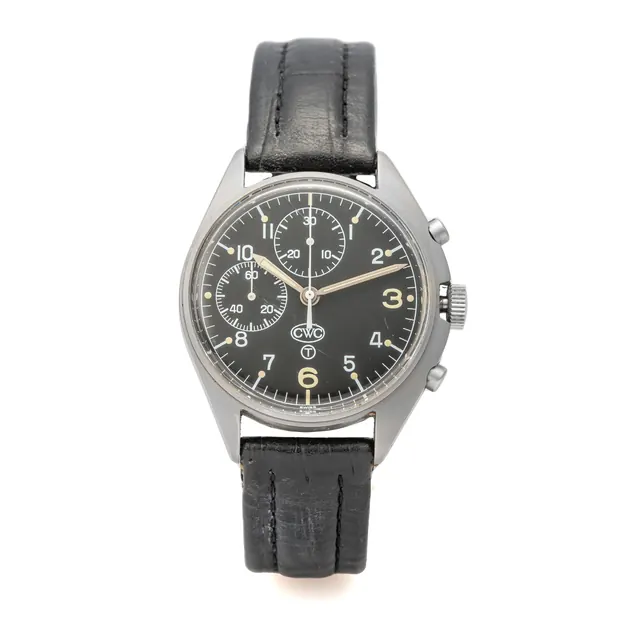
Wristwatches · c. 1985
Cwc wristwatch, Military Chronograph, circa 1985
Antiquorum auction archive, Geneva
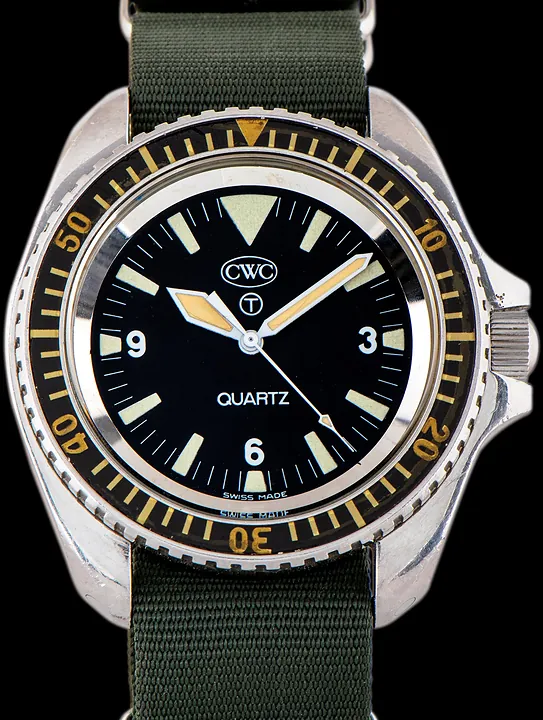
Wristwatches · 1986
CWC Royal Navy Diver 0552/6645-99-7573314, 1986
Craft & Tailored (dealer), Los Angeles
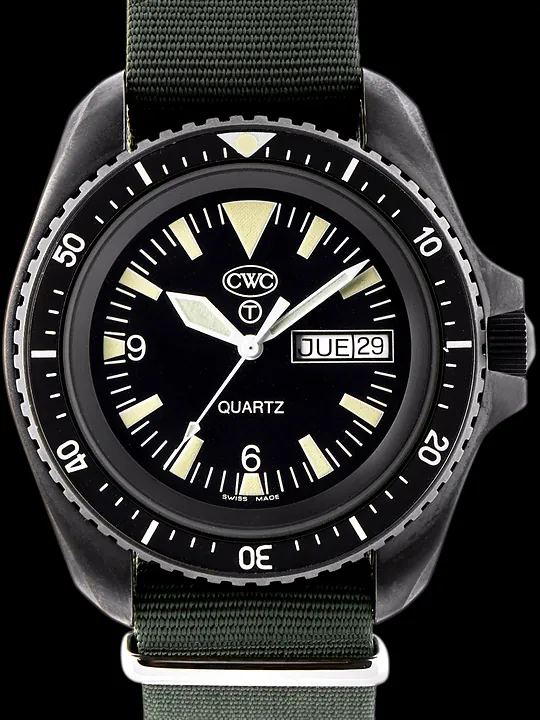
Wristwatches · 2005
CWC Royal Navy SBS Diver W10/6645-99-7995443, 2005
Craft & Tailored (dealer), Los Angeles
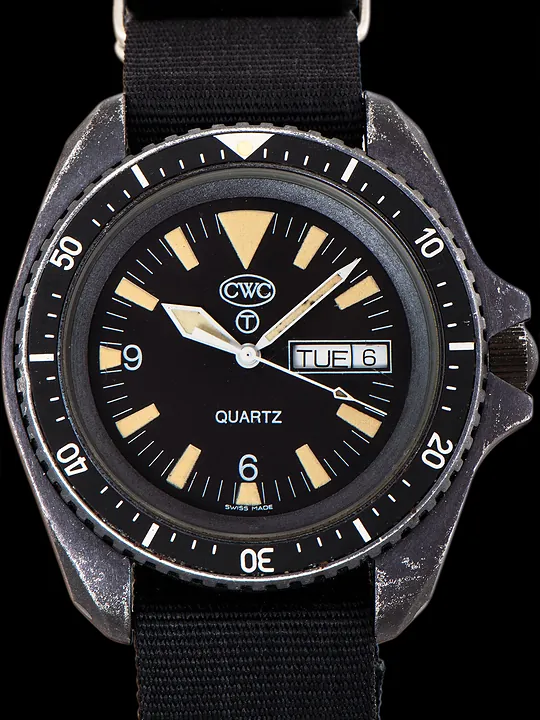
Wristwatches · 1993
CWC Royal Navy SBS Diver 0555/6645-99-7995443, 1993
Craft & Tailored (dealer), Los Angeles
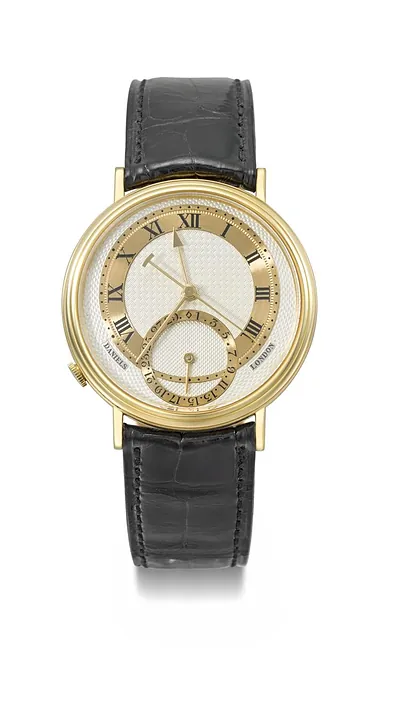
Wristwatches · 1999
'Millennium' co-axial wristwatch by George Daniels and Omega, England, 1999
Science Museum Group, London

Wristwatches · 2008
Wristwatch by Breitling?, 2008
Museum Rotterdam
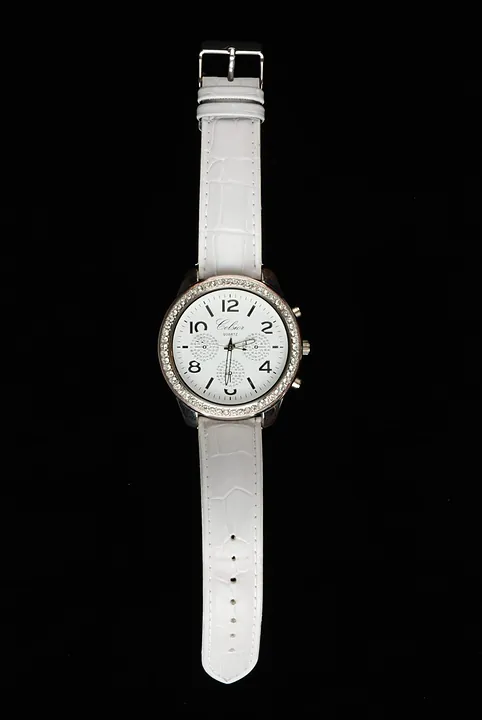
Wristwatches · 2008
Wristwatch by Celsior Quartz, 2008
Museum Rotterdam
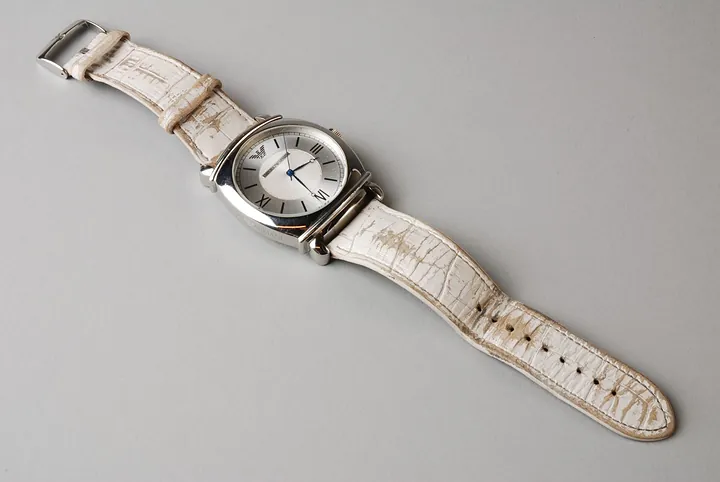
Wristwatches · 2008
Wristwatch possibly by Emporio Armani, 2008
Museum Rotterdam