
Wristwatches · Wristwatch
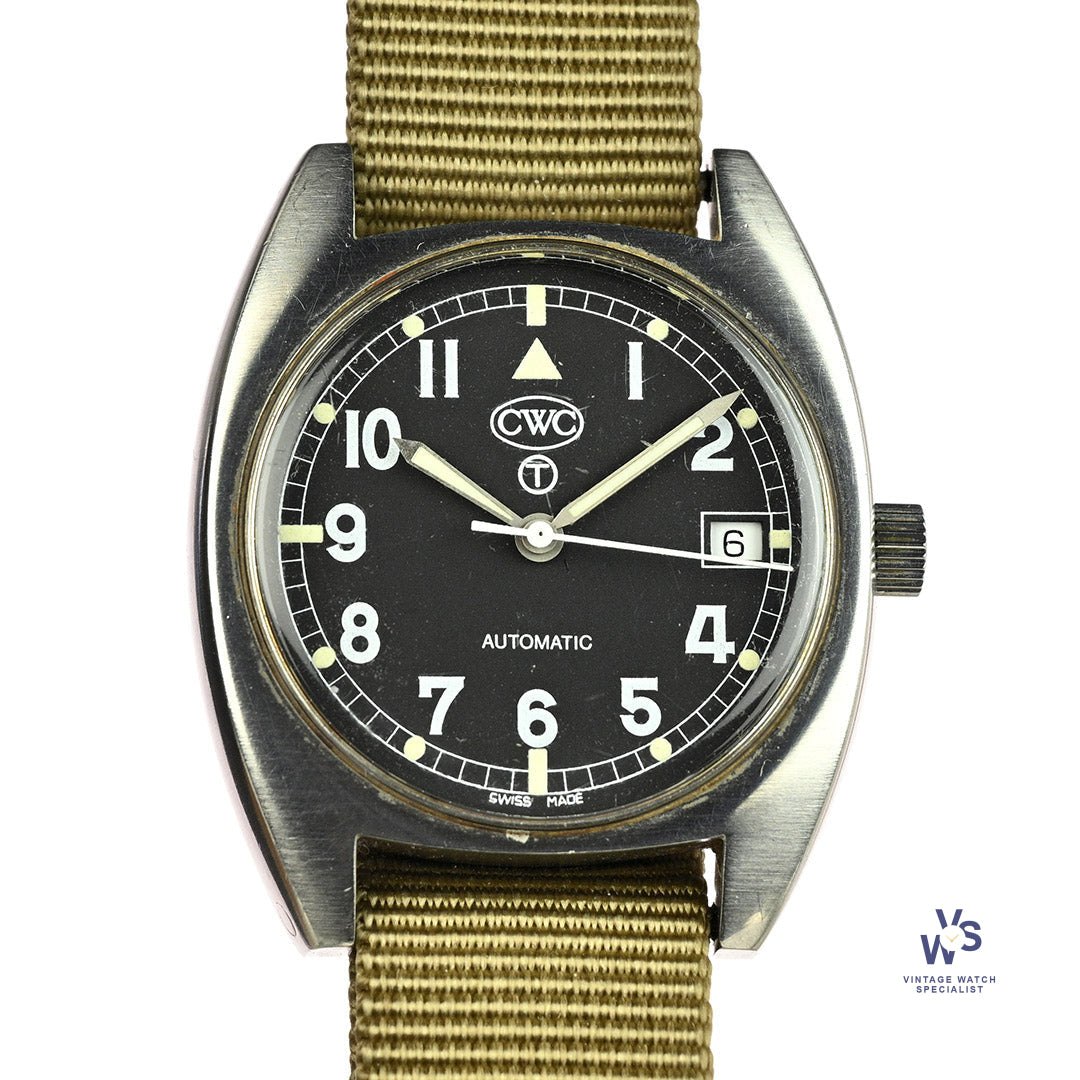
CWC Automatic Movement Field Watch, Tritium Lume, circa 1990s
- Maker / attribution
- CWC (maker)
- Date
- c. 1990s
- Historical period
- Mechanical Renaissance (1990 – 2010)
- Country of origin
- Unrecorded in source
- Object type
- Wristwatch
- Stock no.
- vws4118cs
- Credit line
- Dealer listing, Vintage Watch Specialist (vws4118cs)
- Catalogue title (original)
- CWC - A Rare Automatic Movement Field Watch - Tritium Lume - c.1990s (English)
View the source record (dealer listing) ↗ (opens another website in a new tab)Suggest a correction
Record summary
Catalogued by Vintage Watch Specialist (dealer), United Kingdom (stock number vws4118cs), this is a wristwatch by CWC, dated c. 1990s. The Atlas places it in the Mechanical Renaissance period (1990 – 2010) of its Wristwatches collection. The record is illustrated with 6 photographs.
Assembled from the source record's structured fields. Dates and attributions are given as the source states them; where a field is missing the Atlas leaves it blank rather than estimating.
Catalogue description
Dealer description — Vintage Watch Specialist
A Handsome CWC Automatic Field Watch in Superb Preowned Condition with a Striking Dial and Attractive Tritium Lume Cabot Watch Company (CWC) was founded in 1972 by Ray Mellor, a former Hamilton distributor who stepped in when Hamilton ceased supplying the British Ministry of Defence. CWC went on to become one of the longest-serving suppliers of military watches to the UK armed forces, producing timepieces for the Royal Navy, RAF and British Army. Built to strict MoD specifications, CWC watches earned a reputation for toughness, legibility and reliability in active service. Whats on Offer A strong example of the classic CWC field watch, but rare to find with an automatic movement. This piece captures the utilitarian charm that has made CWC such a favourite among military watch enthusiasts. The rich black dial features clear Arabic numerals, a practical date aperture at 3 o’clock and the circled “T” beneath 12, denoting tritium lume. The lume has aged evenly across the hour plots and sword hands, giving the watch a warm, cohesive vintage character. A central needle second hand adds to the clean, functional layout. Housed in a well-preserved stainless steel case and paired with a comfortable textile strap, this is a robust, wearable tool watch with genuine military DNA and everyday appeal. Case back engravings: 74.141ST 13997.
Historical context
Mechanical Renaissance (1990 – 2010)
Mechanical watches return as cultural objects; independent watchmaking flourishes.
Mechanical watches returned as cultural and luxury objects. Complications, tourbillons and new materials proliferated; independent watchmakers such as George Daniels, F.P. Journe and Philippe Dufour revived artisanal watchmaking; collecting vintage watches became a major field.
Read the period in the timelineMore wristwatches from this periodEarlier: Quartz Revolution
Atlas type guide
Automatic (self-winding) watches
Self-winding watches use the wearer's motion to wind the mainspring. Abraham-Louis Perrelet and Breguet made 'perpétuelle' pocket watches with oscillating weights in the late eighteenth century, but the principle only became practical in the wristwatch. John Harwood patented a bumper automatic in 1923; Rolex's Perpetual rotor (1931) winding in one direction, and later bidirectional rotors (Eterna, Felsa Bidynator), established the modern form. Micro-rotors (Universal Genève, Buren) and peripheral rotors made automatic watches thinner.
What to look for
- A semicircular rotor turning 360° over the movement, or a 'bumper' weight that rebounds between springs.
- 'Automatic', 'Perpetual' or 'Self-winding' on the dial.
- A sealed screw-back case, since automatic watches are wound less often by the crown.
Dating clues
- Bumper automatics: 1923–c. 1955.
- Full rotors: from 1931 (Rolex); widespread after c. 1950.
- Micro-rotors: from 1954–1958.
General guidance written by the Atlas editors about this kind of object. It is not a statement about this particular piece; for that, rely on the source record above and on physical examination.
Related records
Wristwatches · c. 1985
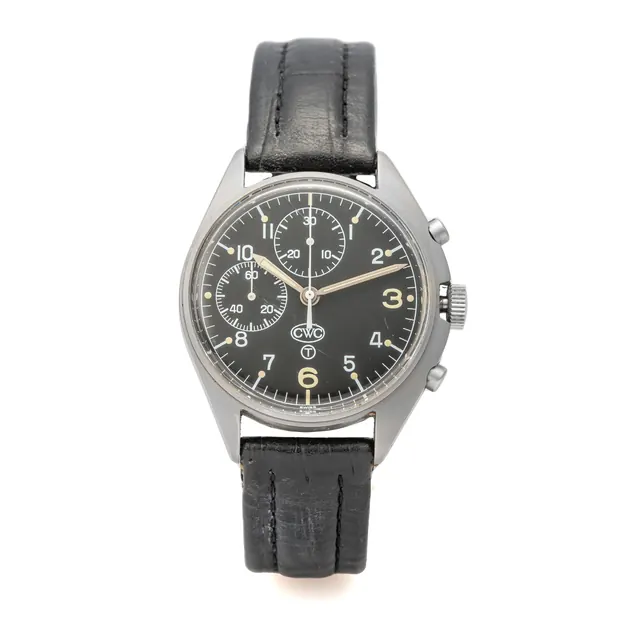
Cwc wristwatch, Military Chronograph, circa 1985
Antiquorum auction archive, Geneva
Wristwatches · 1986
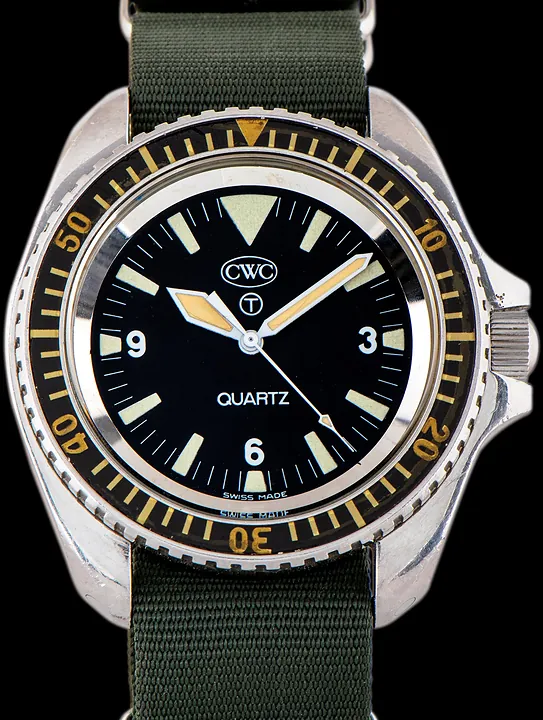
CWC Royal Navy Diver 0552/6645-99-7573314, 1986
Craft & Tailored (dealer), Los Angeles
Wristwatches · 2005
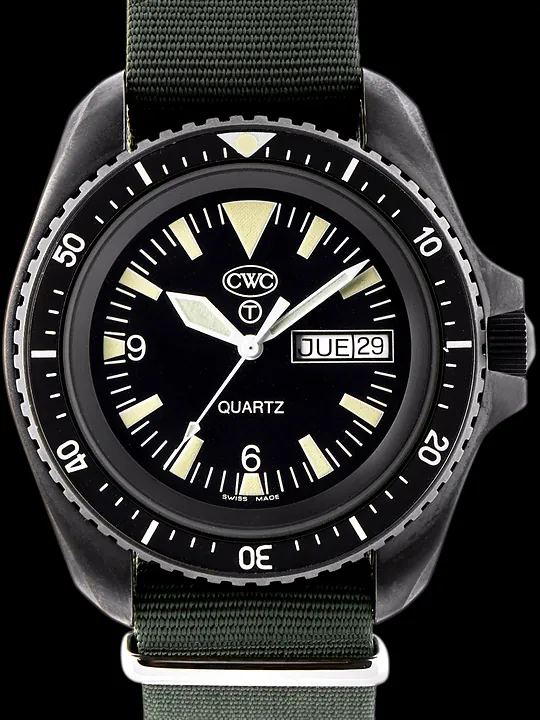
CWC Royal Navy SBS Diver W10/6645-99-7995443, 2005
Craft & Tailored (dealer), Los Angeles
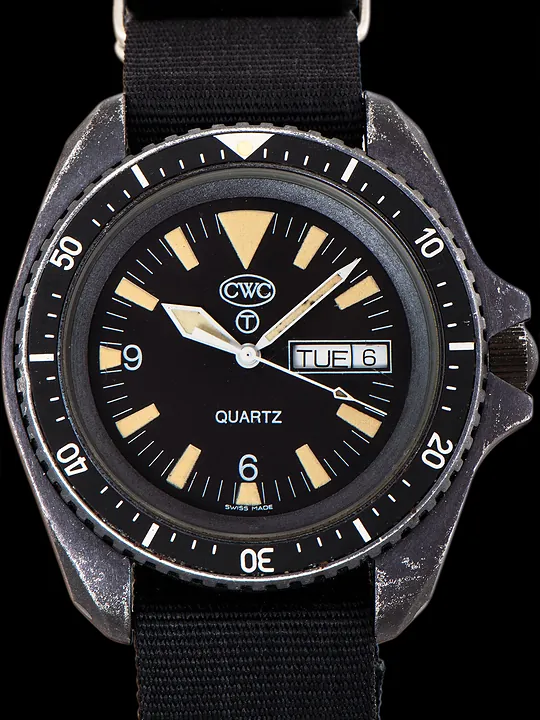
Wristwatches · 1993
CWC Royal Navy SBS Diver 0555/6645-99-7995443, 1993
Craft & Tailored (dealer), Los Angeles
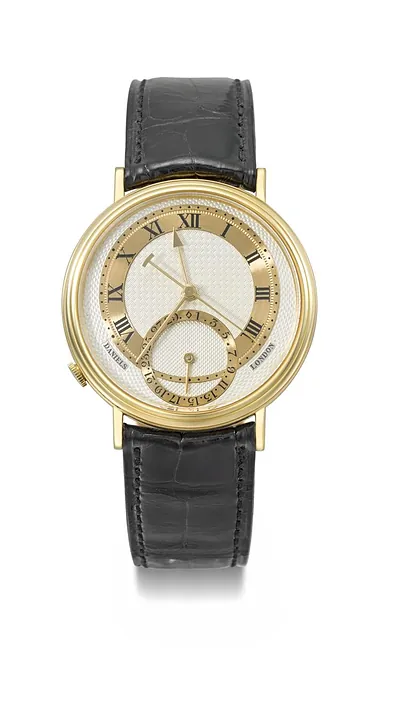
Wristwatches · 1999
'Millennium' co-axial wristwatch by George Daniels and Omega, England, 1999
Science Museum Group, London

Wristwatches · 2008
Wristwatch by Breitling?, 2008
Museum Rotterdam
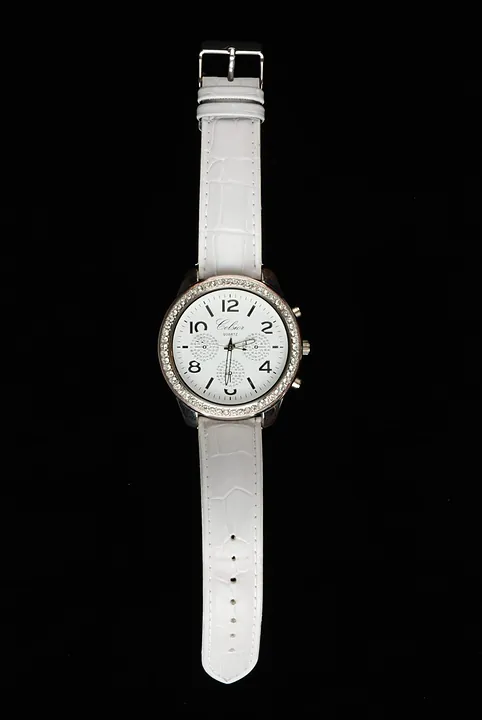
Wristwatches · 2008
Wristwatch by Celsior Quartz, 2008
Museum Rotterdam
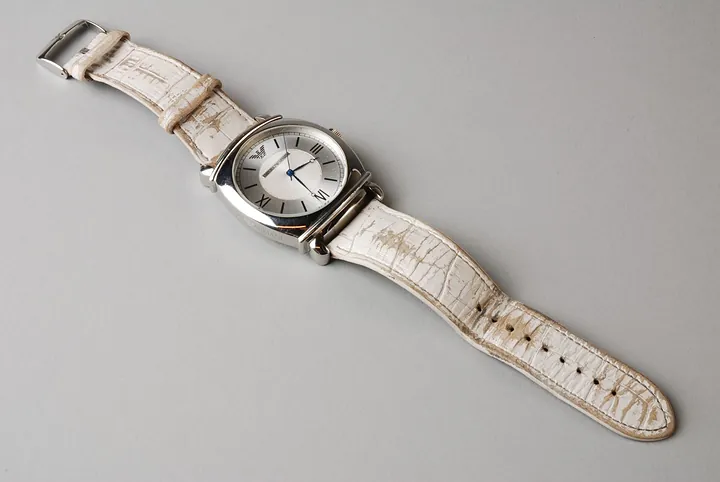
Wristwatches · 2008
Wristwatch possibly by Emporio Armani, 2008
Museum Rotterdam