
Clocks · Wall clock
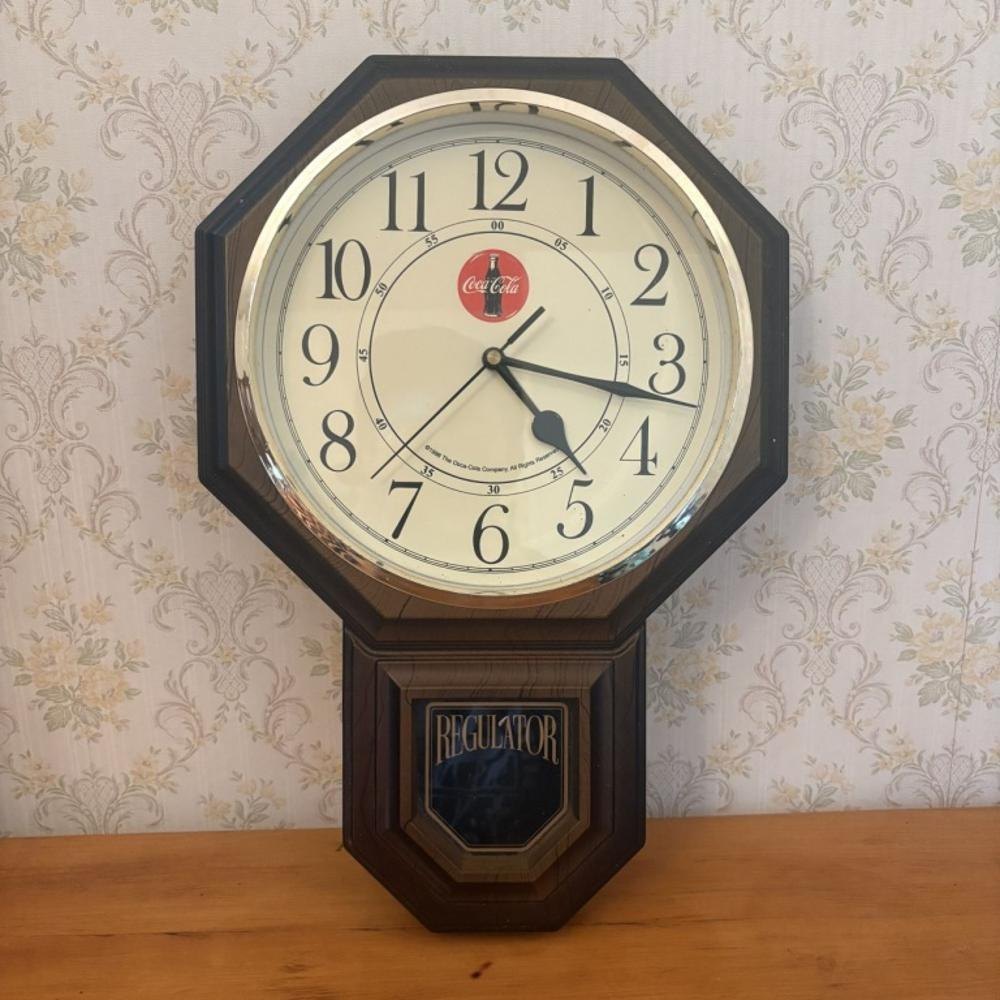
Coca-Cola Regulator Style Quartz Wall Clock
- Maker / attribution
- The Coca-Cola Company (source attribution)
- Date
- 1998
- Historical period
- Mechanical Renaissance (1990 – 2010)
- Country of origin
- Unrecorded in source
- Object type
- Wall clock
- Auction house
- Swisher Bros. Auction
- Lot
- 456
- Credit line
- Swisher Bros. Auction
- Catalogue title (original)
- At Auction: Coca-Cola Regulator Style Battery Operated Quartz Wall Clock 1998 (English)
View the source record (auction lot) ↗ (opens another website in a new tab)Suggest a correction
Record summary
Catalogued by Swisher Bros. Auction (lot 456), this is a wall clock attributed to The Coca-Cola Company, dated 1998. The Atlas places it in the Mechanical Renaissance period (1990 – 2010) of its Clocks collection. The record is illustrated with 1 photograph.
Assembled from the source record's structured fields. Dates and attributions are given as the source states them; where a field is missing the Atlas leaves it blank rather than estimating.
Catalogue description
Original object description
Executed in a regulator configuration, this wall timepiece produced under the Coca-Cola brand features an octagonal upper dial section above an elongated pendulum drop-trunk. The chassis is molded from dark, wood-grained plastic trimmed with a gold-tone metallic bezel. The cream-hued dial displays black Arabic numerals, an inner minute circle marked at five-minute intervals, and three central hands. Directly below 12 o'clock is the round red Coca-Cola logo with a contour bottle, accompanied by a 1998 copyright notice along the lower dial perimeter. The lower glass displays the text REGULATOR in gold lettering, and the rear encases a quartz movement connected to chime wiring.
Construction and Design
Following traditional regulator forms, the piece joins an octagonal upper case to an extended pendulum compartment below. The housing is molded from dark imitation-wood plastic and accented by a gold-tone metal bezel encircling the dial. Gold serif lettering spelling out 'REGULATOR' is applied to the lower window. With overall dimensions of approximately 19 inches in height by 11 3/4 inches in width, the cream dial features Arabic numerals and an inner index demarcated in five-unit increments.
Branding and Markings
The circular red Coca-Cola trademark graphic showing the contour bottle appears beneath the upper hour marker, while a 1998 copyright attributed to The Coca-Cola Company is inscribed at the lower edge of the dial. On the reverse, the black plastic movement cover contains two adhesive labels: a rectangular sticker numbered '46078' and a round label marked 'Q.C.1' beside an illustrated dial.
Mechanism and Operational Status
Uncovered electrical leads and a red module on the back are documented as chime components for acoustic playback. The item is offered strictly in 'As Is/As Found' condition, with cataloguing specifying that the electrical and mechanical systems are sold without operational guarantees.
Inscriptions & marks
46078
Historical context
Mechanical Renaissance (1990 – 2010)
Mechanical watches return as cultural objects; independent watchmaking flourishes.
Mechanical clocks returned as luxury and craft objects, alongside radio-controlled and designer quartz clocks. Independent makers and restorers revived traditional techniques, and museums increasingly documented industrial and electric clocks as heritage.
Read the period in the timelineMore clocks from this periodEarlier: Quartz Revolution
Atlas type guide
Regulators, wall and Vienna clocks
A regulator is a precision pendulum clock used as a time standard in observatories, workshops and railway offices. Typical features are a deadbeat or Graham escapement, a temperature-compensated pendulum (mercury jar, gridiron or later invar), maintaining power and a regulator dial that separates hours, minutes and seconds. George Graham's deadbeat escapement (c. 1715) and his mercury pendulum, together with Harrison's gridiron, set the pattern for two centuries.
Wall clocks span a much wider range: the elegant Viennese Laterndluhr and Dachluhr of the Biedermeier period, the Dutch stoelklok and staartklok, English 'dial' clocks used in schools, offices and railway stations, and mass-produced spring and weight wall clocks from Germany (Gustav Becker, Junghans, Kienzle) and America.
What to look for
- Deadbeat escapement and compensated pendulum (gridiron rods, mercury jar or wood rod).
- A regulator dial with a large central minute hand and separate hour and seconds dials.
- Vienna regulators: glazed cases, slender pendulum, small weights, enamel two-piece dials.
- German factory trademarks stamped on the backplate (e.g. Gustav Becker anchor and crown, Junghans star).
Dating clues
- Graham-type deadbeat regulators: from c. 1720.
- Viennese Laterndluhr: c. 1800–1850.
- German factory 'Vienna-style' regulators: c. 1870–1930; Gustav Becker serial numbers allow close dating.
General guidance written by the Atlas editors about this kind of object. It is not a statement about this particular piece; for that, rely on the source record above and on physical examination.
Read next:Deadbeat escapementAnchor (recoil) escapementGrasshopper escapement
Related records
Clocks · c. 1990
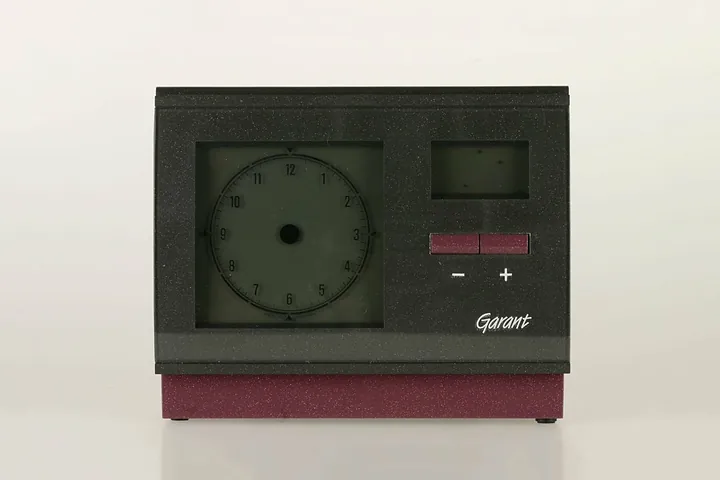
Alarm clock by Andreas GmbH und Co. Haller, Germany, c. 1990
German Clock Museum
Clocks · c. 1990s
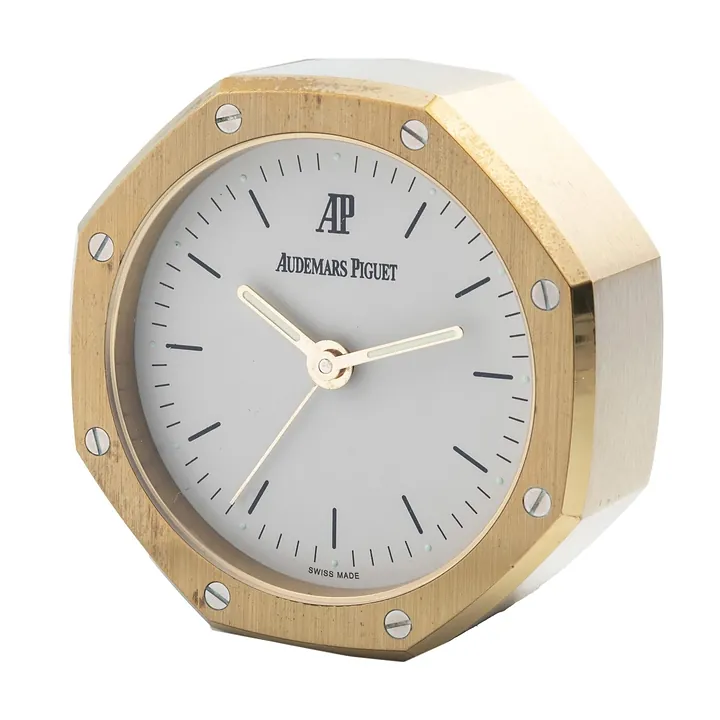
Audemars Piguet Royal Oak, c. 1990s
Antiquorum auction archive, Geneva
Clocks · c. 1990s
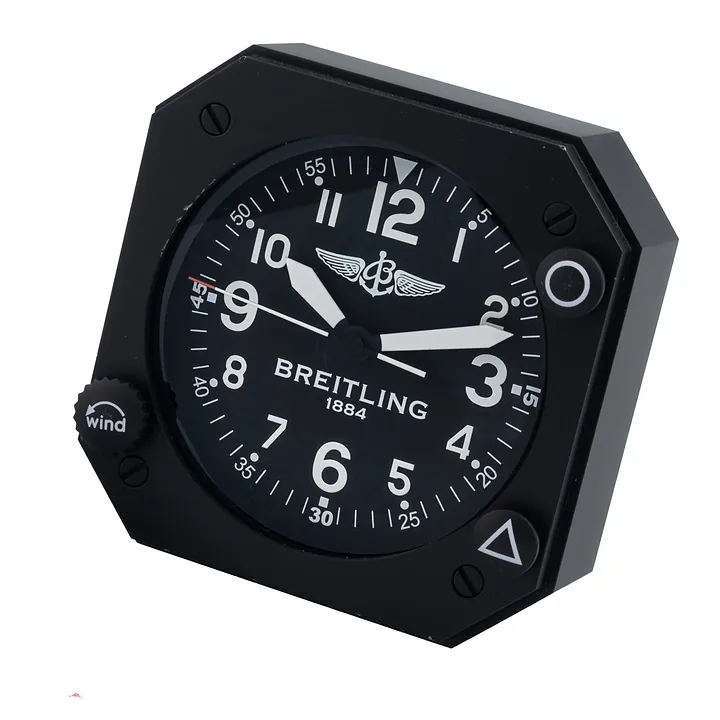
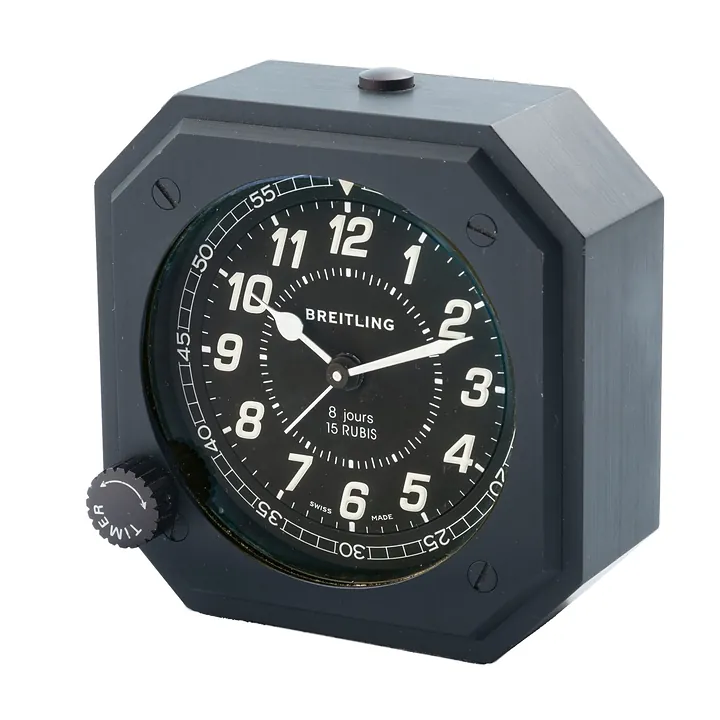
Breitling clock, c. 1990s (Antiquorum Lot 389-18)
Antiquorum auction archive, Geneva
Clocks · c. 1990s
Breitling clock, c. 1990s (Antiquorum Lot 389-20)
Antiquorum auction archive, Geneva
Clocks · c. 1995
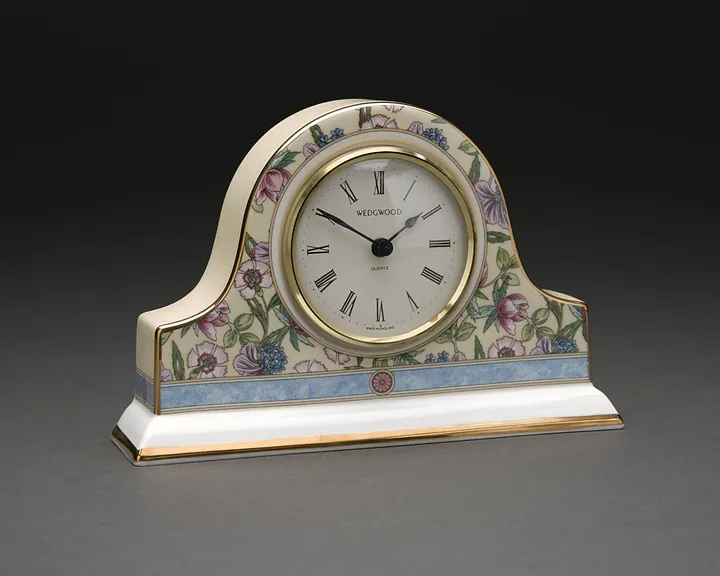
Clock, Bone China with transfer printing, Josiah Wedgwood and Sons, Barlaston, c. 1995 (V&A WE.18792-2014)
Victoria and Albert Museum, London
Clocks · c. 1995
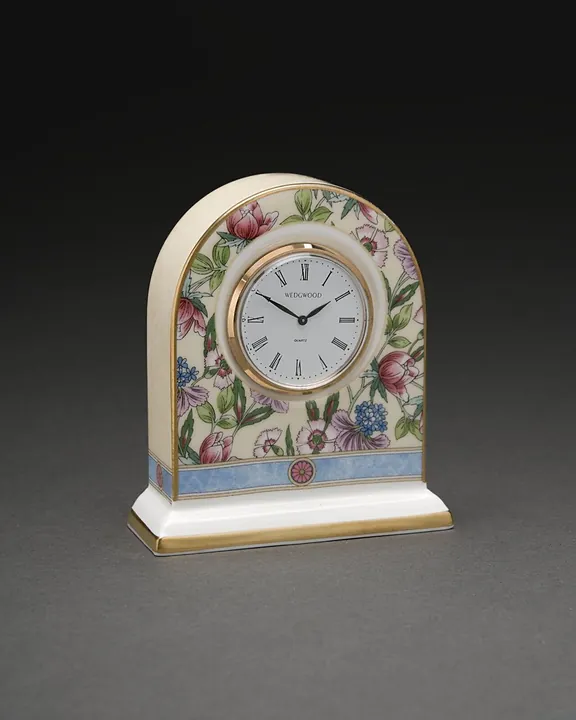
Clock, Bone China with transfer printing, Josiah Wedgwood and Sons, Barlaston, c. 1995 (V&A WE.18793-2014)
Victoria and Albert Museum, London
Clocks · c. 1990
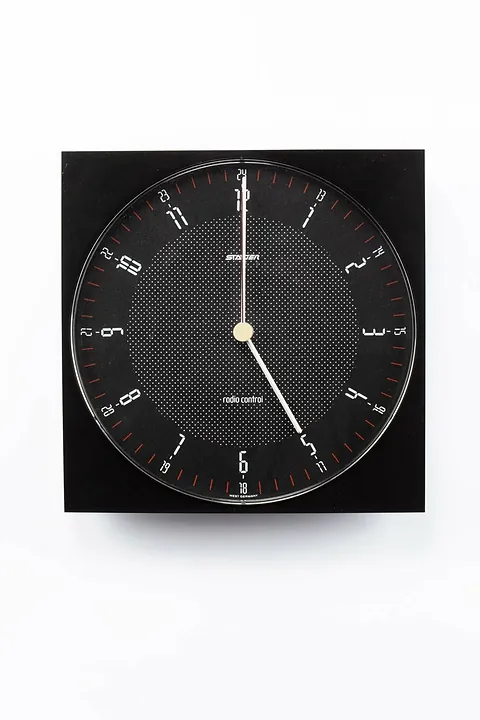
Electric clock by Werner Staiger, Germany, c. 1990
German Clock Museum
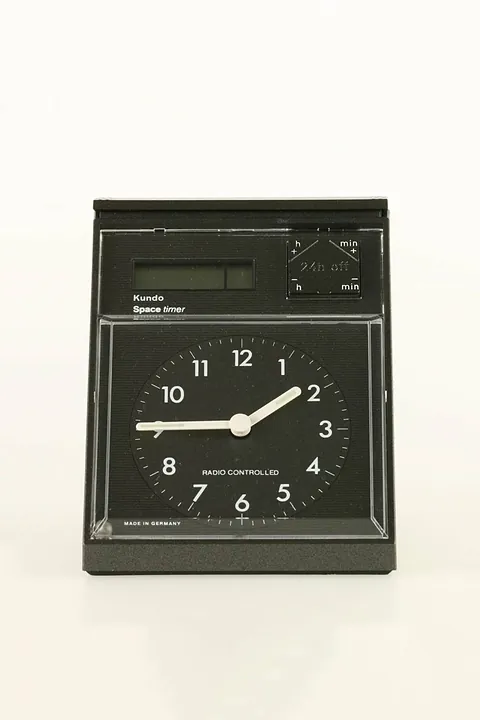
Clocks · 1991
Alarm clock by Kieninger und Obergfell (Kundo), Germany, 1991
German Clock Museum