
Clocks · Clock
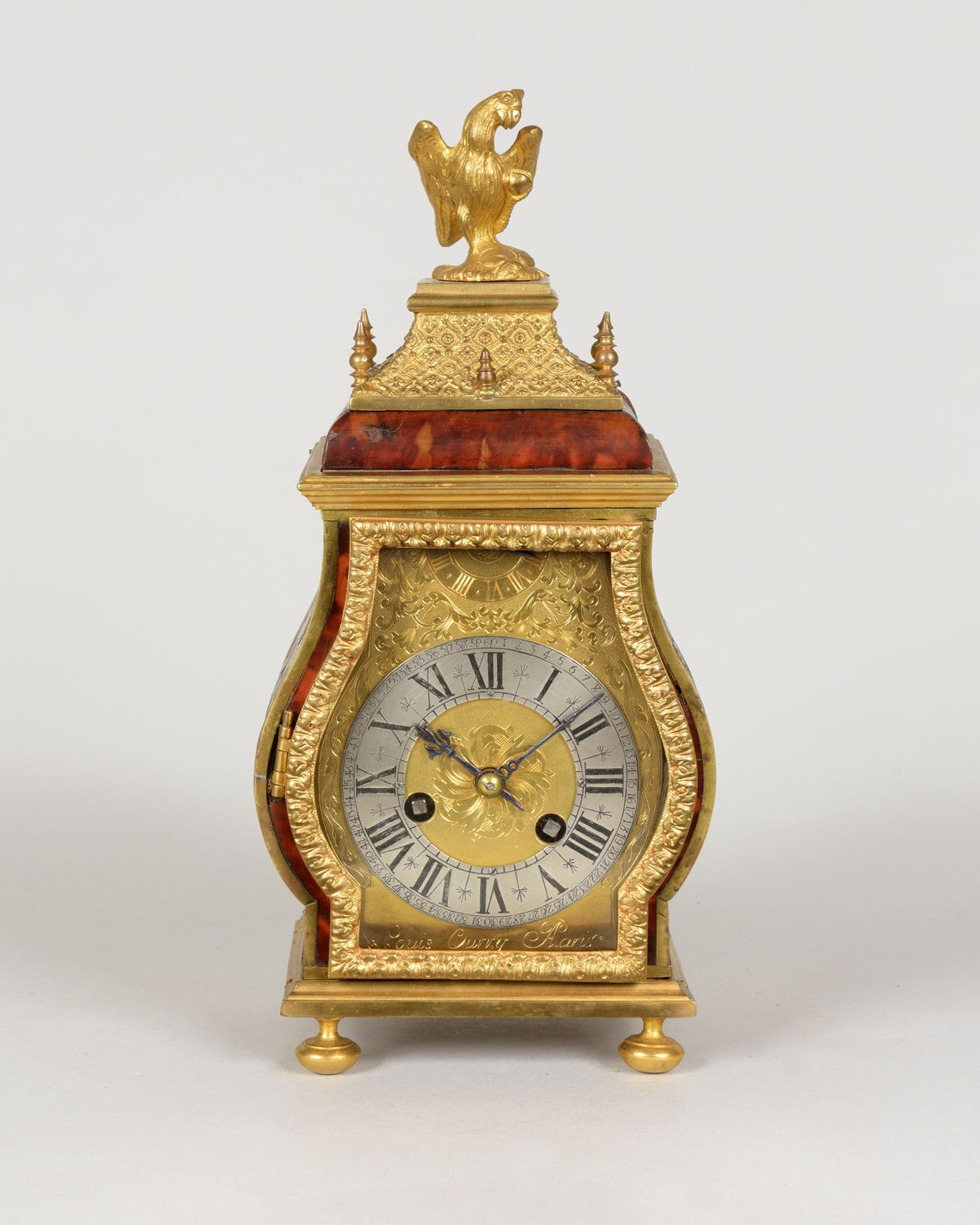
Clock by Louis Ourry, Paris, c. 1690
- Maker / attribution
- Louis Ourry (maker)
- Date
- c. 1690
- Historical period
- Early Modern Horology (1600 – 1750)
- Country of origin
- France
- Place
- Paris
- Object type
- Clock
- Dimensions
- Height 28 cm
- Stock no.
- Product 5045
- Credit line
- Dealer listing, Howard Walwyn (product 5045)
- Catalogue title (original)
- LOUIS OURRY. A fine French Louis XIV period tête de poupée bedchamber clock of rare small size. (English)
View the source record (dealer listing) ↗ (opens another website in a new tab)Suggest a correction
Record summary
Catalogued by Howard Walwyn Fine Antique Clocks (dealer), London (stock number Product 5045), this is a clock by Louis Ourry, made in Paris, France, dated c. 1690. The Atlas places it in the Early Modern Horology period (1600 – 1750) of its Clocks collection. Recorded dimensions: Height 28 cm. The record is illustrated with 6 photographs.
Assembled from the source record's structured fields. Dates and attributions are given as the source states them; where a field is missing the Atlas leaves it blank rather than estimating.
Catalogue description
Dealer description — Howard Walwyn
A fine French Louis XIV period tête de poupée bedchamber clock of rare small size by this highly respected Parisian maker. The clock has a bombé-shaped tête de poupée case surmounted by a cast ormolu cockerel, set on a plinth above five turned finials on the gilt brass caddy top. The cockerel is a symbol of daybreak –‘ un point du jour’ . The oak carcase is veneered in tortoiseshell with brass Boulle marquetry inlay to the sides and the clock stands on a brass moulded base raised on four brass bun feet. This bedchamber clock or pendule d’alcove as an example of exceptional boulle and tortoiseshell French craftsmanship of the late 1600s is small and rare in comparison to the more numerous pendules religieuses of the period. The 3¾ by 5 inch brass dial has a silvered Roman chapter ring with each minute increment hand-engraved and the half-hour points marked by cruciform motifs. The centre is decorated with gilt engraved flowerhead and foliate scrollwork on a stippled ground. A subsidiary regulation dial is set in the arch (calibrated II–IX) with a blued steel indicator hand. The lower edge of the dial is signed Louis Ourry Paris in flowing script. The clock retains its original blued steel hands. It has a 30-hour spring-driven movement with a balance wheel mounted vertically on the ogee shaped backplate. The clock strikes the hours on a bell via a count wheel also set on the backplate along with the externally mounted clicks and ratchet wheels for the twin-going barrels. The brass plates are united by four turned vase-shaped pillars, and the backplate is boldly signed in cursive script by the maker at the base. Date: circa 1690 Height : 11 in (28 cm) Width : 5 in (12.7cm) Depth : 3 ⅞ in (9.8 cm) *Louis Ourry was an important French Huguenot clockmaker. He was born in Blois in 1643 and later established a workshop on the Quai Pelletier in Paris where he made and bought and sold clocks until his death in 1699. He was admitted as maître horloger in 1684 and is known to have collaborated with the celebrated ébéniste André-Charles Boulle. Ourry’s clocks are characterised by the refined decoration of their cases, their high-quality movements and often compact scale, as seen in this beautiful little clock. Louis Ourry had a number of important clients and contacts. Amongst the many visitors to his shop on the Quai le Pelletier near the Pont Notre-Dame was John Locke the English philosopher who came in 1677. Louis told the great man that he had “given off the way of makeing watches with very great balances in imitation of pendulums because, but several jogs in one’s pocket, they are apt some times to stand still.” Following his death in 1699, Ourry’s widow maintained the workshop at the Quai des Orfèvres in Blois, where a 1700 inventory recorded several clocks in violation of sumptuary laws, underscoring the opulence and high value of their production. Today there are clocks signed Ourry in the Louvre, the Château de Versailles, the Musée des Arts Décoratifs and the British Museum. A closely related tête de poupée clock by Ourry is illustrated in Antiquarian Horology (Vol. 39, No. 4, Dec 2018) in a fascinating article by Wauters & Schouten, where it is described as a travelling or bedchamber timepiece. References : Tardy, Dictionnaire des Horlogers Français, pp.494-496 AHS Journal, Vol.39, N0.4 Dec 2018, pp.485-503 Louis Ourry (1643-1699). A Huguenot clockmaker in Paris and an early bedchamber clock from his workshop. Erik Wauters and Chris Schouten HW6660
Historical context
Early Modern Horology (1600 – 1750)
Huygens' pendulum and balance spring transform accuracy; English makers develop the anchor and deadbeat escapements.
Huygens's pendulum (1656–57) improved clock accuracy from about a quarter of an hour to under a minute a day. The anchor escapement (c. 1670) and the long seconds pendulum created the longcase clock; London makers such as Fromanteel, Knibb, Tompion and Quare led European clockmaking, and French makers created the Boulle pendule.
Read the period in the timelineMore clocks from this periodEarlier: Renaissance Horology
Atlas type guide
Lantern, chamber and Gothic clocks
Domestic weight-driven clocks were made in southern Germany, Switzerland, Italy and Flanders from the fifteenth century. These 'Gothic' or chamber clocks have an open iron frame with corner posts, a verge escapement controlled by a foliot or balance wheel, and often an alarm or hour striking on a bell mounted above.
In England the lantern clock appeared around 1600: a brass posted-frame clock with a bell on top under decorative frets, hung on a hook or set on a wall bracket. After about 1658 many were converted to pendulum control, so originality of the escapement is a key question for any surviving example.
What to look for
- Iron (continental) or brass (English) posted frames with turned corner pillars and finials.
- A single hour hand — minute hands are rare before the pendulum era.
- Evidence of conversion: plugged holes, replaced escapement wheels or later pendulums.
- Fret designs and engraving on the dial centre, which help date English lantern clocks.
Dating clues
- Continental Gothic chamber clocks: c. 1450–1650.
- English lantern clocks: c. 1600–1720, with provincial examples later.
- Short 'bob' pendulum conversions after 1658; long pendulums with anchor escapement after c. 1670.
General guidance written by the Atlas editors about this kind of object. It is not a statement about this particular piece; for that, rely on the source record above and on physical examination.
Related records
Pocket Watches · 1650–1675
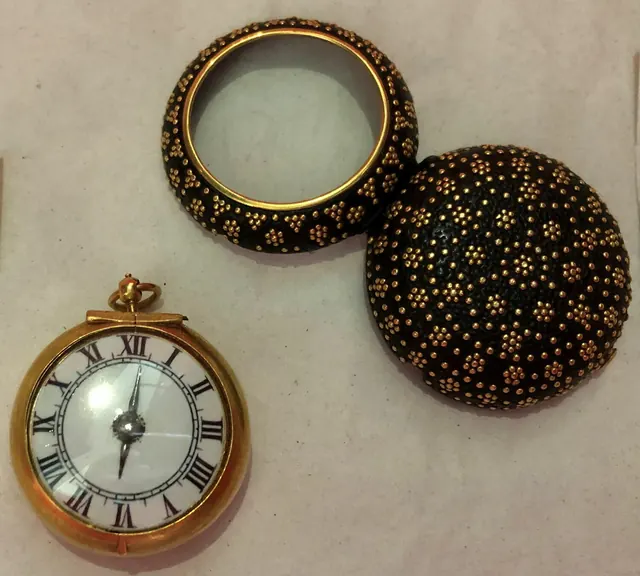
Watch by Louis Ourry, France, 1650–1675
Musée du Louvre, Paris
Clocks · 1590–1610
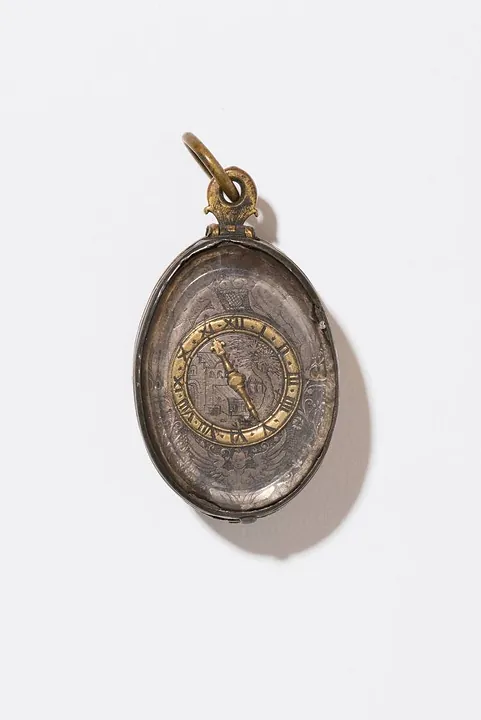
Clock, France, 1590–1610
MAK – Museum of Applied Arts
Clocks · c. 1600
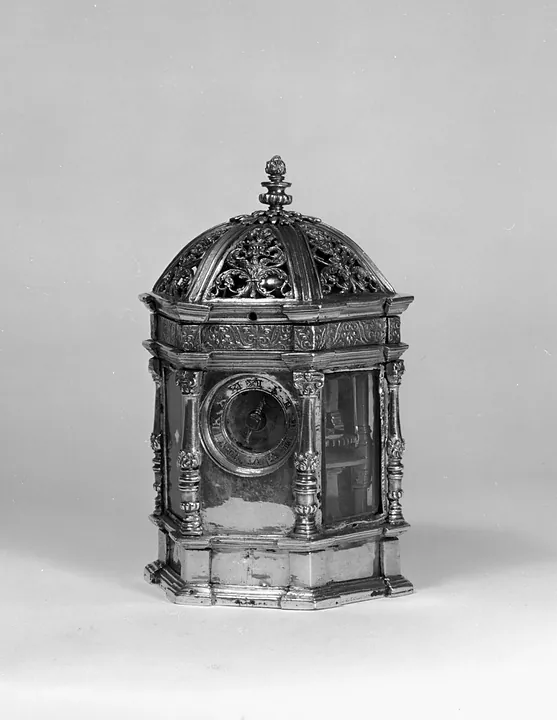
Table Clock, sheet brass, engraved, pierced and gilt, Paris, ca.1600, signed 'B(?) Pichard, à Paris'
Victoria and Albert Museum, London
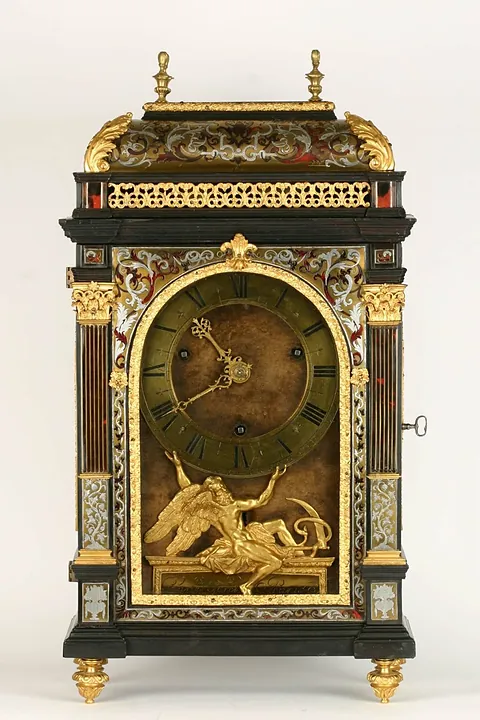
Clocks · 1600–1699
Table clock by Charles Goret, France, 1600–1699
German Clock Museum
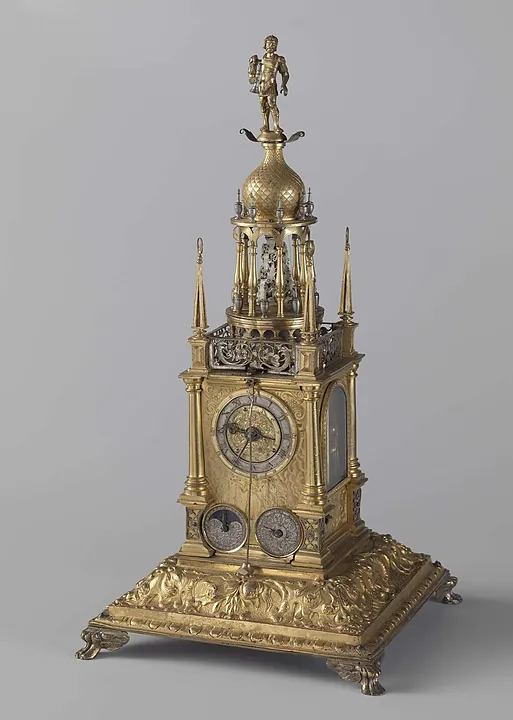
Clocks · 1640
Table clock, France, 1640
Rijksmuseum
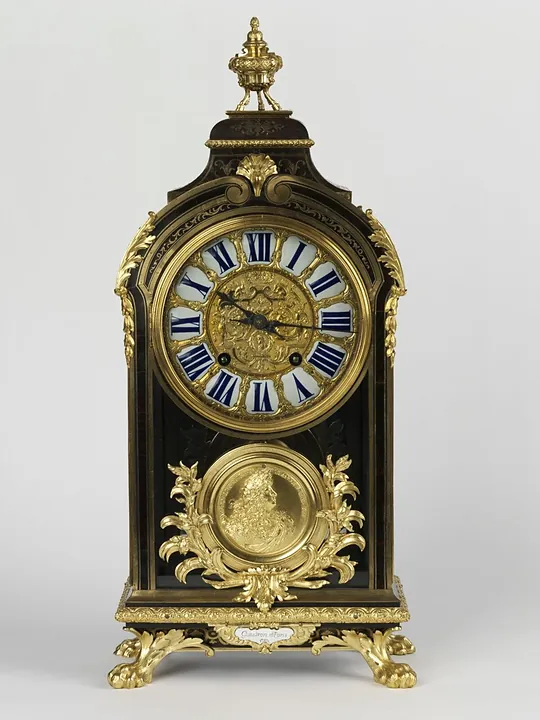
Clocks · late 17th century
Clock with case of tortoiseshell inlaid with brass, Paris, late 17th century
Victoria and Albert Museum, London
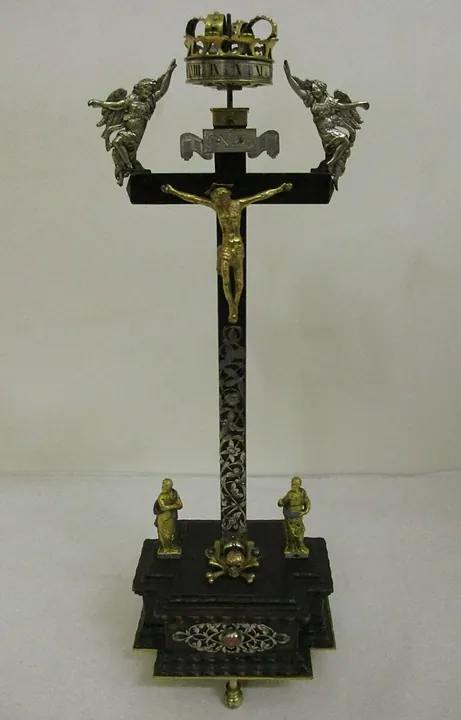
Clocks · 1650
Crucifix Clock, signed W. H. Arnstad, mid- 17th century.
Victoria and Albert Museum, London
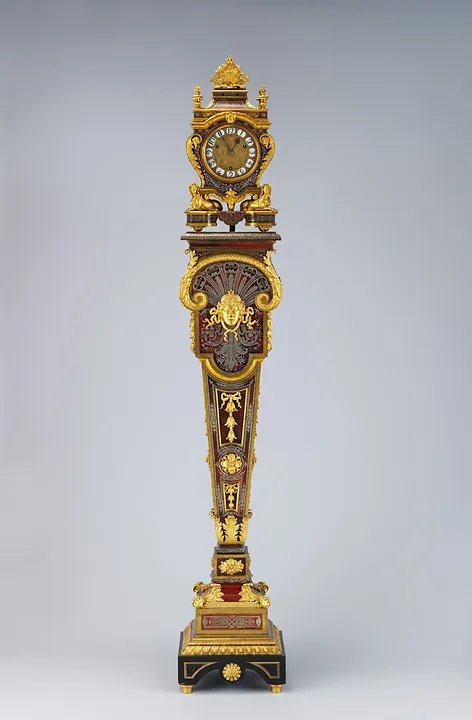
Clocks · c. 1690
Clock with pedestal, case attributed to André Charles Boulle, France, c. 1690
The Metropolitan Museum of Art, New York