
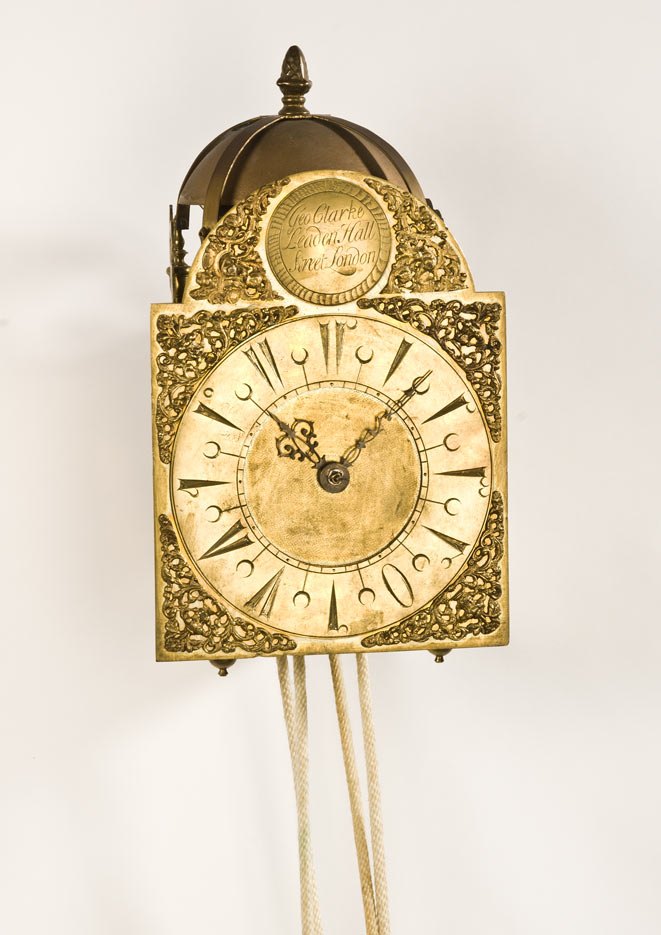
Clocks · Clock
Clock by George Clarke, England, mid 18th century
- Maker / attribution
- George Clarke (Maker)
- Date
- mid 18th century
- Historical period
- Precision & Scientific Horology (1750 – 1850)
- Country of origin
- England
- Place
- London / Leadenhall Street (Herstellung)
- Object type
- Clock
- Dimensions
- Höhe: 38.0 cm, Breite: 21.0 cm, Tiefe: 19.0 cm
- Holding institution
- Badisches Landesmuseum Karlsruhe
- Accession / object no.
- 2013/556 (Inventarnummer)
- Credit line
- Badisches Landesmuseum Karlsruhe
- Catalogue title (original)
- Englische Uhr für den osmanischen Hof (German)
View the source record ↗ (opens another website in a new tab)Suggest a correction
Record summary
Held and catalogued by Badisches Landesmuseum Karlsruhe (object number 2013/556 (Inventarnummer)), this is a clock by George Clarke, made in London / Leadenhall Street (Herstellung), England, dated mid 18th century. The Atlas places it in the Precision & Scientific Horology period (1750 – 1850) of its Clocks collection. Recorded dimensions: Höhe: 38.0 cm, Breite: 21.0 cm, Tiefe: 19.0 cm. The record is illustrated with 1 photograph.
Assembled from the source record's structured fields. Dates and attributions are given as the source states them; where a field is missing the Atlas leaves it blank rather than estimating.
Catalogue description
Catalogue description from Badisches Landesmuseum Karlsruhe
Die Wanduhr »Lantern Clock« im Stile einer sogenannten »Comtoise-Uhr« ist aus Messing und besitzt neben Gewicht und Pendel zwei Blechtüren rechts und links am Gehäuse. Das fast würfelartig wirkende Gehäuse wird um ein krönendes Halbrund erweitert.Die von dem berühmten Uhrmacher George Clarke in der Mitte des 18. Jahrhunderts in der Leadenhall Street zu London für den osmanischen Hof hergestellte Uhr besitzt ein Ziffernblatt mit sogenannten arabischen Ziffern. In dem Halbrund taucht in einem Kreis prominent der Name des Herstellers auf. Ein appliziertes Rankenwerk mit einem zentrierten Vasenmotiv bedeckt die freien Flächen der Frontseite.Die Vorliebe für Zeitmessgeräte reicht im Nahen Osten weit zurück. Im frühen Mittelalter bemühte man sich zunächst selbst, Geräte unterschiedlichster Funktion herzustellen. Dafür steht die Wasseruhr des Kalifen Harun al-Rashid (um 763-809), die als Gesandtschaftsgeschenk den Weg von Bagdad in die Aachener Residenz fand.Ab dem 16. Jahrhundert kehrte sich jedoch das Verhältnis um: allein 120 Gesandtschaften trafen zwischen 1500 und 1740 mit entsprechenden Gaben in Istanbul ein. In den Annalen ist von Uhren »meistentheils auf den Türkischen Zeiger gericht« mit bewegtem Figurenspiel die Rede, die Kaiser Ferdinand II. (1578-1637) an Sultan Murat IV. (1612-1640) schenkte.Die besten Uhrmacher Frankreichs und Englands produzierten dann im 18. und 19. Jahrhundert Uhren für eine wohlhabende osmanische Käuferschicht, die mit viel Gold und Edelsteinen ausgestattet waren. Um die Wende zum 20. Jahrhundert antwortete man auf die wachsende Nachfrage des osmanischen Bürgertums mit Regulatoren teils im historisierenden Gehäuse.Zu den Uhren der ersten Stunde gehört die »Lantern Clock« des Londoner Uhrmachers George Clarke. Die im Stil einer Comtoise-Uhr gehaltene Wanduhr, deren Gehäuse mit appliziertem Rankenwerkdekor um ein krönendes Halbrund erweitert wird, führt an prominenter Stelle den Herstellernamen auf.Bis zur Republikgründung der Türkei war die Verwendung eines »osmanischen« Ziffernblatts gebräuchlich. Sowohl osmanische als auch arabische Zahlen entstammen wiederum dem Zahlensystem der Inder. Letztlich handelt es sich hier um nur eine der vielschichtigen Facetten eines transkulturellen Wunderwerks, das als Parameter des menschlichen Zusammenlebens gilt: die Zeit.Literatur: Schoole Mostafawy, »Tempus fugit« - Doch die Uhr überdauert die Zeit. In: Badisches Landesmuseum Karlsruhe. 100 Objekte - 100 Geschichten. Dem Fremden im Eigenen auf der Spur, hrsg. vom Badischen Landesmuseum, bearb. von Schoole Mostafawy, Karlsruhe 2014, S. 78, Kat. 57; WeltKultur / Global Culture. Führer durch die kulturgeschichtliche Abteilung, hrsg. vom Badischen Landesmuseum, Karlsruhe 2014, S. 47, Abb. 34.
Shown in the original language of the source catalogue. An editor-reviewed English translation has not yet been published; we do not publish machine translations as authoritative text.
Historical context
Precision & Scientific Horology (1750 – 1850)
Harrison solves longitude; Mudge invents the lever; Breguet's Paris workshop defines the modern watch.
The age of the deadbeat escapement, compensated pendulums and observatory regulators. Domestic clocks spread through the middle classes: English longcase and bracket clocks, French gilt-bronze mantel clocks, Viennese Biedermeier wall clocks, Black Forest painted-shield clocks, and the first American shelf clocks.
Read the period in the timelineMore clocks from this periodEarlier: Early Modern Horology
Atlas type guide
Domestic clocks
A clock combines four systems: a source of power (falling weight, coiled spring, or later electricity), a gear train that divides time, an escapement and oscillator that regulate it (foliot, pendulum or balance), and an indicating system of dial and hands or a bell. Its history runs from the large iron weight-driven clocks of the late thirteenth century to Renaissance spring-driven table clocks, the pendulum revolution of 1656, the factory clocks of the nineteenth century and electric and quartz clocks of the twentieth.
Domestic clocks also reflect regional furniture and decorative traditions — English longcase and bracket clocks, French pendules, Viennese regulators, Black Forest and American shelf clocks — and therefore record changing tastes as much as technical progress.
What to look for
- How the clock is powered: weights, spring barrel, fusee, electric coil.
- The oscillator: foliot, short pendulum, long seconds pendulum or balance.
- Whether it strikes: hour only (count wheel) or hours and quarters (rack striking).
- The maker or retailer's name on dial and movement, and any factory trademarks.
- Signs of alteration — replaced dials, converted escapements, 'married' cases.
Dating clues
- Before 1656 clocks used foliots or balances; after, most domestic clocks have pendulums.
- Anchor escapements spread after c. 1670; minute hands became common at the same time.
- Factory production in America and Germany transformed prices after c. 1840.
General guidance written by the Atlas editors about this kind of object. It is not a statement about this particular piece; for that, rely on the source record above and on physical examination.
Related records
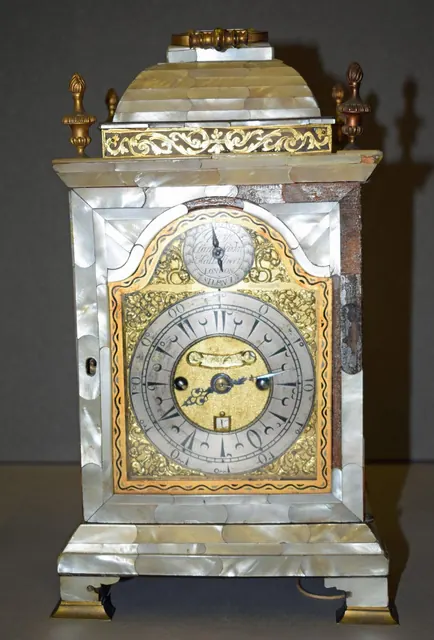
Clocks · c.1750
Clock by George Clarke, England, c.1750
Victoria and Albert Museum, London
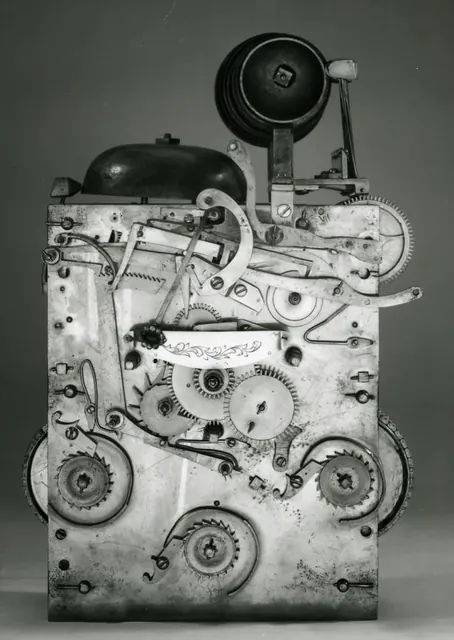
Clocks · 1760–1770
Bracket clock by George Clarke
British Museum
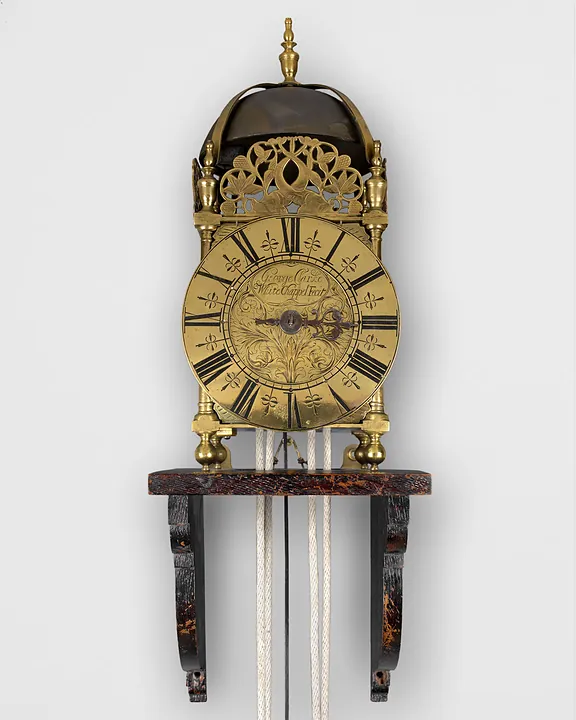
Clocks · c. 1760
Lantern clock by George Clarke, Whitechappel Fecit London, c. 1760
Howard Walwyn Fine Antique Clocks (dealer), London
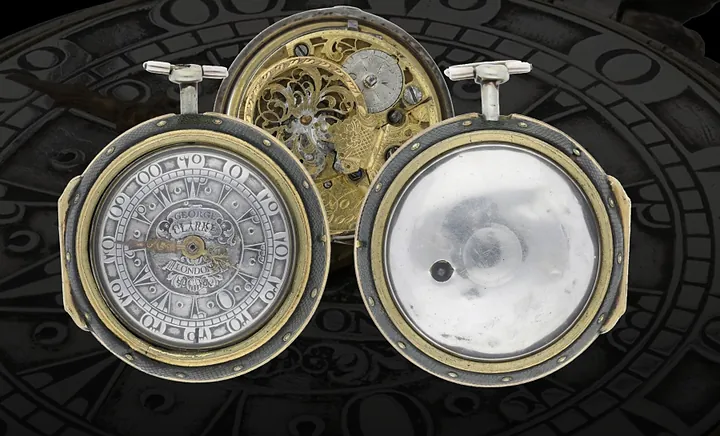
Pocket Watches · 1766 (hallmarked London)
Mid-18th century silver pair cased verge pocket watch made for the Turkish Market by George Clarke, London, hallmarked London 1766
Gardiner Houlgate (auction house), Corsham
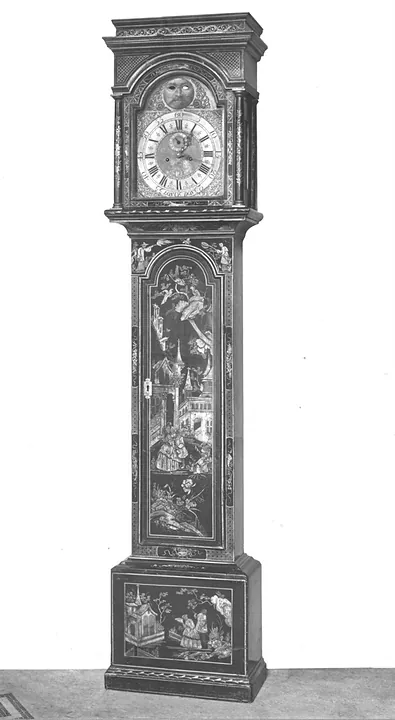
Clocks · 1740–1760
Longcase clock, English, 1740–1760, japanned wood, John Ellicott
Victoria and Albert Museum, London
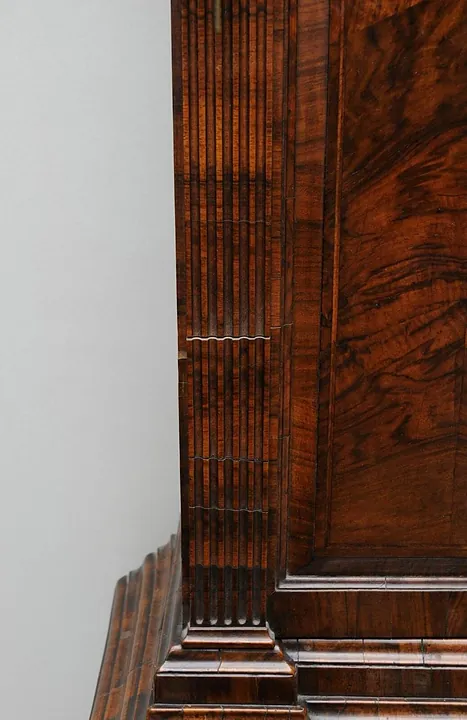
Clocks · c.1750
Long-case clock, English, ca. 1750, by Richard Peyton of Gloucester
Victoria and Albert Museum, London
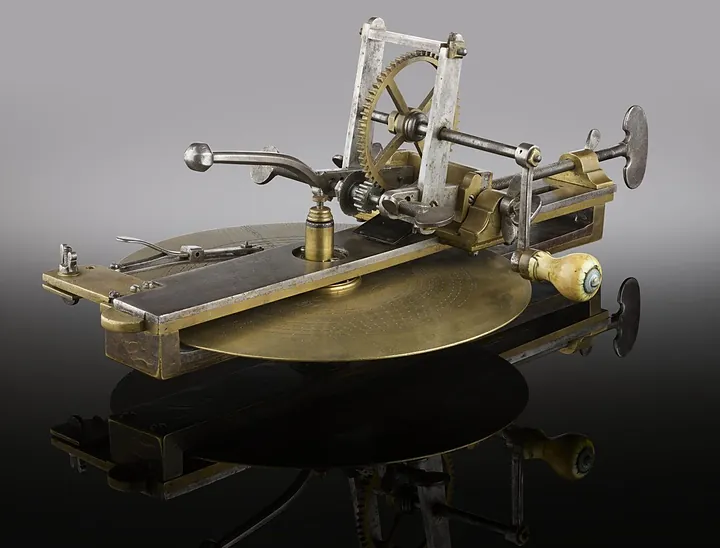
Clocks · 1751
Large wheel engine, signed and dated "John Tipping, Whildon Green, 1751".
Science Museum Group, London
Clocks · 1755
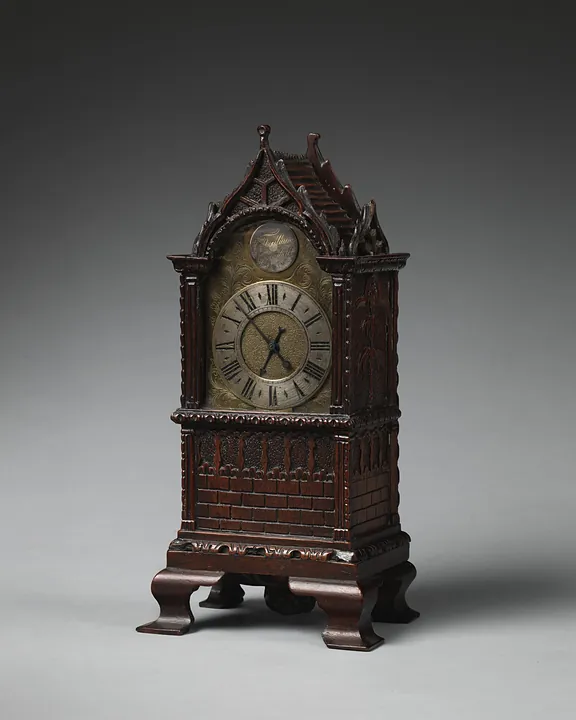
Bracket clock by John Fordham, England, 1755
The Metropolitan Museum of Art, New York